

Feature/OPED
Kaduna’s Political Capital and the Price of Influence

By Sani Abdulrazak, PhD
In the chessboard of Nigerian politics, few cities have watched the pendulum of power swing as often, or occupied as consequential a position, as Kaduna. A city of historical gravitas, intellectual ferment and political intrigue, Kaduna has long been more than a geographical expression; it is an important coordinate in the cartography of Northern Nigeria’s political imagination.
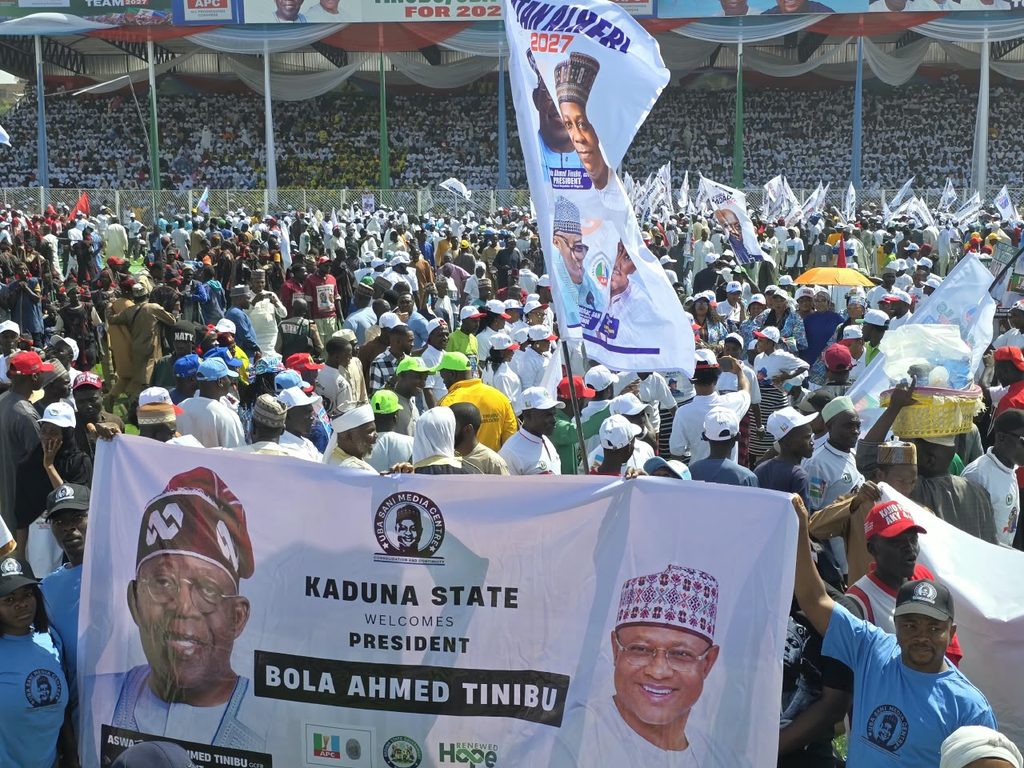
On October 24, 2026, when the All Progressives Congress (APC) chose the city to flag off President Bola Tinubu’s re-election campaign, Kaduna returned to the centre of a national conversation it has helped shape for generations. Yet, beyond the spectacle lies the question: what can Kaduna make of its political capital, and what dividends might accrue to its people?
The occasion invites us to consider not just the significance of the gathering, but the possibilities inherent in the state’s relationship with the Federal Government and the role Governor Uba Sani may play in converting political access into public value.
Kaduna’s place in Nigeria’s political firmament is neither accidental nor ephemeral. Its history is entwined with the evolution of Northern administration, commerce and intellectual life. Its institutions and social plurality have given it a distinctive place in the national story. The city has witnessed the rise and fall of political tendencies, the gestation of national ideas and the convergence of interests that have shaped the country’s trajectory.
To host a presidential campaign flag-off is therefore to occupy a familiar stage, but one whose contemporary significance deserves fresh scrutiny. The choice of Kaduna also provides an opportunity to reflect on the currency of political influence. In politics, as in commerce, capital derives its worth not from possession but from productive deployment.
Governor Uba Sani occupies an important position in this equation. His membership of the governing political establishment and his engagement with President Tinubu’s administration offer channels through which Kaduna’s priorities can be advanced at the federal level. Such relationships can strengthen cooperation between the two tiers of government and widen the possibilities for development.
One of the governor’s primary political tasks is to ensure that Kaduna’s political visibility becomes an asset for the state’s broader aspirations, because the opportunities are glaringly considerable. Security, transport infrastructure, industrial revival, agricultural development and employment creation remain central to the state’s economic future. Progress in these areas would not only improve livelihoods but also strengthen Kaduna’s contribution to national productivity.
At the campaign flag-off, Governor Sani highlighted federal interventions and commitments relating to infrastructure, education, healthcare, agriculture, security and human-capital development. He also referenced the reported release of N178 billion for the reconstruction of the Kaduna–Birnin Gwari road and federal support for a proposed metropolitan light rail project. These initiatives, as they advance, will require sustained coordination and effective implementation. Their potential significance extends beyond the immediate political moment.
Consider the Birnin Gwari corridor. A road may appear, on an engineering drawing, to be little more than a stretch of asphalt connecting two points. In communities where insecurity has impeded movement and commerce, however, it can represent a lifeline: reconnecting farmers to markets, traders to customers and isolated settlements to the wider economy.
The proposed light rail, meanwhile, speaks to Kaduna’s future-facing ambitions. A state with a distinguished industrial heritage must also contemplate the infrastructure of tomorrow. Modern transport can improve urban mobility, stimulate commercial activity and support a more integrated metropolitan economy. The journey from proposal to functioning infrastructure is neither automatic nor effortless, but a well-conceived project, pursued with consistency, can become an enduring public asset. These possibilities illustrate why political influence matters.
A governor’s relationships with the centre are most valuable when they facilitate meaningful conversations about projects, financing, security and economic transformation. The measure of such engagement is not the frequency of ceremonial appearances but the extent to which it advances clearly defined public priorities.
Here, Uba Sani’s political positioning presents an opportunity to align Kaduna’s aspirations with national development objectives. The task is not just to secure attention for the state, but to translate that attention into cooperation capable of producing measurable results. It is a task that calls for strategic judgement, administrative diligence and sustained engagement, of which the governor seems well positioned to deliver the task. These are the dividends against which political capital ultimately acquires meaning. They also explain why Kaduna’s national prominence should be regarded as an opportunity to be cultivated rather than a trophy to be displayed. The people’s expectations are neither unreasonable nor incompatible with political loyalty. Indeed, a constructive relationship between Kaduna and the Federal Government should make it easier to pursue common objectives while remaining attentive to the state’s distinctive needs.
There is also a wider national dimension. Kaduna’s strategic location, commercial potential and institutional heritage position it to contribute to economic integration across Northern Nigeria. Investments that improve connectivity, strengthen security and support industrial activity can generate benefits beyond the state’s borders. By framing its priorities within this broader economic vision, Kaduna can make a compelling case for projects whose value extends to the federation as a whole.
For Governor Uba Sani, the opportunity is to build upon Kaduna’s historic significance and give it renewed developmental expression. Political capital, as we all know, if properly deployed, can outlast the occasion that generated it. It can help establish partnerships, accelerate infrastructure, attract investment and create conditions in which enterprise flourishes. The most enduring influence is that which leaves institutions stronger and citizens better served.
Kaduna has once again occupied the national stage; the occasion has reaffirmed its political visibility and drawn attention to the relationships through which its priorities may be advanced. But the state’s ambition should extend beyond being present where consequential decisions are discussed. It should seek to shape those conversations, articulate its interests with conviction and translate political relevance into tangible progress.
The ovation of a political gathering may be fleeting indeed; the consequences of sound decisions can endure for generations. If the relationships cultivated today help reconnect communities, revive commerce, expand opportunities and strengthen security, Kaduna will have secured something more valuable than ceremonial prominence. It will have converted political capital into public value, and that is the true price of influence: the responsibility to make power count for the people, and the proverbial Lannister of our time, Governor Sani, is well poised to make it count for his people.
Sani Abdulrazak, PhD, is an Analytical Chemist, Writer and Public Commentator based in Zaria. He writes on governance, public affairs, society and the environment