

Economy
Toughest Phase of Tinubu’s Economic Reforms Over—Shettima

By Adedapo Adesanya
The Vice President, Mr Kashim Shettima, has said that the toughest phase of the economic reforms introduced by President Bola Tinubu’s administration is over.
Mr Shettima said the government laid the foundation for economic recovery through what he described as painful but necessary reforms, adding that the next four years would focus on delivering the benefits of the policies to Nigerians.
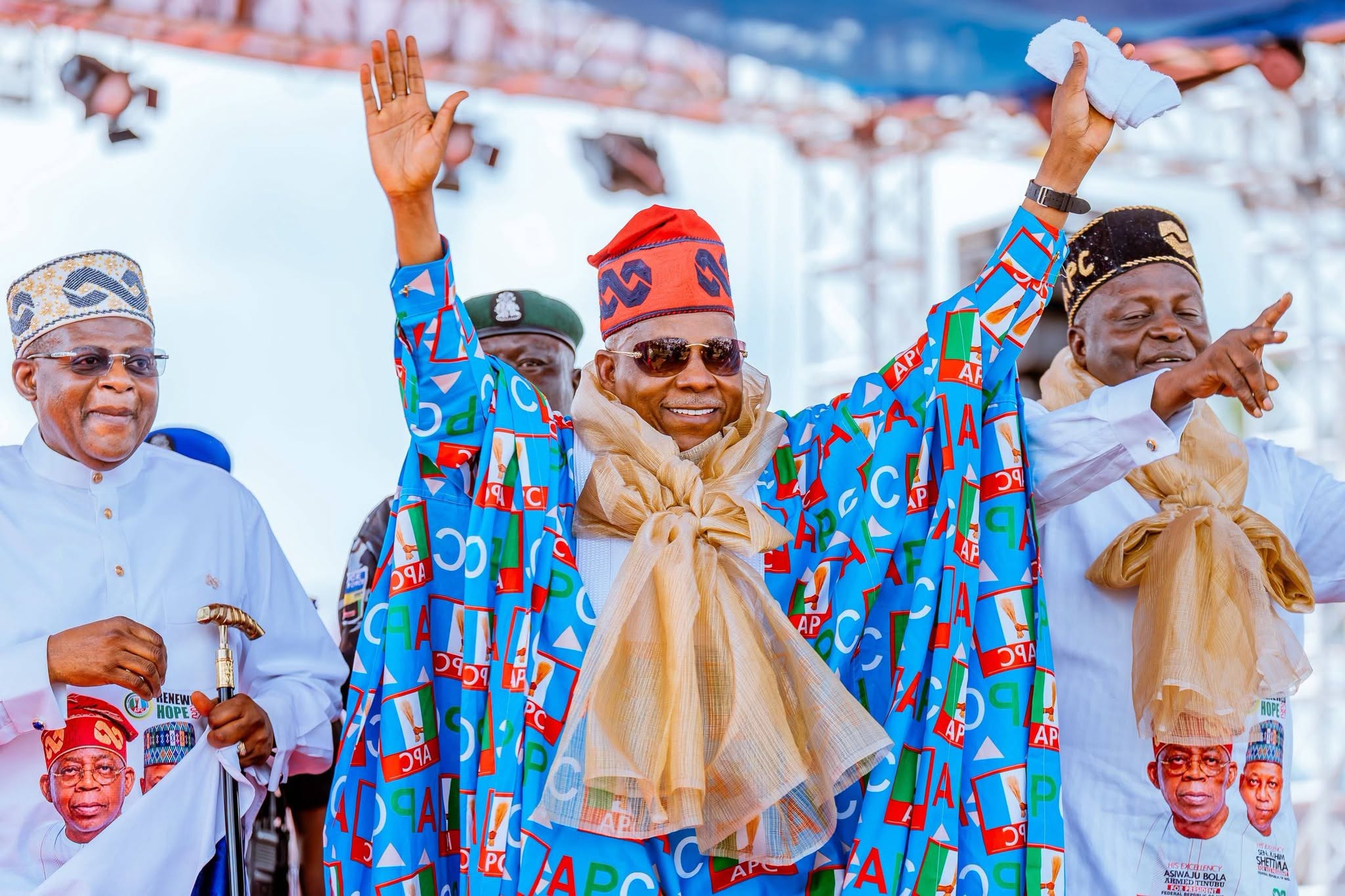
He also expressed optimism that Nigerians would begin to enjoy improved economic conditions if the government secures a second term in 2027, at the All Progressives Congress (APC) presidential campaign rally in Calabar, Cross River State, on Monday.
At the event, he sought support for the re-election of President Tinubu, Governor Bassey Otu and other APC candidates in the 2027 general elections.
In a statement by his Senior Special Assistant on Media and Communications, Mr Stanley Nkwocha, the Vice President said the administration had completed the most difficult part of its economic reset.
“We are confident of this promise to deliver for this nation because we have already done the most difficult job of economic reset. None of the other options available has the capacity to move the needle of the economy. We have rescued the economy, and the road ahead is one of harvest,” he said.
He added that a second term would focus on delivering the gains of the reforms to Nigerians.
“This second term is one of harvest, for you and all Nigerians,” he said.
Mr Shettima urged voters to renew the mandate of Tinubu and himself, while also seeking another term for Otu and his deputy, Mr Peter Odey, in Cross River State.
The Vice President said the APC’s appeal for another term was based on its commitment to progress, prosperity, opportunities and the dignity of Nigerians.
He maintained that political authority belonged to the people and that elected officials seeking renewed mandates must present their records and programmes for public scrutiny.
Mr Shettima also identified Cross River as a major beneficiary of the Tinubu administration’s infrastructure and economic agenda, citing the Lagos-Calabar Coastal Highway as one of the projects expected to transform the state.
He said the highway would improve the movement of people and goods, expand tourism, attract investments and generate employment opportunities across coastal communities.
“This transformative infrastructure project will connect coastal communities. It will ease the movement of goods and people. It will expand tourism. It will attract investors and create thousands of direct and indirect jobs,” he said.
“Our vision is for Cross River to become a major beneficiary of this economic revolution.”
On other infrastructure projects, Mr Shettima said the federal government had approved and supported the Bakassi Deep Sea Port, expressing confidence that it would become an international maritime gateway capable of attracting shipping companies, stimulating industrial development and creating jobs.
He also identified the proposed Gulf of Guinea Commission Secretariat in Calabar as another opportunity to boost the state’s international profile, tourism and commercial activities.
The Vice President further assured the state of the federal government’s commitment to resolving the dispute over 46 oil wells, saying the move would strengthen Cross River’s maritime identity and expand its opportunities in the blue economy.
On education, Mr Shettima said Cross River had benefited from the Nigerian Education Loan Fund (NELFUND), describing the initiative as an intervention aimed at easing the financial burden on parents and improving access to higher education.
He said the administration would continue to prioritise education through initiatives such as Project HOPE Education, which focuses on foundational learning, teacher development, school management and accountability.
However, Mr Shettima acknowledged the economic difficulties facing households, saying the government remained committed to addressing concerns raised by citizens and correcting policies and interventions that failed to meet public expectations.
“The people are the purpose,” he said, insisting that continuity in government should not prevent citizens from demanding accountability.