

Feature/OPED
Mai Mala Buni @ 59: Celebrating an Uncommon Leader

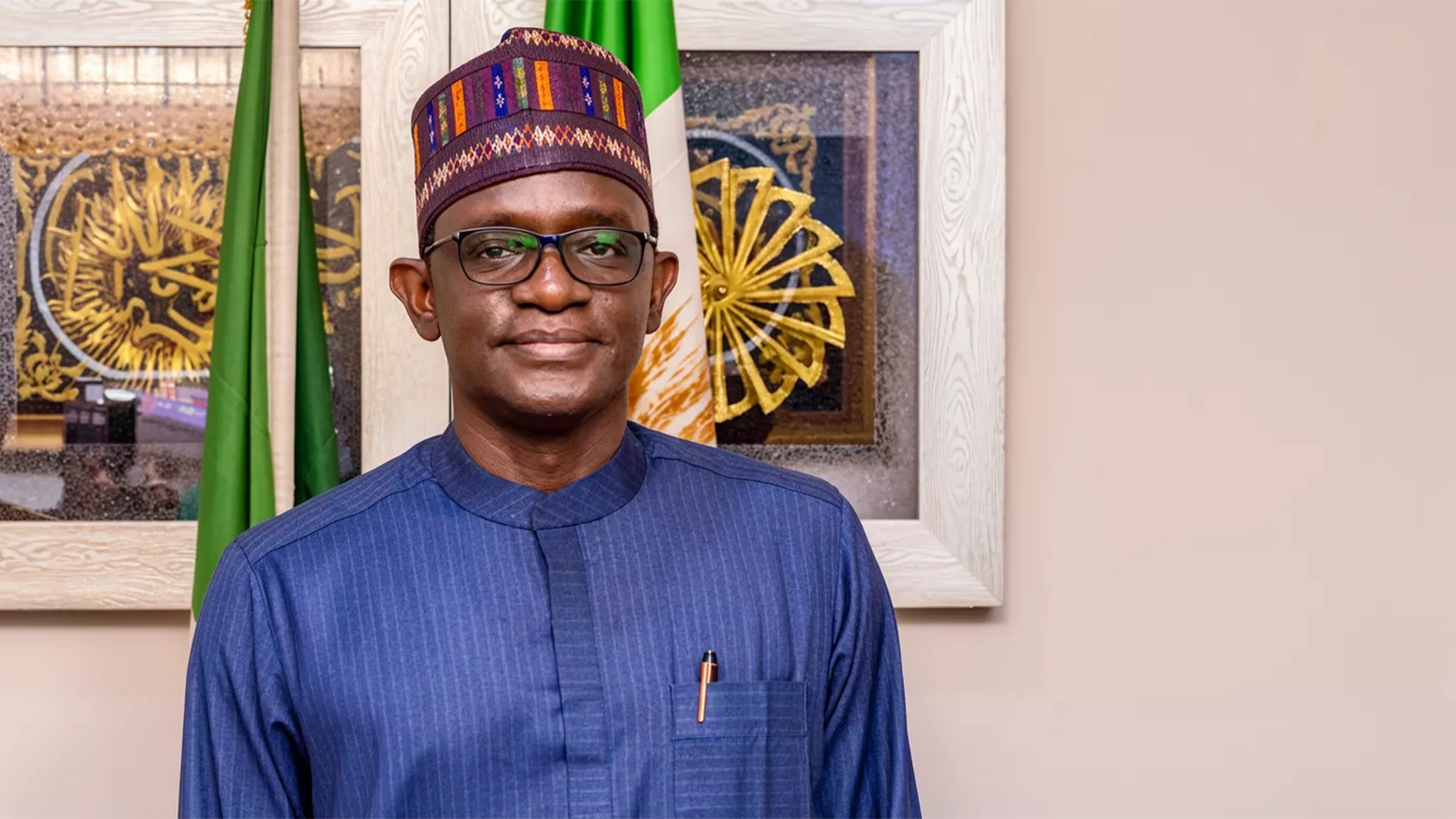
By Abba Dukawa
At 59, Yobe State Governor Mai Mala Buni stands as one of Nigeria’s most distinguished examples of calm, reform-minded, and people-centred leadership. Born on November 19, 1967, in Buni Gari, Gujba Local Government Area of Yobe State, his journey from grassroots political organiser to nationally respected statesman reflects a rare blend of humility, strategic thinking, and unwavering dedication to public service.
In an era where leadership is too often measured by noise rather than impact, Buni has distinguished himself through quiet effectiveness. His style is not built on theatrics or headlines, but on steady, deliberate actions that deliver measurable progress. Whether steering his state through uncertainty or contributing to national political stability, he has consistently demonstrated the capacity to unite, rebuild, and transform.
Buni’s leadership philosophy is straightforward: leadership is responsibility. Those who have followed his work know him not for self-promotion, but for prioritising the needs of his people — security, education, healthcare, infrastructure, economic opportunity, and the restoration of dignity to communities long burdened by hardship.
His leadership blends empathy with strategic foresight. He is known for consulting widely, listening attentively, and responding decisively — qualities that have earned him respect across political and social divides. At 59, he represents a generation of Nigerian leaders committed to proving that politics can be purposeful and principled.
His calm temperament in tense moments, instinct for consensus-building, and ability to navigate complex political environments have made him a stabilising force. More importantly, he continues to champion development initiatives that empower youth, uplift women, strengthen local governance, and create sustainable pathways to progress. His guiding philosophy of “continuity, consolidation, and transformation” has become the defining hallmark of his administration, now in its seventh year.
As is the tradition in Northern Nigeria, young Buni began with the memorisation of the Holy Qur’an under the tutelage of his parents and other clerics before enrolling at Buni Gari Central Primary School, where he obtained his First School Leaving Certificate in 1979. He proceeded to Government Secondary School, Goniri, and obtained his West African Examinations Council certificate in 1985.
He comes from a family of traders and transporters. After his father’s death, he inherited and expanded the family business in Gum Arabic, cotton, groundnuts, hides and skins, transport, oil and gas, and the Bureau de Change. He chaired the boards of several companies, including MBG Integrated Farms Ltd, MMB Petroleum and Chemical Company Nig. Ltd, MBG Construction and General Services Ltd, Buni Gari and Company Nig. Ltd, and Bright View Capital Alliance Ltd.
Friends from childhood recall that his generosity started very early in life; his wardrobe, his food, and his earnings were open to all. That reputation for accommodation, tolerance, and uncommon humility would later earn him the nickname “Peace Ambassador.”
Buni’s political story did not begin in Government House. It began in 1992, when his community nominated him unsolicited to contest as Councillor for Buni Ward in Gujba Local Government Council under the National Republican Convention (NRC). He won and was elected Speaker of the Council. In that role, he led eight of the 11 councillors, while the Council Chairman had only three, a testament to his early powers of persuasion and consensus-building.
In 2019, he won the Yobe governorship election in a landslide so convincing that it was never challenged in any court by any opponent — a rare feat in Nigerian politics. He was re-elected in March 2023 for a second term. He is the 4th Executive Governor of Yobe State. At the national level, Buni played a critical stabilising role during one of the most turbulent periods in the history of the All Progressives Congress (APC).
In June 2020, the APC was on the brink of collapse. The National Working Committee led by Adams Oshiomhole was dissolved, three men were claiming the chairmanship, and court cases were tearing the party apart. Buni was appointed Chairman of the Caretaker and Extraordinary Convention Planning Committee (CECPC).
What followed was widely described as a rescue mission:
- Reconciliation: He embarked on a genuine, all-inclusive reconciliation process, visiting critical stakeholders — including founding leaders — both publicly and behind closed doors. Aggrieved members who had left returned; those contemplating leaving stayed. He reconciled warring factions in Gombe, Ogun, Kwara, and many other states.
- Membership Explosion: Under his stewardship, the APC conducted a nationwide membership registration and revalidation exercise that grew the party from about 11 million to over 41 million members — making it Africa’s largest political party.
- The Defection Wave: His calm diplomacy attracted three sitting PDP governors — Dave Umahi of Ebonyi, Ben Ayade of Cross River, and Bello Matawalle of Zamfara — plus a deputy governor, senators, House members, and state assembly members. This earned him the informal moniker “Defector General.”
- Inclusivity: He convened a National Youth Summit in Abuja and deliberately integrated women and Persons Living with Disabilities into the party’s political architecture.
- Peaceful Transition: Despite two extensions of his initial six-month mandate, he delivered a peaceful National Convention on March 26, 2022, handing over to a substantive National Working Committee. Former President Muhammadu Buhari publicly commended him, saying the party had “bounced back to life” under Buni’s leadership.
Transformative Governance in Yobe State
Since assuming office on May 29, 2019, Buni’s administration has pursued a development agenda focused on rebuilding communities, strengthening institutions, and improving the living conditions of citizens, particularly those affected by years of insurgency. His inaugural pledge was to implement the Resettlement, Reconstruction and Rehabilitation (R3) programme to restore the honour and dignity of victims of insurgency.
Security and Peacebuilding: Yobe today enjoys relative peace across its 17 local government areas. Farmers have returned to their farmlands and business owners move freely across communities. The administration has procured 200 operational motorcycles and 60 patrol vehicles for security agencies and hunter groups, rehabilitated military formations, constructed accommodation for security personnel, and established a military camp in Gashua. He deliberately refused to increase the state’s “grossly unrealistic and outdated” tax rates to allow businesses to recover.
The National Bureau of Statistics found Yobe State to be the most affordable state to live in Nigeria, driven by falling inflation and successful agricultural programmes boosting food security.
Economy, Empowerment and Commerce: To support small businesses, the state created the Ministry of Wealth Creation, Empowerment and Employment Generation. It has distributed tricycles, sewing machines, grinding machines, GSM repair kits, and irrigation pumps to youths; 475 tailoring and embroidery machines and 350 tricycles to persons with disabilities; and cash grants to micro and small entrepreneurs.
New modern markets, motor parks, abattoirs, and sesame processing factories have been built in Damaturu, Nguru, Machina, and Potiskum. Dormant industries — including Yobe Flour and Feed Mills and Sahel Aluminium — have been revived. The administration also protected sesame farmers from exploitation by grain merchants by constructing roads linking rural communities to markets.
Social Welfare and Environment: The administration provided N3.9 billion in multi-purpose cash assistance to 52,000 households and over 200,000 individuals, plus food and non-food assistance to 974,220 individuals. It has made significant payments to retirees and pensioners and has supported empowerment programmes for orphans and indigent families.
It also established the Yobe State Agency for Substance Use Prevention, Drug Abuse Control, Treatment and Rehabilitation (YOSADAC), and invested in water supply, rural electrification, flood control — including the Damaturu Waterway Project, strategic culverts in Ngalda, and reconstruction of the Alagarno Flood Control Gate — and climate resilience.
A Legacy Still Evolving
As Mai Mala Buni marks his 59th birthday, the moment invites both celebration and reflection. His legacy, defined by resilience, courage, and a commitment to unity, continues to evolve. Within and beyond Yobe State, many celebrate an uncommon leader: a man whose quiet strength speaks louder than noise, whose actions resonate more deeply than rhetoric, and whose vision continues to illuminate a path of hope.
From National Secretary of the ruling party to Governor, and to the man who saved the APC, Buni’s story remains that of a leader who never sought power, but to whom power was entrusted — and who, time and again, proved worthy of that trust.
At 59, he is not at the end of a journey. He is at the height of it, with experience, wisdom, and the trust of his people behind him. And for Yobe State, and for Nigeria, that is a cause for celebration.
Dukawa writes from Kano and can be reached at [email protected]