

Economy
Economic Team Advances Budget Harmonisation, Price Stability Agenda

By Aduragbemi Omiyale
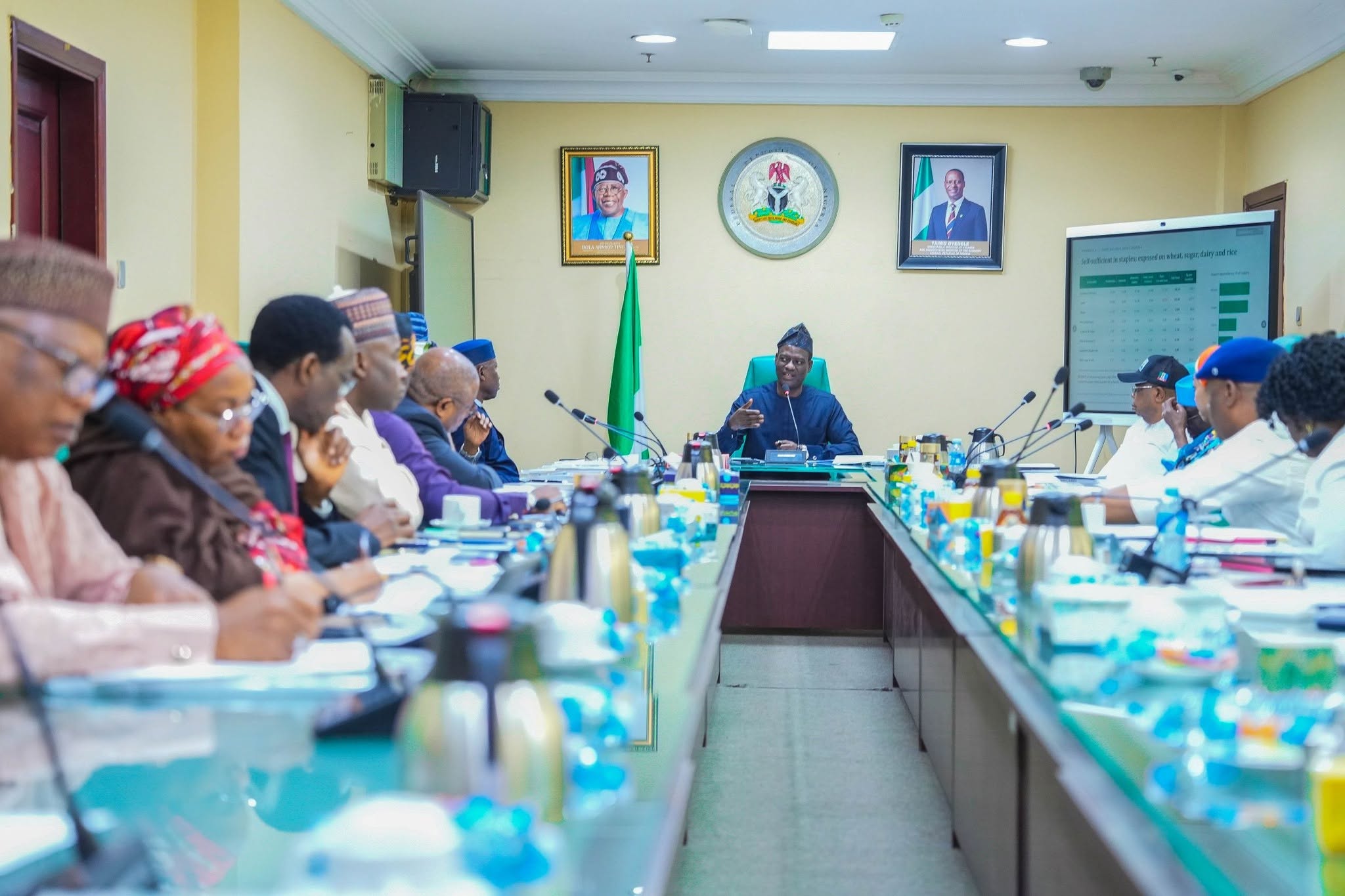
The Economic Management Team (EMT) on Wednesday, November 18, 2026, reviewed Nigeria’s macroeconomic performance and advanced work on budget harmonisation, food stability, energy coordination, arts and tourism, the national digital postcode system, and the draft National Development Plan 2026–2030.
At its meeting in Abuja, the team aligned the budget around more realistic revenue and financing assumptions, with plans to implement as much capital spending as possible in 2026 and carry forward outstanding balances into 2027, while moving Nigeria toward a single annual budget cycle going forward.
The EMT, chaired by the Minister of Finance and Coordinating Minister of the Economy, Mr Taiwo Oyedele, also reviewed progress on the 2027 finance bill to update Nigeria’s tax laws and introduce further improvements to the ongoing tax reform, as part of a wider effort to promote ease of doing business, lower borrowing costs and channel more financial-sector liquidity into the real economy.
During the gathering, food security and price stability were identified as a key priority, under a 90-day action plan earlier approved by the National Economic Council (NEC) and endorsed by the Federal Executive Council (FEC). Members discussed measures to stabilise prices for staple foods such as cassava, yams, maize and rice, strengthen farm-input delivery to farmers, reduce post-harvest losses, and improve the targeting of agricultural support.
In addition, the team reviewed Nigeria’s national gas plan and the power sector’s 90-day action plan, which targets consistent grid distribution of about 5,500 megawatts in the near term, alongside continuing work on transmission capacity, metering, and the protection of critical electricity infrastructure from vandalism and theft.
Further, the EMT reviewed the draft National Development Plan 2026–2030, built around seven pillars spanning macroeconomic stability, energy, industrialisation, infrastructure, governance, security and human capital development. Members were asked to carry out further review, with feedback to be incorporated ahead of the plan’s eventual launch.
The group welcomed the continued contraction in inflation, which stood at 14.06 per cent in October 2026, its lowest in six years, as well as the decision of Moody’s and Fitch to revise Nigeria’s sovereign credit outlook from stable to positive in 2026, following S&P Global’s upgrade of the country’s rating to ‘B’ from ‘B-’ in May 2026.