Connect with us

Economy

Equatorial Guinea, Burkina Faso Sign Gas Supply Deal

Published

on

LNG Supply

By Modupe Gbadeyanka

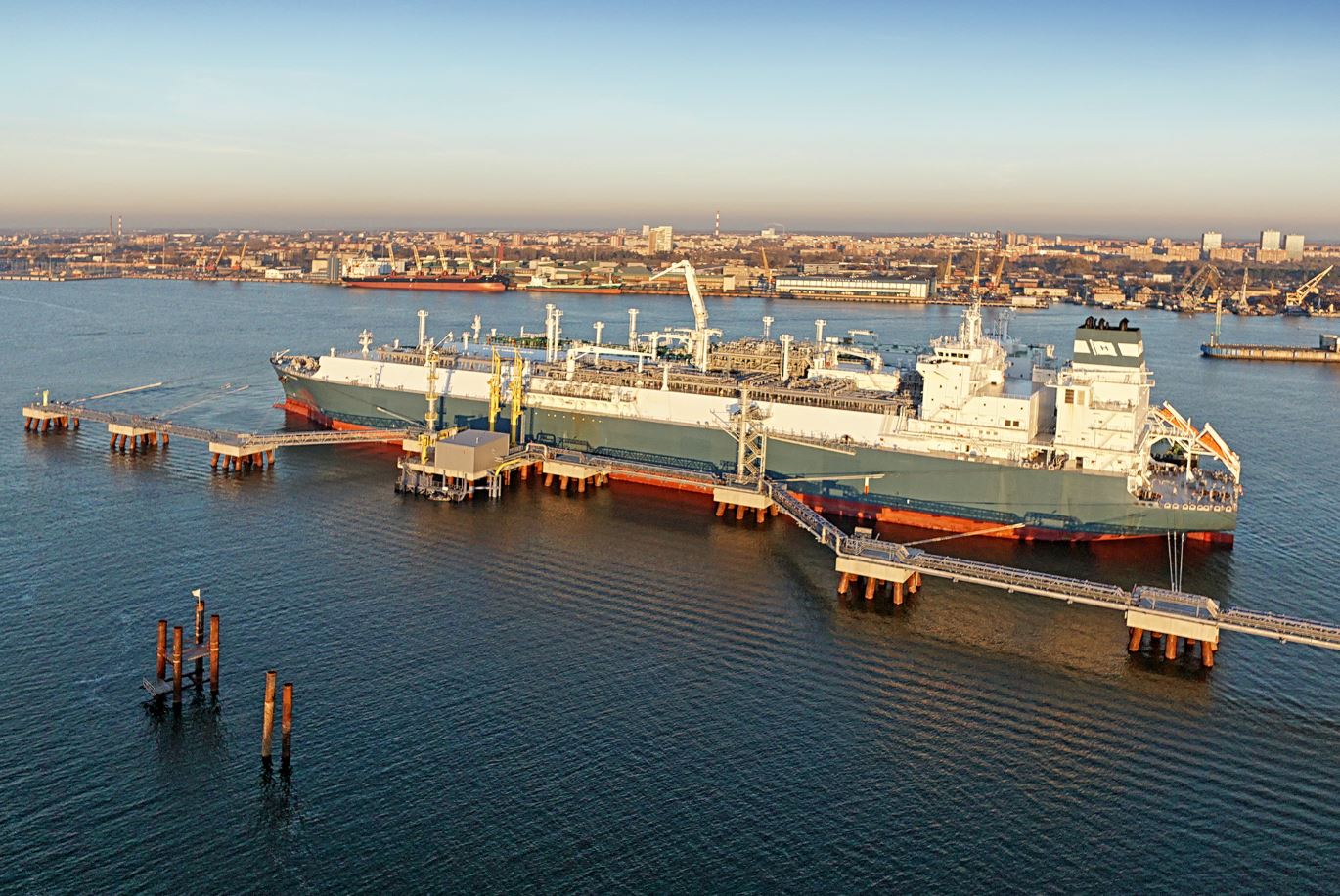
A memorandum of understanding has been signed between Equatorial Guinea and Burkina Faso for the supply of Liquefied Natural Gas (LNG) and construction of critical infrastructure to import, store and transport gas.

The initial three-year agreement compels both sides to negotiate and sign an LNG sales and purchase agreement (SPA) and a terminal use agreement (TUA) that will be the basis for their first LNG exchange. The MoU also calls for Equatorial Guinea to explore and produce oil and gas in Burkina Faso.

“We are very pleased to strike this agreement and be given the opportunity to supply our African brothers in Burkina Faso with crucial gas resources,” said Gabriel Mbaga Obiang Lima, Minister of Mines and Hydrocarbons of Equatorial Guinea. “This collaboration with Burkina Faso, part of our LNG 2 Africa initiative, highlights the important responsibility of African countries to cooperate in the energy sector and build the necessary infrastructure to strengthen our economies.”

As part of the agreement, both sides will commission a technical study for the construction of regasification and LNG storage terminals and will exchange knowledge and data. They will also work to build regasification and storage terminals in Burkina Faso and transport infrastructure, either by pipeline or LNG carrier.

Equatorial Guinea is one of Africa’s biggest LNG producers, exporting 3.4 million tonnes per annum of LNG to destinations worldwide. It is committed to significantly expanding its export capacity through the 2.2 million tonnes per annum Fortuna FLNG project, which is on track to reach final investment decision by the end of the year. When it goes online in 2020, Fortuna will be Africa’s first deepwater FLNG project.

In May, Equatorial Guinea entered into a binding agreement with the OneLNG joint venture to explore the liquefaction and commercialization of natural gas in offshore blocks O and I. Bringing online new LNG volumes will enable Equatorial Guinea to sell gas to higher priced markets in Africa and beyond while retaining a share in profits for onward marketing.


Modupe Gbadeyanka is a fast-rising journalist with Business Post Nigeria. Her passion for journalism is amazing. She is willing to learn more with a view to becoming one of the best pen-pushers in Nigeria. Her role models are the duo of CNN's Richard Quest and Christiane Amanpour.

Click to comment

Leave a Reply

Your email address will not be published. Required fields are marked *

Economy

Monte Carlo Simulation for Trading Strategy Risk Assessment

Published

on

Most traders evaluate a strategy by looking at its historical performance.

Common metrics such as total return, win rate, profit factor, maximum drawdown, and Sharpe ratio provide valuable information about how a strategy performed in the past.

The problem is that historical performance tells only one story.

Financial markets are inherently uncertain. Even a strategy with an impressive backtest can experience very different outcomes once it encounters changing market conditions, unexpected volatility, or an unfavorable sequence of trades.

This is why professional traders, quantitative researchers, and portfolio managers increasingly rely on Monte Carlo simulation as part of their risk assessment process.

Rather than focusing on a single historical outcome, Monte Carlo analysis explores thousands of possible scenarios, helping traders understand what could happen—not just what already happened.

Why Historical Performance Is Only Part Of The Picture

Backtesting remains one of the most important tools in strategy development.

Platforms such as MetaTrader 5 provide sophisticated testing environments that allow traders to evaluate Expert Advisors and trading systems using historical market data.

A typical backtest may show:

Metric Result
Net Profit 35%
Win Rate 54%
Maximum Drawdown 12%

At first glance, these numbers appear encouraging.

However, every backtest contains one important limitation:

History occurred only once.

The strategy followed a specific sequence of winning and losing trades. If those same trades had occurred in a different order, the overall experience could have looked very different.

This is where Monte Carlo analysis becomes valuable.

Understanding Sequence Risk

One of the most important concepts in Monte Carlo simulation is sequence risk.

Consider a simple series of trades:

Trade Result
1 +3%
2 +2%
3 -1%
4 +4%
5 -2%

The overall result is positive.

However, if those same trades occurred in a different order:

Trade Result
1 -2%
2 -1%
3 +2%
4 +3%
5 +4%

the final return may remain similar while the path becomes significantly more difficult.

The trader may experience:

  • Larger drawdowns
  • Longer recovery periods
  • Increased psychological pressure
  • Greater capital requirements

The strategy itself has not changed.

Only the sequence has changed.

Monte Carlo simulation explores thousands of these alternative scenarios to estimate how different trade sequences may influence future performance.

Exploring Thousands Of Possible Outcomes

Monte Carlo analysis works by generating large numbers of alternative outcomes based on historical strategy behavior.

A simplified process looks like this:

Historical Trade Results
        ↓
    Randomization
        ↓
     Simulation
        ↓
Repeat Thousands of Times
        ↓
    Risk Analysis

Each simulation represents a plausible alternative version of history.

By repeating this process thousands of times, traders can estimate:

  • Potential drawdowns
  • Losing streak probabilities
  • Capital requirements
  • Performance variability
  • Confidence intervals

The objective is not to predict the future.

The objective is to understand uncertainty.

Looking Beyond Average Returns

Many traders focus heavily on expected returns.

Risk professionals often focus on worst-case outcomes.

Consider two strategies:

Metric Strategy A Strategy B
Average Return 20% 20%
Historical Drawdown 10% 10%

At first glance, they appear nearly identical.

Monte Carlo analysis may reveal a different story:

Risk Metric Strategy A Strategy B
Worst Simulated Drawdown 18% 35%
Probability of 20% Drawdown 5% 27%

Although historical results appear similar, future risk characteristics may differ significantly.

This is one reason why institutional investors rarely rely solely on traditional backtest statistics.

The Reality Of Losing Streaks

One of the most underestimated aspects of trading is the impact of consecutive losses.

Even profitable strategies can experience difficult periods.

For example:

Consecutive Trades
Loss
Loss
Loss
Loss
Loss
Loss

Such sequences are completely normal.

However, they often create emotional pressure and lead traders to abandon otherwise profitable systems.

Monte Carlo analysis helps estimate:

  • Expected losing streak lengths
  • Worst-case losing streaks
  • Probability of extended downturns
  • Recovery requirements

Understanding these possibilities allows traders to set more realistic expectations before real capital is exposed.

Position Sizing And Capital Preservation

Position sizing is one of the most important applications of Monte Carlo analysis.

Even profitable strategies can fail if risk per trade is too aggressive.

Monte Carlo simulations help answer questions such as:

  • How much capital is required?
  • What position size is sustainable?
  • What drawdown level is acceptable?
  • What is the probability of account depletion?

For example, a strategy may appear relatively safe at 1% risk per trade.

The same strategy may exhibit a significant probability of severe drawdowns when risk increases to 5% per trade.

Understanding these relationships often leads to better risk-management decisions.

Portfolio Risk And Diversification

Monte Carlo simulation is not limited to individual strategies.

Portfolio managers frequently use it to evaluate:

  • Multi-strategy portfolios
  • Multi-asset portfolios
  • Diversification effects
  • Correlation risks

A portfolio may appear well diversified based on historical data.

However, asset relationships can change unexpectedly during periods of market stress.

Monte Carlo analysis helps traders evaluate how portfolios may behave under alternative scenarios rather than relying solely on historical observations.

Randomness Plays A Bigger Role Than Most Traders Realize

One of the most important lessons of Monte Carlo analysis is that randomness influences results more than many traders expect.

A profitable strategy can experience:

  • Unfavorable timing
  • Extended drawdowns
  • Long losing streaks
  • Temporary underperformance

without any deterioration in the underlying strategy.

Understanding this distinction helps traders separate:

Normal Statistical Variation Genuine Strategy Problems
Temporary drawdowns Structural performance decline
Random losing streaks Broken trading logic
Short-term underperformance Changing market assumptions

This perspective is essential for long-term strategy management.

Monte Carlo As Part Of A Complete Validation Process

Monte Carlo analysis works best when combined with other research methods.

Many professional workflows follow a process similar to:

Step Process
1 Strategy Development
2 Historical Backtesting
3 Optimization
4 Monte Carlo Analysis
5 Forward Testing
6 Deployment
7 Ongoing Monitoring

The broader MetaTrader ecosystem supports many stages of this workflow through strategy testing, optimization, algorithmic development, and performance analysis tools.

The objective is not simply to find profitable strategies.

The objective is to understand how those strategies may behave when market conditions become less favorable.

Why Professional Firms Use Monte Carlo Analysis

Institutional investment firms focus on risk as much as return.

Their goal is not only to identify profitable opportunities but also to understand:

  • Capital requirements
  • Worst-case scenarios
  • Portfolio resilience
  • Survival probabilities

These considerations become increasingly important as capital allocations grow larger.

The same principles can benefit independent traders.

A strategy with slightly lower returns but substantially lower risk may ultimately prove more sustainable over the long term.

Understanding Risk Beyond The Backtest

Historical performance provides valuable information, but it tells only part of the story.

Monte Carlo simulation helps traders explore the uncertainty that exists beyond a single backtest result. By generating thousands of alternative scenarios, the technique provides insight into drawdowns, losing streaks, capital requirements, and portfolio resilience.

As algorithmic trading becomes increasingly sophisticated, risk assessment is becoming just as important as strategy development itself.

The most successful traders are often not those who find the highest returns.

They are those who understand the risks behind those returns and prepare for outcomes that may never appear in a traditional backtest.

In modern quantitative trading, understanding uncertainty can be just as valuable as identifying opportunity.

Continue Reading

Economy

Capital Inflows to Nigeria Rise 83.8% to $10.37bn in Q1 2026

Published

on

Nigeria's capital inflows

By Adedapo Adesanya

Nigeria attracted $10.37 billion in capital importation in the first quarter of 2026, representing an 83.8 per cent increase from the $5.64 billion recorded in the corresponding period of 2025, according to the National Bureau of Statistics (NBS).

The latest Capital Importation Report released by the stats bureau also showed that capital inflows rose by 60.97 per cent from $6.44 billion recorded in the fourth quarter of 2025.

The report stated, “In Q1 2026, total capital importation into Nigeria stood at $10.37bn, higher than $5.64bn recorded in Q1 2025, indicating an increase of 83.83 per cent. In comparison to the preceding quarter, capital importation increased by 60.97 per cent from $6.44bn in Q4 2025.”

Analysis of the inflows showed that portfolio investment remained the dominant source of foreign capital, accounting for $9.86 billion or 95.09 per cent of the total amount imported into the economy.

The stats office disclosed that foreign direct investment stood at $135.08 million, representing only 1.30 per cent of total capital inflows, while other investments accounted for $374.48 million or 3.61 per cent.

“Portfolio Investment ranked top with $9.86bn, accounting for 95.09 per cent, followed by Other Investment with $374.48m, accounting for 3.61 per cent. Foreign Direct Investment recorded the least with $135.08m, representing 1.30 per cent of total capital importation in Q1 2026,” the report added.

A further breakdown showed that money market instruments attracted the largest share of portfolio investments at $6.50 billion, while investments in bonds amounted to $3.23 billion.

Equity investments under the portfolio category stood at $131.81 million.

The banking sector emerged as the biggest destination for foreign capital during the quarter, attracting $7.55 billion, representing 72.79 per cent of total inflows.

The financing sector followed with $2.43 billion or 23.42 per cent, while the production and manufacturing sector attracted $152.27 million, accounting for 1.47 per cent of total capital imported.

Other sectors that received foreign investments included shares, trading, agriculture, information technology services, telecommunications, oil and gas, transport, construction, healthcare, education, and consultancy services.

The United Kingdom remained Nigeria’s largest source of foreign capital, accounting for $5.08 billion or 49.01 per cent of total inflows. The United States followed with $3.18 billion, representing 30.69 per cent, while South Africa accounted for $983.83 million or 9.49 per cent.

Among financial institutions, Standard Chartered Bank Nigeria Limited received the highest capital inflow during the quarter at $4.41 billion, representing 42.56 per cent of the total.

Stanbic IBTC Bank Plc followed with $2.78 billion or 26.79 per cent, while Rand Merchant Bank handled $930.82 million, accounting for 8.97 per cent.

Other banks that facilitated capital inflows into the country during the period included Citibank Nigeria, Access Bank, First Bank of Nigeria, Guaranty Trust Bank, Zenith Bank, FCMB, Ecobank, Fidelity Bank, and United Bank for Africa.

Continue Reading

Economy

NUPRC Plans Another Licensing Round in Q3 2026

Published

on

Oil Licensing Round

By Aduragbemi Omiyale

The 2026 licensing round for oil fields is expected to commence in the third quarter of 2026, the Nigerian Upstream Petroleum Regulatory Commission (NUPRC) has disclosed.

This followed the approval of President Bola Tinubu, who doubles as the Minister of Petroleum Resources.

A statement issued by the spokesperson of NUPRC, Mr Eniola Akinkuotu, on Wednesday said the authorisation is in compliance with the Petroleum Industry Act (PIA).

“We are also fortunate that the President and Minister of Petroleum Resources has approved the 2026 Licensing Round,” the chief executive of the agency, Mrs Oritsemeyiwa Eyesa, was quoted as saying in the statement when she received representatives of Meren Energy (formerly Africa Oil) in Abuja yesterday.

Mrs Eyesan, who expressed satisfaction with the conduct of the 2025 Licensing Round so far, stated that the commercial bid would take place in July, after which the next licensing round would commence.

The NUPRC boss said the heightened participation in the 2025 Licensing Round was a testament to the fact that Nigeria was headed in the right direction.

She said the rise in investments, coupled with the upswing in production, was evidence that Nigeria’s oil and gas sector, under the leadership of President Bola Tinubu, had become attractive.

“We are in the process of finalising the 2026 launch, which will happen by the third quarter at the latest. So, this is the make-or-break point, and we want to make sure we make it,” she stated.

In his remarks, the chief executive of Meren Energy, Mr Oliver Quinn, said the current reforms had inspired the company to increase its investments in Nigeria, hence its interest in asset divestments and licensing rounds, revealing that his company’s investment priority is Africa, of which Nigeria ranks as number one.

“We have operated in Agbami, Akpo and Egina world-class fields. I think till date, in 20 years, about $11bn in capital from our side has gone into these assets, and about $4bn has gone to tax and royalties,” he said, adding, “Nigeria remains the core of our business today because of the quality of these assets.”

According to Mr Quinn, Meren Energy is pressuring its partners on these assets to deepen their investments and then increase overall production, noting that the energy firm was the first in Nigeria to sell crude oil to the Dangote refinery and will continue to fulfil its Domestic Crude Supply Obligation so long as the price remains right.

Continue Reading

Trending