Brands/Products
Ghana Wins Maritime Boundary Dispute Against Cote d’Ivoire
By Dipo Olowookere
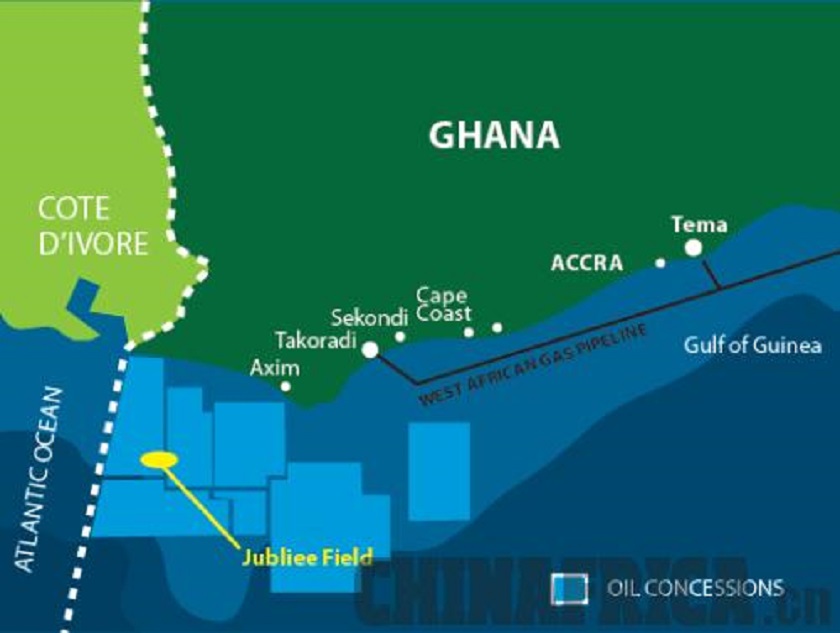
The maritime boundary dispute between Ghana and Cote d’Ivoire has been won by the former after the ruling by a Special Chamber of the International Tribunal for the Law of the Sea (ITLOS).
The tribunal adopted the boundary line claimed by Ghana, rejecting the one proposed by Côte d’Ivoire.
Ghana was represented by a team of international lawyers led by Professor Philippe Sands Q.C. of Matrix Chambers (London) and Paul Reichler of Foley Hoag LLP (Washington).
The case was widely followed because of the abundant oil and gas resources in the Gulf of Guinea off the southern coast of the two neighbouring African States.
Ghana laid claim to and began to exploit all of the deposits to the east of an equidistance line that it long considered the de facto boundary between the two States.
Côte d’Ivoire challenged Ghana’s claims and threatened to prosecute international oil companies drilling in the disputed waters. In early 2015, the two States agreed to submit the dispute for binding resolution by ITLOS.
In its ruling, the tribunal unanimously agreed with Ghana that the boundary should follow an equidistance line, and that Ghana acted lawfully in its drilling and extractive activities on its side of that line.
The boundary that was adopted is a line extending from the coast to the southwest at an angle of 191.8 degrees. The tribunal rejected Cote d’Ivoire’s claim that the boundary should run to the southeast along an angle of 168.7 degrees.
Over 9,000 square nautical miles of sea and seabed were disputed. All were awarded to Ghana. These include the oil and gas fields known as TEN (Tweneboa, Enyenra and Ntomme) which are estimated to hold 2 billion barrels of oil and 1.2 trillion cubic feet of natural gas.
In addition to Sands and Reichler, Ghana’s legal team included Foley Hoag attorneys Clara Brillembourg, Tafadzwa Pasipanodya, Nicholas Renzler and Alejandra Torres Camprubí; Alison Macdonald Q.C. (Matrix Chambers); Anjolie Singh; Professor Pierre Klein (UniversitéLibre de Bruxelles); Daniel Alexander Q.C. (8 New Square Chambers); and FuiTsikata (Reindorf Chambers – Accra). Ghana’s Agent was Attorney-General Gloria Afua-Akuffo.
“The final boundary line was a 100 percent victory for Ghana, which is very rare in maritime delimitation cases,” Reichler said.
Brands/Products
Odekina Leaves UBA for AEDC to Head Corporate Communications Department
By Aduragbemi Omiyale
One of the foremost Public Relations practitioners in Nigeria, Mr Omede Odekina, has joined the Abuja Electric Distribution Company (AEDC).
He is now on the payroll of the energy firm as the Head of Brand Marketing and Corporate Communications Department after leaving the United Bank for Africa (UBA) Plc.
The Kogi State University graduate will use his experience as a media relations expert to sell the image of the electricity organization.
In an announcement via his LinkedIn page, Mr Odekina described his movement from the banking space to the energy industry as the “beginning of an exciting new chapter and a unique opportunity to help shape how one of Nigeria’s most critical service organisations engages with its customers and communities.”
He thanked UBA for providing him with the platform to grow his career, describing the lender as “truly one of the best places to work.”
According to him, “UBA was more than a workplace; it was a family. The culture, leadership, and people created an environment of excellence, trust, and continuous growth. I leave deeply appreciative of the journey, the friendships, and the values that will remain with me always.”
The Associate of the Nigerian Institute of Public Relations (NIPR) disclosed that in his new role, “my focus is firmly on positioning Abuja Electricity Distribution Plc as Nigeria’s number one electricity distribution company, one that delivers reliable service with professionalism, respect, transparency, and a strong sense of community partnership.”
“It is a responsibility I embrace with enthusiasm, purpose, and optimism for what lies ahead,” he said further.
Brands/Products
Reputation Economy: How Nigerian Brands Won and Lost Public Trust in 2025
Nigeria’s leading independent media intelligence consultancy, P+ Measurement Services, has released its 2025 Industry Media Reputation Report, revealing that corporate reputation has emerged as one of the most decisive assets for Nigerian companies, rivaling financial performance and market share in shaping public trust.
The report analysed and audited thousands of print and online news reports published in 2025 across the banking, insurance, telecommunications, and e-hailing sectors. In total, coverage of 29 commercial banks, 13 insurance companies, five e-hailing platforms, and four telecommunications operators was examined to determine how corporate actions translated into public perception.
According to the findings, rising operational costs, currency pressures, regulatory scrutiny, labour relations, and service reliability now directly influence how brands are judged in the media and by stakeholders.
“Reputation is no longer a soft outcome of publicity. It is a measurable business asset shaped by corporate behaviour, governance quality, customer experience, and crisis response,” said a Senior Analyst at P+ Measurement Services, Ms Tumininu Balogun.
She added, “For more than a decade, we have been at the forefront of media intelligence in Nigeria. Our commitment to the PR and communications industry is to ensure that reliable media data and actionable insight are always available, so professionals can move beyond intuition and make truly data-driven decisions.”
E-Hailing Industry: Driver Relations Reshaped Corporate Reputation
The e-hailing sector recorded one of the clearest shifts in reputation dynamics in 2025, driven largely by labour policies and platform economics.
inDrive Nigeria led the sector with 39% of positive reputation share, following extensive media coverage of its decision to reduce driver commission to 0.1% during peak hours in Abuja. Bolt Nigeria followed with 32%, supported by reports on its electric tricycle deployment in Lagos. LagRide recorded 17%, driven by coverage of its electric vehicle infrastructure partnership, while Uber Nigeria accounted for 11% and Rida 1%.
On the negative reputation scale, Bolt recorded the highest share at 40%, linked to driver protests following fare reduction policies. Uber accounted for 29%, inDrive 20%, LagRide 8%, and Rida 3%, largely associated with reports on strike threats, platform reliability concerns, and driver earnings disputes.
The report notes that how platforms treat drivers has become as influential to reputation as rider experience.
Banking Industry: Profitability Confronted by Governance Risk
Among commercial banks, Stanbic IBTC recorded the strongest positive reputation position at 26%, driven by recognition as KPMG’s top retail bank. Zenith Bank followed with 22%, supported by dividend payout coverage. Fidelity Bank (19%), UBA (17%), and FirstBank (16%) gained positive reputation visibility through education initiatives, digital service upgrades, and branch automation projects.
However, reputational exposure remained significant. GTCO recorded the highest negative reputation share at 28%, followed by FirstBank at 26%, FCMB at 18%, and both UBA and Ecobank at 14%, mainly due to media reports concerning legal disputes, fraud investigations, and customer-related controversies.
The report highlights that in the banking sector, strong earnings and digital innovation strengthen reputation, but governance failures can rapidly undermine it.
Insurance Industry: Financial Stability and Data Protection Define Trust
In the insurance sector, AXA Mansard led positive reputation share with 36%, followed by Leadway Assurance (29%), AIICO (16%), NEM Insurance (11%), and SanlamAllianz (8%).
AXA Mansard also accounted for the highest negative reputation exposure at 68%, driven by reports of a significant decline in pre-tax profit. AIICO recorded 18%, Leadway 12%, and NEM 2%, largely connected to regulatory matters and data protection concerns, including coverage of customer data breaches.
The findings indicate that insurers are now judged as much by financial resilience and cybersecurity posture as by product offerings.
Telecommunications Industry: Infrastructure Investment Meets Rising Public Expectations
MTN Nigeria led positive reputation share with 47%, driven by infrastructure expansion narratives and innovation campaigns. Glo followed with 28%, Airtel Nigeria with 16%, and T2 (formerly 9mobile) with 9%, largely supported by its rebranding coverage.
On the negative reputation side, MTN recorded 44%, T2 31%, Glo 13%, and Airtel 12%, influenced by reports on service quality challenges and the Nigeria Labour Congress boycott directive targeting telecommunications operators.
The sector’s results suggest that while capital investment enhances visibility, network reliability and customer experience increasingly determine long-term reputation.
Reputation Has Become a Strategic Business Asset
Across all four industries, the report finds a consistent pattern: reputation in 2025 closely followed corporate behaviour.
Brands that demonstrated transparency, operational fairness, financial discipline, digital reliability, and customer focus were more likely to build positive public trust. Companies facing labour unrest, legal disputes, regulatory sanctions, data breaches, or service disruptions saw these issues rapidly reflected in their reputation profile.
For brand owners, investors, regulators, and communication professionals, the implication is clear: reputation is no longer managed only through messaging, but through measurable actions that are permanently recorded in the media ecosystem and searchable online.
Brands/Products
Nigeria Must Accelerate Adoption of Renewable Energy Solutions—JMG
By Modupe Gbadeyanka
A leading provider of integrated electromechanical solutions in Nigeria, JMG Limited, recently showcased real-world impact of its solar and hybrid energy solutions across key sectors of the economy to members of the media.
At the media tour held at JMG’s head office in Lagos, the Chief Commercial Officer of JMG, Mr Rabih Jammal, stressed the urgent need for Nigeria to accelerate its adoption of renewable energy solutions.
“Clean energy is no longer a future concept – it is happening now – and it is working. At JMG, we are not just advocating for renewables; we are delivering them.
“From our 150-kilowatt solar installation at our Victoria Island head office to multiple large-scale deployments nationwide, we have proven that clean energy works technically, commercially and financially,” he said at the event hosted to commemorate the International Day of Clean Energy.
According to him, JMG’s solar and hybrid projects have helped clients save millions of naira in diesel costs, improve energy reliability and significantly reduce carbon emissions.
“As more countries move toward sustainable solutions, clean energy has become an economic imperative for Nigeria. It enhances competitiveness, lowers operating costs and enables communities. This is only the beginning as we will continue to invest in solar solutions, technology, partnerships and people to scale clean energy across the country,” he added.
Also speaking, the Head of Marketing at JMG, Ms Oluwatomi Faniran, described clean energy as a core responsibility embedded in the company’s business strategy.
“At JMG, clean energy is more than technology; it is a responsibility. Our track record speaks for itself,” Ms Faniran said, highlighting the successful deployment of solar hybrid systems at NIPCO fuel stations, the powering of a government state house, and energy-efficient solutions delivered at facilities such as Nourdm Global and Rack Centre.
With decades of experience delivering solutions that enhance comfort, safety and efficiency across residential, commercial and industrial spaces, JMG operates across critical business units including conventional and renewable power, electrical infrastructure, HVAC systems, elevators and escalators, air compressors and energy-efficient technologies. Its operations are backed by internationally recognised ISO certifications in quality management, health and safety, and environmental sustainability.
-
Feature/OPED6 years agoDavos was Different this year
-
Travel/Tourism9 years ago
Lagos Seals Western Lodge Hotel In Ikorodu
-
Showbiz3 years agoEstranged Lover Releases Videos of Empress Njamah Bathing
-
Banking8 years agoSort Codes of GTBank Branches in Nigeria
-
Economy3 years agoSubsidy Removal: CNG at N130 Per Litre Cheaper Than Petrol—IPMAN
-
Banking3 years agoSort Codes of UBA Branches in Nigeria
-
Banking3 years agoFirst Bank Announces Planned Downtime
-
Sports3 years agoHighest Paid Nigerian Footballer – How Much Do Nigerian Footballers Earn