

Health
Will Nigerian Senate Get it Right on Healthcare?


By Carl Ndukwe
The timeless aphorism says that health is wealth yet one of the biggest challenges facing Nigeria since independence has been the country’s inability to guarantee affordable and universal health care to its citizens.
Little wonder we are consistently ranked in the comity of poor nations. Access to healthcare is not only important, it is fundamental to all areas of social development, from combating poverty to achieving a high standard of living.
In May 2017, the Nigeria Academy of Pharmacy in partnership with the Pharmaceutical Society of Nigeria organized a symposium in Lagos, tagged Health of the Nation – the imperative of Interprofessional collaboration. The keynote address delivered by Prof. Eyitayo Lambo, a former Minister of Health and foremost health economist was revealing and damning.
Nigeria, said Lambo, was ranked 187 among 191 countries by World Health Organization in 2000.
X-raying the sundry challenges which the nation’s health system has had to face over the years, Lambo noted that the constitution makes very scant provision for health while there is hardly any legislation that defines the roles and responsibilities of the three tiers of government, while adding that the National Health Act 2014 has not resolved the problem.
In Nigeria today, demands on the health care systems have increased alarmingly and health care organizations are feeling overwhelmed and pressured to provide more timely services while at the same time working with limited human and financial resources. There is an urgent need to strengthen national health systems and improve health outcomes for the citizenry.
According to data from the National Demographic Health Surveys (NDHS), in a research conducted by the National Bureau of Statistics, about 900,000 children and mothers die each year in Nigeria from health reasons that could often have been successfully resolved with an effective healthcare system.
Nigeria contributes just under 15 percent of all maternal deaths globally and about 13 percent of all under-five deaths worldwide. If we are to challenge these grim statistics, then we must get good healthcare into every home.
Along these lines, the weakness and gaping holes in our health system especially from an insurance point of view is evidently manifest in the rise of crowd-funded medical cases.
Remember Mayowa of blessed memory, Baby Ade and most recently, Sadiq Daba as well as the many other Nigerians who have resorted to platforms like Gofundme to raise funds for medical reasons. While Nigeria has several private healthcare providers, their service, expensive and limited, are largely exclusive to the well-to-do citizens residing in the cities and urban areas.
The National Health Insurance Scheme, which largely caters to public service employees, is also, as currently constituted, very limited in scope. Neither existing solutions can cater to the healthcare needs of the majority of Nigerians, who are either rural dwellers, unemployed or involved in the informal sector. In view of the aforementioned, the importance of reforming our healthcare system cannot be overemphasized.
Fortunately, it would seem that the need to get our Healthcare system right is fast rising on our list of national priorities and gaining attention in the right quarters. With our population growing astronomically, urbanization more rapid than ever, there is now a greater call for social development to catch up with societal expansion.
It, therefore, gladdens the heart to see some level of advocacy in the National Assembly where senators are tabling bills and debating ideas on how to get an efficient and effective healthcare system for every Nigerian.
Recently, Senate President, Bukola Saraki stated that one of the best ways to achieve Universal Health Coverage was to provide health insurance scheme to the informal sector.
Perhaps, he is drawing from his experience as the Governor of Kwara State, when he introduced the Informal Health Insurance Scheme to cater to people in the rural areas.
To see Saraki leading the charge and leading his colleagues in the upper chambers with the same drive and determination to see healthcare extended to every man, woman and child who is Nigerian is a clean break from the selfish toga with which the Red chamber had been adorned.
The ongoing amendment of the National Health Insurance Scheme is evidence of moving from passion to action. Central to this bill, which seeks to repeal the National Health Insurance Scheme Act and enact the National Health Insurance Commission Bill 2017, is the need to ensure a more effective implementation of a health insurance policy that enhances greater access to health care services for all Nigerians.
This means that the bill would lay down the framework for a universal healthcare care system where everyone pays into the Insurance Scheme and everyone gets quality healthcare delivery, regardless of their employment status or personal wealth. The bill is also geared towards effectively regulating private health insurance providers in Nigeria to ensure that they deliver, not just for the well to do, but also the poor and people in rural areas.
In December, the Senate Committee on Health held a public hearing on the amendment, which was well attended by the representatives of public and private health institutions, regulatory and professional bodies as well as labour and trade unions.
At the public hearing, the Senate Committee Chairman on Health, Senator Olanrewaju Tejuoso disclosed that in order to ensure that Nigeria attains the Universal Health Coverage (UHC), the Senate had passed a resolution mandating the Appropriation Committee of the Senate to make provision for the Basic Health Care Provision Fund (BHCPF) in the 2018 budget.
This is a crucial step toward achieving the objective of the National Health Act, signed into law in 2014, which stipulated that one percent consolidated fund for the improvement of Primary Health Care (PHC) services through the Basic Health Care Provision Fund (BHCPF). This consolidated fund means that in addition to what it gets from the annual budget, healthcare would also gain more financing go forward.
Going forward to achieve Universal Healthcare will never be an easy road, but staying on our current path is much worse. This is why we all as Nigerians must follow and actively support the Senate’s resolution, passed last year, to implement the Basic Health Care Provision Fund.
At the heart of this resolution is the fundamental principle that to achieve a healthy, and thereby prosperous, society, we need cross subsidization and solidarity in healthcare, whereby the rich support the poor, the well support the sick and the haves support the haves not. Senate bills, acts and resolutions cannot on their own bring these principles to life, they need the active support and buy-in of the general public.
Carl Ndukwe is an Abuja based communications professional.



By Adedapo Adesanya
The National Health Insurance Authority (NHIA) says the number of Nigerians enrolled in health insurance has risen to more than 22 million.
The Director-General of NHIA, Mr Kelechi Ohiri, said this resulted from the implementation of the mandatory health insurance, which has gained momentum nationwide.
He said this on Wednesday at the Annual General Meeting of the Nigerian Association of Insurance and Pension Editors (NAIPE) in Lagos.
Mr Ohiri said enrolment had increased to 22.03 million, representing a 35 per cent year-on-year growth, attributing this to stronger collaboration with state social health insurance agencies, ministries, departments and agencies, organised labour, employers, the private sector, and the gradual implementation of the mandatory health insurance provisions of the NHIA Act.
He said that the country had moved beyond policy formulation to delivering measurable improvements in healthcare access, service quality and consumer protection in line with the federal government’s health sector reform agenda.
According to him, Nigeria already has the necessary policies and legislation to achieve Universal Health Coverage, positing that the key challenge was effective implementation.
“The decisive variable is now implementation- consistent, rigorous and accountable execution that converts political commitment into healthcare access for real Nigerians,” he said.
Mr Ohiri said that the transition from the former National Health Insurance Scheme to the NHIA had strengthened regulation, consumer protection, accountability and strategic purchasing, while providing the legal and operational framework for achieving Universal Health Coverage.
He added that improving the experience of enrollees remained central to the Authority’s reform agenda.
According to him, NHIA has strengthened its complaints management system, introduced faster resolution timelines, and intensified compliance monitoring of Health Maintenance Organisations (HMOs) and healthcare providers.
He further added that NHIA had sanctioned facilities that failed to meet the required standards, adding that his organisation had resolved 3,878 complaints, representing an 87 per cent resolution rate, while 95 per cent of the cases were concluded within prescribed timelines.
Mr Ohiri noted that more than N14.2 million had been refunded to enrollees, while non-compliant healthcare facilities had been sanctioned.
He said NHIA had also introduced service standards, including a one-hour treatment commencement target for enrollees requiring urgent care, to improve access to timely and quality healthcare services.
The NHIA boss further disclosed that capitation payments to healthcare providers had been increased by 93 per cent.
He said fee-for-service reimbursements rose by 378 per cent to enable providers to invest more in personnel, equipment and infrastructure.
According to him, 7,592 healthcare facilities have been assessed under the SafeCare quality framework as part of efforts to institutionalise continuous quality improvement across the country.
Mr Ohiri also highlighted interventions targeted at vulnerable groups, including support for more than 48,500 pregnant women, expanded maternal and newborn healthcare services, the Vulnerable Group Fund, and improved access to healthcare for pensioners and retirees.
He said Universal Health Coverage could only be achieved if every Nigerian, regardless of income or location, had access to quality healthcare services.

By Modupe Gbadeyanka
The new one-hour authorisation response time ultimatum policy introduced by the National Health Insurance Authority (NHIA) has received the full backing of SUNU Health Nigeria Limited.
This policy was introduced by the agency to ensure enrollees get prompt approval codes to access care.
Healthcare service providers have been urged to report any Health Maintenance Organisation (HMO) that violates this initiative through an email, with the HMO in copy and a timestamp attached as evidence of the request. They may proceed to offer services to enrollees thereafter.
Speaking at the company’s second-quarter Providers’ Forum for the Lagos-Ogun region in Lagos recently, the chief executive of SUNU Health, Dr Moyosore Olomola, expressed optimism that this policy would improve healthcare delivery in the country, especially for enrollees, who crave quality service.
At the event themed Improving Quality and Access to Care Through Stronger Provider Network, and held at the Nigerian Institute of Medical Research (NIMR) in Yaba, Lagos, Mr Olomola reaffirmed the HMO’s commitment to operating within legal and operational frameworks to guarantee adequate care for enrollees.
“Access to care and quality of care remain key priorities in our healthcare systems. We know quite well that deliberate collaboration, strategic partnerships, and a shared commitment to excellence are required to achieve these priorities.
“A strong provider network is doubtless the backbone of any effective healthcare system. It ensures that our mutual enrollees receive the right care, at the right time, in the right place, and at the right price,” Mr Olomola, represented at the programme by the organisation’s Chief Operating Officer (COO), Dr Faith Nwachi, stated.
He further assured that SUNU Health would strictly adhere to the one-hour authorisation limit, stressing that this aligns seamlessly with one of the organisation’s core values—promptness and its corporate slogan, Humanity is the centre of our initiatives.
In a bid to further improve access and quality of care, SUNU Health also demonstrated its new operational software and Mobile app, aptly named SUNU Legacy.
Also speaking at the event, the NHIA Lagos State Coordinator (Ikeja), Dr Bethuel-Kasimu Abraham, noted that the forum’s expected outcome is to significantly reduce delays in accessing medical care.
Other key expectations include ensuring continuity of care, improving patient outcomes, and strengthening accountability among HMOs.
Addressing specific pain points faced by enrollees, the NHIA Ogun State Coordinator, Mr Dare Adefeso, acknowledged that the agency had received complaints regarding out-of-stock drugs and the discrimination of enrollees by certain providers.
He affirmed that the NHIA is actively addressing these issues, stressing that moving forward, every facility must ensure enrollees are properly catered to regardless of their status, provided they have an active health insurance plan.
Corroborating the long-standing legacy of SUNU Health, the Ogun State Director of the National Orientation Agency (NOA), Mrs Aishat Tiamiyu, shared that her agency is responsible for public information dissemination and has been enrolled with SUNU Health for over 25 years.
Commending the HMO’s stellar service over two decades, she called for the immediate enrollment of new NOA staff into the scheme.
The Providers’ Forum remains one of the strategic channels employed by SUNU Health to consistently engage healthcare providers, understand their operational challenges, introduce new software updates, and solidify partnerships aimed at fostering premium healthcare delivery across Nigeria.

By Aduragbemi Omiyale
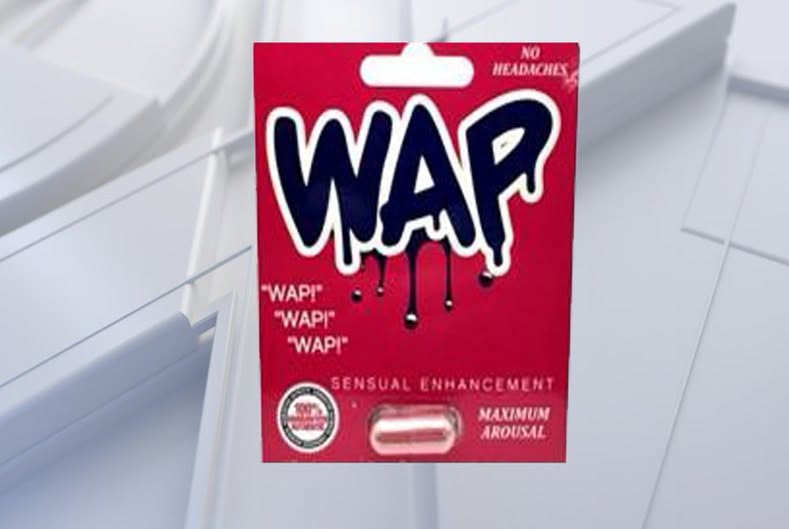
The National Agency for Food and Drug Administration and Control (NAFDAC) has announced the recall of a sexual enhancement product known as WAP Sensual Enhancement Capsules.
In a statement on Monday, the Nigerian agency disclosed that the recall is due to “undeclared pharmaceutical ingredients” in the product, whose country of origin is unknown, but is marketed and distributed online in the US through eBay.
It was emphasised that the recall is being “voluntarily” made by the manufacturer, Best Supplements Best Prices Company.
The detection of the undeclared pharmaceutical ingredients was made by the US Food and Drug Administration (FDA).
Laboratory analysis by the US FDA revealed that the product contained undeclared sildenafil, tadalafil, and flibanserin, which were not mentioned on the product label. Such substances may include phosphodiesterase type-5 (PDE-5) inhibitors or related compounds commonly used for the treatment of erectile dysfunction, the statement by NAFDAC stated.
Sildenafil and tadalafil are ingredients in FDA-approved prescription drugs used to treat erectile dysfunction.
It was noted that these undeclared ingredients may interact with nitrates found in some prescription drugs, such as nitroglycerin, and may lower blood pressure to dangerous levels. Consumers with diabetes, high blood pressure, high cholesterol, or heart disease often take nitrates.
Flibanserin is the active ingredient in an FDA-approved prescription drug used to treat low sexual desire in women. Flibanserin can cause drowsiness, sedation, dangerously low blood pressure, and fainting, especially when combined with alcohol.
Consumers have been encouraged to report compromised products (medicines or medical devices) to the nearest NAFDAC office, call 0800-162-3322, or send an email to sf******@********ov.ng.
