World
UN Raises Fears Over Human Rights in Mali
By Dipo Olowookere
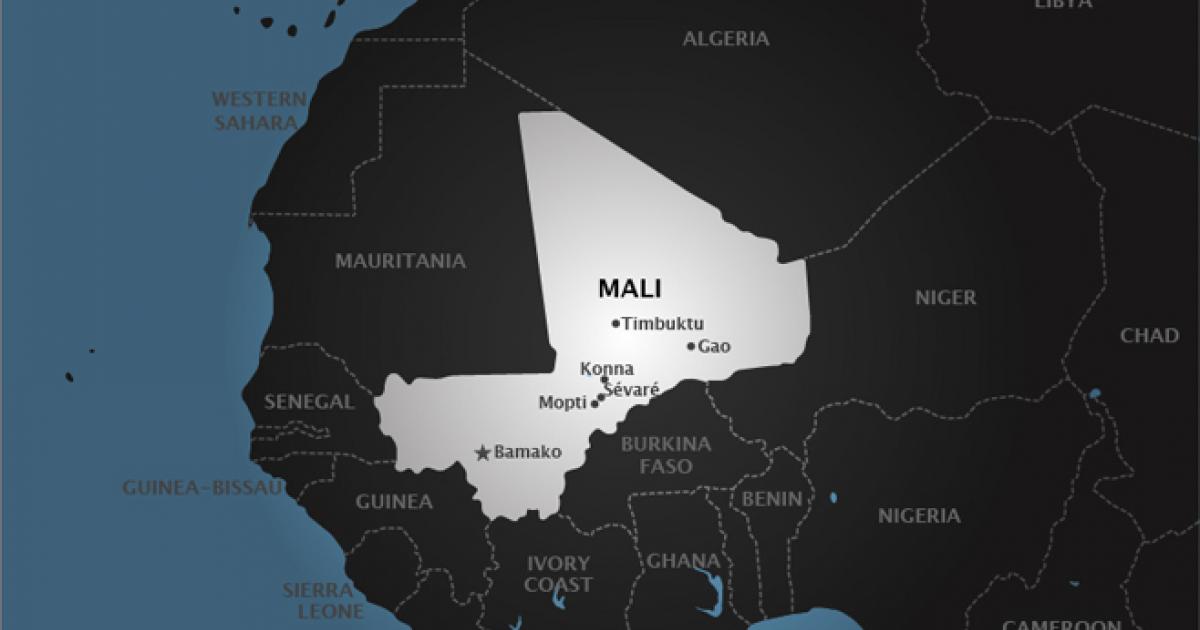
Despite the signing of a 2015 Peace Agreement, the human rights situation in Mali still remains a concern, according to a United Nations report published on Thursday.
It found that more than 600 cases of human rights violations and abuses were committed between January 2016 and June 2017: an interim period established under the peace deal aimed at laying the foundations for a democratic and unified country.
“This report provides useful insights on the challenges and progress in the human rights situation in northern and central Mali,” said Mahamat Saleh Annadif, Special Representative of the UN Secretary-General and Head of the UN Multidimensional Integrated Stabilization Mission in Mali (MINUSMA), which issued the report together with the Office of the High Commissioner for Human Rights (OHCHR).
“It also demonstrates that respect for human rights, far from being a generator of tension, may contribute, on the contrary, to creating an environment that is conducive to the implementation of the Peace Agreement.”
The Agreement on Peace and Reconciliation in Mali signed by the authorities, a rebel alliance from the north and a pro-government armed coalition, was finalized in June 2015.
The UN study showed that more than 800 other incidents involving unidentified armed elements and which put the lives of civilians at risk also took place during the reporting period.
Overall, these acts of violence impacted more than 2,700 victims, the majority of whom were men and children.
They include 441 individuals who were killed.
Nearly 80 per cent of violations, abuses and other incidents that put civilians at risk involved armed movements that were signatories to the Peace Agreement, those which had not signed it, or unidentified armed elements.
Perpetrators also included elements affiliated with Al Qaida in the Islamic Maghreb (AQIM), Ansar Dine and other similar groups.
Meanwhile, the Malian defence and security forces, and other state actors, were involved in 20 per cent of the cases, while international forces, including MINUSMA, were involved in two per cent.
The report said primary factors which led to the violations include confrontations between signatory armed groups in the Kidal region, the expansion of activities of AQIM, Ansar Dine and other similar groups, and increasing armed robberies and other violent crime in the central regions of the country, as well as counter-terrorism operations conducted by the state.
World
Today’s Generation of Entrepreneurs Value Flexibility, Autonomy—McNeal-Weary
By Kestér Kenn Klomegâh
The Young African Leaders Initiative (YALI) is the United States’ signature step to invest in the next generation of African leaders. Since its establishment in 2010 by Obama administration, YALI has offered diverse opportunities, including academic training in leadership, governance skills, organizational development and entrepreneurship, and has connected with thousands of young leaders across Africa. This United States’ policy collaboration benefits both America and Africa by creating stronger partnerships, enhancing mutual prosperity, and ensuring a more stable environment.
In our conversation, Tonya McNeal-Weary, Managing Director at IBS Global Consulting, Inc., Global Headquarters in Detroit, Michigan, has endeavored to discuss, thoroughly, today’s generation of entrepreneurs and also building partnerships as a foundation for driving positive change and innovation in the global marketplace. Here are the excerpts of her conversation:
How would you describe today’s generation of entrepreneurs?
I would describe today’s generation of entrepreneurs as having a digital-first mindset and a fundamental belief that business success and social impact can coexist. Unlike the entrepreneurs before them, they’ve grown up with the internet as a given, enabling them to build global businesses from their laptops and think beyond geographic constraints from day one. They value flexibility and autonomy, often rejecting traditional corporate ladders in favor of building something meaningful on their own terms, even if it means embracing uncertainty and financial risk that previous generations might have avoided.
And those representing the Young African Leaders Initiative, who attended your webinar presentation late January 2026?
The entrepreneurs representing the Young African Leaders Initiative are redefining entrepreneurship on the continent by leveraging their unique perspectives, cultural heritage, and experiences. Their ability to innovate within local contexts while connecting to global opportunities exemplifies how the new wave of entrepreneurs is not confined by geography or conventional expectations.
What were the main issues that formed your ‘lecture’ with them, Young African Leaders Initiative?
The main issues that formed my lecture for the Young African Leaders Initiative were driven by understanding the importance of building successful partnerships when expanding into the United States or any foreign market. During my lecture, I emphasized that forming strategic alliances can help entrepreneurs navigate unfamiliar business environments, access new resources, and foster long-term growth. By understanding how to establish strong and effective partnerships, emerging leaders can position their businesses for sustainable success in global markets. I also discussed the critical factors that contribute to successful partnerships, such as establishing clear communication channels, aligning on shared goals, and cultivating trust between all parties involved. Entrepreneurs must be proactive in seeking out partners who complement their strengths and fill gaps in expertise or resources. It is equally important to conduct thorough due diligence to ensure that potential collaborators share similar values and ethical standards. Ultimately, the seminar aimed to empower YALI entrepreneurs with practical insights and actionable strategies for forging meaningful connections across borders. Building successful partnerships is not only a pathway to business growth but also a foundation for driving positive change and innovation in the global marketplace.
What makes a ‘leader’ today, particularly, in the context of the emerging global business architecture?
In my opinion, a leader in today’s emerging global business architecture must navigate complexity and ambiguity with a fundamentally different skill set than what was previously required. Where traditional leadership emphasized command-and-control and singular vision, contemporary leaders succeed through adaptive thinking and collaborative influence across decentralized networks. Furthermore, emotional intelligence has evolved from a soft skill to a strategic imperative. Today, the effective modern leader must possess deep cross-cultural intelligence, understanding that global business is no longer about exporting one model worldwide but about genuinely integrating diverse perspectives and adapting to local contexts while maintaining coherent values.
Does multinational culture play in its (leadership) formation?
I believe multinational culture plays a profound and arguably essential role in forming the kind of leadership required in today’s global business environment. Leaders who have lived, worked, or deeply engaged across multiple cultural contexts develop a cognitive flexibility that’s difficult to replicate through reading or training alone. More importantly, multinational exposure tends to dismantle the unconscious certainty that one’s own way of doing things is inherently “normal” or “best.” Leaders shaped in multicultural environments often develop a productive discomfort with absolutes; they become more adept at asking questions, seeking input, and recognizing blind spots. This humility and curiosity become strategic assets when building global teams, entering new markets, or navigating geopolitical complexity. However, it’s worth noting that multinational experience alone doesn’t automatically create great leaders. What matters is the depth and quality of cross-cultural engagement, not just the passport stamps. The formation of global leadership is less about where someone has been and more about whether they’ve developed the capacity to see beyond their own cultural lens and genuinely value differences as a source of insight rather than merely tolerating them as an obstacle to overcome.
In the context of heightening geopolitical situation, and with Africa, what would you say, in terms of, people-to-people interaction?
People-to-people interaction is critically important in the African business context, particularly as geopolitical competition intensifies on the continent. In this crowded and often transactional landscape, the depth and authenticity of human relationships can determine whether a business venture succeeds or fails. I spoke on this during my presentation. When business leaders take the time for face-to-face meetings, invest in understanding local priorities rather than imposing external agendas, and build relationships beyond the immediate transaction, they signal a different kind of partnership. The heightened geopolitical situation actually makes this human dimension more vital, not less. As competition increases and narratives clash about whose model of development is best, the businesses and nations that succeed in Africa will likely be those that invest in relationships characterized by reciprocity, respect, and long-term commitment rather than those pursuing quick wins.
How important is it for creating public perception and approach to today’s business?
Interaction between individuals is crucial for shaping public perception, as it influences views in ways that formal communications cannot. We live in a society where word-of-mouth, community networks, and social trust areincredibly important. As a result, a business leader’s behavior in personal interactions, their respect for local customs, their willingness to listen, and their follow-through on commitments have a far-reaching impact that extends well beyond the immediate meeting. The geopolitical dimension amplifies this importance because African nations now have choices. They’re no longer dependent on any single partner and can compare approaches to business.
From the above discussions, how would you describe global business in relation to Africa? Is it directed at creating diverse import dependency?
While it would be too simplistic to say global business is uniformly directed at creating import dependency, the structural patterns that have emerged often produce exactly that outcome, whether by design or as a consequence of how global capital seeks returns. Global financial institutions and trade agreements have historically encouraged African nations to focus on their “comparative advantages” in primary commodities rather than industrial development. The critical question is whether global business can engage with Africa in ways that build productive capacity, transfer technology, develop local talent, and enable countries to manufacture for themselves and for export—or whether the economic incentives and power irregularities make this structurally unlikely without deliberate policy intervention.
World
Russia Expands Military-Technical Cooperation With African Partners
By Kestér Kenn Klomegâh
Despite geopolitical complexities, tensions and pressure, Russia’s military arms and weaponry sales earned approximately $15 billion at the closure of 2025, according to Kremlin report. At the regular session, chaired by Russian President Vladimir Putin on Jan. 30, the Commission on Military and Technical Cooperation with Foreign Countries analyzed the results of its work for 2025, and defined plans for the future.
It was noted that the system of military-technical cooperation continued to operate in difficult conditions, and with increased pressure from the Western countries to block business relations with Russia. The meeting, however, admitted that export contracts have generally performed sustainably. Russian military products were exported to more than 30 countries last year, and the amount of foreign exchange exceeded $15 billion.
Such results provide an additional opportunity to direct funds to the modernization of OPC enterprises, to the expansion of their production capacities, and to advanced research. It is also important that at these enterprises a significant volume of products is civilian products.
The Russian system of military-technical cooperation has not only demonstrated effectiveness and high resilience, but has created fundamental structures, which allow to significantly expand the “geography” of supplies of products of military purpose and, thus strengthen the position of Russia’s leader and employer advanced weapons systems – proven, tested in real combat conditions.
Thanks to the employees of the Federal Service for Military Technical Cooperation and Rosoboronexport, the staff of OPC enterprises for their good faith. Within the framework of the new federal project “Development of military-technical cooperation of Russia with foreign countries” for the period 2026-2028, additional measures of support are introduced. Further effective use of existing financial and other support mechanisms and instruments is extremely important because the volumes of military exports in accordance with the 2026 plan.
Special attention would be paid to the expansion of military-technological cooperation and partnerships, with 14 states already implementing or in development more than 340 such projects.
Future plans will allow to improve the characteristics of existing weapons and equipment and to develop new promising models, including those in demand on global markets, among other issues – the development of strategic areas of military-technical cooperation, and above all, with partners on the CIS and the CSTO. This is one of the priority tasks to strengthen both bilateral and multilateral relations, ensuring stability and security in Eurasia.
From January 2026, Russia chairs the CSTO, and this requires working systematically with partners, including comprehensive approaches to expanding military-technical relations. New prospects open up for deepening military-technical cooperation and with countries in other regions, including with states on the African continent. Russia has been historically strong and trusting relationships with African countries. In different years even the USSR, and then Russia supplied African countries with a significant amount of weapons and military equipment, trained specialists on their production, operation, repair, as well as military personnel.
Today, despite pressure from the West, African partners express readiness to expand relations with Russia in the military and military-technical fields. It is not only about increasing supplies of Russian military exports, but also about the purchase of other weapons, other materials and products. Russia has undertaken comprehensive maintenance of previously delivered equipment, organization of licensed production of Russian military products and some other important issues. In general, African countries are sufficient for consideration today.
World
Trump Picks Kevin Warsh to Succeed Jerome Powell as Federal Reserve Chair
By Adedapo Adesanya
President Donald Trump has named Mr Kevin Warsh as the successor to Mr Jerome Powell as the Federal Reserve chair, ending a prolonged odyssey that has seen unprecedented turmoil around the central bank.
The decision culminates a process that officially began last summer but started much earlier than that, with President Trump launching a criticism against the Powell-led US central bank almost since he took the job in 2018.
“I have known Kevin for a long period of time, and have no doubt that he will go down as one of the GREAT Fed Chairmen, maybe the best,” Mr Trump said in a Truth Social post announcing the selection.
US analysts noted that the 55-year old appear not to ripple market because of his previous experience at the apex bank as Governor, with others saying he wouldn’t always do the bidding of the American president.
If approved by the US Senate, Mr Warsh will take over the position in May, when Mr Powell’s term expires.
Despite having argued for reductions recently, “Warsh has a long hawkish history that markets have not forgotten,” one analyst told Bloomberg.
President Trump has castigated Mr Powell for not lowering interest rates more quickly. His administration also launched a criminal investigation of Powell and the Federal Reserve earlier this month, which led Mr Powell to issue an extraordinary rebuke of President Trump’s efforts to politicize the independent central bank.
-
Feature/OPED6 years agoDavos was Different this year
-
Travel/Tourism9 years ago
Lagos Seals Western Lodge Hotel In Ikorodu
-
Showbiz3 years agoEstranged Lover Releases Videos of Empress Njamah Bathing
-
Banking8 years agoSort Codes of GTBank Branches in Nigeria
-
Economy3 years agoSubsidy Removal: CNG at N130 Per Litre Cheaper Than Petrol—IPMAN
-
Banking3 years agoSort Codes of UBA Branches in Nigeria
-
Banking3 years agoFirst Bank Announces Planned Downtime
-
Sports3 years agoHighest Paid Nigerian Footballer – How Much Do Nigerian Footballers Earn