Banking
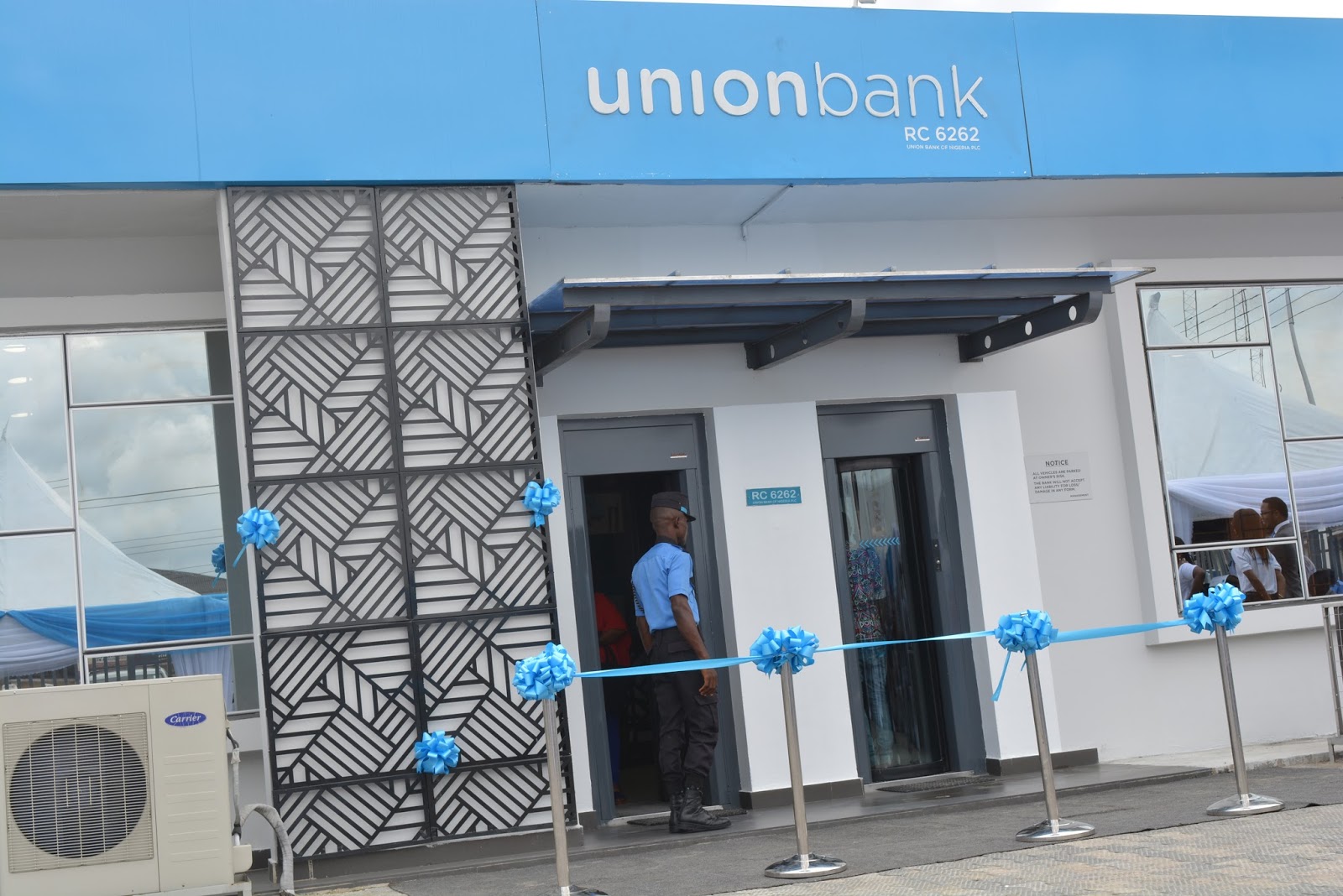
Union Bank Asset Quality Significantly Weak—Fitch
By Dipo Olowookere
Foremost rating agency, Fitch Ratings, has disclosed that its assessment has shown significant weakness in Union Bank’s asset quality measures.
Fitch made this known in a statement issued last week, where it announced affirming Union Bank of Nigeria Plc’s Long-Term Issuer Default Rating (IDR) at ‘B-‘ with stable outlook.
In the statement, the rating firm said it also affirmed the bank’s Viability Rating (VR) at ‘b-‘ and Support Rating at ‘5’.
It said the Nigerian lender, which has a market share of about 4 percent, has IDRs, driven by its standalone creditworthiness, as defined by the VR, that are constrained by Nigeria’s operating environment and factor in a high impaired loans ratio, some weakness in loan loss reserve cover, which puts pressure on capital adequacy and performance metrics which, although improving, are still impacted by high loan impairment charges.
However, it noted that risk appetite is now lower and management was focusing on loan restructuring and recoveries.
Fitch said in Union Bank’s well-established brand helps to attract cheap retail deposits that make up 60 percent of its deposit funding.
It added that corporate lending represents around 70 percent of loans but Union Bank’s strategy is to establish itself as a leading mid-tier bank in Nigeria, developing deeper customer relationships particularly in the corporate and SME segments, and ultimately expand its retail lending capabilities.
This expansion is likely to be supported by shareholders, particularly Atlas Mara Limited, which owns around 21 percent of the bank, a financial company whose primary goal is to support retail banking across the African continent, the rating agency said.
During the initial years under new ownership (2011- 2015), risk appetite at Union Bank was high, Fitch pointed out, stressing that this resulted into a loan portfolio that is highly concentrated on the oil sector (38 percent of loans).
“Our assessment shows significant weakness in asset quality measures. Impaired loans represent around 9% -10% of gross loans.
In addition, the bank has a high level of non-performing and restructured loans not captured in the impaired loan ratio.
Loan loss reserve cover, at around 80% of impaired loans, exposes the bank to unexpected losses even after factoring in the availability of collateral for some large impaired loans,” Fitch said in the statement obtained by Business Post.
It said the lender’s management’s focus on recoveries and loan restructuring is showing positive initial signs but the sustainability of these trends will be assessed over time.
Union Bank’s margins compare favourably with peers’ and overall operating profit metrics are broadly in line with peers’. Operating profit reflects some pressure on efficiency ratios impacted by the cost of maintaining a large branch network and the impact of inflation, it said further.
Fitch noted that Union Bank’s funding profile is improving, pointing out that customer deposits are growing steadily, reliance on interbank deposits is declining and all public sector deposits have been repaid, in line with local requirements.
It further said Union Bank’s foreign currency (FC) liquidity position was tight in 2016 and, along with several Nigerian peers, and the bank restructured some trade finance obligations with international correspondent banks.
“These are being repaid in line with restructured terms, but our assessment is that the bank’s FC liquidity position remains tight. The bank’s history of accessing term FC funding under new management is limited to a small number of counterparts,” it said.
Fitch said in the statement that given asset quality challenges, capital ratios have become strained.
It pointed out that Union Bank raised N49.7 billion of Tier 1 capital in 4Q17 and it believes that prudential capital shortfalls have been addressed.
“However, capital levels may still not be commensurate with risk despite the capital injection, largely because unreserved impaired and non-performing loans still represent a high proportion of equity,” it stressed.
The statement said Union Bank’s National Ratings reflect the bank’s creditworthiness relative to the country’s best credit and to peers operating in that country.
“Fitch believes that sovereign support to Nigerian banks cannot be relied on given Nigeria’s (B+/Negative) weak ability to provide support, particularly in FC. In addition, there are no clear messages from the authorities regarding their willingness to support the banking system.
“Therefore, the Support Rating Floor of all Nigerian banks is at ‘No Floor’ and all Support Ratings are at ‘5’.
“This reflects our view that senior creditors cannot rely on receiving full and timely extraordinary support from the Nigerian sovereign if any of the banks become non-viable.
“The bank’s IDRs, National Ratings and VR are primarily sensitive to either improvements or deterioration in asset quality and capital adequacy. Given the extent of Union’s asset quality pressures, upside is limited at present,” the rating company disclosed.
Banking
S&P Forecasts 25% Credit Growth for Nigerian Banks in 2026
By Adedapo Adesanya
Nigerian banks are expected to post stronger credit growth of up to 25 per cent in 2026 while retaining positive profitability, according to a new outlook by S&P Global Ratings.
In its Nigerian Banking Outlook 2026, S&P said improved lending to key sectors of the economy alongside resilient non-interest income would help banks absorb the impact of regulatory headwinds and easing interest rates.
The ratings agency projected credit growth of between 20 and 25 per cent in 2026, driven largely by increased investments in oil and gas, agriculture and manufacturing.
It added that the outlook for lending was supported by expectations of moderating inflation and gradual monetary easing, following recent interest rate cuts by the Central Bank of Nigeria (CBN).
“We expect credit growth of about 20-25 per cent supported by investments in the oil and gas, agriculture, and manufacturing sectors. Although interest rates have started to decrease, profitability should stay resilient in 2026, supported by growth in non-interest income (NII) and lower provisions.
“We expect Nigerian banks to prove resilient and capable of preserving their profitability in 2026,” S&P said, noting that earnings would be supported by transaction driven fees, commissions and a still elevated cost of risk, even as margins come under pressure.
The ratings agency noted further that it expects nominal lending growth to remain high at about 25 per cent, supported largely by investments in the oil and gas sector, agriculture and manufacturing.
S&P said Nigerian banks would continue to benefit from rates that remain high relative to peers, supporting net interest margins while interest rates are expected to decline further in 2026.
“Although interest rates have started to decline, we expect rates to remain high relative to peers, which will continue to support banks’ net interest margins through 2026.
“We forecast the average return on equity (ROE) will normalise at 20-23 per cent in 2026 compared to 25 per cent estimated for 2025, while return on assets will decline marginally to 3.0-3.1 per cent from an estimated 3.3 per cent in 2025. Profitability will be supported by still high interest margins, growing NII, and slightly lower provisions, while capital issuance will increase the equity base leading to a lower ROE.
“Although interest rates have started to decline, we expect rates to be high relative to peers, which will continue to support the banks’ net interest margins through 2026. We forecast an average margin drop of about 50bps to 100bps in 2026, as banks’ margins will continue to benefit from higher yields on government securities and large recourse to low-cost customer deposits.”
Banking
CBN Targets Reforms to Ease Compliance Burdens on Fintech Firms
By Aduragbemi Omiyale
To ease regulatory compliance burdens on financial technology (fintech) companies, the Central Bank of Nigeria (CBN) is considering some strategic reforms through a policy known as the Single Regulatory Window.
In its 2025 Fintech Report, the central bank said this scheme will significantly reduce time-to-market for new digital financial products by streamlining licensing and supervisory processes across multiple agencies.
The CBN said there would be a shared regulatory infrastructure in form of a Compliance-as-a-Service model to cut down duplicative reporting, ease the burden on regulated fintechs, and enhance supervisory visibility.
The apex bank said it came up with this idea after being aware of some challenges stakeholders, especially operators, go through in the ecosystem.
The bank said fintech firms remain a critical leg in its financial inclusion drive in Nigeria and must be supported to expand their operations to achieve the goal.
The CBN report showed that 62.5 per cent of fintech firms lamented how regulatory timelines materially affect product rollouts, while over one-third noted that it takes more than 12 months to bring a new product to market, largely due to compliance bottlenecks.
“Stakeholders cited delays in approvals and ambiguity in regulatory guidelines as their most pressing concerns,” a part of the report disclosed.
The report recommended “exploring models for a Single Regulatory Window to simplify multi-agency compliance processes and reduce time-to-market.”
It was also suggested that to address the issues, the bank must review “approval timelines and operational guidelines.”
In addition, the central bank was advised to either review the PSB framework or introduce a dedicated digital banking licence that would enable inclusive lending under stronger prudential oversight.
“A dedicated digital bank licence may be a more effective pathway for inclusive lending than expanding the PSB mandate,” the respondents suggested.
As for digital assets, the CBN signalled a shift towards a more nuanced regulatory framework for cryptocurrency, balancing innovation with financial integrity rather than imposing blanket restrictions, as fintechs acknowledged crypto’s potential to drive cost-effective cross-border transactions and strengthen remittance channels, while also warning of risks linked to illicit flows and consumer protection.
“There was broad agreement on the need for a risk-based, activity-focused regulatory framework,” the report stated, adding that regulators must avoid equating all crypto activity with criminality, especially as many scams originate offshore.
Banking
Onafriq, PAPSS to Launch Wallet-Based Outbound Payments from Nigeria to Ghana
By Modupe Gbadeyanka
A platform to enable cross-border intra-Africa payments for individuals, merchants, and traders in Nigeria and Ghana is being designed by Onafriq Nigeria Payments Limited in partnership with the Pan-African Payment and Settlement System (PAPSS).
The platform, currently in its pilot stage, is the first wallet-based outbound payments scheme, which is fully in Naira and instant, without relying on hard currency conversion.
The parties are working together with banks and mobile money operators in the West Africa nations.
The Central Bank of Nigeria (CBN) has already approved this initiative, which will benefit small and medium enterprises (SMEs), the real engine of intra-African trade, as they will now have access to a faster, cheaper way to reach customers and suppliers across the border.
By reducing barriers to cross-border trade, the new service will allow these businesses to grow their addressable markets and activity. From December 1, this service will be fully operational for a 6-month period.
Through the partnership with PAPSS, Onafriq, which is a CBN licensed payment service provider, is supporting the operationalization of the Africa Continental Free Trade Area (AfCFTA) mandate. The mandate itself is driving tariff-free trade for the 54 member states of AfCFTA. Within the partnership itself, Onafriq provides the mobile money rails, with an ecosystem consisting of over 1 billion mobile wallets.
Meanwhile, PAPSS brings a network of over 160 commercial banks, representing an ecosystem of more than 400 million bank accounts across its 19 African countries of operation. The two partners are essentially seamlessly connecting two worlds: mobile money and banking. As a consequence, intra-African trade transactions will take place more easily and opportunities will be created.
Currently, Africa is made up of bank and mobile-led markets, with siloes often inhibiting transactions between these economies. However, this partnership will remove these boundaries. With over one billion mobile wallets and 500 million bank wallets across Africa, this partnership will allow for cross-border collaboration at scale.
This partnership builds on Onafriq and PAPSS’ existing partnership for payments into Ghana, announced earlier this year.
“Our work with PAPSS shows what collaboration at scale can unlock—seamless, secure connections between banking systems and mobile money ecosystems. This is how we open bi-directional trade corridors, reduce costs for businesses, and give African enterprises the rails they need to trade with confidence in their own currencies. The vision is continental, but it starts with practical steps like this one,” the Managing Director for Anglophone West Africa, Mxolisi Msutwana, said.
The Chief Information Officer for PAPSS, Ositadimma Ugwu, added, “Too often, African businesses and individuals see borders as roadblocks instead of opportunities. With this step, we’re challenging that mindset, giving Nigerians the ability to send value next door with the same ease as sending a text message. Our vision is simple: make Africa’s borders invisible to payments. This pilot makes that a reality, moving us closer to a continent where payments don’t pause at the border.”
-
Feature/OPED6 years agoDavos was Different this year
-
Travel/Tourism9 years ago
Lagos Seals Western Lodge Hotel In Ikorodu
-
Showbiz3 years agoEstranged Lover Releases Videos of Empress Njamah Bathing
-
Banking8 years agoSort Codes of GTBank Branches in Nigeria
-
Economy3 years agoSubsidy Removal: CNG at N130 Per Litre Cheaper Than Petrol—IPMAN
-
Banking3 years agoSort Codes of UBA Branches in Nigeria
-
Banking3 years agoFirst Bank Announces Planned Downtime
-
Sports3 years agoHighest Paid Nigerian Footballer – How Much Do Nigerian Footballers Earn