Connect with us

Economy

Sahara Power Group Backs Light Up Nigeria Energy Confab

Published

on

By Dipo Olowookere

A conference aimed to address the key issues affecting the energy sector in Nigeria and also proffer solutions to them has received the full backing of one of the key players in the sector, Sahara Power Group, a subsidiary of Sahara Group, a leading international energy conglomerate in Africa.

Tagged the Light Up Nigeria Energy Conference, the event aims to bring together experts in the field, giving them the opportunity to air their views on issues affecting the industry.

The conference, scheduled to hold on Tuesday, May 15, 2018, at the Oriental Hotel, Lagos, will focus on “Repositioning the Energy Sector for Growth.’

Expected to grace the event is Mr Tonye Cole, the Executive Director and Co-Founder of Sahara Group, who is actually the Chairperson for the confab.

Speaking ahead of the programme, Mr Cole explained that the Group’s partnership with Brandzone LLC was a reflection of its concerted collaboration with stakeholders in the power value chain, in its bid to significantly contribute to the transformation of the sector for the benefit of all Nigerians.

According to him, “We are delighted to partner with Light Up Nigeria in a dual capacity. Sahara is not just a corporate player in most of the concerned sub-sectors, we also have a social purpose to fulfil by leading the movement to ‘Light up Nigeria’ and the wider sub-Saharan African region. I fully anticipate contributing to and learning from the conversation.”

Mr Cole reiterated the need for the Energy sector to position itself to play a more dominant role as a development and growth catalyst for the economy, while expressing optimism that the 2018 conference will definitely offer valuable insights in addressing the challenges, reveal more opportunities and innovative approach to achieving efficiency in the sector.”

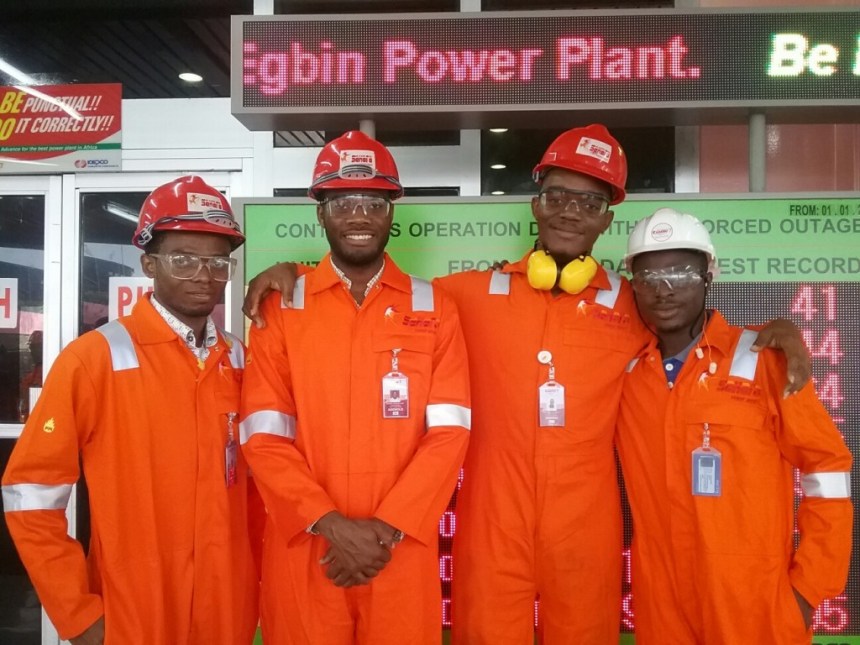
Speaking further to the glaring ‘resource to capacity’ deficit blighting the country, Group Managing Director of Sahara Power Group Limited and Chairman of Egbin Power Plc, Mr Kola Adesina, remarked that Nigeria has Africa’s largest natural gas reserves but still disabled from generating power at even a third of capacity and he sees the conference as a platform to dissect the problem.

He also pointed out that it further gives the industry stakeholders the opportunity to proffer solutions both as corporates and concerned citizens.

In his words: “We could argue that lighting up Nigeria is a metaphor for powering the rest of the region with electricity. Getting power to homes and businesses has to be at the top of both national and regional socio-economic agendas. We are fully committed to seeking new and sustainable means of keeping our turbines turning and the economy growing.”

Sahara Power Group is one the largest private power businesses in Sub-Saharan Africa. Its operating entities include, First Independent Power Limits, FIPL; Egbin Power Plc, sub-Saharan Africa’s largest privately owned thermal power generation plant and Ikeja Electric Plc, Nigeria’s leading Electricity Distribution Company.

Post the 2013 privatization exercise, SPG’s entities have continued to enhance the profile of the sector through ongoing investments in human capital, technology and service excellence.

Egbin has continuously invested in human capital and infrastructure upgrade to enhance the plant’s productivity.

This is evident in its planned investments in additional gas pipelines, and the proposed Floating Storage & Regasification Unit (FSRU) project, Egbin Phase 2 project with an estimated capacity of between 1,350MW and 1800MW using modern technologies.

It is the largest power generating plant in Nigeria and contributes over 20 percent of total electricity generated across Nigeria.

Ikeja Electric occupies a key position in the nation’s power sector geographically for its privileged coverage of many industrial centres. Since 2013, the company has embarked on execution of critical projects to stabilize the network and close identified immediate gaps in technical and customer service deliveries


Dipo Olowookere is a journalist based in Nigeria that has passion for reporting business news stories. At his leisure time, he watches football and supports 3SC of Ibadan. Mr Olowookere can be reached via [email protected]

Advertisement
Click to comment

Leave a Reply

Your email address will not be published. Required fields are marked *

Economy

Oil Market Steadies as Iran Supply Fears Ease

Published

on

crude oil market

By Adedapo Adesanya

The oil market steadied on Monday as civil unrest in Iran subsided, reducing the likelihood of a US attack that could disrupt supplies.

Brent crude was up by 4 cent or 0.02 per cent to $64.14 a barrel while the US West Texas Intermediate traded at $59.44 a barrel due to a US federal holiday in honour of Martin Luther King Jr.

Pressure eased from last week’s highs over Iran tensions and its handling of the protests started to ease and US President Donald Trump appeared to back off from a strike on Iran, for now.

Officials say over 5,000 people have been killed in the protest which was sparked by economic conditions and graduated to call for a regime change in the country which is a member of the Organisation of the Petroleum Exporting Countries (OPEC).

Meanwhile, President Trump stirred a commotion in another part of the world after saying the US would slap tariffs on its European and NATO allies Denmark, Norway, Sweden, France, Germany, the United Kingdom, The Netherlands, and Finland, for supporting Greenland’s status as an autonomous Danish territory.

The return of the US-EU tariff row, now over Trump’s obsession to take over Greenland, threatens to return the cross-Atlantic trade row as European leaders have suggested the EU could pull out of the trade deal with the US.

The European leaders will convene in Brussels, Belgium, on Thursday for an emergency summit.

Following renewed threats from the US against Greenland, gold and silver prices jumped on Monday, while European equities fell. However, as Greenland does not produce oil, market analysts noted that there is no direct connection for crude markets.

Also, the Dollar eased against the safe-haven Yen and Swiss Franc on Monday on concerns about the possible trade war between the US and Europe.

The market was also looking at the risk of damage to Russian infrastructure and distillate supplies at a time when colder weather is forecast to cross North America and Europe, adding to market unease.

Continue Reading

Economy

Sanwo-Olu Signs 2026 Lagos Budget of N4.45trn into Law

Published

on

Budget of N4.45trn

By Modupe Gbadeyanka

The Governor of Lagos State, Mr Babajide Sanwo-Olu, on Monday signed the 2026 appropriation bill of N4.45 trillion into law.

At the signing ceremony in Alausa, Ikeja in the presence of his deputy, Mr Femi Hamzat, the Governor thanked the Lagos State House of Assembly, led by the Speaker, Mr Mudashiru Obasa, for passing the 2026 budget christened Budget of Shared Prosperity.

He said though the appropriation bill was increased from N4.2 trillion to N4.45 trillion, this only showed the independence of the parliament, promising that the executive arm of government will accountably implement the bill.

“On behalf of the people and the government of Lagos State, let me thank the House of Assembly. This is a budget that you have had your full input into, you have scrutinized, you have dissected, and you have taken your time to do the very constitutional provision, which is enshrined in our constitution. I want to thank you for the work you have done.

“You will notice that there is a slight increase from what we put forward, but that goes to show that the independence that you have, and the fact that you believe that Lagosians actually also deserve more, and the fact that you believe that we also can do more. So we’re excited and we’re happy with the way that you have brought it forward here to us.

“For us in the executive, it is another opportunity for us to be able to work together. It is a budget of shared prosperity that has been properly christened, and sharing prosperity means that it’s an inclusive government, it’s a budget that must carry everybody along irrespective of what part of the state, what division in the state, what sector you are from you must feel governance, you must feel the essence of why we’re in government in one form or the other,” Mr Sanwo-Olu said.

The Speaker, represented by the Majority leader of the Lagos Assembly, Mr Noheem Adams, praised the Governor for his people-oriented policies.

Business Post recalls that on November 25, 2025, Mr Sanwo-Olu presented a proposed to spend N4.237 trillion this year, higher than the N3.366 trillion approved for 2025.

But the lawmakers increased the budget to N4.445 trillion and passed it on January 8, 2026, and transmitted to the Governor for assent.

Continue Reading

Economy

Nigeria’s Non-Oil Exports Rise 11.5% to $6.1bn in 2025—NEPC

Published

on

non-oil exports

By Adedapo Adesanya

The Nigeria Export Promotion Council (NEPC) has disclosed that Nigeria’s non-oil exports for the year 2025 stood at $6.1 billion.

According to the NEPC Executive Director, Mrs Nonye Ayeni, on Monday, the figure showed a growth of 11.5 per cent compared to the $5.4 billion recorded in December 2024.

Mrs Ayeni noted that while the top three export destinations for the year were the Netherlands, Brazil, and India, a total of 1.23 million metric tonnes of goods were exported to 11 Economic Community of West African States (ECOWAS) countries, with Ghana, Côte d’Ivoire, Togo, and Benin topping the list.

However, she explained that the exit of Burkina Faso, Mail and Niger led to a decline of trade within the ECOWAS sub-region, as well as Africa.

The three countries under military juntas have moved to restrict trade with their fellow West Africans.

A further breakdown of the 2025 report of the non-oil sector showed that 281 products, which include agricultural commodities, processed and semi-processed goods, were exported.

Top products on the list of non-oil export include cocoa, sesame seeds, urea, soya beans, and rubber, amongst others.

Nigeria has moved in recent times to boost its non-oil exports to reduce vulnerability to external shocks and price volatility associated with commodities like oil.

Despite Nigeria’s heavy dependence on oil revenues, it continues to expose the country to sudden fiscal pressures whenever global prices fall, often constraining public spending and slowing growth.

The latest NEPC data shows that by expanding exports in agriculture, manufacturing, services, and creative industries, Nigeria can build a more balanced economic structure that is better able to absorb global disruptions while sustaining steady income flows.

Market analysts have noted that strengthening non-oil exports can help Nigeria’s long-term competitiveness and foreign exchange (FX) earnings. It could also further improve the country’s trade balance, support currency stability, and attract investment by signalling economic resilience and policy credibility.

Continue Reading

Trending