Banking
Heritage Bank Reaffirms Commitment to Growth of Banking Profession
By Dipo Olowookere
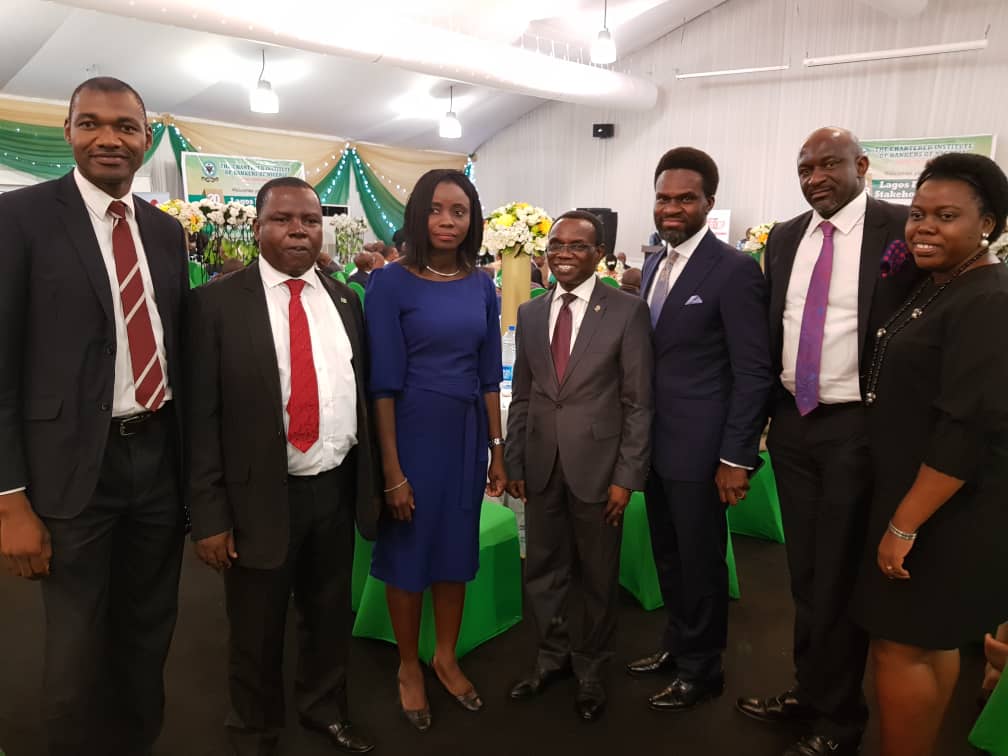
Heritage Bank Plc has again demonstrated its commitment to the growth and progress of the banking profession by partnering with the Lagos branch of the Chartered Institute of Bankers (CIBN) to host the 2018 Lagos Bankers & Stakeholders’ Nite.
General Manager and Chief Compliance Officer of Heritage Bank, Mr Wumi Adeniyi, who disclosed this in a statement yesterday, said the bank decided to support the Lagos Bankers’ Nite initiative because the event will foster a robust engagement among professionals in the sector as well as customers of banks.
“We take very significant recognition of the fact that we are a bank which must interface with our colleagues and customers at a time like this. It is a significant event in the calendar of the banking community in Nigeria and Heritage Bank, being a member of that community, must participate in it and we have supported the initiative over the years.”
Guest speaker of the event,, Mr Austin Okere, Founder/ Executive Vice Chairman of CWG Plc, in his paper entitled, ‘Big data, Fintech and the future of banking,’ noted that the evolving technology which goes beyond financial application is expected to disrupt global supply chain by boosting transaction schemes across borders and improving the transparency of the process.
He said the technology uses the blockchain technology which has created the backbone of a new type of internet which was originally devised for the digital currency, remarking that it is this technology that Fintechs are leveraging to disrupt traditional banks.
He noted that the most disruptive application of the blockchain technology would be in the financial sector as consistent complaints about banks have reached a crescendo in recent times.
According to him, after centuries of receiving deposits and making loans, two customer groups have emerged, and both are calling for a change. The first group comprises of under-banked adults while the second comprises of members of the elite who believe that the relationship is absolutely skewed in favour of the banks.
He said the biggest threat to banks is the perception that they can always make profits even in times of economic downturn when the real sector of the economy suffered the most.
Mr Okere contended that this has led many banks to believe that they are invincible, that is now characterised by loss of touch with customers.
He said the way forward for the banking industry is to collaborate with Fintech companies to deliver financial services because Fintechs have taken over financial services up to a third percentage of the population in volume and in value in countries like Kenya and China.
Also speaking, the chairman of the occasion, Mrs Foluke Abdul-Rasaq, a director with United Bank for Africa (UBA), observed that a strong banking system is imperative to the economic growth of any country. She stressed that the strength of the sector will depend on the confidence of its practitioners.
Earlier in his address of welcome, Mr Kola Abdul, Chairman, CIBN Lagos State Branch, reminded the audience that Bill Gates, the world’s richest man, once said in the mid-90s that banking is necessary, but banks are not.
Mr Abdul said this sentiment has deepened among the population over the last decade with public opinion turning against banks. According to him, technology has begun to open a range of options in financial management following the financial crisis of 2008.
He said Apple Pay’s Stripe is one of the companies revolutionising the way people pay for services in the world while digital currency and peer to peer lenders are opening new funding avenues for start-ups and SMEs.
Banking
We Now Pay Depositors of Failed Bank Within Days—NDIC
By Adedapo Adesanya
The Nigeria Deposit Insurance Corporation (NDIC) says depositors of failed banks in Nigeria can now access their insured funds within days.
The corporation said the development is a part of ongoing reforms aimed at strengthening confidence in the country’s financial system.
The chief executive of NDIC, Mr Thompson Sunday, disclosed this on Thursday at the NDIC Special Day of the 47th Kaduna International Trade Fair, noting that recent interventions had significantly improved the speed and efficiency of depositor compensation.
Represented by Mrs Regina Dimlong, the Assistant Director of Communications and Public Affairs, Mr Sunday said the corporation had successfully deployed the Bank Verification Number (BVN) system to facilitate prompt payments to customers of recently failed banks, including Heritage Bank Limited, Union Homes Plc and Aso Savings and Loans Plc.
“Depositors were paid within days of closure without the need to fill physical forms or visit NDIC offices.
“This is a part of our reform efforts to make depositor protection faster, simpler and more transparent,” he said.
According to him, the reforms were designed to restore public confidence in the banking system and prevent panic withdrawals, especially during periods of financial stress.
Mr Sunday explained that NDIC’s mandate spans deposit insurance, bank supervision, distress resolution and liquidation of failed banks, adding that the Corporation works closely with the Central Bank of Nigeria (CBN) to ensure early detection of risks in insured institutions.
He disclosed that in 2024, NDIC reviewed its deposit insurance framework, increasing coverage for depositors of Deposit Money Banks, Mobile Money Operators and Non-Interest Banks to N5 million, while customers of Microfinance Banks, Primary Mortgage Banks and Payment Service Banks are now covered up to N2 million.
He noted that the revised thresholds now guarantee full protection for about 99 per cent of depositors nationwide, particularly small savers and low-income earners.
The NDIC boss urged Nigerians to ensure their BVNs are properly linked to their bank accounts, stressing that this had become the primary channel for accessing insured deposits in the event of bank failure.
Banking
Nigeria Gets Permanent Seat on African Central Bank Board
By Adedapo Adesanya
Nigeria has secured a major strategic gain at the ongoing 39th African Union Summit, after securing a permanent seat on the board of the African Central Bank.
The Minister of Foreign Affairs, Mr Yusuf Tuggar, confirmed this at the summit on Friday, highlighting it as a significant milestone for both Nigeria and the West African region.
The African Central Bank (ACB) is one of the original five financial institutions and specialised agencies of the African Union (AU).
“Importantly, Nigeria has been given the hosting of the African Monetary Institute and the African Central Bank. Not only that, in today’s plenary, Nigeria was confirmed a seat on the board of the African Central Bank. This is huge,” he said.
He stated that the development represents a diplomatic breakthrough, mentioning that the move faced initial opposition from some member states.
“It is something that was initially resisted by some countries, so now we have a permanent seat on the African Central Bank board. It’s a major success,” he added.
This year’s summit carries the theme Assuring Sustainable Water Availability and Safe Sanitation Systems to Achieve the Goals of Agenda 2063, the sessions will focus on advancing continental commitments to sustainable water management and improved sanitation, critical pillars for health, agricultural productivity, and the broader development aspirations of the AU’s Agenda 2063 framework.
Beyond financial governance, Nigeria and the West African bloc also recorded progress in elections to the Peace and Security Council, the African Union’s highest decision-making body on conflict and security matters.
The delegation announced that “Côte d’Ivoire, Sierra Leone, and the Republic of Benin have been elected,” with Benin securing a fresh term while the other two countries were re-elected.
The Peace and Security Council also convened to deliberate on the situations in Sudan and Somalia. Nigeria voiced strong reservations over Sudan’s potential readmission into the continental body.
“Nigeria voiced its reservations about Sudan being readmitted because, as you know, there are two warring factions in Sudan,” Tuggar stated.
“We reminded the Peace and Security Council that we have to abide by the rules and regulations of the African Union. If there has been an unconstitutional change of government, then the country should not be allowed to participate, and that was carried.”
The summit also outlined its 2026 theme: water sustainability. The Nigerian representative underscored the country’s strategic and demographic significance in advancing that agenda.
“Nigeria was created out of the confluence of the River Niger and the River Benue. So water is very important,” he said.
“We are the largest country in Africa, with a population of 230 million people. We’re going to be 400 million in the next 24 years. So water is a source of life. It’s very important, and we’re playing a very pivotal role in implementing the programs that are being set for the theme of the year.”
Banking
Standard Bank Hosts 2nd African Markets Conference
By Modupe Gbadeyanka
The second African Markets Conference (AMC) will take place in Cape Town, South Africa, from Sunday, February to Tuesday, February 24, 2026.
The event, hosted by Standard Bank, will bring together global institutional investors, sovereign wealth funds, and African policymakers to catalyse the flow of capital into the continent’s most critical sectors.
The theme for this year’s edition is Mobilising Global Capital at Scale for Africa’s Growth and Development.
AMC 2026 will host a high-level delegation of decision-makers, ensuring that the dialogue leads to tangible commitments.
The conference will be structured around five high-impact pillars designed to move the needle on investment, including prioritising infrastructure as an asset class, accelerating the energy transition, deepening African capital markets and mobilising private capital, enabling intra-African trade and flows of capital, and addressing Africa’s sovereign debt and cost sustainability.
It is estimated that by 2050, Africa will add one billion people, more than half in cities, yet it invests only $75 billion of the $150 billion it needs annually for infrastructure. Standard Bank aims to use AMC 2026 to ensure that African priorities remain at the centre of the global financial discourse.
“This year’s engagement bridges the gap between policy ambitions and market realities. Africa urgently needs practical measures to deepen capital pools, improve market liquidity, and strengthen regulatory frameworks that give investors the confidence to deploy capital at scale.
“Mobilising capital is not just about funding projects; it is about building the foundation of a more balanced and inclusive global economy,” the chief executive of Corporate and Investment Banking at Standard Bank Group, Luvuyo Masinda, stated.
-
Feature/OPED6 years agoDavos was Different this year
-
Travel/Tourism10 years ago
Lagos Seals Western Lodge Hotel In Ikorodu
-
Showbiz3 years agoEstranged Lover Releases Videos of Empress Njamah Bathing
-
Banking8 years agoSort Codes of GTBank Branches in Nigeria
-
Economy3 years agoSubsidy Removal: CNG at N130 Per Litre Cheaper Than Petrol—IPMAN
-
Banking3 years agoSort Codes of UBA Branches in Nigeria
-
Banking3 years agoFirst Bank Announces Planned Downtime
-
Sports3 years agoHighest Paid Nigerian Footballer – How Much Do Nigerian Footballers Earn