General
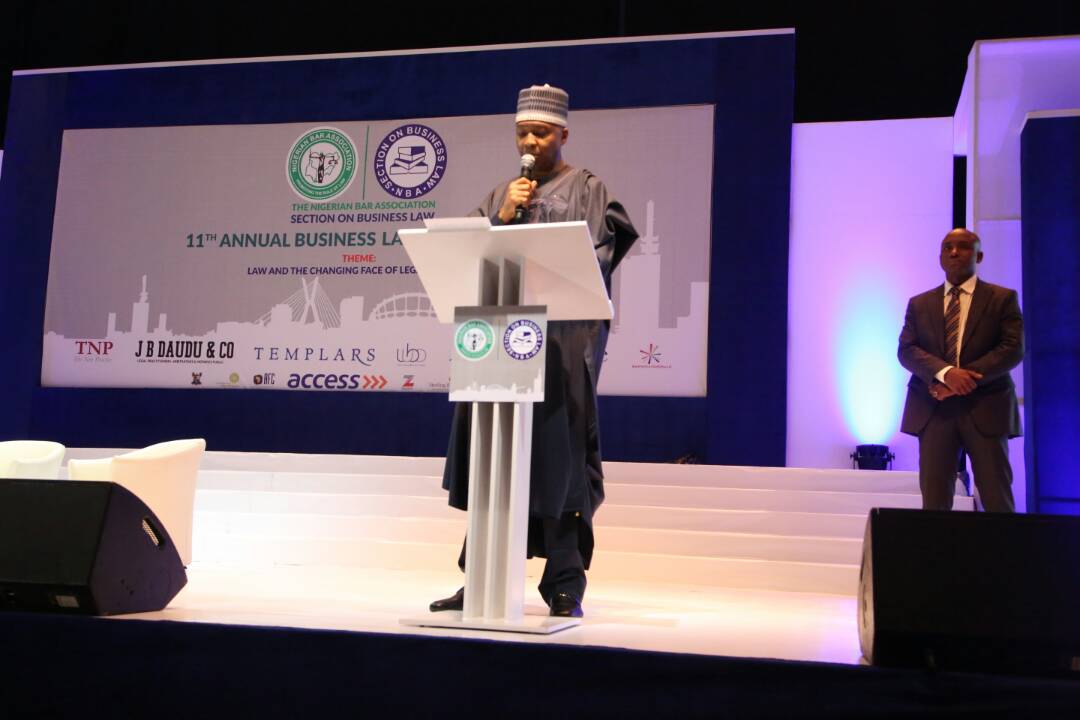
Saraki Quits APC, Returns to PDP
By Modupe Gbadeyanka
Nigeria’s Senate President, Mr Bukola Saraki, has announced his resignation from the ruling All Progressives Congress (APC).
Mr Saraki left the APC on Tuesday night, stating that he was left with no other option after making efforts to resolve issues he had with some key members of the party.
In a statement issued today, the Senate President said he exited the party after due consultations with stakeholders from his state, Kwara State.
Mr Saraki said he was returning to the opposition party, the Peoples Democratic Party (PDP), which he left about four years ago.
“I wish to inform Nigerians that, after extensive consultations, I have decided to take my leave of the All Progressives Congress (APC).
“This is not a decision that I have made lightly. If anything at all, I have tarried for so long and did all that was humanly possible, even in the face of great provocation, ridicule and flagrant persecution, to give opportunity for peace, reconciliation and harmonious existence.
“Perhaps, more significantly, I am mindful of the fact that I carry on my shoulder a great responsibility for thousands of my supporters, political associates and friends, who have trusted in my leadership and have attached their political fortunes to mine. However, it is after an extensive consultation with all the important stakeholders that we have come to this difficult but inevitable decision to pitch our political tent elsewhere; where we could enjoy greater sense of belonging and where the interests of the greatest number of our Nigerians would be best served.
“While I take full responsibility for this decision, I will like to emphasise that it is a decision that has been inescapably imposed on me by certain elements and forces within the APC who have ensured that the minimum conditions for peace, cooperation, inclusion and a general sense of belonging did not exist.
“They have done everything to ensure that the basic rules of party administration, which should promote harmonious relations among the various elements within the party were blatantly disregarded. All governance principles which were required for a healthy functioning of the party and the government were deliberately violated or undermined. And all entreaties for justice, equity and fairness as basic precondition for peace and unity, not only within the party, but also the country at large, were simply ignored, or employed as additional pretext for further exclusion.
“The experience of my people and associates in the past three years is that they have suffered alienation and have been treated as outsiders in their own party. Thus, many have become disaffected and disenchanted. At the same time, opportunities to seek redress and correct these anomalies were deliberately blocked as a government-within-a-government had formed an impregnable wall and left in the cold, everyone else who was not recognized as “one of us”. This is why my people, like all self-respecting people would do, decided to seek accommodation elsewhere.
“I have had the privilege to lead the Nigerian legislature in the past three years as the President of the Senate and the Chairman of the National Assembly. The framers of our constitution envisage a degree of benign tension among the three arms of government if the principle of checks and balances must continue to serve as the building block of our democracy. In my role as the head of the legislature, and a leader of the party, I have ensured that this necessary tension did not escalate at any time in such a way that it could encumber Executive function or correspondingly, undermine the independence of the legislature. Over the years, I have made great efforts in the overall interest of the country, and in spite of my personal predicament, to manage situations that would otherwise have resulted in unsavoury consequences for the government and the administration. My colleagues in the Senate will bear testimony to this.
“However, what we have seen is a situation whereby every dissent from the legislature was framed as an affront on the executive or as part of an agenda to undermine the government itself. The populist notion of anti-corruption became a ready weapon for silencing any form of dissent and for framing even principled objection as “corruption fighting back”. Persistent onslaught against the legislature and open incitement of the people against their own representatives became a default argument in defence of any short-coming of the government in a manner that betrays all too easily, a certain contempt for the Constitution itself or even the democracy that it is meant to serve.
“Unfortunately, the self-serving gulf that has been created between the leadership of the two critical arms of government based on distrust and mutual suspicion has made any form of constructive engagement impossible. Therefore, anything short of a slavish surrender in a way that reduces the legislature to a mere rubber stamp would not have been sufficient in procuring the kind of rapprochement that was desired in the interest of all. But I have no doubt in my mind, that to surrender this way is to be complicit in the subversion of the institution that remains the very bastion of our democracy. I am a democrat. And I believe that anyone who lays even the most basic claim to being a democrat will not accept peace on those terms; which seeks to compromise the very basis of our existence as the parliament of the people.
“The recent weeks have witnessed a rather unusual attempts to engage with some of these most critical issues at stake. Unfortunately, the discord has been allowed to fester unaddressed for too long, with dire consequences for the ultimate objective of delivering the common good and achieving peace and unity in our country. Any hope of reconciliation at this point was therefore very slim indeed. Most of the horses had bolted from the stable.
“The emergence of a new national party executives a few weeks ago held out some hopes, however slender. The new party chairman has swung into action and did his best alongside some of the Governors of APC and His Excellency, the Vice President. I thank them for all their great efforts to save the day and achieve reconciliation. Even though I thought these efforts were coming late in the day, but seeing the genuine commitment of these gentlemen, I began to think that perhaps it was still possible to reconsider the situation.
“However, as I have realized all along, there are some others in the party leadership hierarchy, who did not think dialogue was the way forward and therefore chose to play the fifth columnists. These individuals went to work and ensured that they scuttled the great efforts and the good intentions of these aforementioned leaders of the party. Perhaps, had these divisive forces not thrown the cogs in the wheel at the last minutes, and in a manner that made it impossible to sustain any trust in the process, the story today would have been different.
“For me, I leave all that behind me. Today, I start as I return to the party where I began my political journey, the Peoples Democratic Party (PDP).
“When we left the PDP to join the then nascent coalition of All Progressives Congress (APC) in 2014, we left in a quest for justice, equity and inclusion; the fundamental principles on which the PDP was originally built but which it had deviated from. We were attracted to the APC by its promise of change. We fought hard along with others and defeated the PDP.
“In retrospect, it is now evident that the PDP has learnt more from its defeat than the APC has learnt from its victory. The PDP that we return to is now a party that has learnt its lessons the hard way and have realized that no member of the party should be taken for granted; a party that has realized that inclusion, justice and equity are basic precondition for peace; a party that has realized that never again can the people of Nigeria be taken for granted.
“I am excited by the new efforts, which seeks to build the reborn PDP on the core principles of promoting democratic values; internal democracy; accountability; inclusion and national competitiveness; genuine commitment to restructuring and devolution of powers; and an abiding belief in zoning of political and elective offices as an inevitable strategy for managing our rich diversity as a people of one great indivisible nation called Nigeria.
“What we have all agreed is that a deep commitment to these ideals were not only a demonstration of our patriotism but also a matter of enlightened self-interest, believing that our very survival as political elites of this country will depend on our ability to earn the trust of our people and in making them believe that, more than anything else, we are committed to serving the people.
“What the experience of the last three years have taught us is that the most important task that we face as a country is how to reunite our people. Never before had so many people in so many parts of our country felt so alienated from their Nigerianness. Therefore, we understand that the greatest task before us is to reunite the county and give everyone a sense of belonging regardless of region or religion.
“Every Nigerian must have an instinctive confidence that he or she will be treated with justice and equity in any part of the country regardless of the language they speak or how they worship God. This is the great task that trumps all. Unless we are able to achieve this, all other claim to progress no matter how defined, would remain unsustainable.
“This is the task that I am committing myself to and I believe that it is in this PDP, that I will have the opportunity to play my part. It is my hope that the APC will respect the choice that I have made as my democratic right, and understand that even though we will now occupy a different political space, we do not necessarily become enemies unto one another,” the Senate President wrote in the statement.
General
FG to Deploy 7,000 Forest Guards to Kwara, Sokoto, Others
By Modupe Gbadeyanka
The federal government has concluded plans to immediately deploy the 7,000 forest guards, who completed an intensive three-month training programme.
This information was revealed in a statement issued on Saturday by the Special Assistant on Media to the Minister of Information and National Orientation, Mr Rabiu Ibrahim.
It was disclosed that the forest guards were drawn from seven frontline states comprising Borno, Sokoto, Yobe, Adamawa, Niger, Kwara, and Kebbi States.
The National Security Adviser (NSA), Mr Nuhu Ribadu, was quoted as saying that, “There will be no delay between graduation and deployment. Salaries and allowances will commence immediately, and every certified guard will proceed directly to assigned duty posts.”
The personnel are indigenous to their respective local government areas, enabling them to leverage terrain familiarity and community trust in countering banditry, kidnapping, and the illegal exploitation of forest resources.
The programme is under the Presidential Forest Guards Initiative launched by President Bola Tinubu in May 2025. It represents a coordinated Federal–State security intervention aimed at reclaiming Nigeria’s forests from criminal exploitation.
The scheme is designed to strengthen Nigeria’s internal security architecture by denying terrorists, bandits, kidnappers, and other criminal groups sanctuary within forested and hard-to-reach terrains.
The training was deliberately intensive, structured, and demanding, designed to transform loyal and committed Nigerians into agile, disciplined, and capable field operatives. The curriculum integrated environmental conservation principles with advanced security competencies, ensuring a balanced, professional, and mission-ready force.
Trainees underwent extensive physical and mental conditioning, including endurance exercises, obstacle-crossing drills, and long-range patrol simulations to prepare them for sustained forest operations.
They were also trained in tactical fieldcraft, including movement techniques, enemy-contact drills, ambush response, rescue operations, and coordinated offensive actions—equipping them to deny criminal elements any form of sanctuary within Nigeria’s forest spaces.
Equally central to the programme was a strong emphasis on ethics, legality, and professionalism. The curriculum placed significant focus on human rights, International Humanitarian Law (IHL), gender rights, and the protection of civilians.
Arms handling and use-of-force protocols were strictly regulated in line with an Arms Management Manual jointly agreed upon by all participating agencies.
“These Forest Guards are not just uniformed personnel. They are first responders, community protectors, and a critical layer of Nigeria’s security architecture. They will hold ground, gather intelligence, and support security agencies in reclaiming territories previously overtaken by criminal elements,” Mr Ribadu added.
The training recorded a 98.2 per cent completion rate. A total of 81 trainees were disqualified on disciplinary grounds, while two trainees passed away due to pre-existing medical conditions. All successful participants have been fully certified and cleared for operational service.
General
$1.126bn Financing for Lagos-Calabar Coastal Highway Excites Tinubu
By Modupe Gbadeyanka
The successful closing of about $1.126 billion in financing for the execution of Phase 1, Section 2 of the Lagos–Calabar Coastal Highway has been welcomed by President Bola Tinubu.
A statement issued on Friday by the Special Adviser to the President on Information and Strategy, Mr Bayo Onanuga, disclosed that the funding package was secured by the Federal Ministry of Finance.
Mr Tinubu described this as a landmark because it marks a significant milestone in the delivery of Africa’s most ambitious and transformative infrastructure projects.
He praised the Ministries of Finance and Works and the Debt Management Office (DMO) for working together on the transaction, adding that the federal government will continue to explore creative financing to fund critical projects across the country.
“This is a major achievement, and closing this transaction means the Lagos-Calabar Coastal Highway will continue unimpeded. Our administration will continue to explore available funding opportunities to execute critical economic and priority infrastructural projects across the country,” the President was quoted as saying in the statement.
Phase 1, Section 2 covers approximately 55.7 kilometres, connecting Eleko in Lekki to Ode-Omi, key economic corridors and significantly enhancing national trade efficiency and logistics connectivity.
The successful financing follows the earlier closing of the $747 million financing for Phase 1, Section 1, and demonstrates the scalability and bankability of the Lagos–Calabar Coastal Highway project.
The financing was fully underwritten by First Abu Dhabi Bank (FAB) and Afreximbank, with partial risk mitigation support provided by the Islamic Corporation for the Insurance of Investment and Export Credit (ICIEC), marking ICIEC’s largest transaction since the country’s institutional and regulatory reforms. The structure reflects growing confidence in Nigeria’s reformed investment climate and its capacity to deliver infrastructure.
SkyKapital acted as Lead Financial Advisor, coordinating structuring, lender engagement, and execution. Environmental and Social advisory services were provided by Earth Active (UK), ensuring complete alignment with the IFC Performance Standards, the Equator Principles, and international ESG best practices. Hogan Lovells, as International Counsel, and Templars, as Nigerian Legal Counsel, led the legal advisory services.
Describing the transaction as a “defining moment in Nigeria’s infrastructure journey,” the Minister of Finance and Coordinating Minister of the Economy, Mr Wale Edun, said the fund will be deployed responsibly and judiciously to deliver on the project within timelines.
“The signing on December 19, 2025, of $1.126 billion financing for Phase one — section two of the Lagos-Calabar Coastal road marks a defining moment in Nigeria’s infrastructure journey, following the successful closing of the $747 million financing for Phase one section one on July 9, 2025.
“Collectively, these landmark transactions firmly establish the Lagos-Calabar Coastal Highway as one of the defining flagship projects of President Bola Tinubu’s Renewed Hope agenda, embodying the administration’s commitment to bold, transformational infrastructure.
“This financing is particularly notable as it represents, for the first time, a truly underwritten transaction of this magnitude for a Nigerian road infrastructure project. The facility was fully underwritten by First Abu Dhabi Bank ($626 million) and Afreximbank ($500 million), with partial coverage provided by ICIEC, making it the largest ICIEC-supported transaction since the institution’s creation,” Mr Edun said.
Construction is being executed by Hitech Construction Company Limited, whose rapid on-site progress and early opening of key road sections have earned commendation from lenders for engineering excellence, operational discipline, and execution speed.
In line with the federal government’s commitment to transparency and fiscal discipline, a comprehensive Value-for-Money (VfM) assessment was conducted by the Federal Ministry of Works in coordination with SkyKapital, and the assessment was independently reviewed and confirmed by GIBB.
The successful close of Phase 1, Section 2, represents a clear step-change in market confidence. It demonstrates Nigeria’s ability to move decisively from vision to execution and from reform to delivery.
General
Ekpo Lauds NNPC Over Completion of AKK Mainline Works
By Adedapo Adesanya
The Minister of State for Petroleum Resources (Gas), Mr Ekperikpe Ekpo, has commended the Nigerian National Petroleum Company (NNPC) Limited and its partners for the rapid pace and completion of the mainline welding and associated works of the Ajaokuta–Kaduna–Kano (AKK) gas pipeline ahead of schedule.
The Minister made the remark during a recent inspection of Kilometre Zero of the landmark pipeline project, accompanied by the chief executive officer of the Nigerian state oil company, Mr Bashir Bayo Ojulari, Executive Vice President (Gas, Power, and New Energy) Mr Olalekan Ogunleye, and the managing director of Ajaokuta Steel Company Limited, Mr Nasir Abdulsalam.
“Completing the AKK Mainline ahead of schedule demonstrates the resilience, professionalism, and commitment of the project team,” Mr Ekpo said, describing the milestone as a clear reflection of the Federal Government’s renewed focus on energy infrastructure under President Bola Tinubu’s Renewed Hope Agenda.
The Minister noted that the AKK Gas Pipeline is a strategic national infrastructure poised to drive economic growth across Northern States by supplying natural gas for power generation, supporting gas-based industries, and advancing Compressed Natural Gas (CNG) initiatives.
“This project will enhance industrialisation, create jobs, and strengthen energy security, ushering in a new era of economic opportunities for Nigerians,” he added.
Mr Ekpo concluded by urging all stakeholders to maintain momentum, noting that the AKK Pipeline’s operationalisation will catalyze industrialisation, employment, and inclusive economic growth, aligning with the Federal Government’s broader strategic vision.
Speaking at the site, Mr Ojulari linked the project to tangible national development, highlighting Nigeria’s industrial heritage while projecting a resurgence driven by gas as a transition fuel.
“The AKK Pipeline reflects our commitment to timely project delivery and its strategic importance to national industrialisation and economic security,” he stated.
The inspection tour, according to him, further reinforced the Federal Government and NNPCL’s pledge to ensure the AKK Pipeline’s timely completion, which remains critical to expanding energy access, boosting industrial growth, and supporting shared prosperity across the country.
The Minister and the NNPC management team commended the project workforce for their dedication, emphasizing the role of discipline, collaboration, and technical excellence in achieving the early completion of this landmark project.
The AKK Gas Pipeline, spanning over 614 kilometers, is designed to deliver natural gas to power plants, industries, and CNG facilities, providing a major boost to Nigeria’s energy infrastructure and positioning the country as a regional energy hub.
-
Feature/OPED6 years agoDavos was Different this year
-
Travel/Tourism9 years ago
Lagos Seals Western Lodge Hotel In Ikorodu
-
Showbiz3 years agoEstranged Lover Releases Videos of Empress Njamah Bathing
-
Banking8 years agoSort Codes of GTBank Branches in Nigeria
-
Economy3 years agoSubsidy Removal: CNG at N130 Per Litre Cheaper Than Petrol—IPMAN
-
Banking3 years agoFirst Bank Announces Planned Downtime
-
Banking3 years agoSort Codes of UBA Branches in Nigeria
-
Sports3 years agoHighest Paid Nigerian Footballer – How Much Do Nigerian Footballers Earn