Connect with us

General

Buhari Assures Nigerians Free, Fair Elections in 2019

Published

on

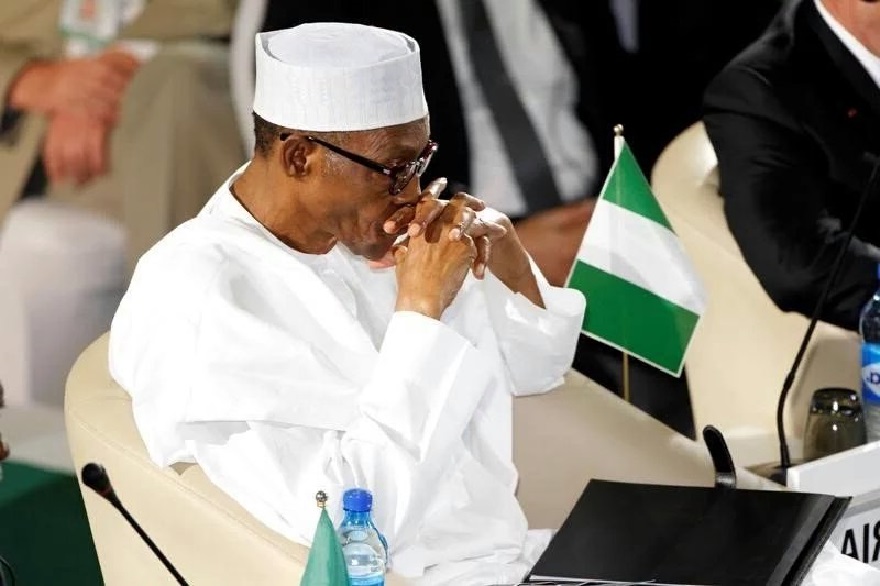
buhari thinking deep

By Modupe Gbadeyanka

On Sunday, President Muhammadu Buhari said as a beneficiary of free and fair elections, he is not afraid of a credible process in 2019.

Mr Buhari made this disclosure in Beijing, China, at an interactive session with members of the Nigerian community in the giant Asian country.

The President reaffirmed his commitment to making sure that the 2019 polls, under his watch, will be free, fair and credible.

He pledged that Nigerians eligible to vote in the next general elections will be allowed to freely elect candidates of their choice.

“I have no fear about free and fair elections because that is what brought me to the present position. I know what I went through and very few Nigerians could boast of trying four times.

“Those interested in participating in the elections must get their PVCs and register in their constituencies and elect anybody of their choice across ethnicity and religion.

“The Nigerian police, law enforcement agencies and INEC must respect the wishes of the people,” he said.

Citing recent elections in Bauchi, Katsina and Kogi States, the President said the country had made progress relative to elections conducted in the past years.

On security issues, the President reaffirmed that his government has succeeded in curtailing Boko Haram insurgents in the country, adding that the terrorist group no longer controls any part of the country.

He attributed the success to operations of security agencies deployed to counter insurgency in the North-eastern part of the country.

“You will all recall that we contested the last election basically on three issues, which includes security, especially in the North East.

“The Boko Haram used to occupy quite a number of local governments in Borno State but they are not in any one now. They have resorted to a very dangerous way of terrorism by indoctrinating young people, mostly girls and attacking soft targets, churches, mosques and marketplaces,” he said.

On herders and farmers clashes in Nigeria, the President told Nigerians in the Diaspora that while security agencies are doing their best to curtail the clashes, the Nigerian media need to complement the efforts through objective and informed reportage.

The President appealed to the Nigerian media to make an attempt at understanding the cultural and historical implications of some of the misunderstanding between herders and farmers.

“To my disappointment, the members of the press in Nigeria do not make enough efforts to study the historical antecedents of issues that are creating national problems for us,” he said.

According to the President, due to the effects of climate change, a farm that used to belong to 5 people now belongs to 50 people, the weather condition; particularly the rainy season is now unpredictable.

The President partly blamed the farmer’s/herders’ controversy on the shrinking of the Lake Chad, which has forced many cattle nomads to seek greener pastures for their herds in other parts of the country.

On Nigeria-China relations, the President applauded China’s generosity and contribution to the development of Nigeria, citing the successful completion of the Abuja-Kaduna railway line, built by the Chinese, and ongoing works on Lagos, Ibadan, Ilorin, Abuja, Kano railway routes.

He said Nigeria and China are also negotiating on the Mambilla project.

President Buhari advised Nigerians planning to travel abroad for “greener pastures” to do so legitimately and not to expect too much from their countries of destination.

“You cannot seek greener pastures in a place where you are not respected because of the colour of your skin or your lack of education or other things. Personally, I think you will earn more respect when you remain at home and get a job,” he said.

Acknowledging the material and intellectual support of Nigerians in the Diaspora to the development of the country, the President assured that his administration will remain focused and committed in providing the needed infrastructure and doing the needful for Nigeria’s prosperity.

Earlier in his remarks, the Nigerian Ambassador to China, Baba Ahmed-Jidda thanked the President for his support to the Embassy, which led to the completion of the Ambassador’s residence.

The Ambassador praised Nigerians resident in the various provinces of China for being law abiding with the exception of few.

On consular matters, the envoy told the President, Nigerians still faced difficulties in the process of obtaining Chinese visas- an issue he thinks the President should take up with the Chinese authority.

Also speaking, the President of the China Chapter of Nigerians in the Diaspora Organisation, Brian Akiti, while wishing the country successful elections in 2019 pledged the support of the organisation to the present administration’s development agenda.

In a separate event, the President also met with Nigerian students on scholarship in China.

He told the students: “I hope you will make the best use of this opportunity given to you. Nigeria is grateful to China for extending this generosity to us.

“The Chinese are helping Nigeria greatly with building infrastructure, it is very much appreciated. We are pleased with the training they are providing for our Nigerian students.”

President Buhari also met with the executives of China Civil Engineering Construction Corporation (CCECC), during which he lauded the construction group for their immense contributions to infrastructure development in Nigeria.


Modupe Gbadeyanka is a fast-rising journalist with Business Post Nigeria. Her passion for journalism is amazing. She is willing to learn more with a view to becoming one of the best pen-pushers in Nigeria. Her role models are the duo of CNN's Richard Quest and Christiane Amanpour.

1 Comment

Leave a Reply

Your email address will not be published. Required fields are marked *

General

NERC Takes Over Kaduna DisCo, Dissolves Board Over N456.5bn Debt

Published

on

Kaduna Electric

By Adedapo Adesanya

The Nigerian Electricity Regulatory Commission (NERC) has dissolved the board of Kaduna Electricity Distribution Plc over the company’s cumulative market obligations of N456.5billion and prolonged financial and operational challenges.

The regulator also appointed an interim board of special directors and directed the commencement of a transparent process for selecting a new core investor for the electricity distribution company.

The decisions were contained in Order No. NERC/2026/086, titled Order on the Regulatory Intervention in Kaduna Electricity Distribution Plc Pursuant to the Electricity Act 2023, which took effect on Monday, August 10, 2026.

NERC said the intervention followed an inquiry and consultations with key industry stakeholders, including the Bureau of Public Enterprises, and was necessitated by KAEDC’s prolonged regulatory and market defaults, inadequate investment and weak operational and commercial performance.

The commission said KAEDC’s cumulative market obligation since privatisation stood at approximately N456.5 billion as of May 2026, comprising N415.5 billion owed to the Nigerian Bulk Electricity Trading (NBET) Plc and N41 billion due to the Nigerian Independent System Operator (NISO)

The company also had other non-market statutory and third-party obligations amounting to N14.26billion, according to the regulator.

NERC said that since ASI Engineering Limited took over operations of KAEDC in June 2024, the company had accrued additional market debt of more than N118.6 billion as of May 2026.

The Commission described the company’s situation as grave, citing prolonged regulatory and market defaults, inadequate investment, weak operational and commercial performance, insufficient assets relative to liabilities and the absence of a credible pathway to sustainable recovery.

NERC said KAEDC paid only 41.93 per cent of its adjusted market invoices in 2025, resulting in a market shortfall of approximately N46.71bn during the year.

It linked the poor remittance performance to the company’s high aggregate technical, commercial and collection losses, which stood at 71.88 per cent in 2025.

The regulator explained that the losses meant KAEDC could account for only 28.2 per cent of the electricity received and delivered to end-use customers during the review period.

NERC also said ASI failed to meet its capital injection commitments towards recapitalising the utility.

According to the commission, KAEDC’s actual capital expenditure in 2025 was approximately N2.48 billion, against a minimum provision of N24.51 billion, representing only 10 per cent performance.

The regulator further noted that KAEDC’s meter coverage had remained between 33.26 per cent and 35.54 per cent since ASI took over the company, despite several interventions aimed at supporting meter deployment across distribution companies.

NERC said the company’s financial difficulties persisted despite approximately N6.58billion in regulatory derogations granted between January 2024 and May 2026 and aggregate Federal Government intervention disbursements of approximately N53.79 billion since July 2018.

It warned that the continued underperformance posed a material risk to electricity consumers, creditors, market stability and the continuity of electricity services.

NERC said it had previously notified KAEDC’s major shareholders and Afreximbank of the imminent intervention and required them to present a credible plan to address the company’s financial situation.

Representatives of ASI, NERC, BPE, Afreximbank and Fidelity Bank subsequently met on June 11, 2026, to discuss proposals for rescuing the company.

According to the commission, the parties agreed that ASI had not complied with conditions prescribed for its acquisition of a 60 per cent majority shareholding in KAEDC and had also failed to comply with BPE requirements for finalising the shareholding arrangements.

NERC said ASI subsequently requested an extension of up to 24 months to stabilise KAEDC’s cash flow, prioritise critical investments and deliver measurable performance improvements, including a pathway to full market remittance.

The regulator, however, rejected the request, saying ASI had been in effective control of KAEDC since June 2024 without a corresponding improvement in its financial and operational performance.

NERC subsequently resolved to exercise its powers under Sections 75 to 79 of the Electricity Act 2023 to dissolve the KAEDC board, preserve the company as a going concern and facilitate a transparent transition to a credible core investor within 12 months.

Consequently, the commission ordered the dissolution of KAEDC’s board and removal of all its directors from office.

“KAEDC’s board of directors is HEREBY DISSOLVED. All directors of KAEDC are removed from office, and the existing board stands dissolved pursuant to section 75 of the EA,” the order stated.

NERC appointed seven special directors to constitute the interim board for the transition period, with Dr Abdullahi Garba as chairman. Other members are Engineer Francis Agoha, Mr Aliyy Aliyu, retired Major General Henry Ayamasaowei, Dr Haliru Dikko, Mr Ayodeji Gbeleyi, representing the BPE, and Dr Abubakar Umar Hashidu.

The commission also appointed the incumbent Managing Director and Chief Executive Officer, Dr Abubakar Umar Hashidu, as administrator for an initial six-month term, subject to review.

NERC said the administrator would oversee the company’s day-to-day operations, ensure continuity of electricity services, implement interim board resolutions, comply with regulatory directives and safeguard the company’s assets and records.

The commission also withdrew the Know-Your-Licensee approvals issued to members of KAEDC’s management team and directed affected management staff to present themselves for revalidation.

Meanwhile, NERC directed Afreximbank to coordinate an open, competitive and transparent process for securing a replacement core investor for KAEDC.

The preferred investor is to be presented to NERC for approval, with the process expected to be completed within 12 months from the commencement of the order, unless the commission grants a written extension.

Continue Reading

General

FG Unveils Tinubu Light Initiative to Provide Clean Energy to 1m MSMEs

Published

on

President Tinubu renewed hope ambassadors

By Adedapo Adesanya

The federal government has unveiled the Tinubu Light Initiative, a presidency-backed renewable energy programme designed to provide affordable clean electricity to one million Micro, Small and Medium Enterprises across Nigeria.

The initiative, unveiled by the National Board for Technology Incubation during the National Showcase of the NextGen Innovation Challenge 2026 in Abuja, is also expected to create more than 50,000 direct jobs while supporting local manufacturing and accelerating the adoption of renewable energy.

The programme is targeted at reducing the high cost of energy that continues to constrain businesses, particularly MSMEs that rely heavily on petrol and diesel generators amid persistent gaps in grid electricity supply.

Speaking at the event, the Director-General and Chief Executive Officer of the NBTI, Mr Kazeem Raji, said the initiative was developed in response to the growing energy burden faced by Nigerian businesses.

Mr Raji said the Tinubu Light Initiative would deploy innovative financing models, strategic partnerships and renewable energy technologies to provide cleaner and more affordable electricity to MSMEs nationwide.

“The Tinubu Light Initiative seeks to change this narrative. Through innovative financing models, strategic partnerships, renewable energy technologies and nationwide implementation, this initiative will provide affordable clean energy solutions to one million Nigerian MSMEs,” he said.

According to him, lowering the energy costs of one million businesses would enable them to redirect resources towards expansion, investment and job creation, while strengthening the competitiveness of locally produced goods.

Mr Raji said the initiative would also go beyond electricity access by supporting the local assembly and production of renewable energy equipment, reducing carbon emissions and expanding access to digital financing, with particular opportunities for women and young entrepreneurs.

“This initiative goes beyond electrification. It is an industrial policy. It is an employment strategy. It is a poverty reduction programme. It is a climate action initiative. It is a national productivity agenda,” he said.

The initiative comes against the backdrop of rising energy costs for Nigerian businesses, with many MSMEs increasingly dependent on self-generation to sustain operations. The cost of petrol and diesel used to power generators has become a significant component of operating expenses, limiting production capacity and putting pressure on jobs.

Mr Raji said the Tinubu Light Initiative was aligned with the Federal Government’s broader economic strategy of leveraging technology, innovation and entrepreneurship to boost domestic production and create sustainable employment.

At the event, he also highlighted the NextGen Innovation Challenge, which attracted thousands of applications from innovators across sectors including renewable energy, agriculture, artificial intelligence, biotechnology, healthcare, manufacturing, education, fintech, climate technology and industrial engineering.

He said the challenge was increasingly becoming a platform for connecting Nigerian innovators with investors and supporting the transition of promising technologies from research and development to commercial applications.

Mr Raji disclosed that an innovator who participated in the inaugural 2025 edition secured a £1.5 million investment commitment, while agricultural technologies developed through the programme are being deployed in Kaduna, Bauchi and other states to improve productivity and reduce post-harvest losses.

He said the NBTI would continue to leverage its network of Technology Incubation Centres to identify innovators, provide mentorship, facilitate technology transfer and support the commercialisation of indigenous technologies.

Mr Raji further announced that the NextGen Innovation Challenge had secured the support of the Commonwealth Secretariat, which would enable the programme to expand beyond Nigeria into a Commonwealth-wide initiative involving all 56 member countries.

Continue Reading

General

2027: SERAP Urges Tinubu, Atiku, Obi, Others to Declare Assets, Liabilities

Published

on

SERAP

By Adedapo Adesanya

The Socio-Economic Rights and Accountability Project (SERAP) has urged all 19 presidential candidates announced by the Independent National Electoral Commission (INEC) to publish details of their assets and liabilities ahead of the 2027 elections.

The group also urged the candidates’ spouses, and where applicable, their unmarried children under 18, to do the same.

It further advised the candidates to disclose the legitimate sources of their significant assets and publicly reject vote-buying and electoral bribery before and during the election.

The organisation called on the candidates to instruct their parties, campaign organisations, agents and supporters not to offer or distribute money, gifts or other material inducements in exchange for votes.

The presidential candidates are President Bola Tinubu (APC), Mr Atiku Abubakar (ADC), Mr Peter Obi (NDC), Senator Sandy Onor (PDP), Mr Omoyele Sowore (AAC), Mr Donald Duke (PRP), Mrs Okwori Ada Elizabeth Frederick (NDP), Mr Chukwu Anita Zugwai (YPP), Mr Rufai Adekunle Omoaje (AA), and Mr Adenuga Sunday (Boot Party).

Others are Mr Memeh Samuel (DLA), Mr Nwanyanwu Daniel Danerechukwu (ZLP), Mr Okereke Sunday Chibuzor (LP), Mr Okereke Iken Esther (NRM), Mr Abbas-Bin Aliyu (ADP), Mr Dikwa Suleiman Mohammed (NNPP), Mr Adebayo Adewole Ebenezer (SDP), Mr Seyi Makinde (APM), and Mr Yusuf Kabiru (APP).

In an open letter to the candidates dated August 8, 2026, and signed by SERAP Deputy Director Kolawole Oluwadare, the organisation urged them to “go beyond the bare legal minimum and voluntarily embrace higher standards of transparency, accountability and integrity in seeking Nigeria’s highest elected office.”

SERAP said candidates seeking Nigerians’ mandate to exercise constitutional powers over public finances, natural resources, appointments and security institutions should be willing to subject their personal financial affairs to reasonable public scrutiny before asking for votes.

“Nigerians should not be asked to choose between candidates on the basis of who can spend the most money. They should be able to choose on the basis of policies, competence, integrity, character and their vision for Nigeria,” the organisation said.

SERAP said voluntary pre-election disclosure would enable voters to assess potential conflicts of interest and significant sources of wealth, strengthen public confidence in the electoral process and provide a baseline against which future changes in assets could be assessed if a candidate is elected.

“The 2027 presidential election presents an opportunity for political leaders to show that public office is a public trust. Candidates who voluntarily disclose their assets and reject vote-buying can show that they are prepared to uphold the transparency and accountability they promise to deliver if elected,” it said.

The organisation also cited constitutional and international provisions in support of its call, noting that although the 1999 Constitution, as amended, does not expressly require presidential candidates to publish their asset declarations before an election, it embodies principles of transparency, accountability, integrity in public office and meaningful participation in government.

SERAP noted that the Constitution already requires elected public officers, including the President, to declare their assets and liabilities.

It cited Paragraph 11 of Part I of the Fifth Schedule, which requires public officers to submit declarations of their properties, assets and liabilities, including those of unmarried children under 18, as well as Section 140(1), which requires a person elected President to make the prescribed declaration before assuming the functions of office.

On vote-buying, the organisation said the persistent use of money, gifts and other inducements to influence voters was a major threat to electoral integrity.

“We are also concerned about the persistent use of money, gifts and other inducements to influence voters. Vote-buying directly undermines the constitutional principle that sovereignty belongs to the people,” it said.

SERAP cited Section 14(2)(a) of the Constitution, which provides that sovereignty belongs to the people of Nigeria, as well as Section 125 of the Electoral Act 2026, which it said criminalises bribery and related conduct intended to procure the return of a person to elective office or the vote of an elector.

It added that vote-buying was particularly harmful amid poverty and economic hardship because it exploits economic vulnerability and risks turning a constitutional political right into a financial transaction.

It, therefore, urged the 19 presidential candidates to publish their assets and liabilities before the election, including relevant assets and liabilities of their spouses and unmarried children under 18, and disclose the legitimate sources of significant assets, including business interests, investments, real property, substantial gifts and inheritance, while protecting legitimate personal security and privacy.

The organisation also asked the candidates to commit to updating their public declarations if elected and explaining material increases in wealth; publicly reject vote-buying and electoral bribery; instruct their campaign organisations and political associates not to distribute money, gifts, food, transportation benefits or other material inducements in exchange for votes; report credible allegations of vote-buying involving their campaign organisations to the appropriate authorities; and sign and publish a public integrity pledge committing themselves, their parties and campaign organisations to peaceful, transparent, accountable and corruption-free elections.

“The choice before Nigerians in 2027 should be a choice based on ideas, policies, competence and integrity—not on who can spend the most money or conceal the most wealth,” it said.

Continue Reading