General
Automatic Ticket: Aidoko’s Senatorial Ambition Suffers Setback
By Modupe Gbadeyanka
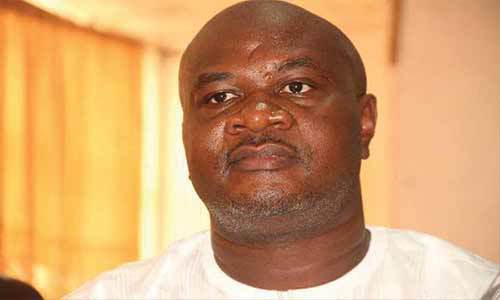
All is not going well concerning the bid by the lawmaker representing Kogi East Senatorial District of Kogi State, Mr Attai Aidoko, to return to the upper legislative chamber of the National Assembly under the Peoples Democratic Party (PDP) as his ambition suffered another set-back.
This is consequent upon the Kogi State Peoples Democratic Party leaders’ refusal to grant him automatic ticket to vie for the position this time at the 2019 general elections.
This newspaper learnt last week that Mr Aidoko was told by leaders of the party that unlike Senator Dino Melaye, his desire for an automatic ticket was an impossible task for a number of reasons including the fact that the understanding for the automatic ticket was made with the rAPC members for which he’s not one. Secondly, having been in the National Assembly for 16 years, it was assumed that his popularity would make it easy for him to win the primaries election if he has done well for his constituency.
This latest development has forced the senator to adopt unusual means in a last-ditch effort to return to the National Assembly, apparently against the wishes of Kogi East people.
Senator Aidoko, who was full of confidence that he would clinch the party ticket, was naturally deflated by this development. He has therefore taken to regular visits to Senator Dino with the hope that the latter’s goodwill and Saraki connection may fetch him the ticket at the primaries billed to take place on October 1, 2018.
Mr Aidoko is also allegedly making a lot of underground maneuvers to tinker with the list of the recently concluded ad hoc delegates’ lists.
It would be recalled that the youths in Kogi East Senatorial District recently called on Senator Aidoko to halt his re-election bid as the zone was not ready for his return to represent them.
The youths under the aegis (Kogi Youths Arise Network) led by its coordinator, Mr Mohammed Misah, had condemned those they referred to as social media propagandists, who they said spin lies and launder the image of Mr Aidoko for political makeover for 2019.
The youths said: “We don’t know what we want, where we are coming from and where we are headed.
“The Igala youths of today have failed to differentiate between their political enemies and political saviours.”
The youths had said that it was under Mr Aidoko’s watch that Ibaji oil wells were ceded to Anambra State.
“Senator Aidoko has provided poor representation, starting from his days in the House of Representatives, where he represented Ankpa/Omala/Olamaboro Federal Constituency from 2003 to 2011, and served as Chairman, House Committee on Federal Capital Territory and later as Chairman, Senate Committee on SEGS.
“As a senator, he can’t point at one single thing as achievement that we can call his constituency project.
“He is only after his personal interest and that of his godfather, which is not good for our people in need of development.
“In fact, Aidoko is a liability on the good people of Kogi East and he has no political relevance in both the region and at the national level.”
The youths noted that Aidoko hails from Ugbamaka-Igah in Olamaboro Local Government Area and that as the chairman, Senate Committee on Sustainable Development Goals, there is “no project that has come to our land.”
Mr Aidoko, they explained, is not in any way familiar with the saying that “charity begins at home,” while stressing that his people have no water, electricity, telephone network, schools, bank and Automated Teller Machine in the entire Olamaboro and “of course, no proper health care system yet, we have someone at the Senate representing us.
“Aidoko that we know always visits Igalaland at night and sneaks out before the crack of dawn.
“We can’t continue to wallow in this politics of stagnation where some wicked few individuals will gather together to oppose everything that is good for our land.
“Our region has suffered so much neglect despite the facts that we have several opportunities to develop, but we have been suffering so much neglect because of the attitude of some of our leaders.”
General
Lokpobiri Urges Prioritisation of Domestic Energy Needs Over International Obligations
By Adedapo Adesanya
The Minister of State for Petroleum Resources (Oil), Mr Heineken Lokpobiri, has stressed the need for Nigeria to prioritise its domestic energy needs before fulfilling international obligations, as the federal government intensifies efforts to strengthen energy security and promote greater transparency in the petroleum market.
Mr Lokpobiri stated this in his goodwill message at the West Africa Refined Fuel Market Conference 2026, themed Funding West Africa Infrastructure and Distribution to Create a Transparent Market for Regional Price Benchmarks.
The minister said the country’s energy security strategy must begin with fulfilling its obligations to Nigerians, stressing that the ongoing deregulation of the downstream petroleum sector had created a framework for greater participation and accountability among industry stakeholders.
According to him, energy security starts with fulfilling “our domestic obligations before extending to international obligations.”
He said the conference provided an opportunity not only to discuss sustainable pricing mechanisms but also to showcase investment opportunities and competitive advantages in Nigeria’s and Africa’s midstream and downstream petroleum sectors.
Mr Lokpobiri said the federal government remained committed to creating a conducive environment for investment in the petroleum industry, particularly as Nigeria seeks to increase refining capacity and improve fuel distribution.
“Under President Bola Ahmed Tinubu, Nigeria continues to implement measures and initiatives designed to unlock the full potential of the petroleum sector,” he said.
He identified increased refining capacity, efficient distribution infrastructure, transparent pricing and stronger regional integration as critical to building a competitive West African refined-fuel market.
The minister said improved infrastructure and market transparency would also help establish reliable regional price benchmarks and strengthen confidence among investors and other industry participants.
He added that Nigeria, as a major player in the global energy market, had an important role to play in developing an integrated West African petroleum market and positioning the continent to compete more effectively in global energy trade.
The conference brought together stakeholders in the petroleum industry to examine financing, infrastructure, distribution and pricing mechanisms for the refined-fuel market across West Africa.
General
FCCPC Warns Bakers Against Unsafe Substitutes, Misleading Consumers
By Adedapo Adesanya
The Federal Competition and Consumer Protection Commission (FCCPC) has warned importers, manufacturers, distributors and other operators in the bakery and confectionery business against compromising food safety, using unsafe substitutes and misleading consumers as rising production costs put pressure on their businesses.
The Executive Vice Chairman of the FCCPC, Mr Tunji Bello, gave the warning on Tuesday at a stakeholder engagement with bakery and confectionery operators organised by the South-West Zonal Office of the commission at the Lagos Chamber of Commerce and Industry (LCCI), according to a statement.
Mr Bello, who was represented at the event by the South-West Zonal Coordinator, Mr Olubunmi Otti, explained that the engagement focused on strengthening compliance with consumer protection, product safety, quality and labelling requirements across the sector.
Mr Bello emphasised that bread and other baked products were consumed daily by millions of Nigerians, “making food safety and consumer confidence critical responsibilities for operators.”
“Consumers ordinarily had no way of knowing where ingredients came from, how they were stored or the conditions under which products were manufactured. They rely on producers to maintain proper hygiene, use appropriate ingredients, accurately represent their products and supply the quantity promised,” Mr Bello said.
Mr Bello said effective consumer protection covered the entire production chain, including the sourcing and quality of ingredients, production, hygiene, handling, packaging, labelling, storage, transportation and display.
He said it also covered the information businesses provided to consumers, the quantity promised and supplied, as well as the actions taken when something went wrong.
According to him, food safety cannot be compromised in the pursuit of profit.
He stressed that the Federal Competition and Consumer Protection Act (FCCPA) 2018 gives consumers the right to goods that are reasonably suitable for their intended purposes, such as good quality, free of defects and compliant with applicable standards set by sector regulators.
Mr Bello, however, acknowledged that businesses were operating in an economic environment where the costs of flour, sugar, energy, transportation, packaging, equipment and financing could fluctuate and place pressure on profit margins.
He noted that such commercial realities could not justify practices that endangered consumers.
The official warned that operators must not respond to rising input costs by resorting to unsafe substitutes, harmful or prohibited additives, poor-quality ingredients, compromised hygiene, manipulated expiry information or other shortcuts that transfer commercial risks to consumers.
He also cautioned operators against misleading consumers through product labels, advertisements and other forms of marketing.
Mr Bello explained that information supplied to consumers on products, packaging, accompanying materials, at points of sale, social media or conventional media must be accurate and not misleading.
He added that information on production dates, shelf life, allergens, storage conditions and other material characteristics required under applicable laws, regulations or standards must be provided and must not mislead consumers.
The FCCPC helmsman also pointed out that the FCCPA prohibits false or incorrect representations, materially misleading representations that were erroneous, fraudulent or deceptive in the promotion or marketing of goods and services.
General
Nigerian Manufacturers Tour Arridex Omnifactory in Lagos
By Modupe Gbadeyanka
The Manufacturers Association of Nigeria (MAN), under the leadership of Mr Segun Ajayi-Kadir, has visited the Arridex Omnifactory in Lagos.
A few months ago, the facility was commissioned as West Africa’s first multi-technology industrial additive manufacturing facility. A second phase, the Mega
Omnifactory, is programmed for commissioning in 2027, and it is expected to rank among the world’s largest single-site industrial 3D manufacturing facilities.
During the recent tour, Mr Ajayi-Kadir welcomed the innovation additive manufacturing is bringing to Nigeria’s industrial sector.
He said MAN would work with its members to identify areas in which additive manufacturing can have the greatest impact, and committed the association’s continued advocacy and policy support for domestic component manufacturing.
The delegation sight-sawed the Advanced Manufacturing Gallery and the Omnifactory production floor, where they saw the equipment and materials behind the on-demand production of industrial components for Nigerian operators.
During the tour, the chief executive of Arridex, Mr Kayode Adeleke, presented the company’s case for additive manufacturing as infrastructure for Nigeria’s industrialisation drive, setting out three tests of industrial sovereignty: whether a country can make a component, whether it can sustain it, and whether it owns the design, the data and the standard behind it.
Citing figures from MAN and the National Bureau of Statistics (NBS), he said the more serious damage is to planning; a manufacturer whose critical inputs are decided elsewhere must forecast failures that may never happen, buy to a supplier’s minimum, pay in foreign currency at the rate of the day, and tie up working capital in a warehouse.
“Sovereignty is not the same as self-sufficiency. No nation makes everything it needs, but every nation must be able to choose what it depends on and when. That is what the Omnifactory represents: the ability to support the strengthening of operational resilience by manufacturing the critical components that Nigerian industry needs, on demand, at home. This is a capability for the country, and we are glad that MAN’s leadership could see it first-hand,” Mr Adeleke stated.