Connect with us

Banking

Wema Bank Sells N20b Bond to Foreign Investors

Published

on

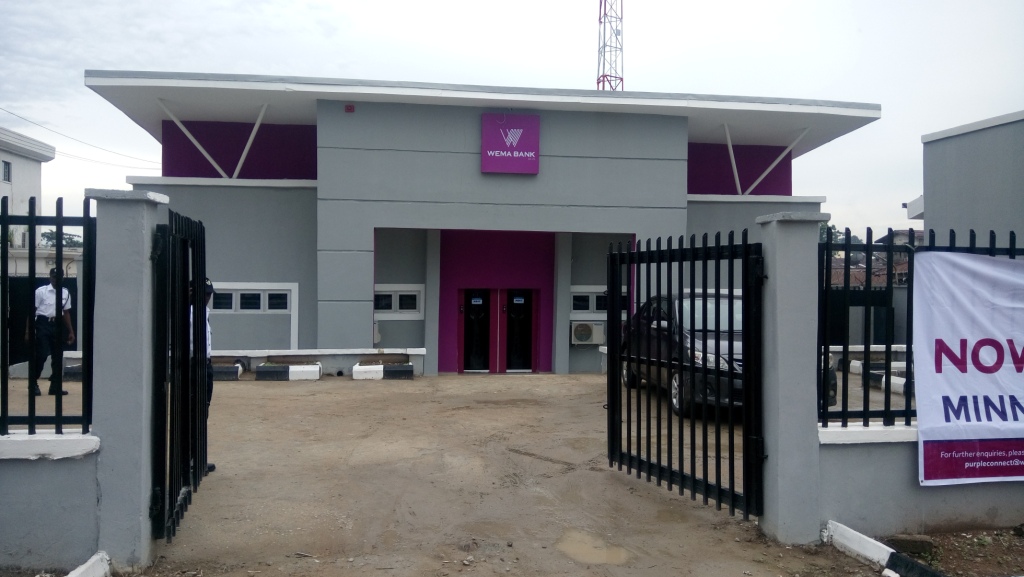
wema bank SPV Bond

By Dipo Olowookere

The board of Tier-2 lender in Nigeria, Wema Bank Plc, has concluded plans to raise fresh capital from the bond market.

The financial institution in a statement to the Nigerian Stock Exchange (NSE) last week disclosed that it wants to sell bonds worth N20 billion to investors mainly at the international market.

According to the bank, proceeds from the proposed exercise would be used to finance some of the operations of the lender.

Wema Bank explained that the series 2 senior unsecured bond is under its N50 billion bond issuance programme launched not too long ago.

“Following the successful establishment of its N50 Billion bond issuance program, the bank (Wema Bank) is set to issue up to N20 billion senior unsecured bond in series 2 Bond issuance program.

“The proceeds of the Bond are intended to boost the working capital financing needs of the bank.

“The series 2 of the bond is to be issued for a tenor of 5-7 years and the target market is the institutional investors,” the notice to the stock market regulator said.

Business Post reports that in the first tranche of the N50 billion debt programme, the mid-tier bank raised about N6.2 billion from the exercise.

Wema Bank, the pioneer of Nigeria’s first fully digital bank ALAT, offers a range of retail, SME banking, corporate  banking,  treasury,  trade  services  and  financial  advisory  to  its  customers.  The company operates with a National Banking Licence, with a network of over 136 branches and service centres across Nigeria, backed by a robust ICT platform.

Wema Bank had earlier said about three months ago that it aims to boost its capital ratio to 15 percent before the end of 2018 from 14.3 percent.

The regulatory minimum capital ratio for Wema Bank and its peers is 10 percent.

In its H1 results for 2018, the lender owned by states in the South West region of Nigeria, improved its profit after tax by 28.8 percent to N1.6 billion from N1.2 billion it achieved in the first half of 2017, while deposits from customers grew by about N103 billion to N354.9 billion from N251.7 billion.

Business Post reports that as at the close of business on Friday, September 28, 2018, Wema Bank traded at 57 kobo per share, rising by 3.64 percent during the day’s session.


Dipo Olowookere is a journalist based in Nigeria that has passion for reporting business news stories. At his leisure time, he watches football and supports 3SC of Ibadan. Mr Olowookere can be reached via [email protected]

Click to comment

Leave a Reply

Your email address will not be published. Required fields are marked *

Banking

Moniepoint CEO Advocates Using Transaction Data to Unlock Financing for SMEs

Published

on

Moniepoint Tosin Eniolorunda

By Modupe Gbadeyanka

The need to consider the usage of transaction data to design credit products for millions of small businesses in Nigeria has been emphasised by the chief executive of Moniepoint Incorporated, Mr Tosin Eniolorunda.

Speaking at a panel session at the launch of the Nigeria Payments System Vision 2028 (PSV 2028) by the Central Bank of Nigeria (CBN) recently, the Moniepoint chief said transactions from the payments ecosystem could be tracked to unlock economic survival for millions of underserved businesses that have been historically shut out of formal credit markets.

PSV 2028 is a framework aimed at setting priorities and direction for the country’s payments infrastructure over the coming years, with financial inclusion, resilience, and innovation among its core pillars.

According to the CBN governor, Mr Yemi Cardoso, the new framework builds on Nigeria’s progress in digital payments and seeks to accelerate the country’s transition towards a more inclusive, technology-driven ecosystem as it continues to lead Africa’s digital payments ecosystem.

At the panel, Eniolorunda noted that “I believe the next phase of growth will come from layering services like credit onto existing payment flows, using the visibility and trust already built through financial transactions.”

Speaking on the power of payment infrastructure as a foundation for broader financial services, he argued that the data generated by payment systems, when used responsibly, holds the key to making credit faster and more accessible for underserved businesses.

“One of the most powerful things about payment infrastructure is the data it creates. When used responsibly, it can help unlock quicker and more accessible credit for businesses that have historically been underserved. For many small businesses, access has always been the real barrier,” he said.

“Achieving the ambitions of PSV 2028 will require regulators, banks, fintechs, and ecosystem players working together with a shared long-term vision,” Mr Eniolorunda added, echoing Governor Cardoso’s warning against the country’s historic “start-stop” policy cycles.

“Over the past two decades, Nigeria’s payments ecosystem has evolved into one of the most dynamic and innovative in the world. From instant payments and digital adoption to fintech-led innovation, our progress has often set the pace on the continent. While this progress has not always been fully reflected in global narratives, its impact on economic activities, financial inclusion, and system resilience is evident across our economy,” he said.

Business Post learned that the panel was moderated by the chief executive of Sterling Bank, Mr Abubakar Suleiman, and also featured the chief executive of the Nigeria Inter-Bank Settlement System (NIBSS) Plc, Mr Premier Oiwoh; his counterparts at Remita Payment Services Limited (RPSL), Mr Deremi Atanda; and Shared Agent Network Expansion Facilities (SANEF) Limited, Mrs Uche Uzoebo, among others.

Continue Reading

Banking

Ecobank Floats $450m Nature Bond for Sustainable Agric Businesses, Others

Published

on

Ecobank Back2School loans

By Aduragbemi Omiyale

The world’s first ICMA commercial bank-issued Nature Bond has been launched by Ecobank Group to mobilise global capital for the protection of Africa’s natural ecosystems.

The debt instrument, up to $450 million, will be tradable on the London Stock Exchange (LSE), creating a new route for international and African capital to ​protect Africa’s biodiversity.

The bond will ​support African farmers, sustainable agriculture businesses and water systems,​ protecting some of the planet’s most important ecosystems.

Africa is home to some of the world’s most important natural capital, including arable land, tropical forests, freshwater systems and biodiversity across hundreds of millions of hectares. But, until now, private nature capital has not flowed to Africa at the scale the continent’s ecological significance warrants​ in global ecological resilience. Despite hosting 25 per cent of global biodiversity, Africa receives less than 3 per cent of nature finance​.

Ecobank’s Nature Bond​ is a direct response to this gap. It​ will support smallholder farmers adopting sustainable agricultural practices, agri-processors with verified deforestation-free supply chains, and water infrastructure protecting freshwater ecosystems relied upon by millions of people.

Unlike many conservation-focused financing vehicles, Ecobank’s Nature Bond channels capital directly through Africa’s real economy — financing businesses and communities whose day-to-day activities shape environmental outcomes at scale.

The investments will be made in 24 markets, with significant deployment in biodiversity-priority countries such as Côte d’Ivoire, Burkina Faso and Ghana. Importantly, 81 per cent of the eligible lending pool is allocated to countries where agricultural land-use change is the primary driver of biodiversity loss, helping direct capital to the areas where it can have the greatest environmental impact.

The framework also incorporates independent monitoring and verification mechanisms, including deforestation screening and supply chain traceability requirements, helping ensure that financed activities deliver measurable nature-positive outcomes. Every eligible loan carries seven independently verified sustainability conditions.

A Nature Bond, under the ICMA secondary designation,​ requires proceeds to actively contribute to nature-positive outcomes, including transforming economic activities to reduce the drivers of nature loss at scale.

The Nature Bond was designed to reach those that conservation-focused instruments were not designed to serve – farmers, agri-processors and water operators whose daily activities collectively determine ecosystem outcomes.

While green bonds typically finance a broad range of environmental objectives, the Nature Bond designation focuses the use of proceeds specifically on nature-related outcomes, including biodiversity, sustainable agriculture, land use and water infrastructure.

“This transaction is a defining moment for African sustainable finance. Investors did not just support this bond. They demanded more of it, allowing us to increase the size and tighten pricing.

“We are not a bank that simply labels bonds. We have spent four years building the systems, governance and accountability needed to make nature finance credible and scalable in Africa.

“This bond is ultimately about the farmers, cooperatives and communities whose livelihoods depend on healthy ecosystems,” the chief executive of Ecobank Group, Mr Jeremy Awori, stated.

On her part, the Head of Sustainability and ESRM at Ecobank Transnational Incorporated, Ms Rachael Antwi, said, “Nature finance will only scale in Africa if it is practical, measurable and connected to the real economy. This bond is designed to do that by linking international capital to eligible lending for sustainable agriculture and water infrastructure across 24 countries. It reflects the systems and standards Ecobank has built to ensure nature finance supports both environmental resilience and the communities whose livelihoods depend on healthy ecosystems.”

Business Post gathered that the $450 million bond was priced following strong investor demand, with the final orderbook exceeding $1.36 billion, almost 400 per cent of the original target size. The strength of demand enabled Ecobank to increase the transaction by $100 million and tighten pricing by 50 basis points.

The transaction attracted support from both international and African investors, demonstrating Ecobank’s unique ability to mobilise capital across global and African markets.

Continue Reading

Banking

Abbey Mortgage Bank Gets Green Light to Switch to Commercial Banking

Published

on

Abbey Mortgage Bank

By Adedapo Adesanya

One of Nigeria’s real estate lenders, Abbey Mortgage Bank Plc, has secured approval from the Central Bank of Nigeria (CBN) to convert into a regional commercial bank, marking a shift from its current status as a primary mortgage institution.

The development was disclosed in a regulatory filing, signalling a strategic change that will see the bank expand into broader commercial banking activities beyond housing finance.

The conversion is expected to take effect later this year, subject to the completion of regulatory and operational requirements, including system upgrades and restructuring.

The move comes amid ongoing changes in Nigeria’s banking sector, where institutions are seeking to strengthen capital bases and diversify operations in response to evolving regulatory and market conditions.

At its recent Annual General Meeting (AGM), its board gave approval to raise N100 billion in additional capital aimed at helping the company achieve its next growth phase.

Shareholders authorised the lender to raise the funds through various funding instruments, including shares, bonds, commercial papers, loans, and other securities, subject to regulatory approvals.

The directors were also allowed to raise fresh equity capital of up to N65.547 billion by way of private placement of 26,562,647,265 ordinary shares of 50 Kobo each at N2.43 per share, subject to regulatory approvals.

In addition, shareholders approved the increase in the company’s issued share capital from N5,076,923,077 divided into 10,153,846,154 of 50 Kobo each to N18,358,246,709.50 by the creation of up to 26,562,647,265 ordinary shares of 50 Kobo each, such new shares to rank pari passu in all respects with the existing ordinary shares in the capital of the bank.

Continue Reading

Trending