General
Technology Can Help Rebuild Trust in Accounting Profession—Expert
By Dipo Olowookere
Following a series of high-profile scandals across the world, many accountants and accounting firms have come under heavy scrutiny by regulating bodies.
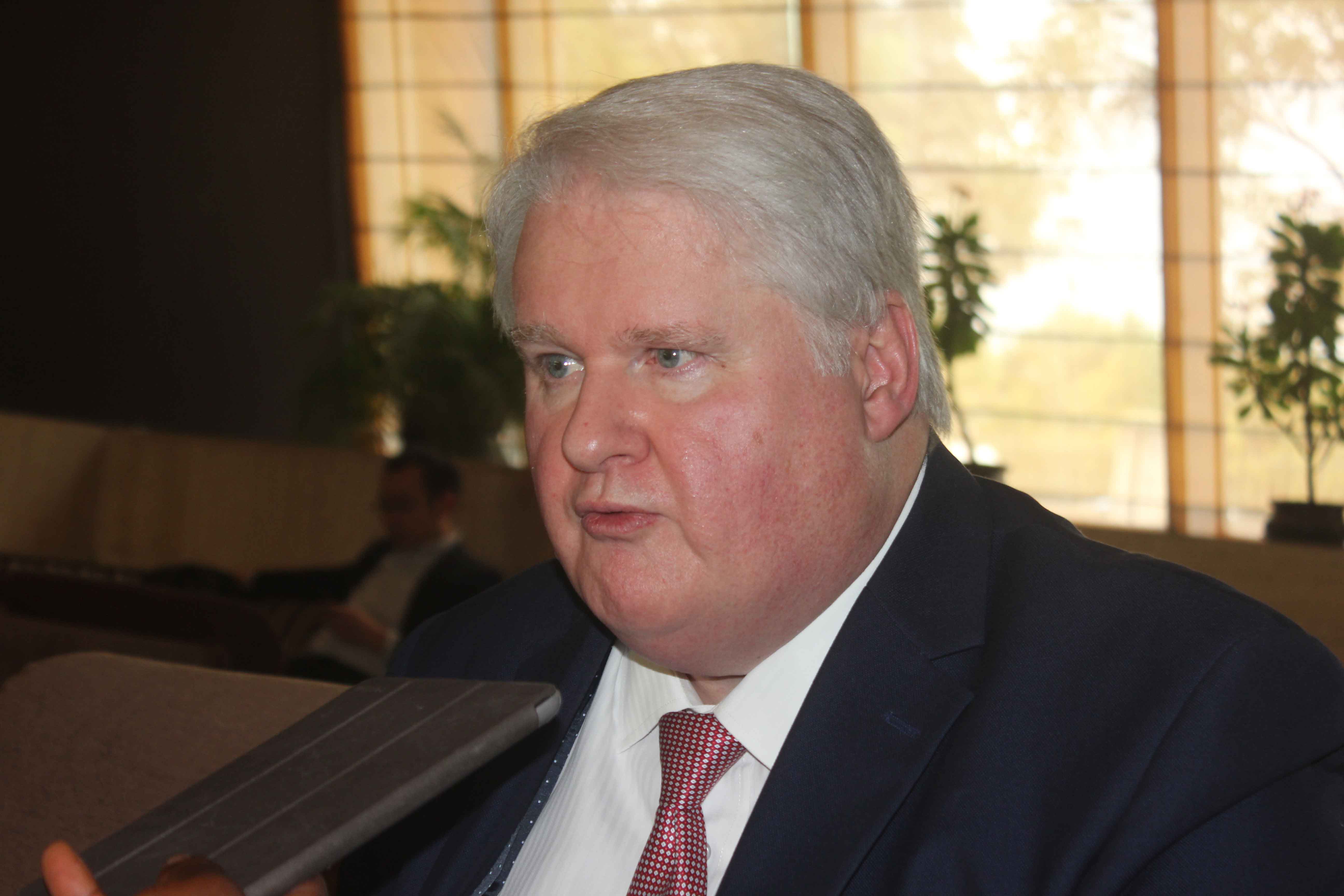
In this regard, one issue of immediate concern to practitioners is the need to regain public trust and an expert in the accounting business, Mr Michael Armstrong, has submitted that if properly utilised, technology can be used as a vital tool to help rebuild trust in the profession.
Speaking at the recently held 48th Annual Accountants’ Conference themed Securing Our Shared Future: A Collective Responsibility, Mr Armstrong said the accounting profession was set to witness exciting times ahead, in a changing world.
The accounting expert, who is the Regional Director of the Institute of Chartered Accountants in England and Wales (ICAEW) in the Middle East, Africa and South Asia, stated that, “Our profession is currently under a great deal of scrutiny with the media reporting corporate failures, criticism of accountants and auditors, and sanctions being imposed on what can sometimes feel like a daily basis. All Chartered Accountants are under scrutiny.”
Mr Armstrong, during his presentation titled Accounting Firms of the Future: Challenges and Opportunities at the event in Abuja, noted that, “As defined by our Royal Charter, the fundamental function of bodies like ICAEW and ICAN are the protection of public interest.
“Due to the loss of public confidence, the key challenge facing the profession and our most immediate concern is the need to rebuild trust.”
Mr Armstrong noted that the accountancy profession needed to recover its original purpose of assuring investors and the public of the truth, rebuilding trust and ensuring the sustainability of the profession.
The ICAEW director called on accounting professionals to act immediately. “In fact, our (ICAEW) CEO, Michael Izza, describes this as a “watershed moment” – a wake-up call for business leaders, regulators and auditors. As a profession, we have to be prepared to think and act differently in the future. If we don’t address this now, one wonders if we will still have a profession in 20 years’ time”, he said.
For Mr Armstrong, who was also a partner at KPMG, one way to improve the credibility of financial reporting is to boost audit quality. He noted that changes, driven by a range of factors, but most significantly technology, will transform all aspects of business and society in the coming years, and reshape the accountancy profession across Africa, Europe, the Middle East and the rest of the world.
“Over the years, our profession has moved from the use of spread-sheets, to computers and other more advanced technological devices.
“While the scale of the change today may appear more dramatic, this is not new territory for the profession which has a long history of adapting to changing regulatory and technological environments. It may seem more pressing and transformational now, but is the arrival of Artificial Intelligence (AI) or Big Data more significant than the arrival of computers into finance departments or the appearance of the spread sheet? Our profession has always been very adaptable in the past so there’s no reason to think it can’t adapt this time,” he added.
Mr Armstrong also emphasised the need for collaboration amongst Chartered Accountants more than ever before; and looks forward to working and collaborating with ICAN following the MoU signed earlier in the year.
In his presentation, Mr Armstrong noted that technology is the driving force behind change in the accountancy profession, as it presents countless opportunities for the profession to deliver more value to businesses through new and enhanced services. He also explained that accountants can save time – for themselves and their clients – from lower value tasks to focus on more complex and advisory work.
Other workshops held at the four-day conference were: ‘SMPS & SMES: Revving The Economy To Action’; ‘Securing Our Shared Future; Cyber Security Challenges’ and ‘Contemporary Issues in Digital Economy’.
The conference ended with a Gala Night and was attended by Chartered Accountants from across Nigeria.
General
Minister Advocates Coordinated, Trust-Driven Government Communication
By Aduragbemi Omiyale
The Minister of Information and National Orientation, Mr Mohammed Idris, has emphasised that unified government messaging remains very critical to restoring public trust, especially in delivering the Renewed Hope Agenda of President Bola Tinubu.
He said this on Thursday in Abuja at an interactive session with Directors of Information and Resident Information Officers (RIOs) on grade level 14-17, deployed across Ministries, Departments and Agencies (MDAs).
The event, according to a statement issued on Friday by the Director Public Relations and Protocol of the ministry, Mr Suleiman Haruna, was themed Aligning Public Information with the Renewed Hope Agenda: Rebuilding Trust Through Effective, Transparent Communication.
The Minister noted that government officials must adopt a unified, coordinated, and trust-driven approach to government communication.
He posited that public trust remains the most valuable asset of government communication, stressing that information officers must be guided by honesty, credibility, and consistency in their work.
“Public trust is our most important capital. Once credibility is lost, no amount of messaging can fix it,” the Minister said, warning that fragmented messaging and parallel communication channels weaken government credibility and confuse citizens, insisting that the government must speak with a single, clear, and consistent voice.
“We are one government serving one national interest, and our communication must reflect that unity,” he said.
Mr Idris urged Resident Information Officers to see themselves as active partners within their host MDAs rather than passive observers, encouraging them to engage proactively with Ministers, Permanent Secretaries, and agency leadership, noting that professionalism, relevance, and initiative are key to earning trust and influence.
Addressing the growing pressure of misinformation and the speed of digital media, the founder of Blueprint Newspaper stressed the importance of timely and accurate communication, noting that delays often create space for false narratives. While reaffirming the federal government’s commitment to freedom of expression, he said such freedom must be exercised responsibly.
The Minister also outlined steps being taken to strengthen professionalism within the information cadre, including mandatory periodic reporting, improved deployment processes, continuous training, and stronger institutional support. He disclosed that the Federal Government has begun restoring the National Institute of Public Information to boost capacity building for public communicators.
He called for teamwork and mutual respect, reminding participants that they are central to the projection of government policies and achievements and that they must align their work with the priorities of the Renewed Hope Agenda.
General
Senate Forms Seven-Man Committee to Harmonise Electoral Act Amendment Bill
By Adedapo Adesanya
The Senate has constituted a seven-man committee to harmonise contributions and opinions on the Electoral Act Amendment Bill, 2026, with a mandate to present a consolidated report to the chamber next Tuesday.
The decision followed over two hours of consideration of the bill’s provisions during a closed-door session on Thursday.
The committee is chaired by the Chairman of the Senate Committee on Judiciary, Human Rights and Legal Matters, Mr Niyi Adegbomore.
Other members are Senators Adamu Aliero, Aminu Tambuwal, Adams Oshiomhole, Danjuma Goje, Tony Nwoye, and Titus Zam.
The group has three days to conclude its assignment and submit its report for consideration at the next plenary session scheduled for next week.
The Senate on Thursday commenced consideration of the Electoral Act 2022 (Repeal and Re-enactment) Bill 2026, moving into a closed-door session to review documents submitted by the Chairman of the Senate Committee on Electoral Matters, Mr Simon Lalong.
The Electoral Act (Repeal and Enactment) Bill, 2025 would expand voter participation, safeguard against electoral fraud, and strengthen institutional capacity of the Independent National Electoral Commission (INEC).
The closed session was convened to allow lawmakers to thoroughly examine the proposed amendments and supporting documents before engaging in further legislative debate on the bill.
This development comes after the upper chamber deferred consideration of the bill on Wednesday, giving lawmakers time to prepare for a detailed review.
Although the House of Representatives has already passed the bill, Senate President Senator Godswill Akpabio underscored the need for thorough scrutiny, given the bill’s implications for the nation’s electoral process.
“This is a very important bill, especially as it is election time. We must take our time to ensure justice is done to all, so that we do not end up at the tribunal,” he said.
According to the committee’s findings, a clause-by-clause analysis of the bill indicates that enacting the legislation would leave Nigerians with an enduring legacy of electoral integrity, enhance transparency, and boost public confidence.
The bill contains more than 20 key innovations distinguishing it from previous electoral frameworks, including provisions recognising the voting rights of prisoners and mandating INEC to register eligible inmates in correctional facilities nationwide.
It also prescribes sanctions for vote-buying ranging from a fine of N5 million to a two-year jail term, as well as a 10-year ban from contesting elections. It also recommends mandatory jail terms and higher fines for offences such as result falsification and obstruction of election officials.
Others include standardising delegates for indirect party primaries to prevent arbitrary determination of delegate criteria by party leaders, while addressing perennial funding challenges to the Independent National Electoral Commission (INEC) by mandating the release of election funds at least one year before polling day.
General
Dangote Cement Ibese Plant Launches Safety FairPlay Initiative
By Modupe Gbadeyanka
A Safety FairPlay initiative designed to drive behavioural change and cultural shift towards safety conducts among its employees has been launched by the Ibese Plant of Dangote Cement Plc.
This programme will drive lasting behavioural and cultural change through an equitable and transparent framework that promotes safe conduct. Built on three core pillars—Recognition, Correction (Coaching) and Discipline.
It rewards positive safety behaviour, ensures consistency in addressing at-risk actions, and encourages open reporting of incidents, near-misses and errors, the company said in a statement on Thursday.
The scheme will be replicated at all the plants of Dangote Cement, marking a significant milestone in strengthening the Company’s safety culture, the organisation added.
The pilot launch of this policy recorded impressive participation from both the management and employees, thus underscoring a shared commitment to safer work practices.
The Technical Director of the cement giant, Mr Anandam Duraisamy, emphasized the strategic importance of the initiative to the business and called on employees to champion a safety culture anchored on fairness, accountability, recognition, and continuous improvement.
He noted that the Safety Fairplay marks a defining moment in the company’s journey toward building a workplace where safety is not just a policy, but a shared mindset—an everyday habit that defines who we are and how we work. We are here to launch an initiative that aims to transform not only what we do, but how we think, act, and respond when it comes to safety.
“Safety FairPlay is about building trust, consistency, and accountability in how we manage safety. When people know that safe behaviour is recognised, risky actions are fairly addressed, and everyone is treated equitably, safety becomes a shared responsibility and a true part of our culture.
“This initiative is about behavioural and cultural change. It recognises that true safety excellence goes beyond equipment, procedures, or compliance; it begins with people-our attitudes, our choices, and our willingness to look out for one another.
“Every incident prevented, every risk spotted, and every safe action taken strengthens our organisation. And that strength comes from you—from each member of our workforce embracing safety as a personal responsibility and a collective value,” he stated.
Also speaking, the Ibese Plant Head of Health, Safety and Environment (HSE), Mr Elvis Akalusi, commended the management for driving the programme and applauded employees for their enthusiastic embrace of the initiative.
He affirmed that the Safety FairPlay Initiative would be fully embedded into the plant’s daily operations, with the full collaboration of all heads of departments.
“This initiative will offer the tools, coaching, recognition, and accountability needed to help each of us make safer decisions. But its success depends on our shared commitment—our courage to consistently do the right thing, even when no one is watching.
“Let us approach this new chapter with open minds and a determination to improve. Let us build a culture where speaking up is encouraged, learning is continuous, and mistakes become opportunities to grow—not reasons for fear,” he stated.
-
Feature/OPED6 years agoDavos was Different this year
-
Travel/Tourism9 years ago
Lagos Seals Western Lodge Hotel In Ikorodu
-
Showbiz3 years agoEstranged Lover Releases Videos of Empress Njamah Bathing
-
Banking8 years agoSort Codes of GTBank Branches in Nigeria
-
Economy3 years agoSubsidy Removal: CNG at N130 Per Litre Cheaper Than Petrol—IPMAN
-
Banking3 years agoSort Codes of UBA Branches in Nigeria
-
Banking3 years agoFirst Bank Announces Planned Downtime
-
Sports3 years agoHighest Paid Nigerian Footballer – How Much Do Nigerian Footballers Earn