Economy
US Stock Markets Open Lower as Fed Considers One More Rate Hike
By Investors Hub
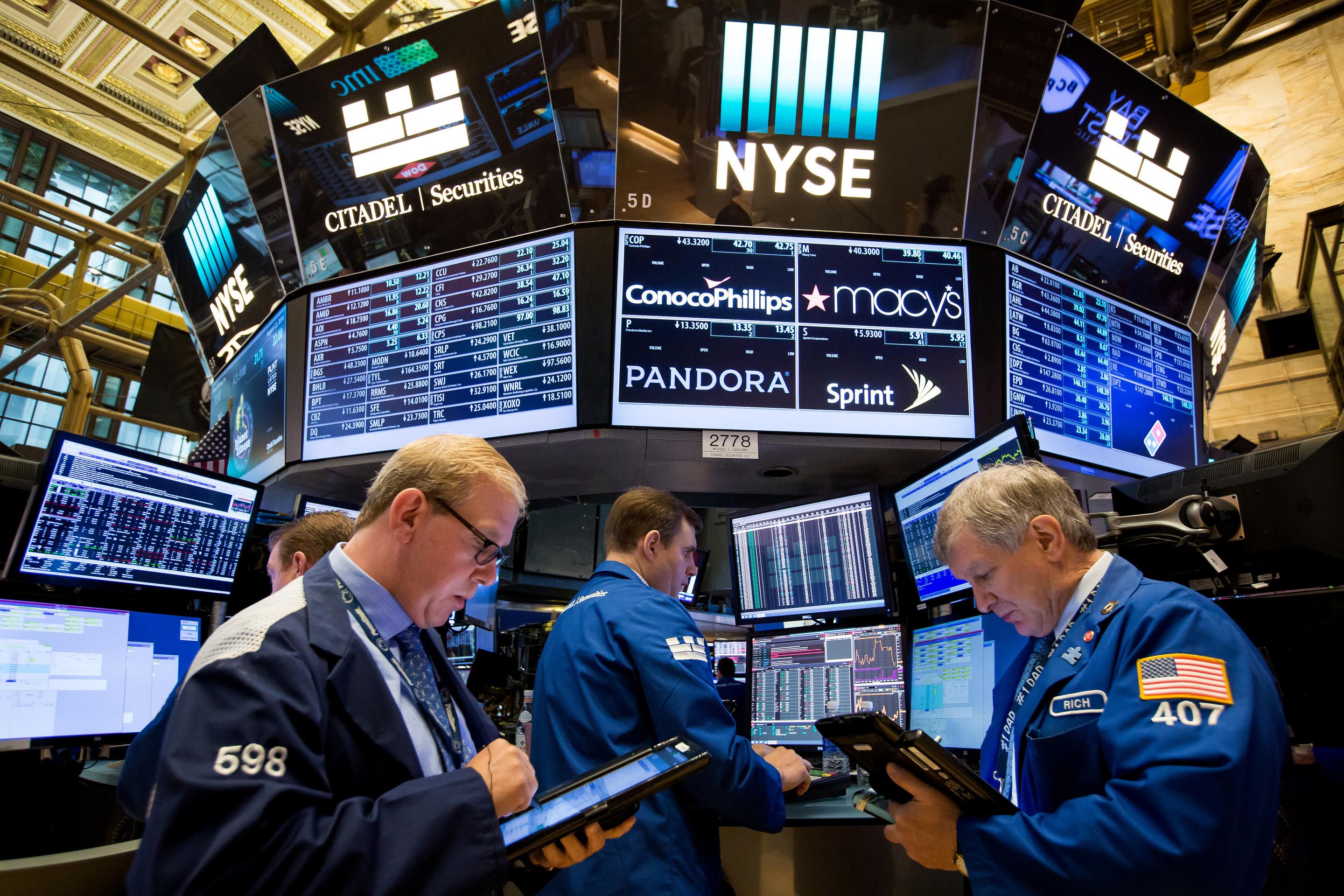
The major U.S. index futures are pointing to a lower opening on Thursday, with stocks likely to move to the downside after ending the previous session roughly flat.
Lingering concerns about the outlook for interest rates may weigh on the markets as traders continue to digest the minutes of the Federal Reserve?s latest monetary policy meeting.
The minutes released Wednesday afternoon showed the Fed continues to favor a ?gradual approach? to raising interest rates, with the meeting participants generally judging that the economy was evolving about as anticipated.
The Fed?s forecasts point to one more rate hike before the end of this year, with CME Group?s FedWatch indicating a nearly 80 percent chance of a quarter-point rate increase in December.
After recovering from an early move to the downside, stocks showed a lack of direction over the course of afternoon trading on Wednesday. The major averages spent the afternoon bouncing back and forth across the unchanged line.
The major averages eventually ended the day in negative territory. While the Dow fell 91.74 points or 0.4 percent to 25,706.68, the Nasdaq slipped 2.79 points or less than a tenth of a percent to 7,642.70 and the S&P 500 edged down 0.71 points or less than a tenth of a percent to 2,809.21.
The lackluster performance in the afternoon came after the Federal Reserve released the minutes of its September monetary policy meeting.
The Fed argued the “gradual approach” would balance the risk of raising rates too quickly, causing a slowdown in the economy, and raising rates too slowly, leading to inflation above the central bank’s 2 percent objective.
Looking ahead, the minutes said a few meeting participants expected rates would need to become modestly restrictive for a time.
A number of participants also determined it would be necessary to temporarily raise rates above the longer-run level in order to reduce the risk of a sustained overshooting of the Fed’s inflation target.
Meanwhile, a couple of participants indicated they would not favor adopting a restrictive policy stance in the absence of clear signs of an overheating economy and rising inflation.
During the meeting, the Fed decided to raise rates by a quarter point for a third time this year to 2 to 2.25 percent and forecast another rate hike before the end of the year. The central bank’s forecasts also pointed to three rate hikes in 2019.
The Fed’s assessment that the “gradual approach” to raising rates remains appropriate comes even as President Donald Trump has repeatedly attacked the central bank for hiking rates too quickly.
Trump continued his assault on the Federal Reserve in an interview with Fox Business on Tuesday, calling the central bank the “biggest threat” to his presidency.
Profit taking contributed to the early weakness on Wall Street, as traders cashed in on yesterday’s gains amid lingering uncertainty about the near-term outlook for the markets.
A negative reaction to the latest batch of earnings news also weighed on the markets, with tech giant IBM Corp. (IBM) falling after reporting third quarter earnings that beat analyst estimates but weaker than expected revenues.
On the other hand, shares of Netflix (NFLX) surged higher after the video streaming service reported better than expected third quarter earnings, revenues, and subscriber growth.
Negative sentiment was also generated by the release of a report from the Commerce Department showing a much bigger than expected pullback in housing starts in the month of September.
Despite the recovery attempt by the broader markets, housing stocks ended the day significantly lower. The Philadelphia Housing Sector Index tumbled by 1.9 percent after jumping by 2.4 percent in the previous session.
Housing stocks pulled back after moving higher for three straight sessions, with the disappointing housing starts data weighing on the sector.
Considerable weakness was also visible among energy stocks, which moved lower along with the price of crude oil. Reflecting the weakness in the energy sector, the NYSE Arca Natural Gas Index slumped by 1.6 percent, the Philadelphia Oil Service Index dropped by 1.4 percent and the NYSE Arca Oil Index fell by 1.1 percent.
On the other hand, tobacco stocks showed a substantial move to the upside on the day, driving the NYSE Arca Tobacco Index up by 1.6 percent. The index rebounded after closing lower for five consecutive sessions.
Economy
Moniepoint Research Shows Diminishing Role of Cash in Nightlife Payments
By Modupe Gbadeyanka
A new report released by Africa’s leading all-in-one financial ecosystem, Moniepoint Incorporated, has revealed that the use of cash for financial transactions is gradually dying due to security concerns.
The study, which looked into transaction data of over 27,000 clubs, bars, and lounges, showed that bank transfers dominated, followed closely by card payments, with cash actively discouraged. It was observed that transfers outpace card payments by nearly 2 million transactions during peak nighttime hours across its network.
In the research titled The Business of Community Nightlife in Nigeria, findings provided a rare, data-driven look into the country’s informal night economy.
While high-end Detty December venues grabbed headlines with daily revenues of N360 million and table prices reaching N1.2 million, Moniepoint’s study shifted the spotlight to the “community nightlife” where roadside bars, suya spots, and neighbourhood joints form the bedrock of social life for millions of Nigerians.
One of the study’s most operationally significant findings concerns the timing of spending. Nightlife in Nigeria runs late, but economically, the night is decided early.
Transaction volumes begin climbing sharply from 8 pm, peak before midnight, and then decline steadily even as venues remain full. By the time the night is at its longest, purchasing activity has already wound down.
However, for bar operators, this has clear practical implications – the most critical hours for staffing, stocking, vendor payment and cash flow management are the earliest hours of the day between midnight and 6 am.
The report further underscores the sector’s role in employment, noting that local bars typically expand their workforce by 30-50 per cent on peak nights. Conservative estimates suggest that at least 54,000 people are engaged in nightlife labour every night across Nigeria.
It was also observed that the most common transaction narrations from the data sourced – “food”, “pay”, “sent”, “pos”, “cash” – reflect the full breadth of nightlife spending: street food, club entry, lounge tabs, transport, and afterparties. Digital payments have gained huge traction in Nigeria’s social space.
While alcohol remains a key revenue driver, the data shows that food is the quiet stabiliser of Nigeria’s night economy, particularly in local and informal settings. In several neighbourhood venues, bottled water and meals outsell beer and spirits, especially early in the evening.
Lagos leads in sheer concentration of nightlife establishments, with 4,856 bars, clubs, and lounges on the Moniepoint network. FCT follows with 2,515, then Rivers (2,362), Delta (1,930), and Edo (1,574).
Katsina leads the country in nighttime food truck payment value, with vendors pulling in over N130 million in the last 12 months. Kwara State leads in transaction count. Nigeria’s nightlife economy is distributed, not overly elitist.
On the lending side, the report noted that a significant share of loan requests from bar and lounge operators is directed toward renovations, furniture, lighting, and sound systems, showing that investments are intended to attract and retain customers in a competitive sector where ambience plays a decisive role.
Commenting on the report, the chief executive of Moniepoint, Mr Tosin Eniolorunda, said, “Nigeria’s local bars and night-time operators are not peripheral to the economy; they are a critical part of its architecture. We see a substantial and sustained economic sector that employs hundreds of thousands of Nigerians every night and deserves the same attention we give to agriculture, healthcare, and retail.
“Our goal is to make sure every one of those businesses has the tools to grow. From giving credit to finance renovations and sound systems to providing same-day settlement that allows vendors to restock and with tools like Moniebook that power inventory management and reconciliation, Moniepoint is ensuring that this vital artery of the nation’s economy remains viable and empowering.”
Economy
CBN Reduces Interest Rate by 50 Basis Points to 26.50%
By Adedapo Adesanya
The Central Bank of Nigeria (CBN) has cut the interest rate by 50 basis points to 26.50 per cent from 27 per cent.
Nigeria’s apex bank announced this during its two-day 304th Monetary Policy Committee (MPC) meeting, which concluded on Tuesday in Abuja.
This comes after the country’s interest rate cooled in January to 15.10 per cent from 15.15 per cent, according to the National Bureau of Statistics (NBS), strengthening the case for a reduction.
The CBN Governor, Mr Yemi Cardoso, said all members of the MPC unanimously agreed upon the decision.
“The committee decided to reduce the monetary policy rate by 50 basis points to 26.50 per cent,” he said.
Mr Cardoso stated that the liquidity ratio was maintained at 30 per cent, and the standing facilities corridor was adjusted to +50 to -450 basis points around the monetary policy rate.
He said the committee retained the Cash Reserve Ratio (CRR) at 45 per cent for commercial banks and 16 per cent for merchant banks, while the 75 per cent CRR on non-TSA public sector deposits was equally maintained.
The CBN uses the MPR, which works as the benchmark interest rate, to manage inflation, macroeconomic stability, and liquidity.
Last November, the MPC retained the Monetary Policy Rate (MPR) at 27.00 per cent. The last time the apex bank cut interest rates was in September last year, to 27 per cent from 27.50 per cent after a series of easing in inflation.
Market analysts had argued for higher interest cuts due to results seen in the CBN’s inflation targeting framework. Meanwhile, some say the 50 basis points reduction will offer a temporary reprieve as inflation heads for a single-digit target in the coming months.
Economy
Grey to Cut Cross-Border Payment Costs with New USD Offering
By Adedapo Adesanya
A cross-border payments solutions company, Grey has expanded its business banking platform to include US Dollar corporate accounts, bulk international payments, and USDC stablecoin support, all integrated into a single system.
The company is positioning itself as a low-cost, faster alternative to traditional international banking, particularly for businesses in emerging markets as it enables companies to open US Dollar accounts, receive global payments, and send payouts to 170+ countries, including bulk transfers, within minutes.
Grey aims to solve common cross-border payment challenges, particularly the high transfer costs that often range between 6 and 7 per cent of transaction value, prolonged settlement cycles that can stretch across several days, and the limited access many businesses face when trying to open and operate foreign currency accounts. In addition, companies frequently contend with hidden intermediary fees and poor foreign exchange transparency, both of which undermine cost predictability and effective cash flow management.
By integrating USD business accounts and USDC stablecoin functionality into its platform, Grey enhances its value proposition around faster settlement, clearer pricing structures, improved cost efficiency, and broader global accessibility. The expanded capabilities enable businesses to manage international transactions with greater speed, transparency, and operational control.
“Businesses may operate without borders today, but access to reliable global banking remains uneven, particularly for companies in high-growth markets,” said Mr Idorenyin Obong, Co-founder and Chief Executive Officer of Grey. “We’re closing that gap and enabling businesses to move money faster, with greater transparency and control, wherever their clients or partners are based.”
“When payments are delayed, or costs are unpredictable, growth stalls,” added Mr Joseph Femi Aghedo, Chief Operating Officer and Co-founder of Grey. “Grey eliminates those friction points, giving businesses a faster, simpler way to manage payroll, supplier payments, and partner payouts across borders. Adding USD and stablecoin capabilities makes these benefits accessible to even more customers.”
Established in Africa in 2020, Grey has a presence in key markets, including the United States, the United Kingdom, and Europe, and has recently expanded its services and operations into Latin America and Southeast Asia.
Since its inception, the company has consistently enhanced its services to empower digital nomads worldwide, regardless of location. Grey’s offerings include multi-currency accounts, low-cost international money transfers, a virtual USD card, expense management tools, and robust security measures.
-
Feature/OPED6 years agoDavos was Different this year
-
Travel/Tourism10 years ago
Lagos Seals Western Lodge Hotel In Ikorodu
-
Showbiz3 years agoEstranged Lover Releases Videos of Empress Njamah Bathing
-
Banking8 years agoSort Codes of GTBank Branches in Nigeria
-
Economy3 years agoSubsidy Removal: CNG at N130 Per Litre Cheaper Than Petrol—IPMAN
-
Banking3 years agoSort Codes of UBA Branches in Nigeria
-
Banking3 years agoFirst Bank Announces Planned Downtime
-
Sports3 years agoHighest Paid Nigerian Footballer – How Much Do Nigerian Footballers Earn