Connect with us

Economy

NPDC Attains 100% Local Content Input in Edo Gas Project

Published

on

By Dipo Olowookere

The Nigerian Petroleum Development Company (NPDC), an Upstream Subsidiary of the Nigerian National Petroleum Corporation (NNPC), has achieved a 100 per cent local content input in the development of Oredo Integrated Gas Handling Facility.

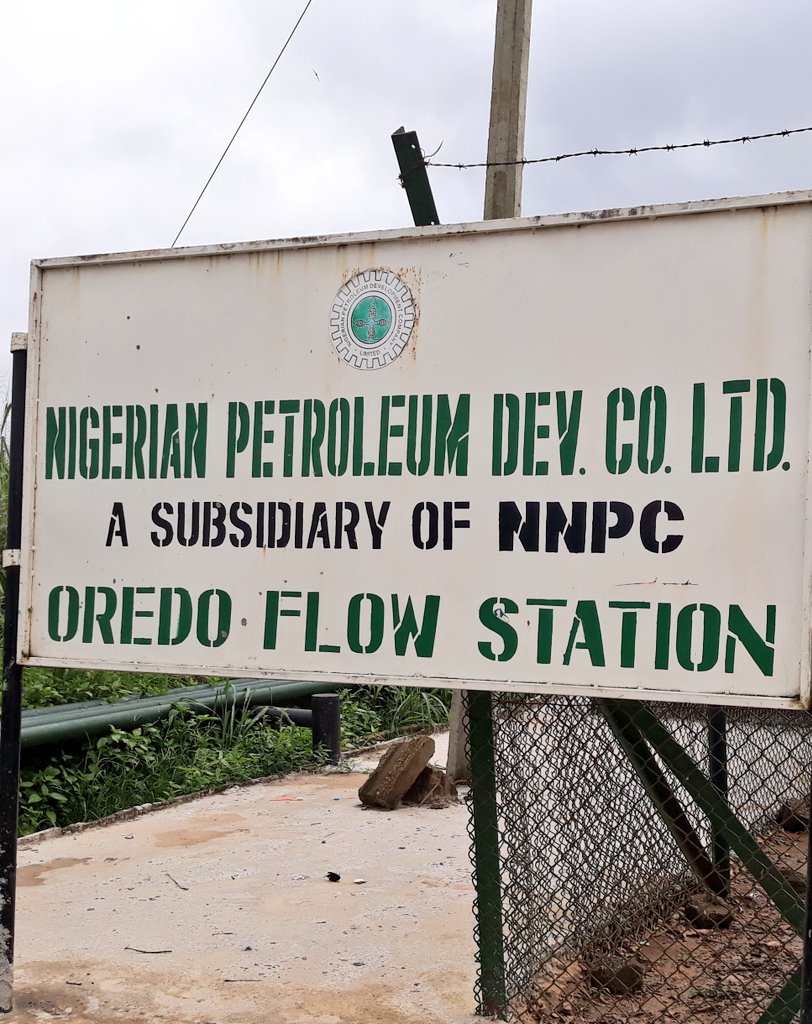
Group Managing Director of NNPC, Dr Maikanti Baru, declared this Wednesday during a tour of the NPDC’s Oredo Flow Station, Oredo Gas-to-Pan-Ocean Facility, Oredo Integrated Gas Handling Facility (IGHF), as well as the Oredo LPG Dispensing Facility, all in Edo State.

Commending NPDC on the feat, Mr Baru said he was proud that a world-class facility was being put in place by a Nigerian engineering contractor in conjunction with another Nigerian company, the NPDC.

“From engineering, construction to erection of the various units, we feel very encouraged by the huge man-hours which you are putting in here, day and night, with full local content,” Mr Baru told over 500 workers at the site.

The IGHF is currently at 80 percent completion. When completed in December, it will make provision for dehydration of gas and liquid extraction. It is expected to also produce both Liquefied Petroleum Gas (LPG) and Propane, in addition to dry gas to the Escravos Lagos Pipeline System (ELPS).

He described the Oil Mining Lease (OML) 111, where the gas projects are located, as one of the most significant assets of the NPDC because it is where the corporation’s staff and their contractors design, build and operate facilities hitherto operated by the International Oil Companies (IOCs).

“You could see that right from the well-design through to reception of the various liquids to the processing and disposal of the various outputs, it is fully indigenous. So, it cannot be better than this,” he added.

He said as a National Oil Company (NOC), the corporation was using this to showcase its ability to intervene, stressing that “we are not just a player, we are also building capacity that can enable us intervene by taking over any assets whenever any contractor decides to opt out,” he added.

Mr Baru stated that the project’s funding constraints would be addressed soonest, stressing that NNPC was considering alternative means to support and complete the project.

“All these projects are located within OML 111, one of our critical assets which we are keen on deriving maximum benefits from,” he stated.

Earlier, Managing Director of NPDC, Mr Yusuf Matashi, thanked the NPDC Board led by the GMD, for coming down to inspect the gas facilities, saying it was the first time the company was witnessing a highly-synchronised support towards these projects.

He said the LPG Dispensing Facility strategically offered 40% solution for Nigeria’s domestic LPG market which would translate into extra cash flow for the company.

“Another advantage is that it will ensure ease of distribution and penetration into the market. You can take LPG to every nook and cranny of the country from here. So, it is quite strategic,” he noted.

The MD said in line with NPDC’s Corporate Social Responsibility (CSR) efforts, the company had engaged youths within the host community area, with a number of them fully involved in the local contracts around the project as well as the pipeline Right Of Way (ROW).

“We have also completed a Skills Acquisition Centre which is currently being furnished in line with the component of the project. We intend to commission the centre even before the project is completed. From our records, this is one project that has engendered cordial relationship with the Oredo community and we hope to replicate similar understanding in other areas within the Niger Delta,” Mr Matashi stated.

In his remarks, the NNPC Chief Operating Officer, Upstream, Mallam Bello Rabiu, who expressed happiness that the project would be delivered within time and budget, also charged the workers to double the over one million man-hours achieved so far in the project without any incidence.

While further assuring of timely funding for the project, the NNPC Chief Financial Officer, (CFO) Mr Isiaka Abdulrazaq, commended the NPDC Management for performing impressively on the project and for its drive towards making NPDC the E&P Company of choice in Nigeria.

Located 34km southeast of Benin City, the OML 111 is an onshore field comprising five fields viz: Oki-Oziengbe-South, Aroh North, Koko, Oghama as well as Oredo, which has twelve (12) out of its fifteen (15) wells currently producing.


Dipo Olowookere is a journalist based in Nigeria that has passion for reporting business news stories. At his leisure time, he watches football and supports 3SC of Ibadan. Mr Olowookere can be reached via [email protected]

Click to comment

Leave a Reply

Your email address will not be published. Required fields are marked *

Economy

SEC Okays 50% Hike in X-Alert Fee for Capital Market Transactions

Published

on

x-alert fee capital market

By Aduragbemi Omiyale

The Securities and Exchange Commission (SEC) has approved a 50 per cent hike in the X-Alert service fee per transaction in the Nigerian capital market.

The X-Alert fee is a flat rate charged for sending real-time SMS/email notifications for transactions to investors from both buy and sell sides.

It was introduced by the Nigerian Exchange (NGX) to replace percentage-based charges, aimed at increasing transparency and reducing total transaction costs for investors.

Investors were earlier charged N4 per SMS, but the country’s apex capital market regulator has approved a 50 per cent increase in X-Alert service fee, meaning the new rate is N6 per SMS.

Business Post gathered from one of the players in the ecosystem that the effective date for the new price was Thursday, March 26, 2026.

“We wish to inform you of a revision to the X-Alert (SMS) service fee applicable to transactions executed on the Nigerian Exchange (NGX).

“Following approval by the Securities and Exchange Commission (SEC), the X-Alert fee has been reviewed upward from N4.00 to N6.00 per transaction,” the notice sighted by this newspaper read.

Continue Reading

Economy

World Bank Projects 4.2% Growth for Nigeria Amid Risks

Published

on

dampen growth in Nigeria

By Adedapo Adesanya

Nigeria’s economy is projected to remain resilient in the face of mounting global uncertainties, with the World Bank forecasting a 4.2 per cent growth rate in 2026.

However, the global lender has warned that rising fuel costs and persistent inflation, worsened by geopolitical tensions in the Middle East, could undermine household incomes and slow poverty reduction.

Speaking in Abuja, the bank’s lead economist for Nigeria, Mr Fiseha Haile, noted that while the ongoing US-Israel-Iran conflict has pushed up prices, overall economic activity has remained largely intact.

“Overall business activity has been expanding over the past few ​months, suggesting the impact on growth has been relatively contained. But the shock is still ⁠being felt through higher inflation,” Mr Haile said.

According to him, business activity has continued to expand in recent months, indicating that the broader impact on growth has been “relatively contained,” even as inflationary pressures intensify.

Nigeria’s inflation rate, though significantly reduced from around 33 per cent in December 2024 to 15.06 per cent in February 2026, remains elevated compared to regional peers.

“Inflation is still elevated and under ‌increasing ⁠pressure, and that poses risks to incomes and poverty reduction,” Mr Haile said.

The renewed surge in fuel prices, reportedly rising by over 50 per cent during the Iran conflict, has had a ripple effect on transportation, food, and production costs, amplifying the cost-of-living crisis.

The World Bank urged Nigerian authorities to adopt prudent macroeconomic measures, including tightening monetary policy, avoiding blanket subsidies, and saving windfalls from higher oil prices to strengthen fiscal buffers.

It also recommended reconsidering restrictions on fuel imports as a potential tool to ease inflationary pressures.

The economic reforms under President Bola Tinubu — including the removal of fuel subsidies, exchange rate unification, and tax restructuring — were acknowledged as ambitious steps aimed at stabilising the economy.

These reforms have contributed to improved external buffers, with rising foreign exchange reserves and reduced volatility.

Additionally, Nigeria’s fiscal deficit stood at 3.1 per cent of GDP in 2025, while the debt-to-GDP ratio declined for the first time in a decade.

Yet, the World Bank cautioned that tighter global financial conditions could still pose risks to capital inflows, borrowing costs, and remittances.

Continue Reading

Economy

FTSE Russell Restores Nigeria’s Frontier Market Status

Published

on

FTSE Russell Nigeria

By Aduragbemi Omiyale

The Frontier Market status of Nigeria, earlier yanked off by FTSE Russell, has now been fully restored.

The platform earlier reclassified the country’s status to Unclassified following several uncertainties and economic issues.

But after recommendations from its Equity Country Classification Advisory Committee and Policy Advisory Board, the Frontier Market status has been restored by FTSE Russell, marking a significant milestone in the country’s reintegration into global investment indices and signalling renewed opportunity for international investors.

However, this will take effect from September 2026, with the outcome announced as part of the March 2026 interim review and communicated to investors across key global markets.

The decision reflects sustained improvements in Nigeria’s market infrastructure, accessibility, and overall investability, driven in large part by enhancements to the Nigerian Exchange (NGX) platform. These include strengthened trading systems, improved settlement processes, and increased transparency, all of which have contributed to a more efficient and accessible market environment for domestic and international investors.

According to the FTSE Quality of Markets assessment, Nigeria recorded Pass ratings across several core criteria, including regulatory oversight, capital repatriation, brokerage competitiveness, tax framework, and settlement efficiency, with a T+2 settlement cycle in operation. These gains reflect deliberate efforts to align market operations with global standards and improve the investor experience.

While acknowledging this progress, the review also highlighted areas for further development, including foreign exchange market depth, transaction cost efficiency, derivatives market availability, and certain custody and clearing mechanisms. Addressing these gaps will require continued coordination across regulators, market operators, and the broader financial ecosystem.

FTSE Russell noted that its country classification process combines detailed technical assessment with input from global institutional investors, ensuring that both structural conditions and real-world investor experience are reflected. The organisation also commended Nigerian market authorities for their continued engagement.

“This milestone reflects the strength of collaboration across Nigeria’s capital market ecosystem, but importantly, the deliberate efforts to strengthen the underlying market infrastructure that supports efficient trading, transparency, and investor access,” the chief executive of NGX Group Plc, Mr Temi Popoola, said.

“At NGX Group, we have remained focused on building a more resilient, accessible, and globally competitive platform, and this reclassification affirms the progress made.

“We will continue to work closely with regulators, market operators and stakeholders to deepen reforms, address identified gaps, and sustain momentum towards higher market classifications,” he added.

The Frontier Market designation is expected to enhance Nigeria’s visibility among global asset managers and index-tracking funds, potentially unlocking new capital inflows and broadening participation in the market.

As global investors increasingly prioritise markets with strong infrastructure, transparency, and accessibility, Nigeria’s re-entry into the FTSE Frontier Market universe underscores the critical role of market infrastructure in enabling capital formation and connecting local opportunities to global capital.

Continue Reading

Trending