Connect with us

Economy

Outlook for Africa’s Oil & Gas Sector Positive—Report

Published

on

oil prices driving up Trump

By Dipo Olowookere

A new report by PwC has disclosed that the outlook for Africa’s oil & gas industry remains positive amid difficult operating and economic headwinds.

Tough economic and external conditions have placed pressure on oil & gas companies to be more cost-effective and efficient. As a result, companies have adopted to a low-cost environment, which promises to be even more beneficial given the current recovering oil price.

In the PwC’s annual Africa Oil & Gas Review released at the 25th Africa Oil Week conference, 2018 held in Cape Town, PwC Africa Oil & Gas Advisory Leader, Mr Chris Bredenhann, said, “Africa’s oil & gas companies have weathered the downturns and capitalised on the upswings focusing their efforts on new ways of working, reducing costs and utilising new technology.”

Companies have taken to restructuring their portfolios with a focus on established regions, less exploration, higher value plays with low break-even-cost, and projects with shorter lead times and lower risk. The industry has also renewed its focus on delivering projects on-time and on-budget.

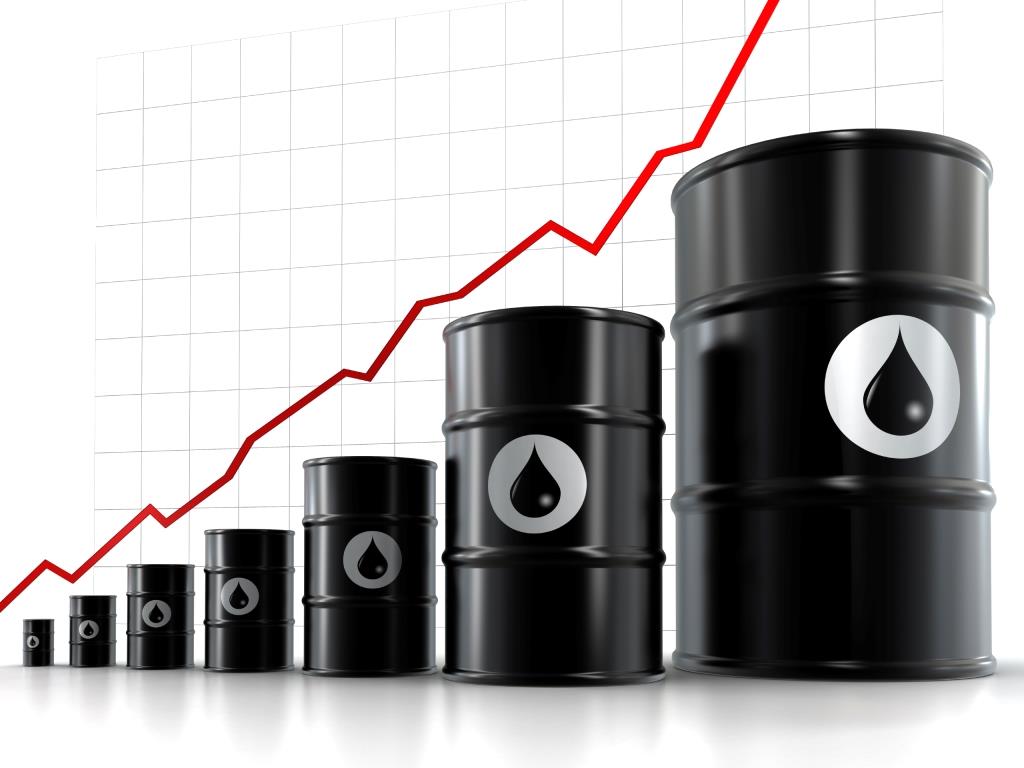
As the oil price is steadily rising towards pre-collapse levels, the outlook for the industry is hopeful. “It is, however, important for companies to avoid falling into the cost inflation trap that could eat into the profitability gains that should follow from the rising oil price. Keeping up capital discipline and further improving productivity will yield sustained results for the industry,” Bredenhann adds.

Despite positive developments, the oil & gas industry still faces numerous and persistent challenges around talent shortages, regulatory uncertainty, political instability, corruption and fraud, and a lack of infrastructure.

Notwithstanding the challenges, Africa does offer plenty of opportunities in the form of unexplored hydrocarbon demand fuelled by population growth, urbanisation and the emergence of a growing middle class.

PwC’s Africa Oil & Gas Review, 2018 analyses what has happened in the last 12 months in the oil & gas industry within the major and emerging markets. This edition focuses on the expert opinions of a panel of industry players from across the value chain who share their views of oil & gas in Africa.

At the end of 2017, Africa is reported to have 487.8 tcf of proven gas reserves, 7.1% of global proven reserves, only marginal changes to the prior year. Africa’s share of global oil production has slightly increased by 0. 3% since last year to 8.7% standing at 8.1 million bbl/d. The main contributors continue to be Nigeria, Angola, Algeria and Egypt. Libya also increased its production by 102.9% in 2017, placing it as the fourth-largest oil producer in Africa with an 11% share moving Egypt into fifth position.

Regulatory developments in Africa

Regulatory uncertainty continues to be a major barrier to the development of the oil & gas industry in Africa. Overall, there are some positive developments that demonstrate that governments are reacting to the new environment. Despite some notable improvements around regulation, there is still a high level of uncertainty in a number of jurisdictions, the report said.

In South Africa, the proposed Amendment Bill to the Mineral and Petroleum Resources Development Act (MPRDA) may be withdrawn, and there are plans to split oil & gas from mining formulating separate legislation, it added.

Growth and development

The report stated that the outlook for the oil & gas industry is looking more optimistic with the Brent oil price having broken through the $80 mark at the time of compiling our report. Although there has been a significant increase in the number and size of final investment decisions (FIDs) in 2018, the industry is not what it was. New finds are much smaller and leaner than they were in prior years. Deepwater oil has been given preference over gas, and oil fields offering the highest rates of return are attracting investment. There is also a preference for brownfield over greenfield developments.

The current oil price recovery reflects a tight supply and demand balance, as well as an indication that we are heading towards a potential global supply crunch in the early 2020s. Exploration spend in Africa and globally is starting to pick up as well. It is safe to assume that this trend will continue if the current higher price environment is sustained.

Digital disruption in Africa

There have been a number of developments in digital transformation in the oil & gas industry, not only globally, but also in Africa. A number of new technologies have been deployed by the industry across the value chain. Some examples include: the use of drones to inspect remote facilities thereby reducing safety and health risks; the use of robots to undertake monitoring and safety checks, which also reduces the safety risks for human operators; and the use of virtual reality to simulate the drilling of wells remarkably reducing drilling costs. Digital disruption is here to stay, and African companies must embrace this to reap the rewards.

Looking to the future

Africa is the world’s fastest economic region with a growing population that is becoming more urbanised. According to PwC’s Strategy& estimates, Africa’s total energy demand is forecast to increase by 60% to 28 000 trillion btu by 2030.

Based on different potential trajectories for economic development, energy access policy and climate mitigation strategies, researchers have put forward various alternative scenarios for energy production and consumption on the continent in the years ahead.

Hydrocarbons are expected to continue to play a major role in the energy mix that will satisfy Africa’s growing energy needs. Major gas resources on the continent including Mozambique, Nigeria, Angola, Tanzania, Senegal and Mauritania, could augment the key position of gas as an energy source for Africans. In the low-carbon context, gas also plays the role of a transition fuel before a wider switch to renewables, a development which is likely to take longer in Africa than on other continents.

The increase in population and the demand for freight transport will also see an increased demand for liquid fuels. Many African countries are ‘thinking refineries’ at various scales. Countries that are considering new refineries or upgrades include Angola, Equatorial Guinea, Uganda, Nigeria, Republic of Congo, Ghana, São Tomé & Príncipe, and Zambia. Given projected population growth and refined fuels consumption, an estimated additional 3.4 bbl/d of refined fuels will be needed to meet Africa’s needs by 2030.

The role of National Oil Companies (NOCs)

The role that NOCs play as operators and custodians of the orderly development of the hydrocarbon industry in their respective countries cannot be underestimated. Almost 30 of Africa’s NOCs are involved at various points of the value chain and at different levels of maturity.

The PwC analysis delves deeper into the NOC landscape to provide a perspective on the future that NOCs could face.

“We have identified four potential scenarios along two axes: the level of regulatory stability and the level of diversification within a country’s economy,” it said.

These scenarios depict a number of possible future pathways and provide industry players with some options with regard to how they might respond to these potential outcomes and their impact on operations.

NOCs should consider these scenarios to enable them to design strategies that avoid the pitfalls identified.

The African oil & gas industry has been through some difficult years in the wake of the oil price crash. However, the industry has restructured itself and is more competitively placed in terms of operational performance, the report stated.

“It is critical that the sector retains its capital discipline and adopts digital technologies if the hard-earned wins in cost savings are to be retained. Progress in addressing corruption and improving corporate governance will also need to be maintained. Moreover, in the longer term, the energy transition will continue to impact the sector’s dynamics with implications for oil demand,” Bredenhann concludes.


Dipo Olowookere is a journalist based in Nigeria that has passion for reporting business news stories. At his leisure time, he watches football and supports 3SC of Ibadan. Mr Olowookere can be reached via [email protected]

Advertisement
Click to comment

Leave a Reply

Your email address will not be published. Required fields are marked *

Economy

Police, Capital Market Regulators Partner for Nigeria’s Economic Growth

Published

on

IGP Egbetokun capital market regulators

By Aduragbemi Omiyale

The Nigeria Police Force (NPF) has promised to work with the Securities and Exchange Commission (SEC) and the Nigerian Exchange (NGX) Group Plc for the prevention of financial crime, and the reinforcement of trust and confidence in Nigeria’s capital market.

The Inspector General of Police, Mr Kayode Egbetokun, gave this assurance on Wednesday at the closing gong ceremony in his honour at the NGX in Lagos.

The police chief said, “A transparent and well-regulated capital market is vital to Nigeria’s economic growth. The Nigeria Police Force remains committed to working with regulators and market operators to prevent financial crime, protect investors, and uphold the integrity of our financial system.”

Earlier in his welcome address, the chairman of NGX Group, Mr Umaru Kwairanga, commended the leadership of the police in supporting market integrity.

“Market integrity is a shared responsibility. By honouring the Inspector-General of Police, we are reinforcing the importance of institutional alignment in protecting investors and preserving trust in our financial system.

“Strong collaboration between regulators, enforcement agencies, and market infrastructure institutions is essential to building a resilient and credible market that supports economic growth,” he stated.

The Director-General of SEC, Mr Emomotimi Agama, while speaking, emphasized the importance of coordinated enforcement, noting: “Investor protection is at the core of market regulation, and today’s engagement highlights how critical collaboration with law enforcement is to achieving that mandate. This partnership strengthens our enforcement capacity, enhances deterrence against illegal investment activities, and reinforces confidence in the Nigerian capital market.”

As for the chairman of NGX Limited, Mr Ahonsi Unuigbe, “A transparent and orderly market can only thrive where rules are respected and misconduct is addressed decisively. The presence of the Nigeria Police Force in this collective effort sends a strong signal that safeguarding the market is a national priority.”

Similarly, the chief executive of NGX Group, Mr Temi Popoola, stressed the importance of aligning innovation with oversight, pointing out that, “Technology and market growth must be supported by strong enforcement and investor protection frameworks. Our collaboration with the SEC and the Nigeria Police Force reflects a unified approach to preserving the credibility of Nigeria’s capital market.”

Continue Reading

Economy

NASD OTC Exchange Closes Green by 0.09%

Published

on

NASD OTC exchange

By Adedapo Adesanya

The NASD Over-the-Counter (OTC) Securities Exchange rallied by 0.09 per cent on Wednesday, February 4, amid renewed appetite for unlisted stocks.

This lifted the NASD Unlisted Security Index (NSI) by 3.18 points to 3,641.30 points from the previous session’s 3,641.30 points and raised the market capitalisation by N1.9 billion to N2.180 trillion from the N2.178 trillion quoted on Tuesday.

The bourse recorded three price gainers and four price losers at the midweek session.

The advancers were led by Air Liquide Plc, which went up by N2.04 rise to end at N22.53 per share versus the previous session’s N20.49 per share, Central Securities Clearing System (CSCS) added 97 Kobo to sell at N44.97 per unit versus N44.00 per unit, and Acorn Petroleum Plc appreciated by 2 Kobo to N1.37 per share from N1.35 per share.

On the flip side, Geo-Fluids Plc lost 55 Kobo to sell at N6.26 per unit versus N6.81 per unit, Nipco Plc depreciated by 48 Kobo to trade at N259.00 per share versus N259.48 per share, FrieslandCampina Wamco Nigeria Plc declined by 40 Kobo to N63.10 per unit from N63.50 per unit, and Industrial and General Insurance (IGI) depleted by 1 Kobo to 65 Kobo per share from 66 Kobo per share.

Yesterday, the volume of trades slid by 64.5 per cent to 2.5 million units from 7.0 million units, the value of transaction decreased by 53.2 per cent to N17.7 million from N37.9 million, and the number of deals went down by 47.1 per cent to 18 deals from 34 deals.

CSCS Plc remained the most traded stock by value on a year-to-date basis with 16.0 million units valued at N652.6 million, followed by FrieslandCampina Wamco Nigeria Plc with 1.7 million units exchanged for N111.2 million, and Geo-Fluids Plc with 11.7 million units traded for N76.1 million.

CSCS Plc was also the most active stock by volume on a year-to-date basis with 16.0 million units sold for N652.6 million, trailed by Mass Telecom Innovation Plc with 13.3 million units worth N5.3 million, and Geo-Fluids Plc with 11.7 million units valued at N76.1 million.

Continue Reading

Economy

Naira Rallies to N1,358/$1 at Official Market, N1,450/$1 at Parallel Market

Published

on

Naira parallel market

By Adedapo Adesanya

The Naira rallied at the different segments of the foreign exchange (FX) market on Wednesday as supply continues to outweigh demand, giving it an edge against the United States Dollar.

In the parallel market, the Nigerian Naira improved its value on the greenback yesterday by N5 to quote at N1,450/$1 compared with the previous day’s N1,455/$1, and at the GTBank FX desk, it gained N3 to trade at N1,383/$1, in contrast to Tuesday’s exchange rate of N1,386/$1.

In the the Nigerian Autonomous Foreign Exchange Market (NAFEX), which is also the official market, the Naira firmed up against the Dollar at midweek by N14.63 or 1.1 per cent to settle at N1,358.28/$1 versus the preceding session’s N1,372.91/$1.

Against the Pound Sterling, the domestic currency appreciated on Wednesday by N14.16 to N1,863.43/£1 from the previous day’s N1,877.59/£1, and gained N13.73 on the Euro to end at N1,606.03/€1 versus the N1,619.76/€1 it was exchanged a day earlier.

The strengthening of the Naira value has been driven by the injection of forex into the financial markets by foreign investors seeking attractive investments in the emerging markets, helping to boost Nigeria’s external reserves, which provide the Central Bank of Nigeria (CBN) with the capacity to support the local currency.

As of February 4, 2026, the reserves reached $46.59 billion.

The local currency has been able to find a solid path despite no indications of any intervention from the apex bank in recent week, strengthening the case of price discovery.

Policy moves by the CBN is also offering a backbone for the FX market as it considers some strategic reforms through a policy known as the Single Regulatory Window.

In its 2025 Fintech Report, the central bank said this scheme will significantly reduce time-to-market for new digital financial products by streamlining licensing and supervisory processes across multiple agencies.

Meanwhile, the cryptocurrency market was in red amid a broad sell-off in global technology stocks, with reports showing that liquidity was notably thin, amplifying price moves and contributing to forced liquidations. The decline followed a sharp sell-off in global technology stocks overnight, where concerns over the pace of artificial intelligence adoption and rising capital spending by major firms weighed heavily on valuations.

Bitcoin (BTC) lost 7.9 per cent to sell at $70,534.94, Ripple (XRP) declined by 11.2 per cent to $1.42, Binance Coin (BNB) slumped by 9.4 per cent to $689.70, Ethereum (ETH) crashed by 8.9 per cent to $2,072.46, and Solana (SOL) dipped by 8.7 per cent to $89.86.

In addition, Dogecoin (DOGE) depreciated by 6.9 per cent to $0.1008, Cardano (ADA) slipped by 6.8 per cent to $0.2792, Litecoin (LTC) dropped 5.1 per cent to trade at $57.56, and US Dollar Tether (USDT) went down by 0.1 per cent to $0.9980, while the US Dollar Coin (USDC) closed flat at $1.00.

Continue Reading

Trending