Economy
Nigeria’s Content Board Shares $21m NCI Fund to Vendors
By Modupe Gbadeyanka
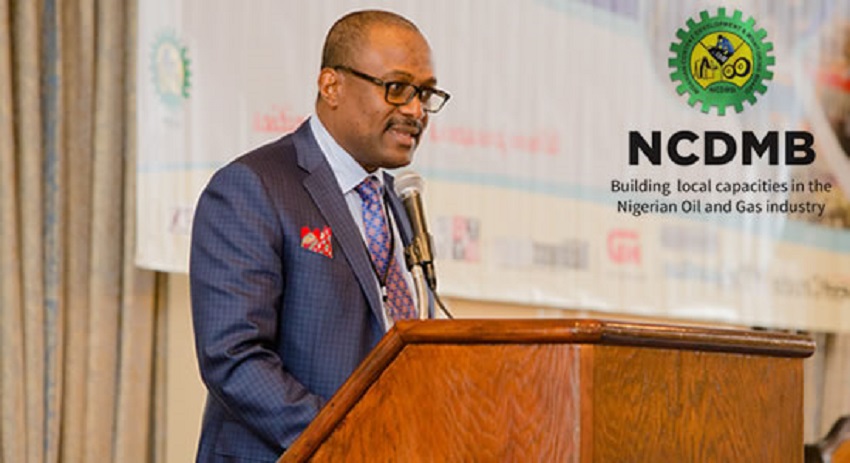
Minister of State for Petroleum Resources, Mr Emmanuel Ibe Kachikwu, and the Group Managing Director of the Nigerian National Petroleum Corporation (NNPC), Mr Maikanti Kacalla Baru, led other industry leaders to commend the Nigerian Content Development and Monitoring Board (NCDMB) for the numerous achievements recorded in the implementation of Nigerian Content in the oil and gas industry.
They spoke Tuesday at the 8th Practical Nigerian Content Workshop, organised by the NCDMB and CWC, in Yenagoa, Bayelsa State and pledged support to deepen the implementation of policies and initiatives that would increase in country value addition in the oil and gas sector.
According to Mr Kachikwu, the impact of Nigerian Content in the oil industry has stimulated other sectors like Information & Communication, Automobile, Construction and Power to adopt some of the templates in their policy formulations.
“We are also proud that some African countries like Kenya, Congo Brazzaville and Uganda as well as Gabon and Angola have come to Nigeria in the past for mentorship on Local Content initiatives,” he added.
The Minister, who was represented by the Permanent Secretary in the Ministry of Petroleum Resources, Mrs Folashade Yemi, promised the commitment of the Federal Government to promoting robust private sector participation in the oil and gas sector and ensuring ease of doing business in the economy in general.
Also speaking, Mr Baru said NNPC was pleased to see the achievements of Local Content in various sectors of the Nigerian economy.
He noted that in “in 2010, the available in-country capacity for line pipes was 100,000 metric tonnes, just 10 percent of the annual industry demand of one million MT/annum.
“However, today, through the robust collaboration of NCDMB with NNPC and other stakeholders, the capacity of line pipes has been ramped up to 420,000MT/annum, representing 40 percent of industry demand.”
The GMD reaffirmed “NNPC’s commitment to compliance with the provisions of the Nigerian Content Act, to increase in-country value addition and support job creation. We will also continue to encourage our partners to do the same.
“NNPC is fully committed to NCDMB’s agenda for the next ten years, to increase Nigerian Content in the Nigerian Oil and Gas Industry to 70 percent by 2017.”
Executive Secretary of NCDMB, Mr Simbi Wabote, presented a scorecard of the Board’s performance in 2018, dwelling particularly on the Nigerian Content 10-year strategic roadmap.
On the $200 million Nigerian Content Intervention Fund (NCI Fund) launched to provide funding support to local service companies, Mr Wabote stated that $21 million has been given out as loan to beneficiaries as at the end of October.
“In 2019, we intend to develop and launch our investment policy to further provide flexibility to our funding and investment interventions,” he said.
He also hinted that in 2019 the Board “plans to support the establishment of at least one more modular refinery and participate in the LPG value chain if the condition precedent are in place”
NCDMB had in 2018 taken 30 percent equity in the 5,000 barrels per day modular refinery in Ibigwe, Imo State and commenced the construction of oil and gas parks at Bayelsa and Cross River States.
On the provision of constant power to the parks, Mr Wabote said a thermal power plant was being constructed by the Nigerian Agip Oil Company (NAOC), which would also serve the oil and gas park in Bayelsa state while discussions are ongoing to source electricity from the NIPP station in Odukpani, Cross River State to supply the park situated close-by.
Other plans for 2019 include the finalization of the review of Offshore Rig Acquisition Strategy and posting of 20 trained marine personnel being trained by the Board, for their 1 year international sea time in fulfilment of the requirement for the Certificate of Competency (CoC).
The Executive Secretary also reported that the Board has commenced the forensic audit of remittances to the Nigerian Content Development Fund and fulfilled its promise to put in place 3rd party monitors to enhance compliance monitoring in the upstream, midstream, and downstream sectors of the industry.
He added that, “By 2019, we intend to deepen and widen the roll-out of third party monitoring service providers for effective monitoring of the 51 operating companies and close to 8,000 oil and gas service providers registered on our NOGIC-JQS. In addition, we will further expand our compliance and enforcement framework to cover marginal field operators, midstream and downstream sectors.”
He said the Board have established collaborative efforts with the Nigeria Customs Service, EFCC, NNPC, NAPIMS, Nigeria Immigration Service, FAAN, OGFZA, National Judicial Council and NIMASA and would sharpen those inter-agency collaborations going forward.
In his remarks, the Governor of Bayelsa State, Hon Seriake Dickson, commended the NCDMB for being a good corporate citizen in the state and expressed hope that the completion of the Board’s 17-storey headquarters would lead to more oil and gas deals being sealed in the state, so the citizenry would derive maximum benefits.
Economy
Insurance Firms Must Submit 2025 Assessment Returns by May 31—NAICOM
By Adedapo Adesanya
The National Insurance Commission has issued new guidelines for the collection, management, and administration of the Insurance Policyholders’ Protection Fund.
In a circular issued to all insurance institutions on Tuesday, the regulator also set May 31, 2026, as the deadline for insurers to submit their assessment returns for the 2025 financial year.
Recall that on August 5, 2025, President Bola Tinubu signed into law the Nigerian Insurance Industry Reform Act ( NIIRA 2025).
This landmark legislation repeals the Insurance Act 2003, and consolidates related provisions, ushering in a modern regulatory framework. It lays a strong foundation for sustainable growth and increased investment in the country’s insurance sector.
The commission said the guidelines were issued in exercise of its powers under the 2025 Act and other existing insurance laws and regulations to provide regulatory clarity, improve guidance, and ensure ease of compliance across the industry.
According to NAICOM, the guidelines establish a comprehensive structure for the operation of the IPPF, which serves as a statutory safety net to protect insurance policyholders in the event of distress or insolvency of a licensed insurer or reinsurer. The framework also provides direction on the reimbursement of loans by insurers and reinsurers.
NAICOM stated, “The guidelines ensure regulatory clarity, guidance and ease of compliance, as it provides a comprehensive regulatory framework for the collection, management, and administration of the Fund, which serves as a statutory safety net designed to protect insurance policyholders against distress and insolvency of a licensed insurer or reinsurer, including guidance for the reimbursement of loans by an insurer or reinsurer.
“Please be informed that the IPPF Assessment Returns in respect of the year 2025 shall be submitted to the Commission not later than 31st May 2026, while subsequent submissions shall be in line with Section 4.3 of the Guideline on Insurance Policyholders Protection Fund.”
Economy
Dangote Refinery Sells Petrol at N1,200/L as Global Oil Prices Slump
By Adedapo Adesanya
The Dangote Refinery on Wednesday returned the petrol price to N1,200 per litre, less than 24 hours after it increased it by 5 per cent.
The private refinery had raised the ex-depot price by N75 on Tuesday, citing pressure from volatile global oil markets, but quickly brought it back to N1,200 per litre from N1,275 per litre.
The swift downward review is directly linked to a sharp drop in international crude prices. Brent crude has plunged to $95.05 per barrel, after a 13 per cent decline, while the US West Texas Intermediate (WTI) crude closed at $97.18, recording nearly a 14 per cent drop.
This development comes after US President Donald Trump announced a conditional two-week ceasefire with Iran, which eased fears of immediate supply disruptions in the global oil market.
“This will be a double-sided CEASEFIRE!” Trump said on social media, marking a sharp reversal from his earlier warning that “a whole civilisation will die tonight” if Iran failed to comply with US demands.
Iran’s Foreign Minister, Mr Abbas Araqchi, confirmed that the country would halt attacks provided strikes against Iran cease and transit through the Strait of Hormuz is coordinated by Iranian forces.
Despite the breakthrough, tensions remain elevated across the region, with several Gulf states reporting missile launches, drone activity, or issuing civil defence warnings.
While oil prices have fallen back below $100, they remain significantly elevated after surging by a record amount in March. Market analysts noted that regardless of how successful the ceasefire is, geopolitical risk related to the Strait of Hormuz is likely to remain elevated for the foreseeable future under the control of Iran.
Economy
Crude Deliveries Double to Dangote Refinery in Mix of Naira, Dollar Supply
By Adedapo Adesanya
Crude oil deliveries from the Nigerian National Petroleum Company (NNPC) Limited to the Dangote Petroleum Refinery doubled in March, boosting prospects for improved fuel availability.
This was revealed by the chief executive of Dangote Industries Limited, Mr Aliko Dangote, on Tuesday, when he received the Deputy Secretary-General of the United Nations, Mrs Amina Mohammed, at the industrial complex in Ibeju-Lekki, Lagos.
While speaking on feedstock supply, Mr Dangote commended the NNPC for increasing crude deliveries to the refinery in March, noting that volumes rose to 10 cargoes—six supplied in Naira and four in Dollars—to support domestic fuel availability, according to a statement by the Refinery.
“Last month, they gave us six cargoes for Naira and four cargoes for Dollars,” he said.
Despite the improvement, Mr Dangote noted that the supply remains below the 19 cargoes required for optimal operations, with the refinery continuing to bridge the gap through imports from the United States and other African producers.
He also expressed concern over the unwillingness of international oil companies operating in Nigeria to sell to the refinery, stating that their preference for selling crude to traders forces it to repurchase at higher costs, with broader implications for the economy.
Mr Dangote added that the refinery is seeking increased access to domestically priced crude under local currency arrangements as part of efforts to moderate fuel costs and enhance long-term energy and food security across the continent.
On her part, Mrs Mohammed underscored the strategic importance of Dangote Industries Limited -particularly Dangote Fertiliser Limited—in addressing Africa’s mounting food security challenges, while calling for stronger global partnerships to scale its impact.
Mrs Mohammed said the United Nations would prioritise amplifying scalable solutions capable of mitigating the continent’s food crisis, describing Dangote’s integrated industrial model as a critical pathway.
“I think the UN’s job here is to amplify and to put visibility on the possibilities of mitigating a food security crisis, and this is one of them,” she said. “I hope that when we go back, we can continue to engage partners and countries that should collaborate with Dangote Industries.”
-
Feature/OPED6 years agoDavos was Different this year
-
Travel/Tourism10 years ago
Lagos Seals Western Lodge Hotel In Ikorodu
-
Showbiz3 years agoEstranged Lover Releases Videos of Empress Njamah Bathing
-
Banking8 years agoSort Codes of GTBank Branches in Nigeria
-
Economy3 years agoSubsidy Removal: CNG at N130 Per Litre Cheaper Than Petrol—IPMAN
-
Banking3 years agoSort Codes of UBA Branches in Nigeria
-
Banking3 years agoFirst Bank Announces Planned Downtime
-
Sports3 years agoHighest Paid Nigerian Footballer – How Much Do Nigerian Footballers Earn