Connect with us

Economy

CBN Woos Foreign Investors to Stimulate Economic Growth

Published

on

Emefiele Outlines Policy Thrust 2019

By Dipo Olowookere

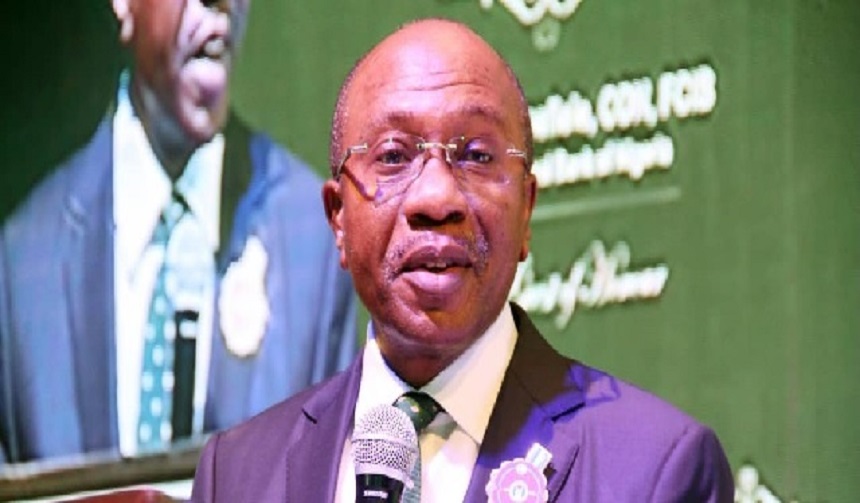
Governor of the Central Bank of Nigeria (CBN), Mr Godwin Emefiele, has outlined the monetary policy thrust for 2019, saying that the bank was of the view that the short-term outlook of the Nigerian economy remains good, adding that current tight stance of the apex bank is expected to continue in the near-term, due to the rising inflation expectations and exchange market pressures.

He also said that the central bank, working with the federal government, was open to foreign investors who were keen to support efforts at unlocking the immense opportunities in Nigeria’s economy.

Mr Emefiele stated these while delivering the keynote address entitled Strengthening the Economic Recovery Process in Nigeria at the 53rd Annual Bankers’ Dinner of the Chartered Institute of Bankers of Nigeria (CIBN) on Friday, November 30, 2018.

“Your Central Bank today is more committed to creating wealth and putting in place strong policies for creating jobs for our growing youth population; your Central Bank today is ever more committed to promoting a more stable and resilient financial system,” he said.

While advising against hasty criticism of monetary policies, which he said were taken based on macroeconomic and geopolitical contexts, he assured that the CBN would always act in good faith, with the best available information and in cognizance of current economic conditions, to pursue price and financial system stability, support job creation on a massive scale and ensure a more inclusive growth in the economy.

On the restriction of access to foreign exchange from the Nigerian market for 41 items that can be produced in Nigeria, he reeled out statistics to show that the policy had helped to boost local production of the items.

He said that the combination of the restriction on 41 items along with other measures imposed by the fiscal and monetary authorities helped to promote the recovery that got Nigeria out of recession.

He warned that any attempt to reverse the policy could negatively affect economic growth in the country, particularly as it relates to the push to diversify the Nigerian economy. He also disclosed that the CBN’s Economic Intelligence and Banking Supervision Departments would work closely with the Economic and Financial Crimes Commission (EFCC) to expose and sanction any bank, company or Foreign Exchange operator that colludes with individuals or companies to undermine the policy on 41 items.

Speaking on the success of the Anchor Borrowers’ Programme, he said the development finance intervention scheme had ensured that Nigeria emerged from being a net importer of rice to becoming a major producer of rice, supplying key markets in neighbouring countries.

According to him, as at October 2018, a total number of 862,069 farmers cultivating about 835,239 hectares, across 16 different commodities, had so far benefited from the programme, which had generated 2,502,675 jobs across the country.

He said the Nigerian economy had performed creditably compared to the performance of other emerging markets such as Brazil, South Africa, Turkey, and Argentina, adding that the country’s dominance over the review period was due to the stability of the Investors & Exporters (I&E) Foreign Exchange window rate and the yields being high by emerging-market standards.

In spite of the impact of the recession that Nigeria experienced, he said the country’s economy remained the largest in Africa by the size of its GDP, with a very well diversified mix of opportunities across different sectors, such as ICT, Manufacturing, Solid Minerals, Trade and Agriculture. He assured investors that their investments in the country would be protected by the monetary and fiscal authorities.

Other issues the Governor spoke on were the efforts of the bank at ensuring financial inclusion, credit allocation, Risk Based Supervision, Gross Domestic Product, inflation, exchange rate, balance of payment and domestic credit. Present at the dinner were the Deputy Governors of the CBN, Dr. Okwu Joseph Nnanna (Economic Policy) and Mrs Aishah Ahmad (Financial System Stability); the President/Chairman, of Council, CIBN, Dr. Uche Olowu; representatives of the Governors of Lagos and Kano States; the former CBN Governor, Chief Joseph Sanusi; Chief Executives Officers of Deposit Money Banks; Departmental Directors from the CBN; bankers and investors.


Dipo Olowookere is a journalist based in Nigeria that has passion for reporting business news stories. At his leisure time, he watches football and supports 3SC of Ibadan. Mr Olowookere can be reached via [email protected]

Economy

Dangote Raises Investment in Ethiopia to $4bn, Promises Food Security

Published

on

Dangote investment Ethiopia

By Modupe Gbadeyanka

Nigerian businessman, Mr Aliko Dangote, has increased his investment in Ethiopia to over $4 billion from $2.5 billion.

During a high-profile visit hosted by Prime Minister Abiy Ahmed, the business mogul informed newsmen in Gode, in Ethiopia’s Somali region, that the expanded scope includes critical infrastructure such as a 110-kilometre pipeline, a 120MW power plant, a polypropylene packaging facility, and a two-million-tonne NPK blending plant, among other new components.

The richest man in Africa described Ethiopia as a key strategic destination for Dangote Group’s long-term investments.

“In total, our declared and signed investments in Ethiopia now exceed $4 billion. This makes Ethiopia the second-largest recipient of our investments in Africa, accounting for nearly nine per cent of our continental outlay between now and 2030,” he said.

He also reaffirmed his commitment to boosting food security across Africa through large-scale fertiliser investments, declaring that the continent has the capacity to feed itself and become a net exporter of agricultural products.

Speaking on the strategic importance of fertiliser in agricultural productivity, Mr Dangote noted that Africa’s food insecurity challenges are largely due to limited access to key inputs.

Africa holds immense agricultural potential, yet continues to grapple with food insecurity due to limited access to fertiliser. Through our investments, we are committed to reversing this trend by boosting productivity, empowering farmers, and advancing a sustainable path to food self-sufficiency,” he stated as he was accompanied to inspect the site of the proposed fertiliser plant, where construction activities are already underway.

He added that his organisation’s ambition, though bold, is achievable with sustained investment in fertiliser production and agricultural infrastructure.

“Africa has the capacity to feed itself and even export to the rest of the world. Our fertiliser investments across the continent are designed to unlock that potential and secure a prosperous future for our people,” Mr Dangote noted.

He further commended Prime Minister Abiy Ahmed’s leadership and vision for economic transformation, saying he is “driving development beyond expectations, but such progress requires strong private sector collaboration. We are proud to partner with Ethiopia to help build one of Africa’s most dynamic economies in the coming decade.”

In his remarks, Mr Ahmed described his guest as a trusted partner and commended the pace of work on the fertiliser project, which he said aligns with Ethiopia’s broader development priorities.

He emphasised that the project would significantly boost domestic fertiliser production, reduce dependence on imports, and provide critical support to millions of Ethiopian farmers.

According to the Prime Minister, the fertiliser plant will also create extensive employment opportunities, strengthen the industrial value chain, and reinforce Ethiopia’s position as an emerging agro-industrial hub in Africa.

“This type of large-scale investment demonstrates the power of strong collaboration between government and the private sector,” he said. “Expanding such partnerships will accelerate economic growth, attract further investment, and improve the livelihoods of our people.”

The Dangote fertiliser initiative is widely seen as a transformative step toward reshaping Africa’s agricultural landscape, with the potential to enhance productivity, reduce import dependence, and drive inclusive economic growth across the continent.

Continue Reading

Economy

FrieslandCampina Wamco, Three Others Raise NASD OTC Exchange by 1.41%

Published

on

OTC stock exchange

By Adedapo Adesanya

The NASD Over-the-Counter (OTC) Securities Exchange closed higher by 1.41 per cent on Friday, May 15, supported by four securities on the platform.

During the session, FrieslandCampina Wamco Plc added N14.24 to its share price to sell for N159.00 per unit, in contrast to the previous day’s N144.76 per unit.

Further, Central Securities and Clearing System (CSCS) Plc appreciated by N1.34 to N72.34 per share from N71.00 per share, Geo-Fluids Plc improved its price by 4 Kobo to N2.94 per unit from N2.90 per unit, and Industrial and General Insurance (IGI) Plc gained 1 Kobo to trade at 61 Kobo per share compared with Thursday’s closing price of 60 Kobo per share.

As a result, the NASD Unlisted Security Index (NSI) rose by 58.20 points to 4,188.41 points from 4,130.21 points, and the market capitalisation soared by N34.82 billion to N2.506 trillion from N2.471 trillion on Thursday.

During the session, the volume of trades went up by 180.8 per cent to 1.2 million units from 417,349 units, and the value of transactions increased by 29.8 per cent to N29.8 million from N23.2 million, while the number of deals fell by 22.6 per cent to 24 deals from 31 deals.

Great Nigeria Insurance (GNI) Plc ended the day as the most traded stock by value on a year-to-date basis with 3.4 billion units sold for N8.4 billion, followed by CSCS Plc with 60.8 million units exchanged for N4.1 billion, and Okitipupa Plc with 27.9 million units valued at N1.9 billion.

GNI Plc also closed the session as the most traded stock by volume on a year-to-date basis with 3.4 billion units worth N8.4 billion, followed by Resourcery Plc with 1.1 billion units transacted for N415.7 million, and Infrastructure Guarantee Credit Plc with 400 million units traded for N1.2 billion.

Continue Reading

Economy

Profit-taking Sinks Nigeria’s Equity Market by 0.76% as Bears Take Control

Published

on

Nigerian equity market

By Dipo Olowookere

The bears overpowered the Nigerian Exchange (NGX) Limited on Friday, sinking it further by 0.76 per cent when the closing gong was struck by 4 pm.

The nation’s flagship equity market was under selling pressure during the session, as investors booked profits after the shares witnessed price appreciation in the past trading sessions.

The energy sector was the most impacted, as it shed 4.43 per cent. The consumer goods index declined by 0.90 per cent, the banking counter decreased by 0.15 per cent, and the industrial goods sector lost 0.08 per cent, while the insurance counter gained 2.42 per cent, which was not enough to salvage the situation.

Consequently, the All-Share Index (ASI) contracted by 1,912.19 points to 250,330.92 points from 252,243.11 points, and the market capitalisation moderated by 1.225 trillion to N160.444 trillion from N161.669 trillion.

Zichis was the worst-performing stock for the session after it gave up 9.97 per cent to close at N29.43, FTN Cocoa slipped by 9.95 per cent to N8.96, The Initiates slumped by 9.90 per cent to N32.30, LivingTrust Mortgage Bank tumbled by 9.88 per cent to N3.83, and International Energy Insurance dropped 9.71 per cent to trade at N2.79.

The best-performing stock was ABC Transport, which grew by 10.00 per cent to N6.27. May and Baker also appreciated by 10.00 per cent to N47.30, SCOA Nigeria surged by 9.98 per cent to N33.05, Trans-Nationwide Express expanded by 9.97 per cent to N7.06, and DAAR Communications jumped 9.76 per cent to N2.25.

Yesterday, investors traded 1.1 billion shares worth N44.3 billion in 65,744 deals compared with the 1.0 billion shares valued at N41.6 billion transacted in 74,822 deals a day earlier. This indicated a dip in the number of deals by 12.13 per cent, and a rise in the trading volume and value by 10.00 per cent and 6.49 per cent, respectively.

Chams was the busiest equity for the day, with 328.5 million units sold for N1.1 billion. UBA traded 61.6 million units worth N2.7 billion, First Holdco transacted 58.7 million units valued at N4.2 billion, Secure Electronic Technology exchanged 51.9 million units worth N45.0 million, and Access Holdings traded 51.8 million units valued at N1.3 billion.

Continue Reading

Trending