Connect with us

Economy

Buhari Family Owns Huge Shares in Etisalat, Keystone Bank—Atiku

Published

on

By Dipo Olowookere

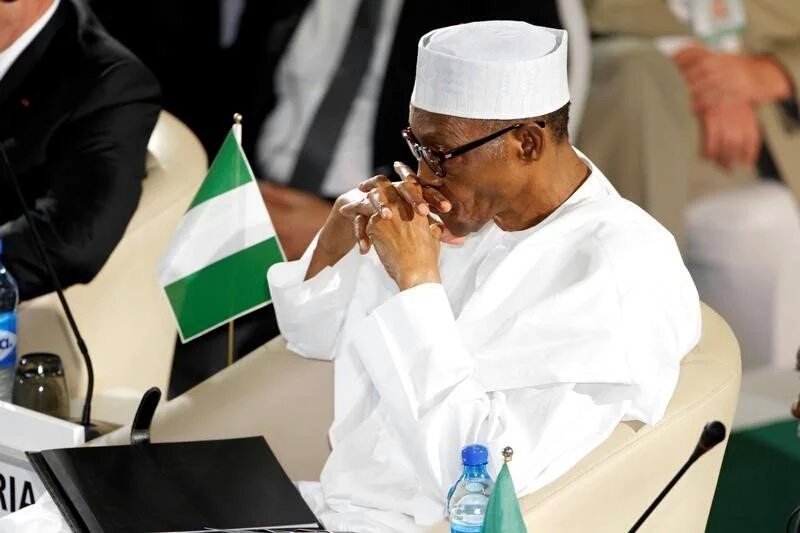
Presidential candidate of the opposition Peoples Democratic Party (PDP), Mr Atiku Abubakar, has accused the family of President Muhammadu Buhari of having a substantial share in Etisalat (now 9mobile) and Keystone Bank.

Mr Atiku made this accusation in a statement signed by his Special Assistant on Public Communication, Mr Phrank Shaibu, on Wednesday in Abuja.

According to the statement, the President allegedly obtained shares worth $2 billion in the two companies through proxies as well as N3 billion worth of shares in the new Pakistani Islamic Bank.

Below is the full statement:

Read Mr Shaibu’s full statement sent to PREMIUM TIMES below.

The Presidential Candidate of the People’s Democratic Party (PDP), Atiku Abubakar, has called on the appropriate authorities to urgently institute a probe to unravel the hidden faces behind the new ownership structure of multi-billion naira telecoms giant, Etisalat Nigeria, as well as Keystone Bank.

In a statement issued in Abuja on Wednesday, the Special Assistant to Atiku on Public Communication, Phrank Shaibu, said such a probe was necessary in view of reports that members of President Muhammadu Buhari’s family now own substantial share in Etisalat Nigeria which has an estimated $2 billion (about N727 billion at 360 per dollar) of its estimated $20 billion global net worth.

Atiku also expressed shock at reports from unimpeachable sources that the first family now plays big in the nation’s financial sector after acquiring mouth-watering shares in Keystone Bank with total assets of $1.916 billion (equivalent to N307.5 billion) as well as purchasing about N3 billion worth of shares in the new Pakistani Islamic Bank.

“I know that last week was turbulent for President Buhari and I apologise for adding to his woes, but as he is insistent on the myth that he is spotless and anti-corrupt, if this is found to be true, this scandal would break every rule of corporate and public governance, since this will be the first time members of the first family will be openly involved in a once-in-a-lifetime deal that would make them all richer beyond their wildest dreams,” the statement said.

The accusation is coming amidst reported allegations in the media that the All Progressives Congress (APC) led federal government plans to use billions of Naira from the Anchor Borrowers Programme allocated by the Central Bank of Nigeria (CBN) for farmers, using imaginary donations from 12 million farmers as a façade.

But the presidential candidate of the PDP advised President Buhari to shun the use of state resources and machinery for the upcoming 2019 presidential poll.

Specifically, Atiku said no farmer contributed any N1.7 billion for Buhari’s re-election campaign, warning that APC’s decision to use monies meant for farmers to run his campaign is not tidy at all.

“The other day, a man who scored 15,424,921 votes to win the 2015 general election was reported to have been nominated by 14 million APC members at the Presidential primaries for 2019. Now, over 12 million farmers have donated to his campaign. Are they indirectly spewing out outrageous figures of people they intend to claim voted for them in the coming elections? Could that be why the President was flashing an occult double four hand signal that has gone viral?What did the hand signal mean? Does it mean that the President has jettisoned the idea of a free and fair election and telling Nigerians that no matter how they vote, he will return for a second term of four years? In any case , if the farmers who just took a loan through the borrowers anchor programme and have not liquidated the facility can donate this huge sum or any sum for that matter, it means the ‘Association of widows and children of all those slain by Boko Haram and herdsmen will donate N5billion to the Buhari campaign. In fact, the 23.1 million youth who lost their jobs between 2016 till date will donate about N12billion to the Buhari campaign.”

“Assuming but not even conceding that such a huge sum of money was donated to President Buhari by Nigerian farmers as his handlers would want Nigerians to believe, wouldn’t such donation be in contravention of Section 91 (9)of the Electoral Act 2010 (as amended) which says no individual or other entity shall donate more than N1m to an aspirant or a candidate,” Atiku said.

Section 91 (2) of the Electoral Act further states that a presidential candidate can spend a maximum of N1 billion.

The law also recommends a fine of N1m or a prison term of 12months or both for any candidate that breaches the provisions of the Act.

“We have no stand on whether or not President Buhari should run for office. That is his prerogative and that of his party. But we believe it is improper for public office holders to forcefully loot public funds, on behalf of a sitting president seeking a second term in office.

“What this means is that there is a ‘war chest’ which apparently is from the national coffers,” Atiku said.

He said if President Buhari wants to run for office next year, he should take only from monies sourced from donations by his campaign groups that are independent of government. “Anything short of that – as is currently the case with the use of funds from the CBN meant for farmers will mean there will be no level playing field for all the candidates billed to contest for the presidency during next year’s presidential elections,” Atiku said.


Dipo Olowookere is a journalist based in Nigeria that has passion for reporting business news stories. At his leisure time, he watches football and supports 3SC of Ibadan. Mr Olowookere can be reached via [email protected]

Economy

CPPE Projects Naira Stability in Q2, Flags Volatility Risks

Published

on

naira street value

By Adedapo Adesanya

The Centre for the Promotion of Private Enterprise (CPPE) has projected relative stability for the Naira exchange rate in the second quarter of the year, supported by improved foreign reserves and liquidity, but cautioned that volatility risks remain.

In its Q1 2026 Economic Review and Q2 Outlook: Macro Stability Gains Amid Persistent Cost Pressures and Rising Geopolitical Risks report released on Sunday, the think-tank’s chief executive, Mr Muda Yusuf, said exchange rate conditions also improved significantly as the Naira, which experienced substantial volatility during the reform transition period, stabilised within a relatively narrow band of about N1,340–N1,430 per Dollar in the official market during Q1 2026.

“This stability has helped to moderate imported inflation and restore a measure of business confidence. External reserves strengthened considerably, rising above $50 billion in early 2026,” he stated.

The group said that the Nigerian economy in the first quarter of 2026 reflected a blend of improving macroeconomic stability and persistent structural constraints.

It said that proof of a more stable macroeconomic environment is increasingly evident, underpinned by the cumulative gains from foreign exchange reforms, a sustained period of monetary tightening, and the gradual normalisation of key economic indicators.

However, it noted that these improvements continue to coexist with significant headwinds, adding that the country’s economic growth will remain positive in the next three months, but the pace of expansion may slow due to mounting downside risk

The report also warned of a growing risk of stagflation, as persistent cost pressures combine with fragile growth conditions. It added that rising political activities ahead of the 2027 general elections could weaken reform momentum and distract from economic management.

The CPPE noted that rising global crude oil prices, triggered by the ongoing Middle East conflict, pose a major threat to Nigeria’s fragile disinflation process. While higher oil prices could boost export earnings and government revenue, the think tank stressed that the domestic impact would be adverse.

“The cost pass-through effect poses a significant threat to the fragile disinflation process, potentially reversing recent gains in price stability, weakening real incomes, and further exacerbating the cost-of-living pressures facing households and businesses,” the organisation said.

Highlighting monetary policy concerns, CPPE said the current inflationary trend is largely driven by structural and cost-related factors rather than excess demand, observing that, “Additional monetary tightening would have limited effectiveness in addressing the underlying drivers of inflation, while potentially exacerbating constraints on investment, credit expansion, and overall economic growth.”

The CPPE further raised concerns over the implementation of the proposed N68 trillion 2026 budget, citing weak revenue performance, delays in capital releases, and growing political influence on spending priorities.

“As political pressures intensify, there is a risk of weakening fiscal discipline, with greater emphasis on recurrent and politically expedient spending,” the group stated, advising businesses to shift focus towards resilience and efficiency, urging firms to prioritise cost containment, adopt alternative energy sources, and strengthen foreign exchange risk management strategies.

It also called on policymakers to take urgent steps to safeguard economic stability and protect vulnerable groups.

“Policy priorities should therefore focus on consolidating macroeconomic stability, addressing structural bottlenecks, and implementing targeted measures to protect vulnerable populations,” it noted.

The CPPE concluded that while macroeconomic stability gains recorded in the first quarter of 2026 are notable, the outlook for the second quarter remains cautiously positive but increasingly uncertain due to geopolitical tensions, fiscal risks, and domestic political dynamics.

Continue Reading

Economy

OPEC+ Boost Output by 206kb/d as Iran War Limits Production

Published

on

opec oil output

By Adedapo Adesanya

The Organisation of the Petroleum Exporting Countries and its allies (OPEC+) agreed to raise its oil output quotas by 206,000 barrels per day for May.

Eight members of ​OPEC+, comprising Saudi Arabia, Russia, Iraq, the UAE, Kuwait, Kazakhstan, Algeria, and Oman, agreed to the increase in May quota at a virtual meeting on Sunday, OPEC+ said in a statement.

However, the rise will be in theory, as its key members are unable to raise production due to the US-Israeli war with Iran, which has affected production.

The war has effectively shut the Strait of Hormuz, the world’s most important oil route, since the end of February and cut ​exports from some OPEC+ members, including Saudi Arabia, the UAE, Kuwait and Iraq. These are the only countries in the group which were able to significantly raise ​production even before the conflict began.

Besides the disruptions affecting Gulf members, others, ​such as Russia, are unable to increase output due to Western sanctions and damage to infrastructure inflicted during the war with Ukraine. For Nigeria, even as Africa’s largest producer, it has not been able to keep production quotas steady.

The OPEC+ quota increase of 206,000 barrels per day ​represents less than 2 per cent of the supply disrupted by the Hormuz closure, but it signals readiness to raise output once the waterway reopens.

Also meeting on Sunday, a separate OPEC+ panel called the Joint Ministerial Monitoring Committee (JMMC), expressed concern about attacks on energy assets, saying they were expensive and time-consuming to repair and so have an impact on supply.

May’s OPEC+ increase is the ​same as the eight members had agreed for April at their last meeting held on March 1, just as the ​war began to disrupt ⁠oil flows.

A month later, the largest oil supply disruption on record is estimated to have removed as many as 12 to 15 million barrels per day or up to 15 per cent of global supply.

The eight OPEC+ members have raised production quotas by about 2.9 million barrels per day from April 2025 through December 2025, before pausing increases for January to ​March 2026. The sub-group holds its next meeting on May 3.

Market analysts have warned that oil prices could hit $150 per barrel if the closure of the strait is prolonged and continues, due to damage to energy assets across the critical Middle East region.

As of the time of this report, Brent crude is trading at $108 per barrel, below the US West Texas Intermediate (WTI) crude at $109 per barrel.

Continue Reading

Economy

Seplat Operations Resume After Pay Rise Deal With Striking Workers

Published

on

Seplat Energy

By Adedapo Adesanya

Workers at Seplat Energy will resume work after a strike action that impacted production was called off by the Petroleum and Natural Gas Senior Staff Association of Nigeria (PENGASSAN) over the weekend, with the company issuing written commitments ‌on pay rises.

Top employees began an indefinite strike last Friday as talks over a collective bargaining agreement and staff ​welfare issues broke down. The action came at a time when Nigeria is ​seeking to maximise production amid rising global oil ⁠prices.

According to Reuters, in an April 4 letter to the chief executive of Seplat Nigeria, Mr Roger Brown, PENGASSAN said it had directed members at the local energy firm to immediately suspend industrial action after negotiations resumed with ​the Nigerian National Petroleum Company (NNPC) Limited. Other less-skilled workers are covered by the Nigeria Labour Congress (NLC) and did not partake in the strike with PENGASSAN.

The union said ​talks on a 2026 collective bargaining agreement would continue, with the ‌aim ⁠of concluding outstanding issues by April 13. However, according to the publication, the union did not disclose more details about its financial demands.

“We can confirm that the union has suspended its notice ​of industrial action ​to allow ⁠negotiations to conclude on outstanding items within an agreed framework,” Seplat spokesperson, Mr Ogechukwu Udeagha, ​said, adding that “operations are recommencing at our various locations.”

Seplat Energy’s group production averaged 131,506 ​barrels of oil ​equivalent per ⁠day in 2025, according to its latest audited results. That is the equivalent of around ​7 per cent–9 per cent of Nigeria’s total liquids production.

The company expects ​output ⁠to rise to 155,000 barrels of oil ​equivalent per ⁠day, making any sustained disruption particularly sensitive for Nigeria’s supply outlook. This comes as it seeks to ​scale production while remaining a major supplier of gas to Nigeria’s ​domestic power market.

With the company’s output expected to rise, any prolonged disruption would have significantly impacted Nigeria’s oil supply and fiscal outlook.

Continue Reading

Trending