Feature/OPED
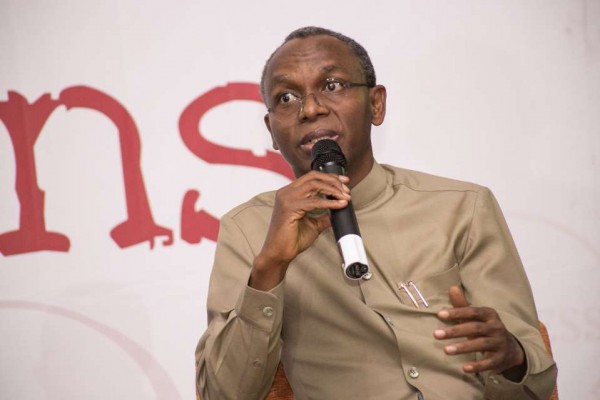
El-Rufai’s Body Bags Threat: Appraising the Electoral and Diplomacy Effects
By Omoshola Deji
Election in Nigeria is more of a war than a contest. The benefits of public office attract people to politics and make them desperate for power. Candidates employ devious tactics to win, as if losing is punishable by death. They dish out hate speeches and uncouth statements without considering the imminent doom such could drag Nigeria into. Governor Nasir El-Rufai of Kaduna State is in the eye of the storm. He stirred the hornet’s nest when he issued a death threat to foreigners who may want to question the conduct of the general elections starting February 16. This piece assesses the effect of El-Rufai’s statement on political behaviour and Nigeria’s foreign relations.
The relationship between Nigeria’s executive arm of government and the global community has been uncordial lately. The United States (US), United Kingdom (UK) and European Union (EU) are casting doubt on the credibility of the forthcoming elections based on President Muhammadu Buhari’s controversial suspension of the Chief Justice of Nigeria, Walter Onnoghen. While commenting on the foreign stance during a live television program on 5 February, 2019, El-Rufai expressed that “those that are calling for anyone to come and intervene in Nigeria, we are waiting for the person that would come and intervene, they would go back in BODY BAGS (emphasis mine), because nobody will come to Nigeria and tell us how to run our country”. A ‘body bag’ is a carrier bag used for moving corpse from a battleground, or an accident or crime scene.
Many thought the outrage that greeted the threat would make El-Rufai eat his words, but that never happened. The threat was rather defined as patriotism. El-Rufai argued in a statement issued by his spokesman, Samuel Aruwan, that “affirming a country will defend itself against needless intervention is the kind of statement you expect to hear from a patriot. It is not a call to violence. Warning about the consequences of meddling in another country’s affairs is legitimate”.
The global community and Nigerians who were infuriated by El-Rufai’s idiocy were hoping the Federal Government would caution him, but that also never happened. The Presidency threw her weight behind El-Rufai, saying he “spoke strongly in defense of national interest”. This is unsurprising as El-Rufai is a chieftain of the ruling party and staunch supporter of President Muhammadu Buhari. But how can the government of a country rationalize a threat to foreigners as national interest? The Presidency should have stayed mute than commit such a pricey blunder. National interest is the interest of a country as a whole, not that of subordinate areas or groups. El-Rufai spoke in defense of the ruling cabal’s interest, not for the majority of Nigerians.
President Buhari’s consistent show of double standard makes him undeserving of integrity accolades. His government labels El-Rufai’s threat a display of patriotism while unarmed Biafra secession campaigners were declared terrorists. The President’s henchmen warning the international community not to interfere in Nigeria’s electoral process praised their interference when it favoured Buhari in 2015. Former US President Barrack Obama influenced the last presidential election against ex-President Goodluck Jonathan. Obama released a video urging Nigerians to open the ‘next chapter’ with their votes when an incumbent President is participating in the election.
Buhari applauded the UK, US and EU when they condemned the postponement of the 2015 elections. Buhari, then a presidential candidate, hailed the foreign interventions, even as Jonathan and his supporters stayed calm and eventually lost the election. The same foreign authorities of 2015 recently condemned the alleged politically motivated suspension of the CJN and the Buhari government is warning them not to meddle in Nigeria’s politics. Such glaring display of double standard approach demeans Buhari’s acclaimed integrity. Buhari only cries foul when he is not profiting; any action or person that does not favour him is wrong, corrupt, unpatriotic or unwelcome.
The unintended grievous consequence of El-Rufai’s statement is the troubles Nigerians in the diaspora would face if any foreigner is injured or killed. The US, UK and Europe are Nigerians choice destinations. Those seeking greener pastures would be denied visas and those already in would be massively deported. We must not bite what we can’t chew! El-Rufai and the Nigerian government are threatening nations whose citizens visiting and living in Nigeria are law-abiding, while Nigerians are not the best-behaved persons overseas. Our nationals residing abroad illegally, disobeying laws and committing heinous crimes would suffer the foreign nation’s retaliatory measures the most. Nigeria cannot long-survive the sanctions that’ll be stamped on her if any harm befalls the foreign observers. The nation imports almost everything and is heavily dependent on foreign aid and loans.
El-Rufai’s uncouth statement would affect the inflow of foreign direct investments. No sane stranger would invest huge in a country whose leaders are threatening foreigners, undermining the rule of law and interfering with the independence of the judiciary.
Many support El-Rufai’s notion that Nigeria should be left alone to run her affairs without any external interference. The degree and limitation of nations sovereignty is an age-long scholarly debate. Nigeria is a member of many foreign organizations and a signatory to many treaties. The membership of global and regional organizations such as the United Nations and African Union has limited the nation’s sovereignty. Identical to the social contract theory on state evolution, nations overtly or covertly submit part of their sovereignty when they join international organizations.
The signing of treaties and embracing the globally recommended mode of governance and development, such as upholding democracy and achieving the Sustainable Development Goals, is a pointer that nations are expected to operate based on standards. Any nation that wants to be absolutely sovereign must not belong to any global body and such is virtually impossible. Nations are sovereign, but not absolutely sovereign. If nations are fully sovereign, why do international organizations set governing standards and principles and sanction erring nations? If nations are truly sovereign, why is the UN Security Council empowered to authorize military operations against nations?
Globalization has bond nations together in such a way that it is difficult for them not to meddle in each other’s affairs. Most nations have assets, investments and interests they care about in several other nations. For example, MTN is a South-African investment in Nigeria and any political-economic challenge that may affect MTN would naturally generate reactions from South Africa.
Foreign interventions are essential and commendable, but they are not always done out of good intents. The interventions are sometimes done to pave way for the exploitation of emerging nation’s resources. The unending war in Congo is a good example. The developed nations are renowned in providing dishonest economic interventions that entrench dependency. Foreign intervention has helped and harmed Nigeria’s economy. The nation lost interest in agriculture when oil multinational corporations (OMNCs) discovered and began oil exploration in the Niger-Delta.
The OMNC’s capital, skill and technology developed the oil sector, but that has largely been for their own benefit. Inhabitants of the region have lost their lands and marines to oil spills. The late Ken Saro-Wiwa’s assertion captures it rightly that they have no land to farm, no water to drink and no air to breathe. The OMNCs also refines oil abroad, instead of constructing refineries in Nigeria to create jobs and boost development. Foreign economic interventions often hinder emerging nation’s growth, but they are the lifesaving oxygen during the outbreak of epidemics such as Ebola, cholera and polio.
The politicians bragging that Nigeria does not need foreign interventions are those hoping to profit from the imperfections of our electoral system. The nation has a lot to gain from foreign electoral interventions and should embrace it, so long as the interventions do not influence election results. External intervention – especially via observations and recommendations – is a means of bettering the quality of our elections. The ruling party has no reason to move against foreign observers if the elections are going to be free, fair and credible. Observing elections help prevent fraud or manipulations, or expose such anomalies if they happen. Foreign observers are a credible means of monitoring the extremes of incumbent seeking re-election, especially in our clime where election results can easily be manipulated.
Observing the electoral process enables nations with mature democracies to recommend ways through which the electioneering process can be strengthened. It can lead to the correction of errors or weak practices, even while the election is ongoing. An observation of the electoral process by foreign persons and groups often boost the public and oppositions confidence in the results. Once the transparency of an electoral process convinces observers to release positive commentaries, the opposition parties may consider throwing in the towel and such increase the legitimacy of the government the election produce.
The US, UK and Europe’s warning is the essential stitch in time that saves nine. Issuing warnings and sanctions is the western nation’s means of avoiding the huge expenses they bare when conflict occur in developing nations. The West is the leading provider of military and humanitarian aid to troubled nations. Cautioning political actors is not inappropriate, considering the wanton destruction of lives and properties war brings.
Anarchy will only worsen Nigeria’s underdevelopment as amenities destroyed won’t not be promptly fixed due to paucity of funds. Even if available, such fund is better spent on settling striking unions and providing amenities. War is not an option for any nation that value lives. Infrastructures can be fixed, the economy can be revived, but lives lost can never be regained. Moreover, Nigeria does not have the capacity to confront the global powers if such need arises; not with the demoralized army struggling to conquer Boko-Haram.
El-Rufai and his encouragers need to act cautiously and be wary of the consequence of their actions on Nigeria. The countries of the foreigners being threatened do not joke with their citizens’ lives. They are not like the Nigerian government that tolerates Boko-Haram and herdsmen. Issues based campaigns must be revived and the purveyors of hate speech and fake news should be appropriately sanctioned or prosecuted. President Muhammadu Buhari owes Nigeria the gratitude of ensuring the elections are free, fair and credible. The elections would pass, Nigeria shall remain.
Omoshola Deji is a political and public affairs analyst. He wrote in via mo******@***oo.com
Feature/OPED
Why Most Nigerians Are Losing Money by “Saving” It
By Izekeo Adegoke
Somewhere in Nigeria right now, a diligent, financially responsible person is watching their savings grow, and losing money at the same time. They do not know it. Their bank balance is rising. Their statement looks healthy. But in real terms, their wealth is quietly and consistently shrinking.
This is not a fringe scenario. It describes the financial situation of millions of Nigerians who are doing everything they were taught.
The gap nobody talks about
Here is the arithmetic that changes the conversation.
The average Nigerian savings account yields between 2% and 4% per annum. Nigeria’s inflation rate, as of recent Central Bank data, sits at approximately 15.69%. That means if you have ₦1 million in a savings account today, it will nominally become ₦1,030,000 in a year, but the real purchasing power of that money will have fallen to the equivalent of roughly ₦790,000 in today’s terms. You saved diligently. You lost ₦210,000 in purchasing power.
This is what economists call negative real returns, and it is the financial reality for the majority of Nigerian savers right now. The distinction between keeping money safe and making money grow has never mattered more than it does in this macroeconomic environment.
Why the savings instinct made sense and no longer does
The preference for savings accounts is not irrational. It is inherited. A generation of Nigerians was raised during periods of significant economic volatility, bank failures, currency devaluations, and frozen accounts. Saving in a regulated institution felt like the responsible, conservative choice. The alternative, markets, stocks, and funds, felt speculative and risky.
That instinct made sense in its context. But the financial landscape has changed materially, and the definition of “safe” needs to catch up.
A savings account today is not a low-risk option. It is a guaranteed negative return dressed in conservative language. The risk is not that you will lose your capital in nominal terms. The risk is that your capital will progressively lose its ability to buy things, fund a retirement, educate children, or build the future you are working toward. That is a real loss, even if your statement does not show it.
The behaviour-change that changes everything
The shift from saving to investing is not about abandoning caution. It is about directing caution more effectively. A diversified investment portfolio spread across fixed income instruments, equities, dollar-denominated assets, and alternative holdings does not eliminate risk. It manages it intelligently, and in doing so, gives your money a fighting chance against inflation.
Consider a ₦1 million portfolio invested across a balanced mix of Nigerian equities and fixed income instruments targeting a 15–18% annual return. Over three years, compounding and market participation could bring that to approximately ₦1.5–1.6 million in nominal terms and, depending on portfolio construction, meaningfully above the inflation rate in real terms. The savings account brings you to ₦1.09 million, having lost ground every single year.
The numbers are not subtle. They are decisive.
Coronation Wealth’s answer to the problem
This is precisely the problem Coronation Wealth was built to solve. Our platforms give individuals access to professionally managed, diversified portfolios across multiple asset classes, including dollar-denominated instruments that provide a structural hedge against naira depreciation. These are not products previously available only to institutional clients or high-net-worth individuals. They are accessible, clearly structured, and designed for people who want their money working as hard as they do. Wealth creation, as we understand it, is not about spectacular bets. It is about making consistent, informed decisions over time with the right tools, the right structure, and a partner who understands the environment in which you operate.
The reframe you need
Safety is not a function of where your money sits. It is a function of what your money does.
A savings account feels safe because the number never goes down. But if that number cannot keep pace with the cost of living, the cost of education, the cost of the future, it is not protecting you. It gives you the illusion of security while inflation quietly does its work.
The most dangerous financial decision most Nigerians are making right now is not taking too much risk. It is the decision to play it safe, and that is precisely why it needs to change.
Izekeo Adegoke is the Chief Digital Officer at Coronation Wealth, the digital investment and wealth management subsidiary of the Coronation Group in Nigeria.
Feature/OPED
This Is Not the Season to Miss Anything (Because the Internet Will Not Wait for You)
There were times when entertainment moved slowly enough that you could catch up later without missing much. This is not one of those times. Right now, everything is happening at once, and if you blink, the internet will already summarise it for you in a version that may not even be fully accurate.
We are in a phase where the moment a show, movie, or reality series airs, clips are already circulating online before many people have watched the full episode. Opinions are formed from short edits, screenshots, and snippets rather than the full context, and conversations often take shape around what has been clipped and shared instead of what actually happened in real time. The ongoing BBNaija Reunion is a clear example of this, with viral moments driving debates and narratives long before many viewers have seen the complete exchange.
And it is not just Big Brother.
The World Cup is literally here, and you already know what that means. Most of the matches are played deep into the night, so many people will wake up to scores they didn’t watch live, scroll cautiously through social media trying to avoid spoilers, or quickly hunt for highlights before someone ruins the result in a group chat or on X. Somehow, everyone will still be expected to join the “did you see that match?” conversation the next morning as if they were awake through every minute of it.
This is the reality of modern viewing: nobody is waiting for you anymore. The funny part is what people do when they miss it. You will see someone on X asking, “abeg who has the link to watch last night’s episode?” and within minutes, replies start flying. Somebody drops a Telegram channel like it is normal, another person shares a random website link, and another group is already posting 30-second clips with captions like “full gist inside” as if that is the full experience.
Before you know it, people are no longer watching the show. They are watching fragments, then opinions, then blog interpretations, then X reactions. And somehow that becomes the version of events that spreads fastest.
That is where the problem starts. Social media does not give context. It gives highlights. Blogs chase clicks, not full stories. Even viral clips in group chats are usually missing the build-up that actually explains why people reacted the way they did.
So, you find yourself arguing passionately about something you did not fully watch. You are forming opinions from “see finish” clips and half-context screenshots. And when you finally watch the full episode later, everything suddenly makes more sense than the version you were dragged into online.
That is why access is becoming more important than ever. Not just access to content, but access to it in real time. Because nothing really hits like watching it live, as it unfolds, with everyone reacting at the same moment. Whether it is a last-minute World Cup goal, a heated reunion moment, or something that instantly becomes meme history, the experience is always different when you are actually there for it.
And this is exactly where viewing has changed. People are no longer tied to one screen in the sitting room. Life does not even allow that anymore. You might be in traffic, at work, outside, or simply away from your decoder when something important is happening, which used to mean you missed your favourite show; now you don’t have to.
Because platforms like DStv and GOtv now let you stay connected even when you are not in front of your television. So instead of chasing Telegram links that may or may not work, which is piracy by the way, or waiting for someone to “summarise what happened,” you can actually watch it yourself.
You can still stay connected using the MyDStv or GOtv Stream app. It is simple. Download the app from your store, log in with your account details, ensure your subscription is active, then head to the Live TV section and select the channel you want. In a few taps, you are back inside the moment everyone is talking about.
And honestly, that is what this season demands. Between Big Brother conversations taking over timelines, new reality TV seasons building buzz, and the World Cup about to dominate every screen in the next few days, this is not the time to be disconnected. Not even the time to say “I’ll catch up later”, because later is exactly where spoilers live now.
So, whether you are watching from your decoder at home or streaming from your phone on the move, the point is the same: you are not out of the conversation. Because in today’s world, missing the show is one thing.
Missing the moment everyone is talking about? That one is harder to recover from.
Feature/OPED
A Tale of Two Kidnappings
By Tony Ogunlowo
In the past few weeks, two high-profile kidnapping cases have captured the attention of the nation. One involved the kidnapping of more than 45 pupils and teachers from a school in Oyo state, and the other involved the relatives of an ex-minister.
Whilst the relatives of the ex-minister, his sister and her two sons, were rescued in a highly publicised police operation, the fate of the missing school children and their teachers remains unclear. Already two teachers have been killed: one was shot and the other beheaded.
Nigeria is a hotbed for kidnapping, and in 2025 alone, there were more than 4,000 reported cases. But bear in mind that for every case recorded, two or three went unreported, leaving relatives to deal with ransom demands on their own. And for cases reported, the overstretched and understaffed police are not much help and often suggest relatives negotiate with kidnappers. As a result, what was once a small sore has now festered, becoming an even bigger wound and growing.
It has been more than twelve years since 276 girls were kidnapped from their school in Chibok. To date, not all of them have been recovered. Some have died whilst others, heavily traumatised, have been found bearing children of their captors: their lives destroyed and those of their families.
The swift rescue of the ex-ministers’ relatives in a short window of just a few days points to one thing – elitism! If you’re well-connected, the powers that be will pull out all the stops to do what they’re supposed to be doing in the first place. If you’re a mere ordinary citizen, they can’t be bothered.
Even though the Federal Government has a policy of not negotiating with kidnappers, which is understandable since they don’t want to encourage the practice, they should have the means to end the scourge. Every government from the Obasanjo regime up to the incumbent have promised to take a hard line on abductions and banditry. To date, all that hardline rhetoric has just been ‘audio’, leaving bandits and kidnappers to get up to all sorts of things. There have been calls to allow citizens to take up arms: not a good idea, as this might encourage extrajudicial killings rather than for self-defence. There have also been calls for stiffer penalties, but, yet again, you need to catch the perpetrators first and make sure they don’t bribe their way out of the judicial system. The Forest Guards program is taking off, and hundreds of them are being recruited, trained and deployed, but are they paramilitary trained to be able to fight kidnappers in the bush?
Just like when the Chibok girls went missing under President Goodluck’s watch, the government is taking a lukewarm approach to the matter. What should be classified as a top priority has been pushed to the bottom of the list as all politicians rush to get their nomination forms in for the 2027 elections: the only thing that matters to them. If this were America, Trump would have mobilised the Army, Navy, Air Force, CIA, and whatever else he could think of to find ALL kidnapped victims. In Nigeria, the only thing politicians are interested in, their top priority, is re-election.
Children’s Day has come and gone, and so also has Democracy Day, as we head towards Independence Day, and somebody’s child, uncle, aunt, husband is still being held against their will with the security services running around like headless chickens, clueless as to what to do next. What happened to their network of informers? Are their surveillance techniques so primitive that they can’t locate a large gathering of people in the bush? Surely contact has been made with all kidnappers so they can list their demands, and why haven’t these leads been tracked using basic cellular telephony technology? But if it’s an ex-minister’s relative, they know how to pull a rabbit out of a hat.
Until the government adopts a zero-tolerance policy towards kidnapping and banditry – and sticks to it, these unfortunate incidents will continue.
Perhaps it’s time to seek foreign assistance since we don’t know what to do: already, Trump has stationed US troops, up North, to help us fight Boko Haram and ISIS. They already have the technology and personnel that can find a fly hiding behind a dune in the Sahara. An ordinary Air Force surveillance plane, or drone, equipped with heat-seeking infra-red cameras, overflying the place at night can easily find anyone hiding out in the Old Oyo park within hours, not days. And please don’t involve the NAF, who seem to bomb more innocent people than bad guys! Alternatively, bring in Sheikh Gumi, who seems to know most of the bandits. He might be able to help.
There is no easy fix to ending insecurity in Nigeria other than to bring in a brutal state of emergency that will grant security services carte blanche to deal with situations as they see fit. Again, this can lead to abuse of power, as was the case with the disbanded SARS.
To truly eliminate all insecurity in the country, the government needs to think long-term and go back to the root cause of all these problems – hunger. A hungry man (or woman) faced with unemployment and a high cost of living, with nothing to lose, will be crazy enough to do any kind of crime to put food on the table and a roof above his head. Doubling the size of the security services and equipping them doesn’t solve the problem.
-
Feature/OPED6 years agoDavos was Different this year
-
Travel/Tourism10 years ago
Lagos Seals Western Lodge Hotel In Ikorodu
-
Showbiz3 years agoEstranged Lover Releases Videos of Empress Njamah Bathing
-
Banking8 years agoSort Codes of GTBank Branches in Nigeria
-
Economy3 years agoSubsidy Removal: CNG at N130 Per Litre Cheaper Than Petrol—IPMAN
-
Banking3 years agoSort Codes of UBA Branches in Nigeria
-
Banking3 years agoFirst Bank Announces Planned Downtime
-
Sports3 years agoHighest Paid Nigerian Footballer – How Much Do Nigerian Footballers Earn