Connect with us

Health

Dangote, Imouhkuede Begin Africa Business Coalition for Health

Published

on

By Dipo Olowookere

An ambitious platform designed to bring together business leaders in Africa to collaborate with heads of government and other stakeholders to tackle basic health challenges in Africa has been launched in Addis Ababa, Ethiopia with assurances from government to collaborate for a healthier Africans.

The platform, African Business Coalition for Health (ABC Health) was launched with commitments by all partners and stakeholders to put efforts together to improve basic health care services in the continent during the inaugural Africa Business: Health Forum 2019, which witnessed the launch of the official logo of the ABC Health.

The ABC Health is a joint initiative of Aliko Dangote Foundation; GBCHealth, and United Nations Economic Commission for Africa (UNECA), with the objective of driving business leadership, strengthening partnerships, and facilitating investments to change the face of healthcare in Africa.

Taking place on the margins of the 32nd African Union Summit Heads of Governments and Business Community leaders across Africa, the forum  examined opportunities to accelerate economic development and growth of the continent through a healthcare reform agenda that focuses on the wellbeing of employees for a more active and productive workforce.


The forum is expected to unify Africa’s key decision makers in exploring opportunities for catalysing growth in the continent’s economy, through business partnerships to invest in the health sector.

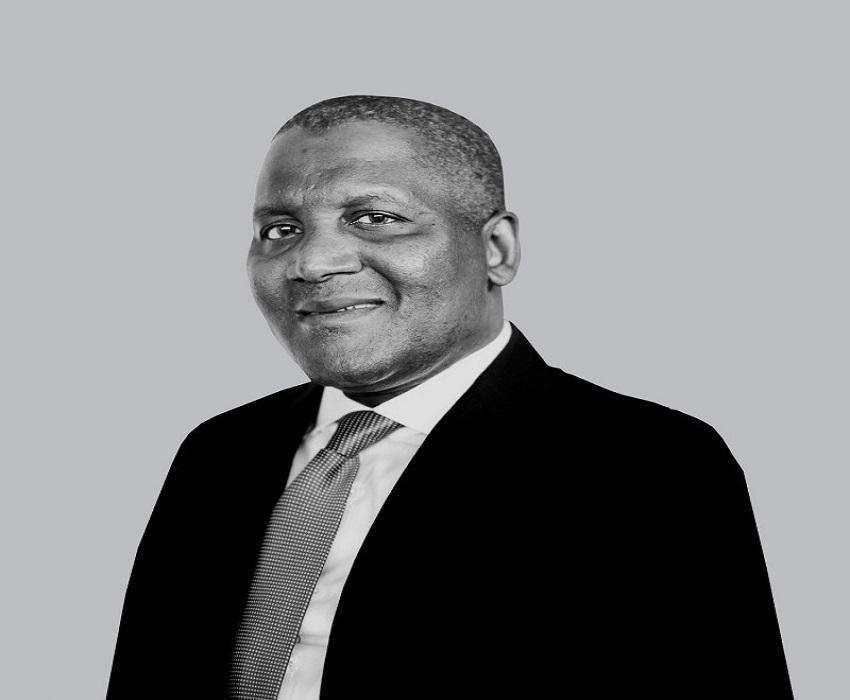
In his opening remarks, Chairman of Aliko Dangote Foundation, Mr Aliko Dangote, who was represented by the Foundation’s Executive Director, Ms Halima Aliko-Dangote, said Africa Business Health Forum would identify issues and solutions to Africa’s health challenges with a view to mobilizing the will to confront it headlong.

He said it is a well-known fact that there is a vital relationship between health and economic growth and development in Africa as healthy populations live longer, are more productive, and save more. Access to essential health services is an important aspect of development.

Mr Dangote stated that “Governments from both developed and developing countries are increasingly looking at public-private partnerships (PPPs) as a way to expand access to higher-quality health services by leveraging capital, managerial capacity, and know-how from the private sector.”

According to him, “Africa’s healthcare systems demand significant investments to meet the needs of their growing populations, changing patterns of diseases and the internationally-agreed development goals.

He said as a businessman, and through Aliko Dangote foundation, he is committed to working with governments and key stakeholders for the development of impactful health initiatives in Africa in the belief that private sector leaders have a strong role to play.

Back in his home country, Mr Dangote informed his audience that in keeping with his passion to see a healthier African people and better continent he has proposed and charged business leaders to commit at least one percent of their profit after tax to support the health sector.

In his own remark, the Co-Chair of the GBCHealth, Mr Aigboje Aig-Imoukhuede, said while Africa has made significant progress in the funding of healthcare, “we are still very far from where we need to be to achieve SDG Goal 3,”

He lamented that the healthcare in Africa is constrained by scarce public funding and limited donor support, and that the out of pocket expenditure accounts for 36 percent of Africa’s total healthcare spend pointing out that given the income levels in Africa, it is no surprise that healthcare spend in Africa is grossly inadequate to meet Africa’s needs leading to a financing gap of N66 billion per annum.

Mr Imhokuede said it was clear that African government alone cannot solve this challenge, which is further exacerbated by our growing population and Africa’s changing disease portfolio. Therefore there is no alternative but to turn to the private sector to complement government funding.

Said he, “Our continent accounts for less than 2 percent of global health even though our very fertile people account for 16 percent of global population and carry 26 percent of the global disease burden. By 2050 Africans will account for more than 50 percent of global population growth much of that coming from my country Nigeria, a great opportunity and at the same time a ticking time bomb should we fail our health systems quickly.

“That is why we have gathered here in Addis Ababa today to see how together we can fix health in Africa. The private sector and the public sector working together as partners have the potential to change Africa’s healthcare from doom and gloom to progress and results. Africa’s private sector has great capacity to be relevant partners.

“The private sector must be encouraged to optimize and step up its involvement and contribution to health funding in Africa. We have seen what global private sector players accomplished in the fight against the AIDS epidemic through powerful coalitions such as GBCHealth. This is an indication of the power of consolidated effort which Africa’s growing private sector can bring to solving our health challenges.”   

“African leaders now have a stronger sense of urgency to combat the lack of quality health care that Africans endure. The inequality of healthcare available to Africans compared to people in other parts of the globe is vast and unacceptably pervasive. With the cooperation of both the public and private sectors, there is a huge potential to boost health outcomes with significant financial gains,” said Mr Aig-Imoukhuede.

The Executive Secretary of the United Nation Economic Commission for Africa (UNECA), Vera Songwe regretted that that Africa with over 50 countries is struggling to combat her healthcare challenges but that organizations such as being launch offer a veritable perspective from the private sector to the solutions to Africa’s health care problems.

She said about $17.3 worth of drugs are imported into African Continent and that if Africa can manufacture those drugs, then that would be 17.3 billion worth of jobs created.

However, to attract the participation of African private sector, there is the need to create enabling environment. “To the private sector, our leaders are expecting you to invest in healthcare because you will get higher returns than you can get anywhere else.”

According to her, a healthier Africa would be a happy Africa and a happy Africa will be a productive Africa.

One after another, the three African heads of governments, namely President of Republic of Djibouti, Omar Gilles; the Ethiopian Prime Minister, Abiy Ahmed; and Botswana President Mokgweetsi Masisi took turn to explain what their administrations have been doing to improve health care delivery services in their respective countries.

They also gave lack of adequate funding as part of the problems militating against achieving their administrations’ plan to provide sound health care services just as other African countries.

They all endorsed the establishment of Africa Business Coalition for Health and concluded that it would provide opportunities to accelerate economic development and growth of the continent through a healthcare reform agenda that focuses on the wellbeing of employees for a more active and productive workforce.

Dipo Olowookere is a journalist based in Nigeria that has passion for reporting business news stories. At his leisure time, he watches football and supports 3SC of Ibadan. Mr Olowookere can be reached via [email protected]

Click to comment

Leave a Reply

Your email address will not be published. Required fields are marked *

Health

NARD Suspends Indefinite Strike, Gives FG Fresh Two-Week Ultimatum

Published

on

resident doctors strike

By Adedapo Adesanya

The Nigerian Association of Resident Doctors (NARD) has suspended its planned nationwide indefinite strike, granting the federal government a two-week ultimatum to address lingering welfare issues affecting resident doctors across the country.

The decision was taken after an emergency meeting of the association’s National Executive Council on Tuesday, where members reviewed assurances from government representatives and resolved to give dialogue another chance.

NARD said the suspension was informed by “progress made” in negotiations, particularly commitments on the prompt payment of salary arrears, hazard allowances, and steps toward resolving issues surrounding the Medical Residency Training Fund.

The association did not declare a full resolution of the dispute. It noted that the government had shown “renewed willingness” to address the concerns that triggered the strike threat.

The association noted that while these engagements signalled a willingness by the government to resolve the dispute, several critical issues remain outstanding, particularly the delayed payment of promotion arrears, salary arrears, the 2026 Medical Residency Training Fund (MRTF), and the backlog of 19 months’ professional allowance arrears owed to resident doctors.

It also expressed concern over the Federal Government’s decision to halt the implementation of the reviewed PAT, which had earlier triggered widespread dissatisfaction among its members and raised fears of disruption to healthcare services nationwide.

Despite these unresolved issues, NARD said it opted to suspend the strike as a demonstration of goodwill and commitment to ongoing dialogue, while giving the government a two-week window to take concrete, measurable and verifiable steps to meet its demands.

The association insisted on the immediate reversal of the decision affecting the PAT, payment of all outstanding arrears, prompt disbursement of the MRTF, and full settlement of the accumulated professional allowance backlog.

It warned that it would reconvene at the expiration of the ultimatum to assess the level of compliance and determine its next course of action, adding that failure by the government to meet its demands within the stipulated timeframe would result in the resumption of the suspended strike without further notice.

NARD also called on its members nationwide to remain calm, united and resolute, while urging the Federal Government to act swiftly to prevent a potential crisis in the health sector.

The association further appreciated the interventions of the Vice President and other stakeholders, expressing hope that their involvement would lead to the timely resolution of the dispute and help sustain healthcare delivery across the country.

Continue Reading

Health

Jacaranda Gets Funds to Expand Affordable Maternal Healthcare in Kenya

Published

on

Jacaranda Maternity

By Modupe Gbadeyanka

To expand affordable healthcare in Kenya, Swedfund has invested about $600,000 into Jacaranda Health Limited (Jacaranda Maternity) to support innovations in neonatal intensive care and strengthen Jacaranda’s ability to provide life-saving services to underserved populations.

Jacaranda Maternity provides high-quality maternal health care at more affordable pricing than typical private providers, focusing on women in Nairobi’s low- and middle-income communities.

The new funding will support the opening of new hospitals, upgrading of neonatal care, and improvements to existing facilities.

Maternal and newborn health outcomes in Kenya remain a challenge, with maternal mortality still high despite improvements in skilled birth attendance.

Public health facilities play a central role but face capacity constraints, while access to reliable, quality care varies across regions and income groups.

Private healthcare providers offering essential maternity services at accessible price points can complement public provision.

Jacaranda Maternity aims to expand its network to six hospitals to achieve financial sustainability while scaling its impact. The healthcare provider is a recognised leader in promoting women’s health, with 71 percent of its staff being women, and a track record of effective environmental and social management.

“This investment will help Jacaranda Maternity provide life-saving care to more women and families while furthering Swedfund’s mission to promote inclusive and sustainable healthcare,” a Senior Investment Manager at Swedfund, Audrey Obara, said.

Continue Reading

Health

Nigeria Secures $350,000 FAO Support to Tackle Rising Bird Flu

Published

on

bird flu

By Adedapo Adesanya

Nigeria will get a $350,000 intervention from the Food and Agriculture Organisation of the United Nations (FAO) to support its response to the ongoing outbreak of Highly Pathogenic Avian Influenza (bird flu) and strengthen the country’s animal health systems.

An agreement was reached on Wednesday during a strategic meeting between the Minister of Livestock Development, Mr Idi Mukhtar Maiha, and the FAO Representative to Nigeria and the Economic Community of West African States, Mr Hussein Gadain, in Abuja.

The intervention, approved under FAO’s Technical Cooperation Programme, will support disease containment efforts in 11 affected states and enhance surveillance, coordination and response mechanisms to prevent further spread of the disease.

Speaking during the meeting, Maiha said effective disease control remains critical to improving livestock productivity and protecting the livelihoods of farmers across the country.

He explained that factors such as drought, scarcity of feed, interaction between livestock and wildlife, as well as cross-border movement of animals have contributed to the spread of diseases in some areas.

“We must continue to strengthen our animal health systems and build the capacity required to respond effectively to disease outbreaks. Our collaboration with FAO will help protect livestock assets, improve productivity and support the broader transformation of the sector,” the minister said.

Mr Gadain commended the federal government’s commitment to the development of the livestock sector and assured that FAO would continue to provide technical support to Nigeria.

He stressed the need to strengthen veterinary services at the state and community levels, improve early detection of diseases and promote biosecurity practices among livestock farmers.

The meeting also reviewed progress on the global campaign to eradicate Peste des Petits Ruminants, a highly contagious disease that affects sheep and goats.

To advance the initiative, the ministry plans to convene a national technical meeting involving veterinary institutions, researchers and practitioners to review Nigeria’s eradication strategy and address gaps in vaccine supply.

As part of preparations, the ministry will engage the National Veterinary Research Institute to assess its vaccine production capacity while exploring other options for vaccine procurement to meet national demand.

Both parties also agreed to accelerate Nigeria’s access to financing under the Pandemic Fund through the One Health approach in collaboration with the Nigeria Centre for Disease Control and the Federal Ministry of Health to strengthen preparedness and response to zoonotic diseases.

Plans are also underway for the Director-General of FAO to participate in the Antimicrobial Resistance Conference scheduled for June 2026 in Abuja, where President Bola Tinubu is expected to be recognised as the African Champion for the eradication of Peste des Petits Ruminants.

The meeting further agreed to inaugurate a Livestock Donor Working Group to coordinate development partner support and advance key initiatives, including the development of a national feed and fodder strategy aimed at improving productivity and sustainability in the livestock sector.

Continue Reading

Trending