Connect with us

Banking

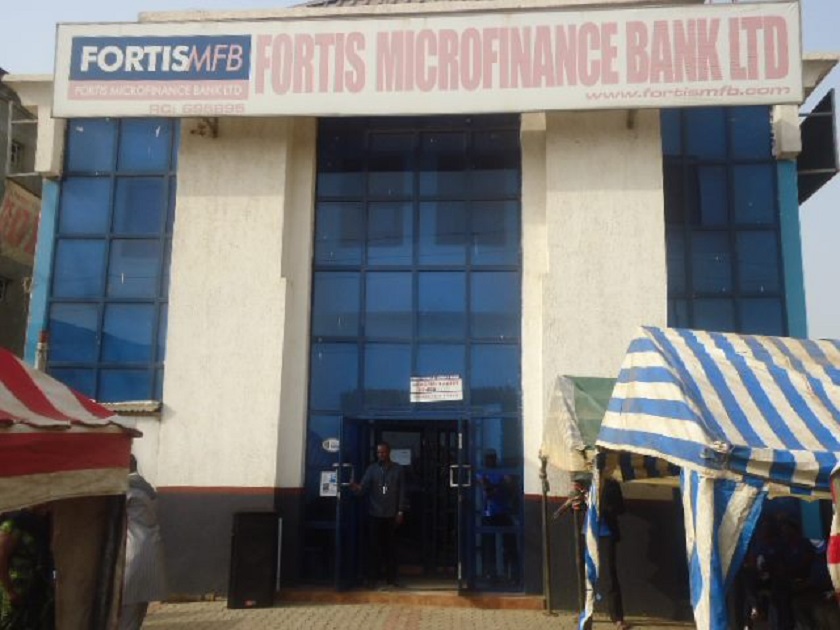
Real Reasons Fortis MFB was Liquidated—NDIC

Published

on

By Modupe Gbadeyanka

The Nigeria Deposit Insurance Corporation (NDIC) has explained why it took the critical decision to liquidate Fortis Microfinance Bank Plc some days ago.

The action did not go down well with some stakeholders in the financial industry, especially shareholders of the collapsed bank.

For example, the National Coordinator of Progressive Shareholders Association of Nigeria (PSAN), Mr Boniface Okezie, had said instead of liquidating the lender, NDIC and the Central Bank of Nigeria (CBN) should have made efforts to save the company.

He claimed that the regulators aggravate problems in the financial industry through liquidation, passing a wrong signal to foreign investors and making Nigerian shareholders ultimate victims.

Also, a financial analyst, Mr Garba Kurfi, who heads APT Securities and Fund, was quoted by Daily Trust as blaming the CBN and NDIC for the liquidation.

According to him, managing affairs of the bank, its resale or the appointment of a new management would have been better for its depositors and other banks that had business relationship with Fortis as well as the economy at large.

But reacting in a statement, the NDIC emphasised that efforts were made by regulators to savage Fortis MFB.

Head of Communications and Public Affairs at NDIC, Mr Mohammed Kudu Ibrahim, noted that operators in the banking system are aware that the liquidation of ailing banks was always the last option adopted by the agency after other cost-effective resolution options have failed.

In all instances, the safety of depositor’s funds is the primary concern of the corporation, he said in the statement.

He stated that depositors of banks always come first in the order of settlement of claims in the liquidation process.

“On the other hand, the shareholders of failed banks are always the last to be paid after the settlement of their depositors and creditors.

“It is however, common knowledge that shareholders are part of the governance structure of the affected banks, through the control they exercise over the Board and Management of their banks during the Annual General Meetings and Extra Ordinary General Meetings, as well as through appointment of Directors and Auditors of their banks. Accordingly, they cannot be absolved from the misdeeds of their Boards,” he said.

Mr Ibrahim added that, “With particular reference to the liquidation of the Fortis MFB, it would be recalled that Fortis MFB was licensed by the Central Bank of Nigeria (CBN) in 2007 and listed on the Nigerian Stock Exchange (NSE).

“However, in 2016, the shares of the bank were suspended due to failure to submit its 2016 audited accounts. It should be noted that the various examinations and supervisory interventions of CBN and NDIC revealed that the bank was being run in an unsafe and unsound manner leading to huge non-performing loans, high cost of funds (foreign and domestic borrowings, and fixed/term deposits), exorbitant administrative and personnel costs (especially high emoluments to successive CEOs), and poor corporate governance practices, all of which impacted negatively on its financial condition. As a consequence, the bank was illiquid, could not honour its obligations to its depositors, and became insolvent.”

“The unhealthy condition of the bank degenerated to the extent that the CBN removed the Management of Fortis MFB Plc in February 2018 and appointed a four (4) person Interim Management Committee (IMC) to take over the control and management of the bank.

“The IMC which comprised of officers drawn from the CBN and NDIC, as well as an independent Chairman, were mandated to steer the bank back to sustainability. The IMC managed the affairs of

Fortis MFB Plc for a period 10 months during which it did all it could to resuscitate the bank and began reimbursing depositors, using funds advanced by CBN for that purpose.

“The above is contrary to the claim by Mallam Garba Kurfi, that the CBN/NDIC made no prior attempt to salvage the ailing bank before its eventual liquidation. Unfortunately, due to the mismanagement of the bank by its erstwhile Board and Management, it could not be salvaged, hence its eventual liquidation.

“The general public is therefore urged to disregard the misleading claims in the publication and to remain assured that the NDIC will always be faithful and alive to its responsibilities in protecting Nigerian Depositors at all times,” he added.


Modupe Gbadeyanka is a fast-rising journalist with Business Post Nigeria. Her passion for journalism is amazing. She is willing to learn more with a view to becoming one of the best pen-pushers in Nigeria. Her role models are the duo of CNN's Richard Quest and Christiane Amanpour.

Advertisement
Click to comment

Leave a Reply

Your email address will not be published. Required fields are marked *

Banking

Secure IT, StockMed, 18 Others Make Wema Bank Hackaholics 6.0 Top 20 List

Published

on

Wema Bank Hackaholics 6.0

By Modupe Gbadeyanka

The six edition of the Hackaholics of Wema Bank Plc has produced 20 top finalists shared equally between two streams, Ideathon and Hackathon.

The Hackathon finalists are Rapid DEV, Secure IT, Neurafeed, Trust Lock Babcock, Pulse Track, IlluminiTrust, Trust Lock FUTA, Fix Fraud AI, KASH Flow and VOC AI.

The Ideathon finalists include PLOY, Fertitude, VarsityScape, Mama ALERT, StockMed, Chao, All Arbitrate, FarmSlate, Sane AI and Cycle X.

They emerged after a two-day pre-pitch held on December 16 and 17, 2025, for the grand finale slated for Friday, December 19, 2025.

They grand finale of Hackaholics 6.0 will convene the top players in Africa’s tech and innovation ecosystem, creating an avenue for these finalists to not only put their creativity to the ultimate test but also give their solutions visibility to potential investors for additional funding opportunities beyond the prizes to be won.

The prizes to be won for the Ideathon include N25 million for the winner, N20 million for the first runner-up, N15 million for the second runner-up and N5 million each for two women-led teams.

In the Hackathon category, the first to fourth-place winners will receive N20 million, N15 million, N10 million and N5 million, respectively.

The pre-pitch saw the top 43 contenders battle in a game of innovation and problem solving, presenting compelling pitches for a chance to make it to top 10 in their respective streams.

After a rigorous stretch of pitches and presentations, the top 20 emerged, securing their spot in the grand finale of Hackaholics 6.0.

“Hackaholics started off as a hackathon and morphed into an ideation. For Hackaholics 6.0, the sixth edition, we decided to give both the builders of new solutions and the refiners of existing ones, an opportunity to make meaningful impact.

“For us at Wema Bank, we understand that innovation isn’t just building from scratch. Sometimes, it’s looking at what exists and developing new ways to optimise that and create more efficiency. This is the idea behind our two-stream Ideathon-Hackathon structure.

“Every year, Hackaholics shows us just how eager and motivated Nigerian youth are when it comes to exploring creativity and innovation, and we are honoured to be the institution that provides them with the platform and resources to put this drive to good use.

“We toured seven cities, indulged 1,460 participants and discovered hundreds of remarkable ideas; some of which needed some refining and some of which deserved to move to the next stage.

“For those who needed to go back to the drawing board, we provided useful guidance and for the top contenders, we were able to shortlist to the top 43, who proceeded to the pre-pitch. To every participant, Wema Bank is proud of you. This is just the beginning,” the chief executive of Wema Bank, Mr Moruf Oseni, said.

Continue Reading

Banking

Customs to Penalise Banks for Delayed Revenue Remittance

Published

on

edo Revenue Collection

By Adedapo Adesanya

The Nigeria Customs Service (NCS) says it will enforce penalties against designated banks that delay the remittance of customs revenue, in a move aimed at strengthening transparency and safeguarding government earnings.

This was disclosed in a statement on the NCS official account on X, formerly known as Twitter and signed by its spokesman, Mr Abdullahi Maiwada, who said the delays undermine the efficiency, transparency, and integrity of government revenue administration.

“The Nigeria Customs Service has noted instances of delayed remittance of customs revenue by some designated banks following reconciliation of collections processed through the B’odogwu platform,” the statement read.

“Such delays constitute a breach of remittance obligations and negatively impact the efficiency, transparency, and integrity of government revenue administration.

“In line with the provisions of the Service Level Agreement executed between the Nigeria Customs Service and designated banks, the Service hereby notifies stakeholders of the commencement of enforcement actions against banks found to be in default of agreed remittance timelines.”

Mr Maiwada disclosed that any bank that fails to remit collected Customs revenue within the prescribed timeline will be liable to penalty interest calculated at three per cent above the prevailing Nigerian Interbank Offered Rate for the period of the delay.

He added that affected banks would be formally notified of the delayed amounts, the applicable penalty, and the deadline for settlement.

“Accordingly, any designated bank that fails to remit collected Customs revenue within the prescribed period shall be liable to penalty interest calculated at three per cent above the prevailing Nigerian Interbank Offered Rate for the duration of the delay.

“Affected banks will receive formal notifications indicating the delayed amount, applicable penalty, and the timeline for settlement,” the statement read.

Continue Reading

Banking

First Bank Deputy MD Sells Off 11.8m First Holdco Shares Worth N366.9m

Published

on

ini ebong first bank

By Aduragbemi Omiyale

The deputy managing director of First Bank of Nigeria (FBN) Limited, Mr Ini Ebong, has offloaded some shares of FBN Holdings Plc, the parent firm of the banking institution.

A regulatory notice from the Nigerian Exchange (NGX) Limited confirmed the development on Thursday.

It was disclosed that the transaction occurred on Friday, December 12, 2025, on the floor of the stock exchange.

The sale involved about 11.8 million shares, precisely 11,783,333 units traded at N31.14 per share, amounting to about N366.9 million.

Mr Ebong, who studied Architecture from University of Ife and obtained Bachelor and Master of Science degrees, became the DMD of First Bank in June 2024. Prior to this appointment, he was Executive Director, Treasury and International Banking since January 2022.

He was previously the Group Executive, Treasury and International Banking, a position he held since 2016 after serving as the bank’s Treasurer from 2011 to 2016.

Before joining First Bank, he was the Head of African Fixed Income and Local Markets Trading, Renaissance Securities Nigeria Limited, the Nigerian registered subsidiary of Renaissance Capital. He also worked with Citigroup for 14 years as Country Treasurer and Sales and Trading Business Head.

He has a passion for market development and has worked actively to drive change and internationalisation of the Nigerian financial markets: foreign exchange, fixed income and securities.

He has worked closely with regulatory bodies such as the Central Bank of Nigeria (CBN) and the Debt Management Office (DMO) in assisting with the development of fresh monetary and foreign exchange policies, to broaden and deepen markets and open them up to international practices.

At various times he has facilitated and delivered courses and seminars on a wide variety of subjects covering Money Markets, Securities and Foreign exchange trading and market risk management subjects to regulators, corporate customers, banks and market participants.

Continue Reading

Trending