Connect with us

Economy

Edo Moves to Boost Tax Compliance

Published

on

godwin obaseki edo state

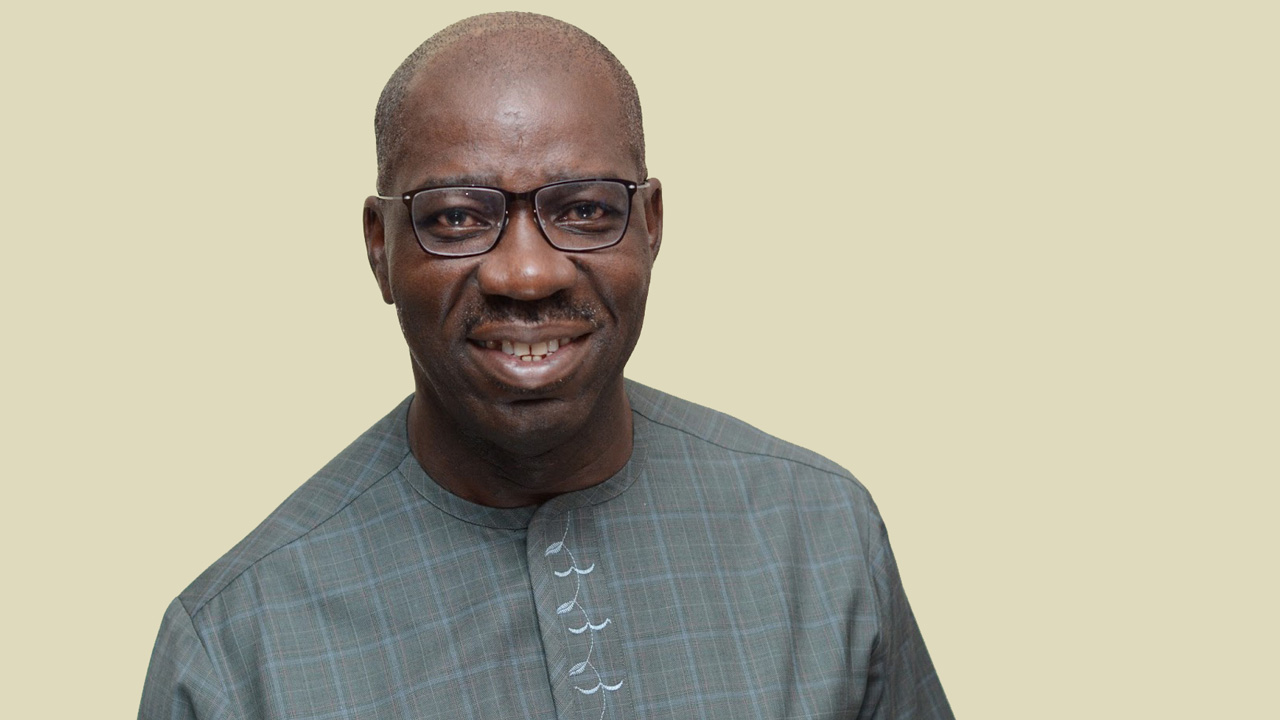
The Edo State Governor, Mr. Godwin Obaseki, has disclosed that his administration was working out strategies to strengthen ties with the Tax Appeal Tribunal, South-South Zone, to boost tax compliance in the state, especially with the recent influx of investors into the Heartbeat of the Nation.

Speaking during a courtesy visit by the Chairman of Tax Appeal Tribunal, South-South Zone, Prof. Obehi Odiase-Alegimenlen, to Government House in Benin City last week, Mr Obaseki said one of the steps was to insist on the use of technology for tax collection as against non-state actors and consultants so as to ensure that traders are protected from harassment and double taxation.

He explained that the ban placed on the use of consultants and non-state actors and the introduction of Information and Communication Technologies (ICT) for tax collection is aimed at protecting traders and other taxpayers from harassment and double taxation.

“This move has led to a backlash, but we will not go back on that decision taken by this administration,” Mr Obaseki added.

Mr Obaseki noted that taxation remains the main source of revenue for most states in the country, adding that any state focused on growing its internal economy must ensure that the people imbibe the culture of paying their taxes and demanding accountability from government.

“I appeal that we work together on advocacy, especially in improving the communication mechanism to drive compliance. People ought to know the importance of paying taxes and that it is their civic responsibility,” he added.

He said the state has undertaken significant reforms in tax administration and has implemented a series of initiatives in deploying technology for tax collection, which have made the process easier and more transparent.

Mr Obaseki explained, “We believe that we can introduce more technologies to drive transparency and make tax collection easier. People don’t want to pay taxes, forgetting that it is their civic responsibility as it helps to develop the economy.”

The Chairman of the Tax Appeal Tribunal, South-South Zone, Prof. Obehi Odiase-Alegimenlen said the tribunal was set-up to resolve disputes from clients of tax authorities.

“In the advanced world, taxation is a very important aspect of our development finance but not so in Nigeria. The Federal Government is trying to make taxation a relevant aspect of getting finance for developing the country,” he added.


Modupe Gbadeyanka is a fast-rising journalist with Business Post Nigeria. Her passion for journalism is amazing. She is willing to learn more with a view to becoming one of the best pen-pushers in Nigeria. Her role models are the duo of CNN's Richard Quest and Christiane Amanpour.

Economy

Naira Crashes to N1,464/$1 at Official Market, N1,485/$1 at Black Market

Published

on

Official FX Market

By Adedapo Adesanya

It was not a good day for the Nigerian Naira at the two major foreign exchange (FX) market on Friday as it suffered a heavy loss against the United States Dollar at the close of transactions.

In the black market segment, the Naira weakened against its American counterpart yesterday by N10 to quote at N1,485/$1, in contrast to the N1,475/$1 it was traded a day earlier, and at the GTBank forex counter, it depreciated by N2 to settle at N1,467/$1 versus Thursday’s closing price of N1,465/$1.

In the Nigerian Autonomous Foreign Exchange Market (NAFEX) window, which is also the official market, the nation’s legal tender crashed against the greenback by N6.65 or 0.46 per cent to close at N1,464.49/$1 compared with the preceding session’s rate of N1,457.84/$1.

In the same vein, the local currency tumbled against the Euro in the spot market by N2.25 to sell for N1,714.63/€1 compared with the previous day’s N1,712.38/€1, but appreciated against the Pound Sterling by 73 Kobo to finish at N1,957.30/£1 compared with the N1,958.03/£1 it was traded in the preceding session.

The market continues to face seasonal pressure even as the Central Bank of Nigeria (CBN) is still conducting FX intervention sales, which have significantly reduced but not remove pressure from the Naira. Also, there seems to be reduced supply from exporters, foreign portfolio investors and non-bank corporate inflows.

President Bola Tinubu on Friday presented the government’s N58.47 trillion budget plan aimed at consolidating economic reforms and boosting growth.

The budget is based on a projected crude oil price of $64.85 a barrel and includes a target oil output of 1.84 million barrels a day. It also projects an exchange rate of N1,400 to the Dollar.

President Tinubu said inflation had plunged to an annual rate of 14.45 per cent in November from 24.23 per cent in March, while foreign reserves had surged to a seven-year high of $47 billion.

Meanwhile, the cryptocurrency market was dominated by the bulls but it continues to face increased pressure after million in liquidations in previous session over accelerating declines, with Dogecoin (DOGE) recovering 4.2 per cent to trade at $0.1309.

Further, Ripple (XRP) appreciated by 3.9 per cent to $1.90, Cardano (ADA) rose by 3.5 per cent to $0.3728, Solana (SOL) jumped by 3.4 per cent to $126.23, Ethereum (ETH) climbed by 2.9 per cent to $2,982.42, Binance Coin (BNB) gained 2.0 per cent to sell for $853.06, Bitcoin (BTC) improved by 1.7 per cent to $88,281.21, and Litecoin (LTC) soared by 1.2 per cent to $76.50, while the US Dollar Tether (USDT) and the US Dollar Coin (USDC) traded flat at $1.00 each.

Continue Reading

Economy

Crude Oil Prices Climb as US Blocks Venezuelan Tankers

Published

on

crude oil prices

By Adedapo Adesanya

Crude oil prices edged up on possible disruptions from a US blockade of Venezuelan tankers as the market waits for news about a possible Russia-Ukraine peace deal.

Brent futures rose 65 cents or 1.1 per cent to $60.47 per barrel while the US West Texas Intermediate (WTI) futures expanded by 51 cents or 0.9 per cent to $56.66 per barrel. Both Brent and WTI were down about 1 per cent this week after both crude benchmarks fell about 4 per cent last week.

US President Donald Trump said he was leaving the possibility of war with Venezuela on the table, noting that there would be additional seizures of oil tankers near Venezuelan waters after the US seized a sanctioned oil tanker off the coast of Venezuela last week.

The American President this week ordered a “blockade” of all sanctioned oil tankers entering and leaving Venezuela, in the US’ latest move to increase pressure on Nicolas Maduro’s government, targeting its main source of income. The pressure campaign on President Maduro has included a ramped-up military presence in the region and more than two dozen military strikes on vessels in the Pacific Ocean and Caribbean Sea near Venezuela, which have killed at least 90 people.

President Trump has also previously said that US land strikes on the South American country will soon start.

Meanwhile, US Secretary of State Marco Rubio on Friday said that the US is not concerned about an escalation with Russia when it comes to Venezuela, as the Trump administration builds up military forces in the Caribbean.

This development comes as President Trump seeks an end to the unending war between Ukraine and Russia that is heading towards its fourth year.

European Union leaders decided on Friday to borrow cash to loan 90 billion Euros to Ukraine to fund its defense against Russia for the next two years as Russian President Vladimir Putin offered no compromise on Friday on his terms for ending the war in Ukraine and accused the European Union of attempting “daylight robbery” of Russian assets.

Ukraine, meanwhile, struck a Russian “shadow fleet” oil tanker in the Mediterranean Sea with aerial drones for the first time.

Earlier this week, the US and Ukraine both signaled progress in negotiations about a peace agreement during talks in German capital city of Berlin. The US is now reportedly offering Ukraine security guarantees modeled on NATO’s Article 5 mutual defense pledge.

Continue Reading

Economy

Tinubu Presents N58.47trn Budget for 2026 to National Assembly

Published

on

2026 budget tinubu

By Adedapo Adesanya

President Bola Tinubu on Friday presented a budget proposal of N58.47 trillion for the 2026 fiscal year titled Budget of Consolidation, Renewed Resilience and Shared Prosperity to a joint session of the National Assembly, with capital recurrent (non‑debt) expenditure standing at 15.25 trillion, and the capital expenditure at N26.08 trillion, while the crude oil benchmark was pegged at $64.85 per barrel.

Business Post reports that the Brent crude grade currently trades around $60 per barrel. It is also expected to trade at that level or lower next year over worries about oil glut.

At the budget presentation today, Mr Tinubu said the expected total revenue for the year is N34.33 trillion, and the proposal is anchored on a crude oil production of 1.84 million barrels per day, and an exchange rate of N1,400 to the US Dollar.

In terms of sectoral allocation, defence and security took the lion’s share with N5.41 trillion, followed by infrastructure at N3.56 trillion, education received N3.52 trillion, while health received N2.48 trillion.

Addressing the lawmakers, the President described the budget proposal as not “just accounting lines”.

“They are a statement of national priorities,” the president told the gathering. “We remain firmly committed to fiscal sustainability, debt transparency, and value‑for‑money spending.”

The presentation came at a time of heightened insecurity in parts of the country, with mass abductions and other crimes making headlines.

Outlining his government’s plan to address the challenge, President Tinubu reminded the gathering that security “remains the foundation of development”.

He said some of the measures in place to tame insecurity include the modernisation of the Armed Forces, intelligence‑driven policing and joint operations, border security, and technology‑enabled surveillance and community‑based peacebuilding and conflict prevention.

“We will invest in security with clear accountability for outcomes—because security spending must deliver security results,” the president said.

“To secure our country, our priority will remain on increasing the fighting capability of our armed forces and other security agencies by boosting personnel and procuring cutting-edge platforms and other hardware,” he added.

Continue Reading

Trending