Economy
Three Equities Contribute 87.91% to NSE’s Weekly Turnover
By Dipo Olowookere
The All-Share Index (ASI) and market capitalisation of the Nigerian Stock Exchange (NSE) further depreciated by last week by 0.65 percent and 0.59 percent respectively to close the week at 29,851.29 points and N13.155 trillion apiece.
All other indices finished higher with the exception of the NSE-Main Board Index, NSE Premium
Index, NSE MERI Growth Index, NSE Consumer Goods Index and NSE Lotus II which depreciated by 0.49 percent, 0.77 percent, 0.83 percent, 1.64 percent and 1.54 percent respectively while NSE ASeM Index closed flat.
In the week, the market recorded a total turnover of 7.5 billion shares worth N91.1 billion were executed in 17,192 deals by investors on the floor of the exchange in contrast to a total of 868.7 million shares valued at N15.8 billion that exchanged hands the previous week in 12,201 deals.
Stocks in the financial services sector led the activity chart with 6.1 billion units valued at N17.5 billion traded in 8,479 deals, contributing 81.87 percent and 19.16 percent to the total equity turnover volume and value respectively.
Equities in the oil and gas industry followed with one billion units worth N65.1 billion in 2,019 deals, with shares in the ICT sector churning out a turnover of 115.3 million units worth N3.4 billion in 866 deals.
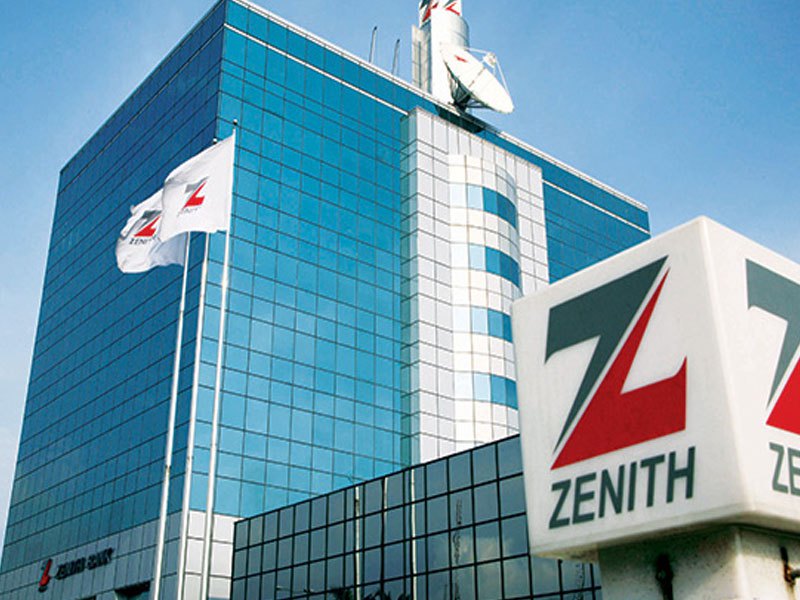
Trading in Wema Bank, Forte Oil and Zenith Bank accounted for 6.6 billion shares worth N77.5 billion in 2,895 deals, contributing 87.91 percent and 85.06 percent to the total equity turnover volume and value respectively.
A total of 34 equities appreciated in price during the week, higher than 19 in the previous week, while 33 equities depreciated in price, higher than 31 equities of the previous week, with 101 equities remaining unchanged, lower than 118 equities recorded in the preceding week.
Linkage Assurance topped the gainers’ chart after gaining 37.50 percent to close at 66 kobo per share.
NEM Insurance appreciated by 33.33 percent to finish at N2.80k per unit, while Thomas Wyatt Nigeria improved by 21.21 percent to end at 40 kobo per share.
Lafarge Africa increased by 18.46 percent to close at N9.75k per unit, while Champion Breweries rose by 18.33 percent to finish at N1.42k per share.
At the other side of the coin, Chams led the losers’ table with a decline of 13.89 percent to settle at 31 kobo per share.
It was followed by CAP, which went down by 11.58 percent to end at N27.50k per unit, and Okomu Oil, which depreciated by 10 percent to close at N66.60k per share.
C&I Leasing and ABC Transport also dropped 10 percent to settle at N5.67k and 27 kobo per share respectively.
Economy
Crude Oil Market Mixed on Fresh Strait of Hormuz Reopening Hopes
By Adedapo Adesanya
The crude oil market was mixed on Wednesday as investors weighed revived expectations of a de-escalation in United States-Iran hostilities.
Brent crude futures gained 9 cents or 0.11 per cent to trade at $79.45 a barrel, while the US West Texas Intermediate (WTI) crude futures fell by 55 cents or 0.73 per cent to $75.22 per barrel.
US President Donald Trump previously said there was an “all-day negotiation” with Iran, characterizing the talks positively while also threatening to hit the country “really hard” if a deal was not reached.
Meanwhile, Iran denied that peace talks were under way. Its Foreign Ministry said on Wednesday that Iran and Oman have reached an understanding on how to manage the Strait of Hormuz.
It was reported that the decision was awaiting a decision from Iran’s supreme leader after Iranian and Omani negotiators completed a draft agreement that could reopen the Strait of Hormuz, the main export route for Persian Gulf oil and LNG. Also, a joint announcement is being finalized.
The proposed temporary arrangement would direct ships entering the Persian Gulf through waters controlled by Iran, while vessels leaving the Gulf would use a route administered by Oman. The agreement would revive parts of the US-Iran memorandum reached in June, which collapsed after attacks on shipping resumed.
Reuters reported that Iran is seeking payments equivalent to between 5 per cent and 7 per cent of cargo value, while Oman has proposed a 3 per cent charge.
However, the Trump administration has rejected any arrangement requiring ships to pay Iran for passage through what was an open international waterway before the war.
Crude stockpiles rose by 2.5 million barrels to 407 million barrels last week, data from the Energy Information Administration (EIA) showed on Wednesday. Previously, the American Petroleum Institute (API) estimated that crude oil inventories in the US rose by 2.69 million barrels in the week ending July 30.
Apart from disruption in the Gulf, a surge in attacks on Russian and Ukrainian ships, ports and export terminals in the Black Sea is disrupting global commodity supplies.
Disruption has spread to the Caspian Pipeline Consortium (CPC), the main export route for Kazakh crude oil, which has repeatedly suspended operations this week because of safety concerns and a lack of tankers.
Economy
NUPRC Targets $50bn Investments from 22 Offshore Projects
By Aduragbemi Omiyale
Between $30 billion and $50 billion in investments are anticipated from 22 major offshore projects by the Nigerian Upstream Petroleum Regulatory Commission (NUPRC) from now till 2030.
Speaking at the Society of Petroleum Engineers’ Nigeria Annual International Conference and Exhibition (NAICE 2026) in Lagos on Wednesday, the chief executive of NUPRC, Mrs Oritsemeyiwa Eyesan, said since 2022, successive licensing rounds have opened access to some of Nigeria’s most prospective oil and gas acreages.
She made reference to the recent 2025 Licensing Round where 31 companies emerged successful bidders for 37 oil and gas blocks after progressing through a robust, data-driven and technology enabled evaluation process.
Mrs Eyesan said the 2026 Licensing Round, which is set to commence soon, is showing greater promise thanks to the transparency that has characterised licensing rounds.
“With preparations already underway for the 2026 Licensing Round, Nigeria is demonstrating that investment certainty is no longer an aspiration; it is becoming an enduring feature of our regulatory framework,” the NUPRC boss stated.
The agency’s chief, who was represented at the event by the Executive Commissioner for Development and Production, Mr Enorense Amadasu, the expected investments are expected to increase production, create jobs and strengthen energy security.
“Since 2024, the NUPRC has approved over $57 billion in Field Development Plan (FDPs) some of which have translated to Final Investment Decisions. Twenty-two major offshore projects are expected between 2026 and 2030 with an estimated investment potential of $30–50 billion.
“Beyond increasing production, these investments will create jobs, expand infrastructure, strengthen energy security and reinforce Nigeria’s position as a leading global upstream investment destination,” she stated.
She noted that besides developing its proven reserves, Nigeria is building a resilient energy future by maintaining a strong pipeline of exploration opportunities that will sustain long-term growth and energy security.
Mrs Eyesan said infrastructure deficit continues to undermine Africa’s promising potential, stating that, Nigeria is, however, addressing this challenge through a series of strategies.
“We are expanding gas gathering systems, processing facilities, pipelines and export infrastructure, while promoting shared facilities, open access, third party access and field tiebacks to reduce costs, speed up project delivery, maximise the use of existing infrastructure and help bring stranded oil and gas resources into production,” the NUPRC boss stated.
Besides these infrastructure strategies, Mrs Eyesan said stronger collaboration among government, security agencies, operators, host communities and private partners; as well as the Host Community Development Trust had led to an improvement in the protection of critical energy assets which had ultimately made Nigeria’s upstream sector more resilient.
Economy
Pathway Advisors Opens N25bn Commercial Paper Offer for Zeenab Foods
By Adedapo Adesanya
Pathway Advisors Limited has launched a N25 billion Series 3 Commercial Paper (CP) issuance for Zeenab Foods Limited, with proceeds expected to strengthen the agro-processing company’s working capital and support its short-term funding needs.
The offer, which is being issued under Zeenab Foods’ N50 billion Commercial Paper Programme, opened for subscription on August 4 and will close on August 10, 2026. Issue and settlement are scheduled for August 11, while the commercial paper will mature on August 10, 2027.
Acting as the lead arranger and issuing house, Pathway Advisors structured the 364-day instrument at a discount rate of 19.69 per cent, translating to an effective yield of 24.50 per cent. The offer has a minimum subscription of N5 million, with additional investments accepted in multiples of N1,000.
Founded in 2011, Zeenab Foods operates across rice milling, the export of processed agricultural commodities, and the supply of food products to international donor organisations, including the United Nations World Food Programme (UN-WFP). The company runs processing facilities in Abuja and Kano, while maintaining export liaison offices in Changsha, Guangzhou and Shanghai in China, as well as Dubai in the United Arab Emirates.
The company has received strong investment-grade ratings from leading credit rating agencies. Agusto & Co. assigned it a short-term rating of A1 and a long-term rating of A-, while DataPro Limited rated it A1 for the short term and A+ for the long term.
According to the transaction details, Zeenab Foods has maintained a strong repayment record under both its previous N20 billion Commercial Paper Programme and the current N50 billion programme. Since 2024, the company has redeemed multiple commercial paper series ahead of maturity, reinforcing investor confidence in its financial position.
The firm has also continued to expand its production capacity to meet growing demand. Its rice milling facility now has an installed capacity of 180 metric tonnes per day following a 50 per cent expansion completed in 2025, with average capacity utilisation standing at about 85 per cent.
Zeenab Foods has also positioned itself to benefit from policy changes in Nigeria’s agricultural sector. Following the federal government’s ban on raw shea nut exports in August 2025, the company leased a shea butter processing facility in Ogun State with an initial capacity of 100 metric tonnes per day. It plans to expand the facility to 300 metric tonnes daily while diversifying into soya oil processing, edible oil refining and cocoa butter production.
The organisation also expects continued growth from its long-standing relationship with the UN-WFP, supported by sustained humanitarian food demand across the Sahel region.
Pathway Advisors Limited, a Securities and Exchange Commission-regulated issuing house and financial advisory firm, said it remains focused on facilitating access to capital for businesses and supporting sustainable economic growth across key sectors of the Nigerian economy through its capital-raising and advisory services.