Economy
Loans: Firm Unveils Credit Rating Score for Nigerians
By Modupe Gbadeyanka
A Lagos-based company known as CRC Credit Bureau (CCB) has come up with a unique three-digit number credit rating system to assist financial institution make quick and informed credit decisions.
Some weeks ago, the Central Bank of Nigeria (CBN) mandated banks to increase their loan to deposit ratio to 60 percent by the end of September 2019. This policy is to spur the economy by making funds available to small business owners, who are the main driver of the economy.
Lenders have been very careful in giving out credit facilities to customers because issues with repayment and the absence of quality credit rating system to help them have an idea of which customer has the potential of paying by an approved loan.
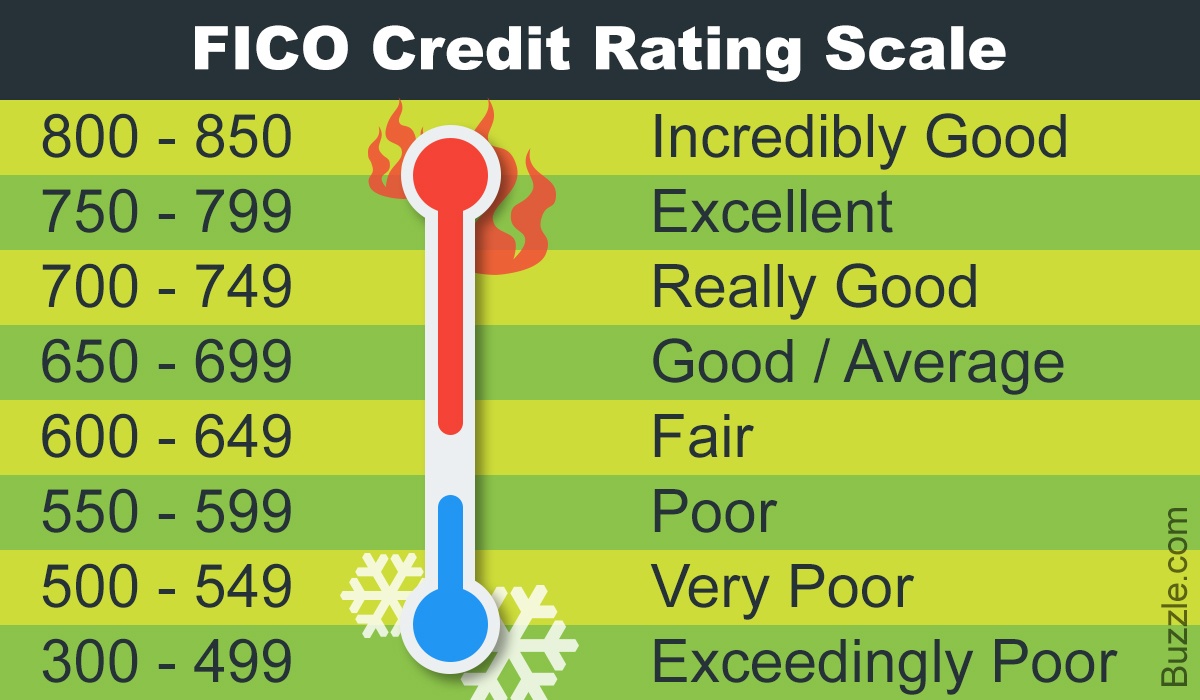
But CCB is coming at the right time to take away this and other fears with its system, which has numbers from 300-850 that summarizes customer’s history of borrowing and paying back loans or post-paid services. The allocated 3-digit number represents how risky it is to do business with holder.
At the unveiling of the credit rating system in Lagos some days ago, Managing Director and Chief Executive Officer of CRC Credit Bureau, Mr Tunde Popoola, informed newsmen that the system was done in collaboration with an America company known as Fair Isaac Corporation (FICO).
He explained that the initiative is a “credit grading system, with 300 being the lowest grade like an ‘F’ in a report card and 850 being the highest which would be an ‘A’ or distinction in your report card.
“It is also used amongst other criteria to determine the interest rate, you will be charged if a lender decides to approve the credit line or loan.
“It is a numerical expression based on a level of analysis of an individual’s Credit Report and is used to represent how risky it is for lenders or creditors to do business with said individual.”
According to him, “In developed economies, it is normal practice for creditors to consider credit scores and reports before advancing loans, goods or services to another party with the understanding that payments are to be made in the future.
“This practice is catching up in Nigeria, as there are more credit activities taking place in the financial and non-financial sectors.
“However, a lot of Nigerians do not know, that the credit scoring system does exist in Nigeria. It is until they need credit facilities like loans or post-paid products, that they are made to know about its existence and how important it is, to their financial lives and access to finance for both personal and business needs.
“The knowledge that both financial and non-financial institutions are using a number to determine if people living in Nigeria can access loans, credit facilities or post-paid services or not, is not common knowledge.”
He stated further that, “There is still a perception that loan granting is based on ‘Man know Man’ which is no longer the case at least for the average Nigerian.
“A poor credit score could mean paying sky-high interest rates on credit facilities or loans, if even approved at all. While a high credit score means borrowing money at a much lower rate because you appear more financially responsible.
“The CRC Score is powered by the Fair Isaac Corporation (FICO), an American company with over 50 years’ experience in data and analytics.
“CRC Credit Bureau in partnership with FICO developed a unique credit rating system for the Nigerian market that helps lenders make quick and informed credit decisions and for individuals’ knowledge of what their credit status is.
“The CRC Score powered by FICO is easily accessible to everyone and can be bought via the CRC Credit Bureau website for just Four Hundred Naira (N400.00) only.
“Knowing your CRC Score, makes you better prepared before applying for a loan and is the first step in taking control of your financial reputation.
“To request for your CRC score visit the CRC website page https://www.crccreditbureau.com/product/crc-score-individual to register and pay for Credit Score and have it delivered to your email address in a matter of minutes.”
Economy
Customs Street Chalks up 1.08% on Renewed Buying Pressure
By Dipo Olowookere
A 1.08 per cent growth was further printed by the Nigerian Exchange (NGX) Limited on Friday on improved appetite for Nigerian stocks.
Data showed that the insurance sector lost 0.61 per cent yesterday due to profit-taking as the energy space gave up 0.08 per cent, while the commodity counter closed flat.
However, the industrial goods landscape appreciated by 2.06 per cent, the banking index improved by 1.31 per cent, and the consumer goods sector expanded by 0.83 per cent.
At the close of business on Customs Street, the All-Share Index (ASI) increased by 1,563.92 points to 147,040.07 points from 145,476.15 points and the market capitalisation went up by N996 billion to N93.722 trillion from N92.726 trillion.
UAC Nigeria led the advancers’ log yesterday after it grew by 10.00 per cent to N96.80, Transcorp Hotels jumped by 9.71 per cent to N172.80, Royal Exchange appreciated by 8.89 per cent to N1.96, Ikeja Hotel soared by 8.74 per cent to N31.10, and Veritas Kapital leapt by 8.07 per cent to N1.74.
On the flip side, Union Dicon declined by 10.00 per cent to N6.30, ABC Transport slipped by 9.88 per cent to N3.10, AXA Mansard depreciated by 7.19 per cent to N12.90, FTN Cocoa lost 4.62 per cent to trade at N4.75, and Guinea Insurance dropped 3.36 per cent to finish at N1.15.
A total of 38 stocks ended on the gainers’ table and 17 stocks finished on the losers’ table, representing a positive market breadth index and strong investor sentiment.
Traders transacted 361.6 million equities for N14.8 billion in 21,051 deals yesterday versus the 1.9 billion equities worth N19.2 billion traded in 23,369 deals a day earlier, showing a decline in the trading volume, value, and number of deals by 80.97 per cent, 22.92 per cent, and 14.20 per cent, respectively.
The busiest stock for the session was Zenith Bank with 59.5 million units worth N3.6 billion, Access Holdings traded 46.1 million units valued at N973.0 million, Fidelity Bank exchanged 29.4 million units for N560.4 million, FCMB transacted 27.9 million units worth N293.9 million, and Tantalizers sold 13.0 million units valued at N29.8 million.
Economy
Nipco, 11 Plc Crash OTC Securities Exchange by 4.76%
By Adedapo Adesanya
Energy stocks influenced the 4.76 per cent loss recorded by the NASD Over-the-Counter (OTC) Securities Exchange on Friday, December 5.
The culprits were the duo of 11 Plc and Nipco Plc,with the former shedding N32.17 to end at N291.83 per share compared with the previous day’s N324.00 per share, and the latter down by N21.00 to sell at N195.00 per unit versus the previous session’s N216.00 per unit.
Consequently, the NASD Unlisted Security Index (NSI) slumped by 170.16 points to 3,401.37 points from 3,571.53 points and the market capitalisation lost N101.81 billion to close at N2.035 billion from the N2.136 trillion quoted in the preceding session.
The OTC securities exchange suffered the decline yesterday despite the share prices of three companies closing green.
Central Securities Clearing System (CSCS) Plc was up by N1.80 to close at N39.80 per share compared with Thursday’s price of N38.00 per share, Air Liquide Plc appreciated by N1.09 to N11.99 per unit from N10.90 per unit, and FrieslandCampina Wamco Nigeria Plc grew by 78 Kobo to N56.57 per share from N55.79 per share.
During the session, the volume of transactions rose by 6,885.3 per cent to 18.2 million units from 4.3 million units, the value of transactions ballooned by 10,301.7 per cent to N389.7 million from N347.2 million, but the number of deals declined by 29.7 per cent to 26 deals from 37 deals.
Infrastructure Credit Guarantee Company (InfraCredit) Plc ended the day as the most traded stock by value on a year-to-date basis with 5.8 billion units worth N16.4 billion, followed by Okitipupa Plc with 170.4 million units valued at N8.0 billion, and Air Liquide Plc with 507.5 million units worth N4.2 billion.
InfraCredit Plc also finished the day as the most traded stock by volume on a year-to-date basis with 5.8 billion units transacted for N16.4 billion, followed by Industrial and General Insurance (IGI) Plc with 1.2 billion units sold for N420.2 million, and Impresit Bakolori Plc with 536.9 million units worth N524.9 million.
Economy
Naira Depreciates to N1,450/$1 at Official Forex Market
By Adedapo Adesanya
The Naira depreciated further against the US Dollar in the Nigerian Autonomous Foreign Exchange Market (NAFEX) on Friday, December 5, as FX demand pressure mounts.
The Nigerian currency lost N2.60 or 0.18 per cent against the greenback to close at N1,450.43/$1 compared with the previous day’s N1,447.83/$1.
Equally, the domestic currency declined against the Pound Sterling in the official forex market during the session by N4.48 to trade at N1,935.45/£1, in contrast to Thursday’s closing price of N1,930.97/£1 and shrank against the Euro by 43 Kobo to end at N1,689.17/€1 versus the preceding session’s rate of N1,688.74/€1.
Similarly, the local currency performed badly against the US Dollar at the GTBank FX counter by N2 to close at N1,455/$1 versus Thursday’s N1,453/$1 but traded flat at the parallel market at N14.65/$1.
As the country gets into the festive period, pressure mounted on the local currency reflecting higher foreign payments and lower FX inflows.
However, there are expectations that the Nigerian currency will be stable, supported by interventions by to the Central Bank of Nigeria (CBN) in the face of steady dollar Demand and inflows from Detty December festivities that will give the Naira a boost after it depreciated mildly last month.
Traders cited by Reuters expect that the Naira will trade within a band of N1,443-N1,450/$1 next week, buoyed by improved FX interventions by the apex bank.
As for the crypto market, it was down yesterday due to profit-taking associated with year-end trading. However, the December 1-Year Consumer Inflation Expectation by the University of Michigan fell to 4.1 per cent from 4.5 per cent previously and 4.5 per cent expected. The 5-Year Consumer Inflation Expectation fell to 3.2 per cent from 3.4 per cent previously and 3.4 per cent expected.
With the dearth of official economic data of late, these private surveys have taken on a new level of significance and the market banks of them to make decisions.
Cardano (ADA) depreciated by 5.7 per cent to $0.4142, Dogecoin (DOGE) slid by 5.1 per cent to $0.1394, Ethereum (ETH) dropped by 3.9 per cent to $3,039.75, Solana (SOL) declined by 3.8 per cent to $133.24, and Litecoin (LTC) fell by 3.7 per cent to $80.59.
Further, Bitcoin (BTC) went down by 2.6 per cent to sell at $89,683.72, Binance Coin (BNB) slumped by 2.2 per cent to $883.59, and Ripple (XRP) shrank by 2.1 per cent to $2.04, while the US Dollar Tether (USDT) and the US Dollar Coin (USDC) remained unchanged at $1.00 each.
-
Feature/OPED6 years agoDavos was Different this year
-
Travel/Tourism9 years ago
Lagos Seals Western Lodge Hotel In Ikorodu
-
Showbiz3 years agoEstranged Lover Releases Videos of Empress Njamah Bathing
-
Banking7 years agoSort Codes of GTBank Branches in Nigeria
-
Economy3 years agoSubsidy Removal: CNG at N130 Per Litre Cheaper Than Petrol—IPMAN
-
Banking3 years agoFirst Bank Announces Planned Downtime
-
Banking3 years agoSort Codes of UBA Branches in Nigeria
-
Sports3 years agoHighest Paid Nigerian Footballer – How Much Do Nigerian Footballers Earn