General
Nigeria Gets First Ever Emmy Nod with ‘Sweet, Sweet Codeine’
By Adedapo Adesanya
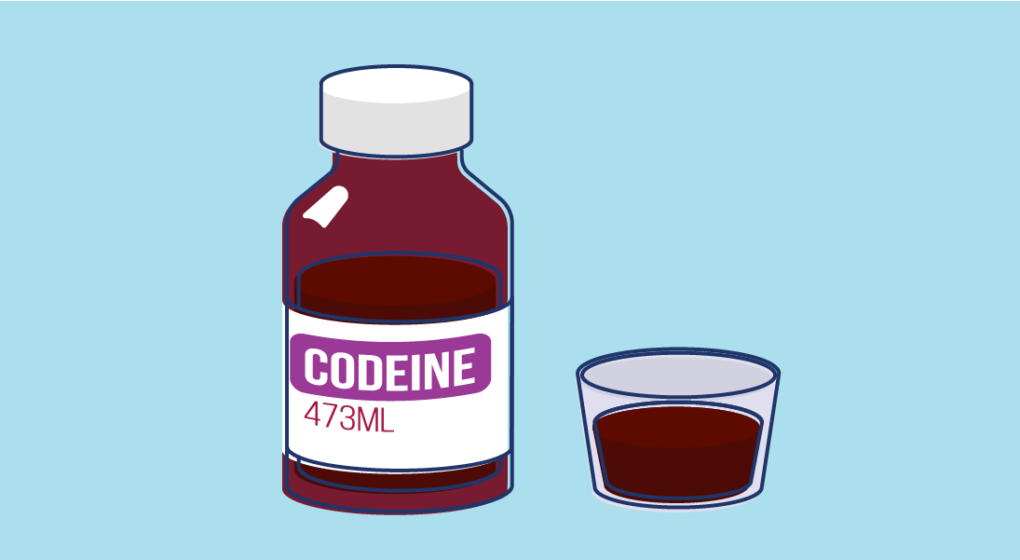
Award-winning Nigerian investigative journalist, Ruona J. Meyer’s documentary, which investigated Nigeria’s struggle with codeine addiction titled ‘Sweet, Sweet Codeine’, has been nominated for an international Emmy – marking the country’s first ever nomination for the prestigious award.
The programme, which explores the horrors of an opioid endemic and exposes the corrupt agents responsible, has led to Nigeria imposing a total ban on the production and importation of codeine cough syrup.
The documentary titled ‘Sweet Sweet Codeine’, was produced by the BBC World Series under their BBC Africa Eye division and also marks its first ever nomination for the award since its formation in 1932.
Ruona Meyer, the Nigerian reporter behind the programme, is studying for a PhD in Media Discourse and African Investigative Journalism at De Montfort University (DMU), Leicester, England said that she pitched the idea to the BBC after witnessing the devastating effects that codeine syrup addiction can have first-hand.
She said: “It was personal for me; and I thought – if someone else’s brother is going to watch this and it helps that one person it would be enough for me but the fact that we destroyed those cartels, I still don’t even believe it.”
Ruona’s own brother battled with codeine syrup addiction following the assassination of their father, Godwin Agbroko, who was an investigative journalist in Nigeria.
Ruona said: “It was always in the back of my mind that my father was killed for doing something like this – for what he wrote about Nigeria.”
Working with Nigerian BBC reporter Adejuwon Soyinka, the report features raids by the National Drug Law Enforcement Agency (NDLEA), undercover drug deals with corrupt pharmaceutical executives and harrowing footage of rehabilitation centres for addicts.
Ruona said: “It was emotionally and mentally upsetting; you had to watch people just like you struggling with addiction and come to terms with the fact that this could easily be you next week.”
After the release of the documentary, Nigeria’s upper house of parliament voted in favour of a total ban on the drug saying that the cough syrup trade profited the insurgency of Islamist extremist group Boko Haram in the country’s northeast.
Since this decision, Nigeria has recalled more than 2.4 million bottles of cough syrup containing codeine to also tackle products already present within the country.
The documentary was so impactful that it prompted a swift response from people across the country, including Nigeria’s first lady, Aisha Buhari, who said in an Instagram post that she was ‘deeply saddened’ by the rise of the problem, especially in Northern Nigeria.
“I call on all security agencies, lawmakers, judiciary, drug manufacturers, civil society, regulators, teachers, parents, neighbours and you to take this as a personal war and halt the menace,” she added.
The BBC Africa Eye documentary features alongside nominees from Brazil, Sweden, Qatar, Russia and the UK in the race for a News or Current Affairs International Emmy; with the winners receiving their awards in New York on Tuesday September 24.
To see the list of all nominations for the Emmy visit: https://www.iemmys.tv/2019-international-emmy-awards-nominees-for-news-current-affairs-announced/
General
Nigeria’s New Alphanumeric Postcode System to Launch October 1
By Adedapo Adesanya
The Minister of Communications, Innovation and Digital Economy, Mr Bosun Tijani, has announced that Nigeria will launch a new alphanumeric postcode system on October 1, 2026, with every home expected to have a unique postcode.
Mr Tijani disclosed the development in a video post on X, describing the new system as a more precise and digitally oriented approach to addressing locations across the country.
He said the initiative would mark a significant shift in Nigeria’s postal addressing system by assigning unique postcodes to individual homes.
The initiative marks a major step in Nigeria’s digital transformation agenda. By replacing the outdated numeric-only system, the alphanumeric codes provide a more flexible and scalable framework that can accommodate the country’s rapid urban growth and diverse settlement patterns.
For emphasis, an alphanumeric postcode system is a postal indexing system that uses a combination of both letters (alpha) and numbers (numeric), along with spaces or punctuation, to identify specific geographic locations, streets, or individual buildings for mail delivery.
Unlike purely numeric postcode systems (such as the 5-digit US ZIP Code or 5-digit codes used in some European countries), alphanumeric codes offer a much higher number of unique combinations using fewer total characters. This flexibility allows postal authorities to pinpoint locations with incredible precision, often down to a single side of a street or a specific large building.
“On October 1st 2026 Nigeria’s new Alphanumeric Postcode System goes live,” Mr Tijani said.
“For the first time, every home will be assigned a unique postcode that’s simple, precise and built for a digital future,” he added.
The minister urged Nigerians to prepare to generate their individual postcodes ahead of the launch.
The new system is expected to strengthen Nigeria’s digital addressing infrastructure and improve the identification and location of homes and properties for postal and other location-based services.
The initiative is being implemented in collaboration with the Nigerian Postal Service (NIPOST) as part of broader efforts to modernise the country’s addressing and digital infrastructure.
General
Tinubu Directs Finance Minister to Give Reforms Scorecard to Nigerians
By Modupe Gbadeyanka
The Minister of Finance and Coordinating Minister of the Economy, Mr Taiwo Oyedele, has been directed to give an account to Nigerians on how the current government has fared since its inception on May 29, 2023.
This directive was given by President Bola Tinubu in a message posted on his verified social media handles on Wednesday.
This coincides with the commencement of campaigns for the 2027 presidential election scheduled for January 16.
According to the timetable of the Independent National Electoral Commission (INEC), candidates seeking to become the country’s president are eligible to kick off their campaigns from today, Wednesday, August 19, 2026.
In his message today, Mr Tinubu said, “When we began this journey of reform in 2023, I promised that the difficult decisions we were making would serve the purpose of building an economy that works better for you and a country that is stronger for our children.
“Today, your government presents The Reforms Scorecard. It sets out what our reforms have achieved, what they have cost us, and the greater costs and harms we have prevented by acting when we did.
“I have therefore directed the Minister of Finance and Coordinating Minister of the Economy, Taiwo Oyedele, to give an account to Nigerians, to explain the numbers, the choices we have made, the progress recorded, and the work that remains.
“You deserve to see the numbers. You deserve to know what has changed and what these reforms mean for you, your family, your business and our country.
“This is your government. This is your country. This is our account to you.”
Shortly after he took the oath of office over three years ago, President Tinubu declared that subsidies on petroleum products were gone. He later approved foreign exchange (FX) reforms, which devalued the Nigerian Naira, shooting from about N800 per Dollar to nearly N2,000 per Dollar. However, it is currently slightly above N1,340 per Dollar in the official market.
General
NNPC, Agip Intensify Efforts to Develop 500m-Barrel Deepwater Assets
By Adedapo Adesanya
The Nigerian National Petroleum Company (NNPC) Limited and the Nigerian Agip Exploration (NAE) Limited are advancing discussions on the development of deepwater assets estimated to hold 500 million barrels of oil reserves.
The development followed a meeting between the chief executive of the state oil company, Mr Bayo Ojulari, and Agip’s Vice Chairman and Managing Director, Mr Maurizio Pinna, in Abuja.
The talks focused on ongoing work on deepwater acreage jointly held by NNPC, NAE and Shell Nigeria Exploration and Production Company (SNEPCo) as well as plans to bring the associated resources into production.
According to NNPC, the acreage comprises the Zabazaba and Etan deepwater fields, with estimated reserves of about 500 million barrels.
The fields are located in Nigeria’s deepwater terrain and are considered significant to the country’s efforts to expand its upstream oil production base, particularly as operators seek to advance projects capable of delivering additional barrels over the medium to long term.
While details of the expected production timeline were not disclosed, the meeting underscores renewed industry focus on unlocking Nigeria’s deepwater resources and growing crude oil production.
The acreage comprises licences converted from OPL 245 and is operated by NAE in partnership with NNPC Limited and SNEPCo.
Mr Ojulari and Mr Pinna also reviewed the work currently underway on the assets and the expected production outlook, with the discussions centred on advancing deepwater development.
The engagement comes amid renewed efforts to attract investment into Nigeria’s offshore petroleum resources and increase national oil production.