Economy
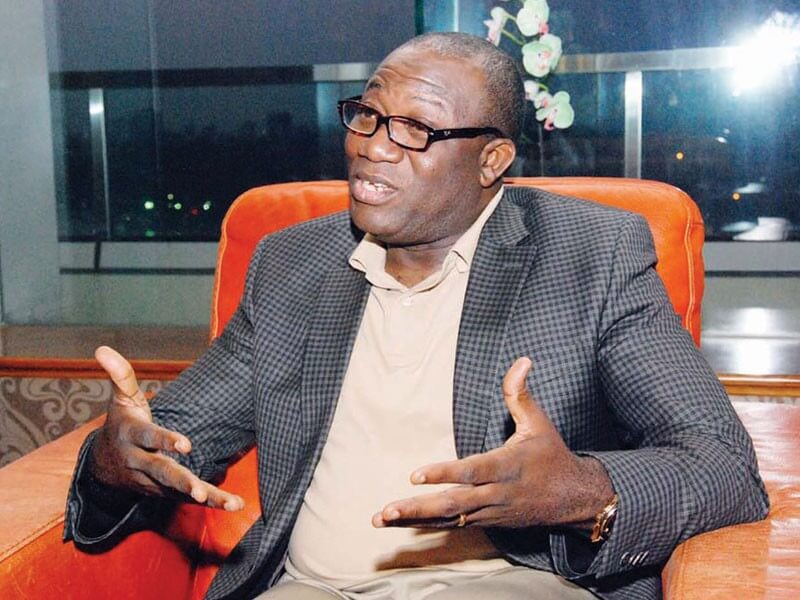
Ekiti State Opens Arms to Investors
By Adedapo Adesanya
Ekiti State has opened its arms wide open to investors willing to invest in the state and its assets in order to enable the creation of jobs for youths in the state.
This was made clear by the Governor of the state, Mr Kayode Fayemi, during his address at the Facts Behind the State Economy at the Nigerian Stock Exchange last Friday,
He also disclosed that the state had cleared all its outstanding bonds listed on the stock exchange and was ready for more investments, noting that officials were available to answer questions on the investment opportunities that exist.
Governor Fayemi noted that the government could not create jobs in massive terms without the collaboration of the private sector, saying “It is the private sector that can fly that process. But we have a duty to make the climate and condition for job creation available for the private sector to thrive.
“We have passed a law establishing the Ekiti State Development and Investment Promotion Agency. Once the agency commences full operations, it will drive our Ease of Doing Business reforms and provide investors with a one-stop shop to deal with investment-related matters,” he said.
He further added: “The state’s tourism assets also provide significant investment opportunities. At the appropriate time, the state will seek investors for some of its existing assets, as well as several greenfield opportunities.
“This will be complemented by a clear strategy on attracting business, recreational and medical or wellness tourists to Ekiti State.”
Mr Fayemi said the state had renewed its focus on peace and security, which he described as the foundation of any economic development, adding that it had started investing in developing the infrastructure required to make Ekiti State a competitive destination for business.
He said, “We are quite concerned about the increasing spate of violence against ordinary citizens and it is the duty of the government to provide security and welfare of the citizens.”
Mr Fayemi then stressed the need to adopt a comprehensive response mechanism that would tackle the increasing poverty level and inequality in the society to curb insecurity in Nigeria.
He noted that only a collaborative approach with the private sector could successfully tackle and overcome security challenges facing the country.
Adding to that, Mr Fayemi also stated that the state had a long history of partnership with NSE, adding that the bond raised by the state had been fully repaid and committed that the state would continue to partner with the Exchange to grow the economy, urging more companies and individuals to see Ekiti State as a destination of choice for investment.
Economy
Oil Prices up as US Inflation Data Outweighs OPEC Supply Concerns
By Adedapo Adesanya
Oil prices were marginally higher on Friday after data showed an overall slowdown in US inflation, helping offset supply concerns as the Organisation of the Petroleum Exporting Countries and allies (OPEC+) is leaning towards a resumption in production increases.
Brent crude futures grew by 23 cents or 0.3 per cent to $67.75 a barrel, while the US West Texas Intermediate (WTI) crude futures expanded by 5 cents or 0.08 per cent to $62.89 per barrel.
US consumer prices increased less than expected in January amid cheaper gasoline prices and a moderation in rental inflation.
The Consumer Price Index rose 0.2 per cent last month after an unrevised 0.3 per cent gain in December, the Labor Department’s Bureau of Labor Statistics said.
The report followed news this week of an acceleration in job growth in January and a drop in the unemployment rate to 4.3 per cent from 4.4 per cent in December.
Market analysts noted that since inflation is stabilising, it may lead to interest rates probably continuing to move a little bit lower.
OPEC is leaning towards a resumption in oil output increases from April, ahead of the upcoming peak summer fuel demand, and amid firmer crude prices owing to tensions over US-Iran relations.
There are indications that this will happen when eight OPEC+ producers – Saudi Arabia, Russia, the United Arab Emirates, Kazakhstan, Kuwait, Iraq, Algeria and Oman – meet on March 1.
The eight members raised production quotas by about 2.9 million barrels per day from April to the end of December 2025, equating to about 3 per cent of global demand, and froze further planned increases for January through March 2026 because of seasonally weaker consumption.
OPEC’s latest oil market forecasts show demand for OPEC+ crude in the second quarter falling by 400,000 barrels per day from the first three months of the year, but demand for the whole year is projected to be 600,000 barrels per day higher than in 2025.
Oil prices had strengthened earlier in the week on concerns that the US could attack Middle Eastern oil producer Iran over its nuclear programme. The US is sending an aircraft carrier from the Caribbean to the Middle East on Friday, a move that would put two carriers in the region as tensions soar between the two countries.
The US also eased sanctions on Venezuela’s energy sector on Friday, issuing two general licenses that allow global energy companies to operate oil and gas projects in the OPEC member and for other companies to negotiate contracts to bring in fresh investments.
On the US supply side, Baker Hughes said oil rigs fell by three to 409 this week.
Economy
Katsina Provides Additional N500m for Women-owned Businesses
By Modupe Gbadeyanka
The Katsina State government has offered additional N500 million to support women-owned businesses in the state as part of efforts to boost economic activities.
Governor Dikko Umaru Radda announced this at the Women of Influence and Investment Summit hosted by the Katsina Inner Wheel Development Initiative (KIWDI), in partnership with Access Bank Plc.
The event brought together women entrepreneurs, investors, policymakers, and development partners to advance women’s economic empowerment in the state.
The summit, themed Where Influence Meets Investment, focused on positioning women as key drivers of enterprise, leadership, and inclusive growth. It also highlighted the growing collaboration between Access Bank and the Katsina State Government on financial inclusion and SME development.
Mr Radda noted that investing in women was critical to building a productive and sustainable economy.
In her welcome address, the founder of KIWDI, Ms Amina Zayyana, said the summit was designed to connect women to opportunities, training, finance, and markets, stressing that when women-led businesses grow, families and communities benefit.
On her part, the Group Head of Women Banking at Access Bank, Mrs Nene Kunle-Ogunlusi, said the lender was proud to partner with Katsina State and KIWDI in advancing women’s economic participation.
“At Access Bank, we are committed to moving women from potential to prosperity. Through our Women Banking proposition and the ‘W’ Initiative, we provide access to finance, capacity building, and market linkages that help women start, stabilise, and scale their businesses,” she said.
She noted that the W Initiative, launched in 2014, is Access Bank’s flagship women- focused platform, designed to meet the real needs of women entrepreneurs and professionals across Nigeria and Africa.
“Our partnership with Katsina State goes beyond banking. It is about supporting economic empowerment, SME growth, and financial inclusion, especially for women,” she added.
Mrs Kunle-Ogunlusi noted that Access Bank was proud to participate not just as a financial institution, but as a long-term partner in women’s economic advancement across Nigeria and Africa.
“At Access Bank, we made a deliberate decision to change that, not with charity, but with strategy. Not with sympathy, but with solutions. The W Initiative, which was launched in 2014, is Access Bank’s flagship women-focused proposition, created to respond to the real needs of women,” she said.
The banker disclosed that through the W Initiative, the bank has disbursed over N314 billion in loans to women, supporting over 3.6 million female loan beneficiaries, and helping women-owned businesses start, stabilise, and scale up.
Economy
2026 Budget: Reps Threaten Zero Allocation for SON, NAICOM, CAC, Others
By Adedapo Adesanya
The House of Representatives Public Accounts Committee (PAC) has recommended zero allocation for the Standards Organisation of Nigeria (SON), the National Insurance Commission (NAICOM), and the Corporate Affairs Commission (CAC), among others, in the 2026 budget for allegedly failing to account for public funds appropriated to them.
The committee, at an investigative hearing, accused the affected ministries, departments and agencies (MDAs) of shunning invitations to respond to audit queries contained in the Auditor-General for the Federation’s annual reports for 2020, 2021 and 2022.
The affected MDAs include the Federal Housing Authority (FHA), the Federal Ministry of Housing and Urban Development, the Federal Ministry of Women Affairs and Social Development, the National Business and Technical Examinations Board (NABTEB), and the Nigerian Meteorological Agency (NiMet).
Others are Federal University of Gashua; Federal Polytechnic, Ede; Federal Polytechnic, Offa; Federal Medical Centre, Owerri; Federal Medical Centre, Makurdi; Federal Medical Centre, Bida; Federal Medical Centre, Birnin Kebbi; Federal Medical Centre, Katsina; Federal Government College, Kwali; Federal Government Boys’ College, Garki, Abuja; Federal Government College, Rubochi; Federal College of Land Resources Technology, Owerri; Council for the Regulation of Freight Forwarding in Nigeria; and the FCT Secondary Education Board.
The PAC chairman, Mr Bamidele Salam, while speaking on the decision of the committee to recommend a zero budget for the defaulting MDAs, stated that the National Assembly should not continue to appropriate public funds to institutions that disregard accountability mechanisms.
“Public funds are held in trust for the Nigerian people. Any agency that fails to account for previous allocations, refuses to submit audited accounts, or ignores legislative summons cannot, in good conscience, expect fresh budgetary provisions. Accountability is not optional; it is a constitutional obligation,” he said.
The panel maintained that its recommendation for a zero budget for the affected MDAs is aimed at restoring fiscal discipline and strengthening transparency across federal institutions and conforms with extant financial regulations and the oversight powers of the parliament.
-
Feature/OPED6 years agoDavos was Different this year
-
Travel/Tourism10 years ago
Lagos Seals Western Lodge Hotel In Ikorodu
-
Showbiz3 years agoEstranged Lover Releases Videos of Empress Njamah Bathing
-
Banking8 years agoSort Codes of GTBank Branches in Nigeria
-
Economy3 years agoSubsidy Removal: CNG at N130 Per Litre Cheaper Than Petrol—IPMAN
-
Banking3 years agoSort Codes of UBA Branches in Nigeria
-
Banking3 years agoFirst Bank Announces Planned Downtime
-
Sports3 years agoHighest Paid Nigerian Footballer – How Much Do Nigerian Footballers Earn