Economy
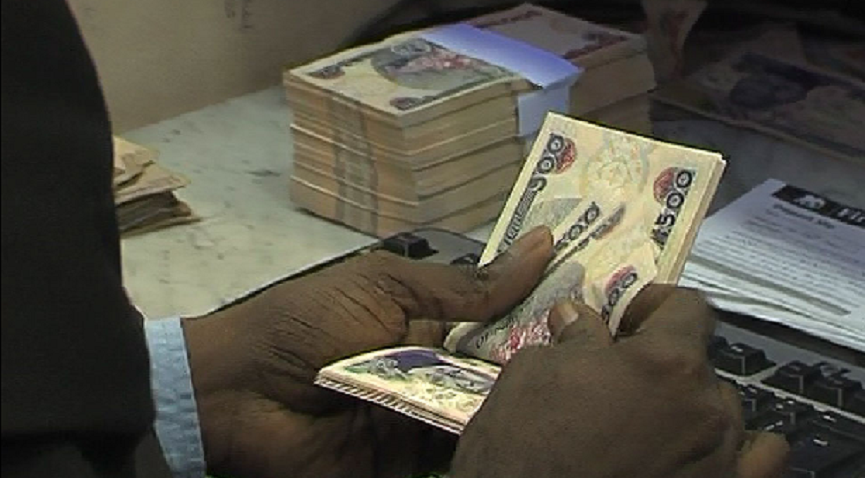
Buying Pressure Cuts T-Bills Yields to 13.88%
By Dipo Olowookere
The average treasury bills yields went down to 13.88 percent at the secondary market on Tuesday after shedding 0.17 percent, Business Post is reporting.
This was caused by renewed buying pressure witnessed on the short and mid end of the curve yesterday as investors begin to take position at the market. However, selling pressure was still observed during the trading session on the long end of the curve.
At the close of transactions on Tuesday, yields declined on the one-month, three-month and six-month maturities, while it appreciated on the one-year tenor.
An analysis showed that yield on the 30-day instrument went down by 0.47 percent to close at 12.84 percent, the 90-day tenor suffered a 0.14 percent drop in yield to settle at 13.16 percent, the 189-day maturity recorded a 0.26 percent fall in yield to finish at 14.22 percent, while yield on the 364-day debt instrument appreciated by 0.18 percent to end at 15.29 percent.
On Thursday, investors are expectant that the Central Bank of Nigeria (CBN) will offer T-bills at the open market when about N204 billion OMO bills mature.
Meanwhile, the money market was bearish yesterday with average rates trending downwards as a result of the 0.86 percent decline recorded by the Open Buy Back (OBB) rate and the 0.93 percent fall printed by the Overnight (OVN) rate at the session.
Business Post reports that this reduced the average rates by 0.90 percent to 8.47 percent.
At the end of the day, the OBB rate declined to 8.00 percent from 8.86 percent, while the OVN rate reduced to 8.93 percent from 9.86 percent.
According to Zedcrest Research, “We expect rates to remain stable [today] as there are no significant funding pressures anticipated.”
Economy
Naira Appreciates 0.55% to N1,356/$1 at Official FX Window
By Adedapo Adesanya
The Naira recorded a positive performance against the United States Dollar in the Nigerian Autonomous Foreign Exchange Market (NAFEX) on Monday, June 15.
At the official FX window, the Nigerian legal tender appreciated against its US counterpart by N7.56 or 0.55 per cent to sell at N1,356.27/$1 compared with the previous session’s N1,363.83/$1.
The local currency also gained N12.39 against the Pound Sterling during the trading day to trade at N1,808.86/£1 versus last Friday’s value of N1,821.25/£1, but shed N2.96 against the Euro to sell at N1,575.85/€1 compared with the previous N1,572.89/€1.
At the GTBank forex desk, the Nigerian Naira depreciated against the greenback yesterday by N2 to quote at N1,373/$1 versus the preceding session’s N1,371/$1, and at the black market, it maintained stability at N1,380/$1.
The pressure on the Naira has remained calm, as Nigeria’s gross external reserves surged to $50.505 billion, the highest since January 2009, driven by inflows from oil sales, affirming expectations that the local currency will remain along a stable band.
Meanwhile, the headline inflation rate rose to 15.93 per cent in May 2026, extending the upward trend recorded since the beginning of the year, according to the latest data released by the National Bureau of Statistics (NBS). The figure shows an increase from the 15.69 per cent recorded in April, indicating that prices of goods and services continued to climb despite a slower monthly rate of inflation.
The NBS said the latest figures suggest that while prices are still rising, the rate of increase has moderated from the previous month, largely impacted by the war in the Middle East, which drove up fuel prices.
In the cryptocurrency market, top benchmarked coins reversed early losses after the Bank of Japan raised interest rates to a 31-year high in its fight against inflation.
There had been profit-taking across the board as traders waited for Iran’s signing after US President Donald Trump and Vice President JD Vance signed an electronic copy of a memorandum of understanding. President Trump said the Strait of Hormuz, already partially open, will fully reopen on Friday.
Ripple (XRP) soared by 3.7 per cent to $1.22, Solana (SOL) grew by 3.6 per cent to $73.82, Ethereum (ETH) jumped by 2.7 per cent to $1,765.24, and Bitcoin (BTC) gained 0.7 per cent to trade at $66,191.45.
On the flip side, Cardano (ADA) slid 1.9 per cent to $0.1776, Dogecoin (DOGE) expanded by 1.7 per cent to $0.0874, TRON (TRX) slumped by 0.8 per cent to $0.3180, and Binance Coin (BNB) declined by 0.6 per cent to $614.10, while the US Dollar Tether (USDT) and the US Dollar Coin (USDC) traded flat at $1.00 each.
Economy
Stock Investors Lose N844bn as Weak Sentiment Triggers Sell-Offs
By Dipo Olowookere
Weak investor sentiment sliced 0.63 per cent from the Nigerian Exchange (NGX) Limited on Monday, the first trading session after a one-day break last Friday for Democracy Day celebration in Nigeria.
The stock market came under selling pressure yesterday, leaving all the major sectors of the bourse facing southwards.
The energy index shed 3.20 per cent, the banking space lost 1.17 per cent, the insurance counter declined by 0.68 per cent, and the consumer goods sector crumbled by 0.39 per cent, while the industrial goods segment closed flat.
Consequently, the market capitalisation decreased by N844 billion to N156.126 trillion from N156.970 trillion, and the All-Share Index (ASI) contracted by 1,316.40 points to 243,422.34 points from 244,738.74 points.
International Energy Insurance gave up 9.99 per cent to trade at N6.40, eTranzact crashed by 9.97 per cent to N14.90, Abbey Mortgage Bank lost 9.65 per cent to finish at N10.30, Oando dropped 9.43 per cent to quote at N48.00, and NAHCO tumbled by 9.19 per cent to N163.00.
On the flip side, Royal Exchange appreciated by 10.00 per cent to N1.65, Ikeja Hotel moved up by 9.97 per cent to N47.45, Neimeth improved by 9.94 per cent to N9.40, Consolidated Hallmark gained 9.58 per cent to sell for N9.04, and University Press climbed 9.09 per cent to N6.00.
Yesterday, market participants traded 569.1 million shares valued at N31.4 billion in 77,652 deals compared with 1.7 billion shares worth N52.8 billion exchanged in 49,807 deals in the preceding session, showing a rise in the number of deals by 55.91 per cent, a tightening in the trading volume by 66.52 per cent, and a shrinkage in the trading value by 40.53 per cent.
Sterling Holdings was the busiest stock on Monday with a turnover of 103.0 million units worth N805.5 million, GTCO exchanged 41.3 million equities for N5.6 billion, FCMB traded 37.9 million shares for N433.7 million, Access Holdings sold 27.3 million equities worth N666.0 million, and UBA transacted 20.4 million stocks valued at N877.3 million.
Economy
Oil Market Sheds $4 as US-Iran Deal Eases Supply Fears
By Adedapo Adesanya
The oil market went down by $4 a barrel to a three-month low on Monday after President Donald Trump said the United States and Iran have signed a memorandum of understanding aiming to end the Iran war and reopen the Strait of Hormuz.
Brent crude futures declined by $4.16 or 4.76 per cent to $83.17 a barrel, and the US West Texas Intermediate (WTI) crude futures shed $4.13 or 4.87 per cent to sell for $80.75 a barrel.
The US and Iran reached a deal to reopen the Strait of Hormuz, though analysts voiced caution over the agreement’s prospects. According to reports, the MoU has been signed by President Donald Trump, Vice President JD Vance and Iranian Parliament Speaker, Mr Mohammad Bagher Qalibaf.
Pakistan and Qatar, the two lead mediators in the deal, also confirmed the agreement, while an official signing ceremony for the agreement is due to be held on Friday in Geneva.
Reuters reported that the draft deal called for reopening the Strait of Hormuz within 30 days under Iranian arrangements, while President Trump said ships could traverse the waterway within days and would not be charged a toll.
Market analysts noted that the deal and the potentially imminent reopening of the Strait of Hormuz do not mean that the oil and gas trade will quickly return to its previous levels. The announcement of the deal is just the first step, and it could take months for oil and gas shipments in the region to return to pre-war levels.
The world has lost millions of barrels of oil and gas supply since the war closed the Strait of Hormuz, a chokepoint for a fifth of the world’s oil and liquefied natural gas supplies, for more than three months.
According to the International Energy Agency (IEA), more than 14 million barrels per day of oil output is shut, equivalent to about 14 per cent of world demand. It is unclear how quickly those barrels will return to market once the waterway is opened.
E4 nations, which include the United Kingdom, France, Germany and Italy, said on Sunday that the countries were prepared to lift sanctions on Iran in response to steps on its nuclear programme.
-
Feature/OPED6 years agoDavos was Different this year
-
Travel/Tourism10 years ago
Lagos Seals Western Lodge Hotel In Ikorodu
-
Showbiz3 years agoEstranged Lover Releases Videos of Empress Njamah Bathing
-
Banking8 years agoSort Codes of GTBank Branches in Nigeria
-
Economy3 years agoSubsidy Removal: CNG at N130 Per Litre Cheaper Than Petrol—IPMAN
-
Banking3 years agoSort Codes of UBA Branches in Nigeria
-
Banking3 years agoFirst Bank Announces Planned Downtime
-
Sports3 years agoHighest Paid Nigerian Footballer – How Much Do Nigerian Footballers Earn