Connect with us

Economy

Nigeria’s Economy Under Threat as Brent Falls to $57

Published

on

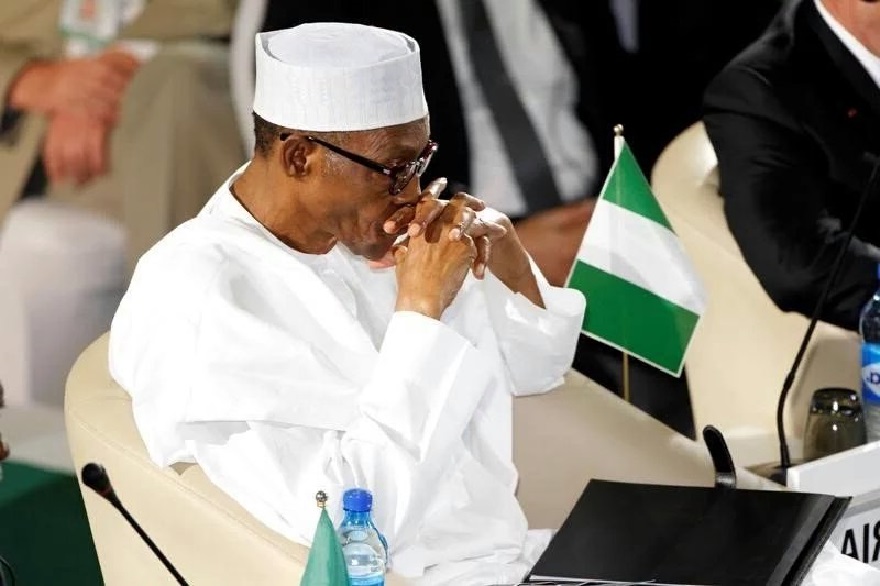
buhari thinking deep

By Adedapo Adesanya

Crude prices traded on Wednesday below where they were before the September 14, 2019 attacks on Saudi Arabia that temporarily led to the kingdom’s losing half of its production.

The Brent Crude on Wednesday night depreciated to $57.54 per barrel after shedding $1.35 or 2.29 percent as the the U.S. benchmark crude, West Texas Intermediate (WTI) Crude, on the other hand, was down by $1.07 or 2 percent to trade at $52.55 per barrel.

This means that the US Crude drop has fallen about 17 percent from the peak reached on the first trading day after the crippling attacks on Saudi Arabian oil facilities.

This indicates that oil is heading toward a two-month low after swelling inventories in the US economy added to a pessimistic and weakening economic backdrop.

According to the US Energy Information Administration, oil stockpiles rose by 3.1 million barrels last week, leading oil prices to further slip on Wednesday.

Also, oil prices were affected by a slide in broader equity markets which is in turn fueling fears about the American economy slowing.

Signs of easing geopolitical tensions in the Middle East also weighed on prices, as Iran Oil Minister Bijan Zanganeh sought to ease tensions with Saudi Arabia with projections that there will be surplus in oil supply next year.

The situation is more worrisome for the Nigerian economy, which is still in recovery mode after slipping into recession in 2016 following decline in oil prices and attacks on its facilities by militants in the oil-rich Niger Delta region.

Though the attacks have been brought down to its barest minimum, the Africa’s largest oil producer, which has its commodity priced under the Brent, is yet to meet full capacity of 2.3 million barrel per day cap. In its 2019 budget, the benchmark for oil was pegged at $60 per barrel and with the price currently below the ceiling, there could be more difficulty meeting up its targets.


Adedapo Adesanya is a journalist, polymath, and connoisseur of everything art. When he is not writing, he has his nose buried in one of the many books or articles he has bookmarked or simply listening to good music with a bottle of beer or wine. He supports the greatest club in the world, Manchester United F.C.

Click to comment

Leave a Reply

Your email address will not be published. Required fields are marked *

Economy

Stablecoins Bridging Crypto, Traditional Finance in Nigeria—IMF

Published

on

stablecoins

By Adedapo Adesanya

The International Monetary Fund (IMF) has said that stablecoins now form a key bridge between crypto markets and the traditional financial system in Nigeria, ranking the country top in inflows in Sub-Saharan Africa.

According to a new report from the institution, Nigeria received about $59 billion in crypto-asset inflows between July 2023 and June 2024. It ranked second globally on Chainalysis’s 2024 Global Crypto Adoption Index, and sixth in 2025.

Within sub-Saharan Africa, Nigeria accounts for roughly 60 per cent of stablecoin inflows since 2019, the report titled Stablecoins in Nigeria: A Growing Cross-Border Channel’ released on Tuesday, noted.

Nigerian households and small firms are moving money across borders in a new way: via smartphones, digital wallets, and US Dollar–pegged crypto assets known as stablecoins.

What began as a niche technology has become a meaningful cross-border payments channel. Its rapid growth is easing long-standing frictions in cross-border transactions.

It is also testing the limits of existing monetary and regulatory frameworks.

IMF noted that the appeal is straightforward, adding that stablecoins allow users with a smartphone and internet access to receive remittances or make cross-border payments in minutes, often at a lower cost than traditional channels.

“For households and small firms with limited access to formal banking services, this is a practical alternative.”

According to the report, global drivers help explain the broader uptake in Nigeria.

“Stablecoins are relatively stable in value, easy to transfer, and widely used as settlement assets within crypto markets.

“They facilitate trading between exchanges and provide a convenient store of liquidity. For remittances, they can undercut conventional channels, where the average cost of sending US$200 to sub-Saharan Africa remains around 9 per cent of transaction value, well above the global average of 6 per cent, according to the World Bank.”

Domestic conditions have amplified these effects. In 2023 and 2024, the sharp depreciation of the naira, high inflation, and constrained access to foreign exchange increased demand for dollar-linked assets.

Stablecoins offered both a hedge against currency risk and a tool for paying overseas suppliers.

After the Central Bank of Nigeria (CBN) restricted banks from servicing crypto exchanges in February 2021, IMF said activity shifted to less regulated channels, notably peer-to-peer platforms.

The rise of stablecoins in Nigeria brings clear benefits – faster, cheaper cross-border payments can support trade, remittances, and financial inclusion.

However, it said the same features raise policy concerns, including monetary sovereignty. As stablecoins are typically denominated in US Dollars, widespread use can resemble a digital form of dollarisation. By reducing demand for the local currency, the IMF said it could weaken the transmission of domestic monetary policy.

“Another concern is financial integrity. Activity that once flowed through banks is moving increasingly to digital wallets and crypto exchanges.

Monitoring systems designed for traditional intermediaries may not capture these transactions effectively, the report stated, noting that the speed and anonymity of some platforms can also increase risks of illicit finance, including money laundering.

IMF noted that these risks are not unique to Nigeria, but the scale of adoption makes them more pronounced.

The IMF also said Nigeria should adopt a balanced approach to stablecoins by supporting innovation while managing risks. It identified four priorities: maintaining a stable and credible Naira, strengthening oversight of stablecoin issuers, improving data collection on stablecoin transactions, and enhancing payment infrastructure.

The Fund noted that recent economic reforms have helped restore confidence in the naira but urged authorities to align regulations with emerging global standards and improve monitoring through better blockchain and transaction data. It also said further investment in faster and cheaper cross-border payment systems could reduce reliance on unregulated stablecoin channels.

The report noted that stablecoins are neither a passing trend nor a complete substitute for traditional finance, saying they are best seen as a response to persistent frictions in cross-border payments. In Nigeria, those frictions are real, and users have found a workaround.

“The policy challenge is to narrow the gap that made the workaround attractive, while ensuring that new risks remain contained. That requires a clear strategy: open to innovation but anchored in sound macroeconomic policy and effective regulation”, the report concluded.

Continue Reading

Economy

Dangote Refinery Drops PMS Price to N1,175 Per Litre

Published

on

Dangote refinery petrol

By Modupe Gbadeyanka

Following the de-escalation of the Middle East tensions, which elevated crude oil prices on the global market, Dangote Petroleum Refinery has cut down the ex-depot price of Premium Motor Spirit (PMS), otherwise known as petrol, by N75 per litre to N1,175 per litre from N1,250 per litre.

This was confirmed in a notice to oil marketers on Monday by the Lagos-based refinery, with a nameplate of 650,000 barrels per day.

Yesterday, the price of Brent crude, which is Nigeria’s crude oil grade, traded at $84 per barrel, after the United States and Iran sealed a ceasefire deal after three months of hostilities.

In the circular to marketers yesterday, Dangote Refinery also disclosed that the coastal price per metric tonne has been slashed to N1,495,215 from N1,595,790.

“Following the de-escalation of tensions in the Middle East, which has impacted energy prices. We wish to inform you that we have reviewed our premium motor spirit gantry/coastal price,” a part of the disclosure revealed.

“Kindly note that all outstanding unloaded gantry volumes will be repriced at the new rate effective 12:00 AM, June 16, 2026.

“We sincerely appreciate your continued patronage and assure you of our unwavering commitment to reliable product supply and excellent service delivery,” it added.

Continue Reading

Economy

Trade the Other Way Around: Why Mobile Apps Are Lagging Behind Desktop Terminals in Nigeria

Published

on

download mt4 for pc

Today, Nigeria’s economic landscape is sparking a revolution in the digital sphere, unfolding right before our eyes. Candidly, without seeing a bigger picture or grasping technical intricacies, even experienced Nigerian traders may get nowhere, lost in the jungle of algorithms. Thus, old-school investment methods are slowly giving way to progressive patterns, with leading-edge trading tools along the way.

Amidst macroeconomic reforms by the Central Bank, skyrocketing volatility of the national currency, and structural changes in the corporate sector, the local financial community is actively pursuing different possibilities to diversify and secure capital. In the sea of choices, retail algorithmic trading has become a leading option across Nigeria. To guarantee peace of mind, download mt4 for pc to lock in profits on your trade.

Mobile Trading in Nigeria: When Accessibility Harms Efficiency

For decades, the market was dominated by the trend of widespread financial “mobilization” on the go. Smartphones opened the windows to the world of trade, offering free access to international markets to new participants across Africa. Despite this fact, Nigeria’s professional community is facing another unforeseeable storm, as hardware restrictions in mobile infrastructure are directly diminishing profitability of retail investors.

In pursuit of milliseconds, accuracy, and stability, Nigerian traders are returning en masse to habitual computer architecture. Of course, smartphones are still a good option for passive investing, long-term planning, or periodic portfolio monitoring, but when it comes to active intraday trading or running automated trading advisors (EAs), mobile operating systems exhibit critical shortcomings. Let’s check the reasons for that.

First and foremost, phones are always about limited multithreading. The thing is, mobile processors are optimized for energy conservation and overheating prevention, but not for the arduous mathematical calculations to process a dense data stream.  The second weakness is signal latency. Wireless networks, despite their continuing development of infrastructure in major hubs like Lagos and Abuja, are massively prone to packet loss and ping instability during peak periods, making them a poor choice for high-frequency trading.

For a trader dealing with the dynamic Nigerian market, even a millisecond of delay in order execution can turn into a lost opportunity. This is why true experts go for installing specialized software on their PCs, choosing a classic desktop terminal over a laptop or a smartphone.

Dominance of PC Platforms in the Age of Automation

Many perceive the transition to the desktop version of the trading platforms as a throwback to the past. To avoid confusion, a comprehensive analysis is required to professionalize the regional market. Nowadays, a PC running a reliable software system offers perks like system resource updates and a heightened level of interaction, among others.

The main advantage for traders in Nigeria lies in the possibility of backtesting and optimization. Backtesting a strategy on extensive historical data, taking into account floating spreads and real tick volume, requires colossal computing power. A desktop platform fully utilizes all the cores of a PC’s processor, allowing it to process thousands of parameter combinations within minutes—a feature impossible on a mobile device.

Another critical aspect for the Nigerian region is the unbroken connectivity via virtual private servers (VPSs). Even expert traders prove powerless when having to cope with power supply problems and internet service outages. Working on the desktop version, on the contrary,  allows for seamless integration of the trading terminal with a remote server in proximity to liquidity providers’ data centers in London or Frankfurt. This way, traders can manage the process from their home workstations, but the trades themselves are executed remotely with minimal latency.

trading platforms nigeria

Finally, ergonomics and visual control can’t be dismissed. Technical market analysis is supposed to simultaneously monitor multiple timeframes and correlated instruments, such as the dollar index, commodity prices, and gold. Desktop platforms are robust enough to deploy complex workspaces across disparate monitors, with each chart equipped with dozens of indicators, analytical panels, and graphical elements. As well, this feature is physically impossible to accommodate comfortably on a standard smartphone screen.

A New Paradigm for Nigerian Investors 

Nigeria’s contemporary financial sector is in anticipation of maturity and a systematic approach from its participants. The era when trading was perceived solely as an effortless way to make cash with a single click is irrevocably gone. Trading in Nigeria has established itself as a full-fledged technology-driven business in search of a trustworthy and fault-tolerant infrastructure.

Ultimately, the integration of automated scripts, thorough analysis of market microstructure, and rigorous risk management is possible only with desktop computing power. For traders seeking to safeguard their capital amid sweeping changes, top-notch PC software is becoming a competitive edge. Building a profound foundation, going with a reputable broker, and deploying a professional terminal on your computer, allows you to control your trading operations with absolute precision.

Continue Reading

Trending