Economy
Naira Depreciates at Investors Window as Buhari Presents 2020 Budget
By Adedapo Adesanya
The Naira depreciated at the Investors and Exporters segment of the foreign exchange (forex) market on Tuesday, October 8, 2019 as President Muhammadu Buhari officially presented the 2020 National Budget to a joint session of the National Assembly.
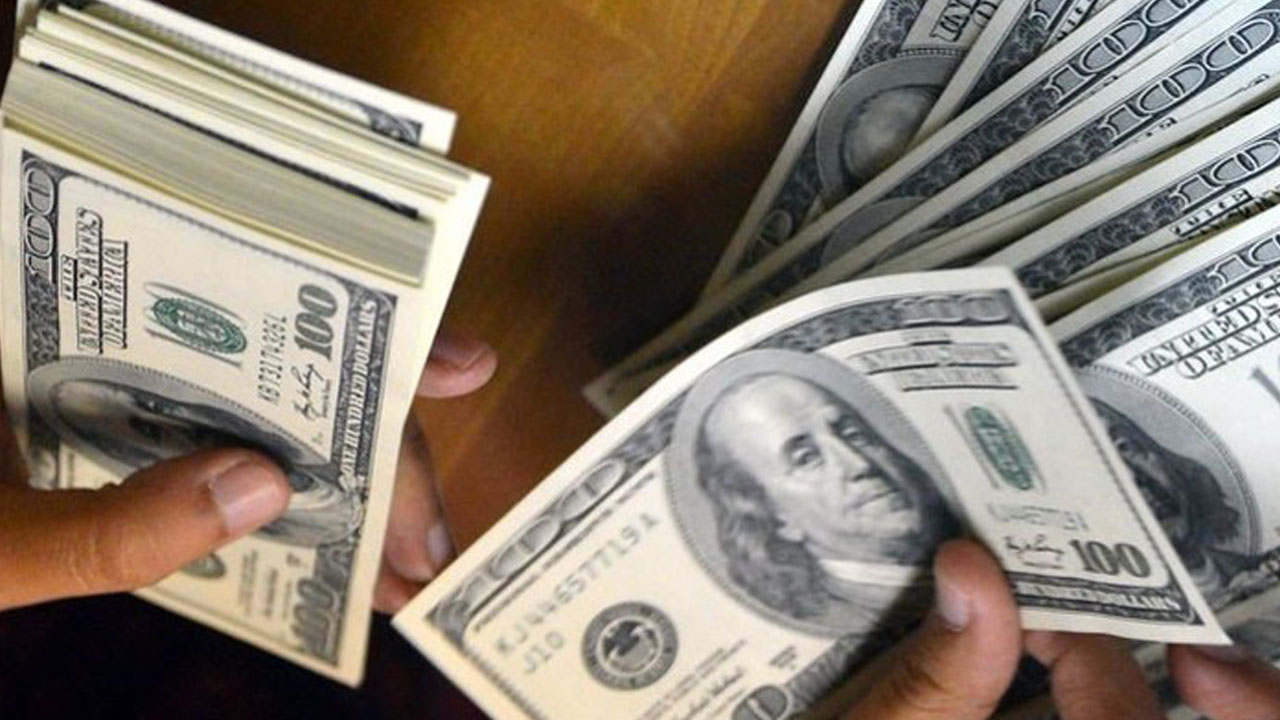
Business Post reports that the local currency dropped 8 Kobo or 0.02 percent against the US Dollar at the market segment during the session to trade at N362.45 against the American currency from N362.37 per Dollar which it traded on Monday.
It was keenly noticed that the depreciation occurred as pressure mounted on the domestic currency at the day. This was reflected in the significant 129 percent increase in the value of transactions recorded at the investors window yesterday.
Data obtained from the FMDQ by Business Post showed that the market turnover on Tuesday was $465.36 million as against the $203.23 million worth of transactions recorded on Monday. This represents an increase of $262.14 million.
A look at the Naira’s performance at another segment of the forex market on Tuesday, the parallel market, showed that the domestic currency closed flat against major listed currencies – the US Dollar, the British Pound Sterling, and the Euro. The local currency was exchanged at their previous prices against these foreign currencies.
A breakdown showed that the Naira was traded against the Dollar at N360/$1 at the black market, it was exchanged at N450/£1 at the same market window as the Pound faces decline following Boris Johnson’s Brexit deal which was dealt a huge blow. When paired with the Euro, the domestic currency remained unchanged at N390/€1.
Also, at the Interbank segment, where the Naira trades at the official price of the Central Bank of Nigeria (CBN), the local currency saw neither growth nor decline as it remained flat on Tuesday at N307.00/$1.
Economy
FCMB Capital Market Reaffirms Commitment to Fixed-income Market Development
By Aduragbemi Omiyale
FCMB Capital Markets Limited, the investment banking arm of FCMB Group Plc, has promised to continue to contribute to the development of the fixed-income market in Nigeria.
The company gave this assurance while reacting to its top position on the Fixed Income Primary Markets Sponsors’ League Table of the FMDQ Securities Exchange Limited in 2025.
The company facilitated the raising of N1.53 trillion in corporate debt capital through bond listings and commercial paper quotations on the platform.
The exchange’s report shows FCMB Capital Markets led overall sponsor contributions across the bond listings and commercial paper quotation markets during the year.
In the bond market, the firm accounted for 11.66 per cent of total listings, for the top spot. In the commercial paper market, FCMB Capital Markets achieved the highest share of quotations at 7.68 per cent, outpacing other registration members in that segment.
The exchange reported that 58 registration members participated in listings and 77 in quotations. During the period under review, 47 institutions actively sponsored fixed-income securities listings or quotations, excluding federal government securities.
“Our ranking reflects the confidence issuers place in our ability to structure and execute capital market transactions.
“Mobilising more than N1 trillion in a single year demonstrates the depth of demand for capital market funding and the role we play in connecting issuers with long-term investors,” the Executive Director for Coverage and Investment Banking at FCMB Group, Mr Femi Badeji, said.
The chief executive of FCMB Capital Markets, Mr Ikechukwu Omeruah, on his part, said the firm remains focused on helping corporates access both long-term and short-term funding through the capital markets.
“Achieving this position reflects the work of our team and the trust of our clients. We remain committed to structuring financing solutions that enable businesses to raise capital efficiently while contributing to the continued development of Nigeria’s fixed-income market,” he said.
Over the past five years, FCMB Capital Markets has participated in several debt and equity transactions across sectors, including oil and gas, power, real estate, financial services, consumer goods and telecommunications.
Economy
Beta Glass Grows FY25 Revenue by 27% on Improved Production Efficiency
By Aduragbemi Omiyale
In the 2025 financial year, Beta Glass Plc grew its revenue by 27 per cent to N149.12 billion from N117.58 billion in 2024, reflecting continued demand for the company’s glass packaging products across key sectors of the Nigerian economy.
Despite market challenges, the organisation performed well due to improved production efficiency, effective cost management, and a clear focus on its key customers and segments.
In the year, the gross margin improved to 35.3 per cent from 26.3 per cent, operating margin rose to 32.3 per cent from 20.0 per cent, reflecting improved operating efficiency and effective cost management.
A look at the bottom-line showed that profit after tax (PAT) went up by 144 per cent to N33.25 billion from N13.63 billion, demonstrating the resilience of its operations despite evolving global and regional market conditions, while the Earnings Per Share (EPS) stood at N55.41 versus N22.71 in 2024.
The chief executive of Beta Glass, Mr Alex Gendis, said, “This year’s results reflect the resilience of our business model and the successful execution of our strategic initiatives.
“Despite market challenges, our commitment to delivering value to our shareholders was and remains strong. Our performance was underpinned by improved production efficiency, effective cost management, and a clear focus on our key customers and segments.
“At the same time, we continued to invest significantly in our asset base, with the rebuild of our furnace in Delta, positioning the business for sustainable long-term growth.”
Economy
Nigeria’s Oil Reserves to Last 59 Years at Current Output—NUPRC
By Adedapo Adesanya
If Nigeria continues producing crude oil at its current pace, its proven reserves would be exhausted in about 59 years, according to the Nigerian Upstream Petroleum Regulatory Commission (NUPRC).
The regulator disclosed this on Wednesday in Abuja, as it released the nation’s official petroleum reserves position as of January 1, 2026.
In a statement signed by its chief executive, Mrs Oritsemeyiwa Eyesan, the commission said Nigeria’s total oil and condensate reserves stand at 37.01 billion barrels, while total gas reserves are about 215.19 trillion cubic feet.
“The Nigerian Upstream Petroleum Regulatory Commission, in keeping with its mandate, is committed to improving upstream sector performance, enhancing the growth of oil and gas reserves, and ensuring stable production for shared prosperity via the operationalisation of the Petroleum Industry Act, 2021, and implementation of the strategic pillars of the commission,” she said.
Providing a breakdown, she stated that “2P crude oil and condensate reserves stand at 31.09 billion barrels and 5.92 billion barrels, respectively, amounting to a total of 37.01 billion barrels.”
On gas, she said, “2P associated gas and non-associated gas reserves stand at 100.21 trillion cubic feet and 114.98 trillion cubic feet, respectively, resulting in total gas reserves of 215.19 trillion cubic feet.”
Explaining the changes recorded within the period, Mrs Eyesan noted that crude volumes declined slightly due to production activities during the previous year.
While Nigeria’s reserves life index stands at 59 years for oil, it was put at 85 years for gas, indicating the estimated duration the resources would last at current production levels.
“The Reserves Life Index is 59 Years and 85 Years for Oil and Gas, respectively. The reason for the slight change in 1.1.2026 oil and condensate reserves by 0.74 per cent is attributable to production in 2025 and reserves update due to field performance and technical evaluation based on subsurface studies.
“The reason for the increase in 1.1.2026 AG and NAG reserves by 2.21 per cent is largely because reserves update is based on discoveries and the result of robust reservoir studies,” she said.
In contrast, she said gas reserves increased on the back of fresh discoveries and improved technical assessments.
“The reason for the increase in 1.1.2026 associated gas and non-associated gas reserves by 2.21 per cent is largely because the reserves update is based on discoveries and the result of robust reservoir studies,” she added.
Declaring the figures official, Mrs Eyesan said, “Consequently, and in furtherance of the provisions of the Petroleum Industry Act, I hereby declare the total oil and condensate reserves of 37.01 billion barrels and total gas reserves of 215.19 trillion cubic feet as the official national petroleum reserves position as of 1st January 2026.”
Findings show that Nigeria’s reserves position in 2026 reflects a modest shift from 2025, when total oil and condensate reserves were slightly higher at about 37.3 billion barrels, while gas reserves stood at approximately 210–211 trillion cubic feet.
The 2026 data, therefore, indicates a 0.74 per cent decline in oil reserves, largely driven by sustained production and limited new oil discoveries, while gas reserves expanded by 2.21 per cent due to ongoing exploration success and renewed focus on gas development.
-
Feature/OPED6 years agoDavos was Different this year
-
Travel/Tourism10 years ago
Lagos Seals Western Lodge Hotel In Ikorodu
-
Showbiz3 years agoEstranged Lover Releases Videos of Empress Njamah Bathing
-
Banking8 years agoSort Codes of GTBank Branches in Nigeria
-
Economy3 years agoSubsidy Removal: CNG at N130 Per Litre Cheaper Than Petrol—IPMAN
-
Banking3 years agoSort Codes of UBA Branches in Nigeria
-
Banking3 years agoFirst Bank Announces Planned Downtime
-
Sports3 years agoHighest Paid Nigerian Footballer – How Much Do Nigerian Footballers Earn