Banking
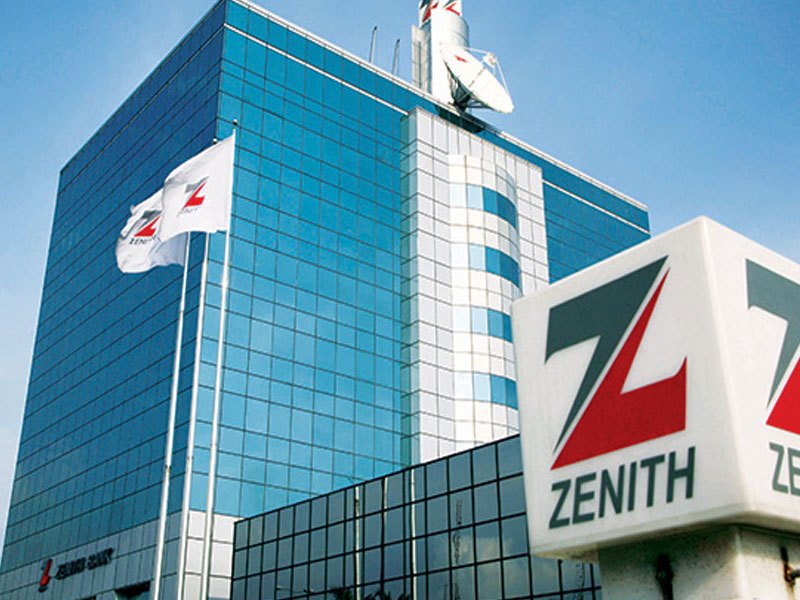
Zenith Bank Q3 Earnings Rise to N491bn, EPS Grows 4.8%
By Dipo Olowookere
One of the tier-one financial institutions in Nigeria, Zenith Bank Plc, on Wednesday released its unaudited financial statements for the nine months ended September 30, 2019 to the Nigerian Stock Exchange (NSE) and a brief analysis by Business Post showed an improvement from what was realized in the same period of last year.
For instance, the lender increased its gross earnings for the period by 3.52 percent to N491.3 billion versus N474.6 billion in Q3 2018. However, the net interest income reduced by 6.08 percent majorly influenced by a lower interest and similar income, which went down to N321.9 billion from N339.1 billion, indicating a decline of 5.07 percent. The interest and similar expense decreased in the period under review to N107.3 billion from N110.6 billion.
For the impairment charge, it was higher by 28.0 percent, closing at N18.3 billion in Q3 2019 compared with N14.3 billion in Q3 2018, while the net interest income after impairment charge rose to N196.4 billion from N214.2 billion.
According to Zenith Bank, its net fee and commission income stood at N73.9 billion as at September 30, 2019 against N62.0 billion as at September 30, 2018, while the trading income was N66.9 billion as at the end of the third quarter of this year versus N52.9 billion in the same time of last year, with other income closing higher to N16.1 billion compared with N13.8 billion.
In the results, the lender said in the first nine months of 2019, it used a total of N57.1 billion as personnel expenses, higher than N51.7 billion in Q3 2018, while N102.7 billion was expended on operating costs, also higher than N109.9 billion spent for the same purpose 12 months ago.
A look at the bank’s bottom-line indicated that the profit before tax increased by 5.32 percent to N176.2 billion from N167.3 billion, while the profit after tax rose by 4.51 percent to N150.7 billion from N144.2 billion, with the earnings per share rising by 4.80 percent to N4.80 against N4.58 in Q3 2018.
For its balance sheet, the lender showed much resilient with a 6.41 percent year-on-year improvement in its total assets, which rose to N5.978 trillion in Q3 2019 from N5.618 trillion in Q3 2018, while the total liabilities year-on-year rose to N5.107 trillion from N4.840 trillion.
During the period under review, Zenith Bank grew its customers’ deposits to N3.952 trillion from N3.276 trillion, while its loans and advances rose to N2.043 trillion from N1.825 trillion, with investment in securities reducing to N492.0 billion from N590.3 billion.
Banking
HabariPay Unveils ‘HabariPay Impact Report 2025’
By Modupe Gbadeyanka
A new report highlighting the transformation from a newly established fintech venture into one of Nigeria’s leading payment infrastructure providers has been launched by HabariPay Limited.
The report, known as the HabariPay Impact Report 2025, provides stakeholders with a comprehensive evolution, innovation journey, business performance, and impact of the fintech subsidiary of Guaranty Trust Holding Company (GTCO) Plc on the digital payments landscape.
The company’s contributions to enabling digital commerce, supporting businesses, strengthening payment infrastructure, and expanding financial access through technology-driven solutions were also captured in the piece.
The HabariPay Impact Report 2025 also highlights the organisation’s strong financial and operational performance, the growth of the Squad platform, and the development of infrastructure that powers payment acceptance, switching, transfers, merchant services, and value-added solutions.
The publication further explores the role of innovation, talent development, and ecosystem partnerships in driving the company’s success.
It showcases HabariPay’s investments in innovation through initiatives such as the Take on Squad Hackathon and the Squad Hackademy, both of which are helping to develop future technology talent and accelerate the creation of practical solutions to real-world challenges.
“As a technology-driven company, we believe that impact extends beyond financial performance. It is reflected in the businesses we enable, the merchants we support, the infrastructure we build, and the opportunities we create for the next generation of innovators.
“The HabariPay Impact Report 2025 captures this journey and demonstrates our commitment to creating sustainable value for customers, partners, and the broader economy,” the Managing Director of HabariPay, Ms Eduofon Japhet, said.
“The HabariPay Impact Report 2025 represents more than a reflection on our achievements; it is a testament to the deliberate investments we have made in building sustainable payment infrastructure, empowering businesses, fostering innovation, and creating long-term value for our stakeholders.
“As we look ahead, we remain committed to expanding our capabilities, deepening our impact, and shaping the future of digital payments through technology-driven solutions that are secure, scalable, and inclusive,” she added.
Banking
Foreign Exhibitors in Nigeria as Ecobank Adire Lagos Kicks Off June 11
By Modupe Gbadeyanka
Some top foreign exhibitors participating in the much-anticipated Ecobank Adire Lagos Experience commencing on Thursday, June 11, 2026, are already in Nigeria.
The four-day event, closing on June 14, will witness participation from notable African fashion brands from Ghana, Sierra Leone, Senegal and the Benin Republic.
Among the international exhibitors confirmed for this year’s edition are Creative Hub Africa and Shades of Class from Sierra Leone, Drame Khadidatou from Senegal, Tampoori from Ghana, and Naylah Collection from the Republic of Benin. Their participation highlights the growing continental appeal of the Ecobank Adire Lagos Experience as a platform for cultural exchange, business collaboration and market access across Africa.
More than 100 exhibitors and vendors, including leading Nigerian brands such as Obida Design Associates, This Is Us, Imani Kids, Ashabi Fads, E25Dresses, Miné by Ejiro Amos Tafiri, Buss Fabrics Store, Aina Aladire and many others, will participate, showcasing the richness of African craftsmanship, innovation and entrepreneurship.
It was gathered that organisers are putting finishing touches to the venue of the exhibition, the prestigious Ecobank Pan African Centre (EPAC) on Victoria Island, Lagos.
All necessary arrangements to ensure a seamless, secure and memorable experience for exhibitors and attendees are being put in place by the bank, further underscoring its commitment to promoting African creativity, entrepreneurship and intra-African trade.
The Head of SMEs, Partnerships and Collaborations at Ecobank Nigeria, Mrs Omoboye Odu, said attendees can look forward to a vibrant showcase of fashion, craftsmanship, art, music, culture and entrepreneurship, with participants drawn from Nigeria and several other African countries.
“We are fully prepared and excited to welcome guests from across Nigeria and the African continent to another edition of the Ecobank Adire Lagos Experience. From exhibition spaces and cultural showcases to networking opportunities and customer engagement activities, every necessary arrangement has been put in place to ensure a seamless and rewarding experience for all attendees,” she stated.
“The Ecobank Adire Lagos Experience continues to evolve as a unique platform that connects creatives, entrepreneurs and consumers from across Africa. Attendees can look forward to exceptional products, interactive sessions, entertainment, cultural exhibitions and valuable opportunities to build relationships, explore new markets and expand their businesses,” Mrs Odu added.
Beyond the exhibition, participants will have opportunities to network, explore business partnerships, discover unique products and experience the diversity and vibrancy of African culture.
The event is open to the public, and visitors can look forward to an immersive experience that seamlessly blends tradition, innovation, fashion, enterprise and entertainment in a grand celebration of Africa’s creative economy.
Over the years, the Ecobank Adire Lagos Experience has grown into one of Nigeria’s foremost platforms for promoting indigenous textile production, supporting small and medium-sized enterprises, and showcasing the ingenuity of African creatives.
The programme has also played a significant role in expanding market access for businesses while preserving and celebrating Africa’s rich cultural heritage.
Banking
Education Not Social Obligation, But Strategic Investment—Union Bank
By Modupe Gbadeyanka
Union Bank of Nigeria has again stressed the importance of education to the nation, saying it is a strategic investment and not a social obligation.
The Chief Brand and Marketing Officer of Union Bank, Ms Olufunmilola Aluko, said this is why the company continues to throw its full weight behind quality educational programmes.
According to her, education is central to the financial institution’s purpose rather than a peripheral cause.
She was speaking in respect to the bank’s partnership with Nigerian Breweries Plc and the Felix Ohiwerei Education Trust Fund for the organisation of the 12th Maltina Teacher of the Year Competition.
The flag off of this year’s programme was held in Lagos on Monday, and it is the third consecutive year Union Bank has served as a partner.
“At Union Bank, we believe education is not a social obligation. It is a strategic investment. A nation that does not invest in its teachers and its learners is borrowing from its own future, and we are in the business of building futures, not mortgaging them,” Ms Aluko stated.
She pointed to Edu360, the bank’s flagship education initiative under the UnionCares platform, as the practical expression of that conviction.
Edu360 spans the full education value chain, from widening access for children in underserved communities and investing in the teachers who multiply learning outcomes, to building digital literacy and STEM capability, and preparing young people for employment or enterprise.
On the role of the financial sector, Ms Aluko challenged her peers to think differently.
“Financial institutions need to stop thinking of ourselves as donors and start thinking of ourselves as ecosystem builders. We can embed financial literacy into school curricula, design products that help parents save for their children’s education, and convene policymakers, educators and the private sector around shared goals. Above all, we can show up consistently, not only when it suits our brand calendars,” she disclosed.
She noted that lasting change requires sustained collaboration between the public and private sectors, and pointed to the strength of the signal sent when institutions commit to teachers at scale, citing the competition’s N100 million grand prize. With twelve editions and more than three hundred teachers recognised to date, she described MTOTY as a model of the consistency Union Bank embodies through Edu360.
Her closing message was directed at educators across the country, stating, “To every teacher in this country, what you do is not small. Your story deserves to be told, and Nigeria needs to know your name.”
-
Feature/OPED6 years agoDavos was Different this year
-
Travel/Tourism10 years ago
Lagos Seals Western Lodge Hotel In Ikorodu
-
Showbiz3 years agoEstranged Lover Releases Videos of Empress Njamah Bathing
-
Banking8 years agoSort Codes of GTBank Branches in Nigeria
-
Economy3 years agoSubsidy Removal: CNG at N130 Per Litre Cheaper Than Petrol—IPMAN
-
Banking3 years agoSort Codes of UBA Branches in Nigeria
-
Banking3 years agoFirst Bank Announces Planned Downtime
-
Sports3 years agoHighest Paid Nigerian Footballer – How Much Do Nigerian Footballers Earn