Connect with us

Banking

Ecobank Cancels Charges on *326# USSD Short Code

Published

on

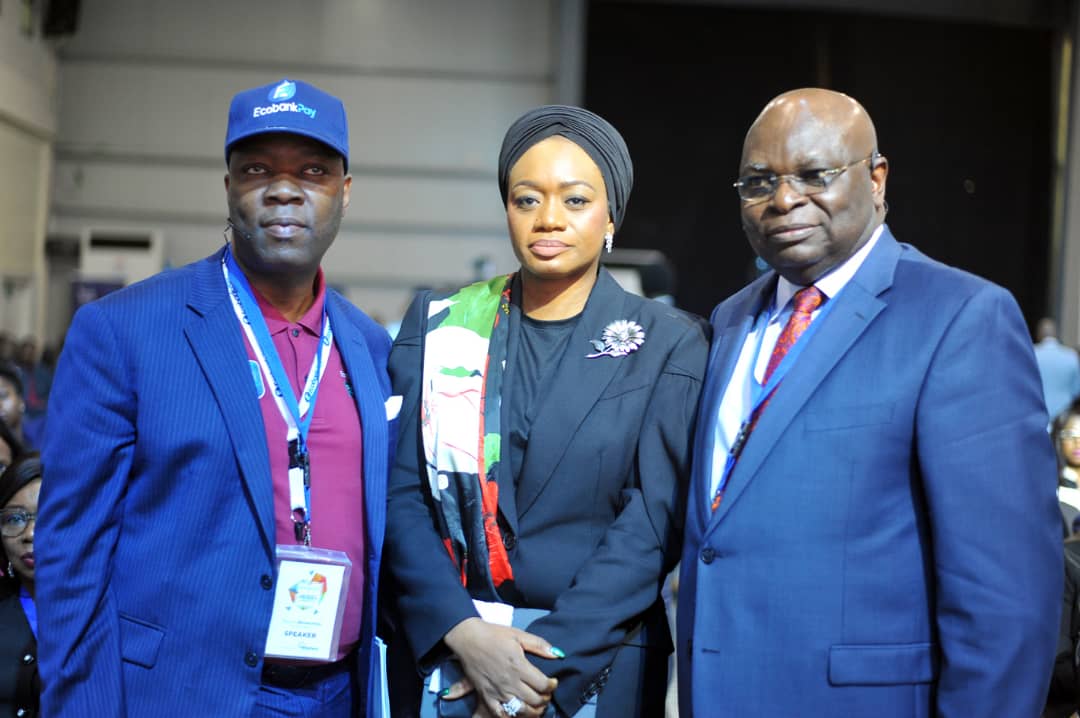
Ecobank Nigeria USSD code

Ecobank Nigeria has announced that access to its *326# Unstructured Supplementary Service Data (USSD) is at zero cost to the consumer. By this announcement an Ecobank customer who performs transactions on the bank’s platform by dialing *326# is free of the USSD session fee.

Managing Director of Ecobank Nigeria, Mr Patrick Akinwuntan, who declared this at the ongoing 2019 Nigeria Fintech Week in Lagos, said all stakeholders must come together to make USSD short code services free to all users, as a key initiative to drive financial inclusion in Nigeria.

He noted that for the industry to grow, all stakeholders should allow consumers to access banking and financial services such as the USSD short codes at zero session use cost, to deepen financial inclusion in Nigeria and further drive its economic development.

Mr Akinwuntan, who asked stakeholders to adopt the strategy of shared infrastructure that will enable easy compliance to risk and regulatory policies, opined that skills development is at the top of core requirements for successful digital platform proliferation.

In his words “when the ecosystem comes together, we can unlock value for all partners and ensure rapid innovation. Clients’ data protection and the professional handling of this data are key to instilling consumer confidence in the system, and the entire ecosystem is only as strong as its weakest link. All participants need to adopt world-class standards for ensuring cybersecurity for the good of our customers”.

Furthermore, the Ecobank Managing Director said that in order to achieve a digitized Africa, countries must have positive regulatory oversight that encourages and facilitates collaboration amongst all stakeholders to unleash value which will include the much-needed investment in awareness and digital payment usage.

In his comment, President of the Fintech Association of Nigeria, Dr Segun Aina said the Nigeria Fintech Week brings together various organizations and individuals in the disruptive technology ecosystem both within and outside Nigeria. He further stated that the association has recorded in excess of four thousand participants across various sectors from over twenty countries across all the continents who have registered to attend different aspects of the week’s events.

“With the quality, diversity and comprehensiveness of the Nigeria Fintech Week, this annual event has obviously received overwhelming market acceptance and endorsement as the main annual Fintech and digital stakeholder platform to look forward to. We, therefore, expect all stakeholders to use the Nigeria Fintech Week as the main annual platform to showcase Nigerians creativity and remarkable exploits in value-enhancing Fintech products and services”, he noted.

The Fintech Association of Nigeria was created during the 1st National Fintech Conference in 2017 and can today boast of over one hundred institutional members from nine sectors of the economy all working together to connect, accelerate and advocate.

Similarly, the Africa Fintech Network was inaugurated during the 3rd National Fintech Conference and the maiden Africa Fintech Festival in December 2018. Today, less than one year after its inauguration, the association has twenty-nine member countries and country National Fintech Associations.

The Africa Fintech Network has been collectively supportive of continental initiatives such as the Africa Continental Free Trade Agreement (AfCTA) and Digital Africa, built global partnerships and recognized by the African Union, United Nations Economic Commission for Africa, African Development Bank, Afreximbank and others.

These self-regulated entities have brought needed coordination to the Fintech ecosystem in Nigeria and Africa with linkages to and alliances with similar organisations in other markets across the world.


Modupe Gbadeyanka is a fast-rising journalist with Business Post Nigeria. Her passion for journalism is amazing. She is willing to learn more with a view to becoming one of the best pen-pushers in Nigeria. Her role models are the duo of CNN's Richard Quest and Christiane Amanpour.

Advertisement
Click to comment

Leave a Reply

Your email address will not be published. Required fields are marked *

Banking

Nigeria Gets Permanent Seat on African Central Bank Board

Published

on

African Central Bank

By Adedapo Adesanya

Nigeria has secured a major strategic gain at the ongoing 39th African Union Summit, after securing a permanent seat on the board of the African Central Bank.

The Minister of Foreign Affairs, Mr Yusuf Tuggar, confirmed this at the summit on Friday, highlighting it as a significant milestone for both Nigeria and the West African region.

The African Central Bank (ACB) is one of the original five financial institutions and specialised agencies of the African Union (AU).

“Importantly, Nigeria has been given the hosting of the African Monetary Institute and the African Central Bank. Not only that, in today’s plenary, Nigeria was confirmed a seat on the board of the African Central Bank. This is huge,” he said.

He stated that the development represents a diplomatic breakthrough, mentioning that the move faced initial opposition from some member states.

“It is something that was initially resisted by some countries, so now we have a permanent seat on the African Central Bank board. It’s a major success,” he added.

This year’s summit carries the theme Assuring Sustainable Water Availability and Safe Sanitation Systems to Achieve the Goals of Agenda 2063, the sessions will focus on advancing continental commitments to sustainable water management and improved sanitation, critical pillars for health, agricultural productivity, and the broader development aspirations of the AU’s Agenda 2063 framework.

Beyond financial governance, Nigeria and the West African bloc also recorded progress in elections to the Peace and Security Council, the African Union’s highest decision-making body on conflict and security matters.

The delegation announced that “Côte d’Ivoire, Sierra Leone, and the Republic of Benin have been elected,” with Benin securing a fresh term while the other two countries were re-elected.

The Peace and Security Council also convened to deliberate on the situations in Sudan and Somalia. Nigeria voiced strong reservations over Sudan’s potential readmission into the continental body.

“Nigeria voiced its reservations about Sudan being readmitted because, as you know, there are two warring factions in Sudan,” Tuggar stated.

“We reminded the Peace and Security Council that we have to abide by the rules and regulations of the African Union. If there has been an unconstitutional change of government, then the country should not be allowed to participate, and that was carried.”

The summit also outlined its 2026 theme: water sustainability. The Nigerian representative underscored the country’s strategic and demographic significance in advancing that agenda.

“Nigeria was created out of the confluence of the River Niger and the River Benue. So water is very important,” he said.

“We are the largest country in Africa, with a population of 230 million people. We’re going to be 400 million in the next 24 years. So water is a source of life. It’s very important, and we’re playing a very pivotal role in implementing the programs that are being set for the theme of the year.”

Continue Reading

Banking

Standard Bank Hosts 2nd African Markets Conference

Published

on

standard bank African Markets Conference

By Modupe Gbadeyanka

The second African Markets Conference (AMC) will take place in Cape Town, South Africa, from Sunday, February to Tuesday, February 24, 2026.

The event, hosted by Standard Bank, will bring together global institutional investors, sovereign wealth funds, and African policymakers to catalyse the flow of capital into the continent’s most critical sectors.

The theme for this year’s edition is Mobilising Global Capital at Scale for Africa’s Growth and Development.

AMC 2026 will host a high-level delegation of decision-makers, ensuring that the dialogue leads to tangible commitments.

The conference will be structured around five high-impact pillars designed to move the needle on investment, including prioritising infrastructure as an asset class, accelerating the energy transition, deepening African capital markets and mobilising private capital, enabling intra-African trade and flows of capital, and addressing Africa’s sovereign debt and cost sustainability.

It is estimated that by 2050, Africa will add one billion people, more than half in cities, yet it invests only $75 billion of the $150 billion it needs annually for infrastructure. Standard Bank aims to use AMC 2026 to ensure that African priorities remain at the centre of the global financial discourse.

“This year’s engagement bridges the gap between policy ambitions and market realities. Africa urgently needs practical measures to deepen capital pools, improve market liquidity, and strengthen regulatory frameworks that give investors the confidence to deploy capital at scale.

“Mobilising capital is not just about funding projects; it is about building the foundation of a more balanced and inclusive global economy,” the chief executive of Corporate and Investment Banking at Standard Bank Group, Luvuyo Masinda, stated.

Continue Reading

Banking

Fidelity Bank Shows Love to Ikoyi Correctional Centre Inmates

Published

on

Fidelity Bank Ikoyi Correctional Centre

By Aduragbemi Omiyale

Inmates at the Ikoyi Correctional Centre in Lagos were recently full of joy when Fidelity Bank Plc donated some relief items to them.

The financial institution, through its Corporate Social Responsibility (CSR) initiative known as Fidelity Helping Hands Programme (FHHP), handed over various household tools and gift items to the leadership of the correctional facility as part of its efforts to support the rehabilitation and development of indigent persons in society.

The Chief Human Resources Officer of Fidelity Bank, Mr Charles Nwachukwu, reaffirmed the bank’s deep commitment to transforming lives and restoring hope, emphasising that true progress lies not only in financial growth but in extending compassion and opportunity to those that society often overlooks.

“At Fidelity Bank, we believe that every individual deserves a second chance. Our approach to Corporate Social Responsibility is rooted in empathy, standing with communities, uplifting the vulnerable, and opening doors for brighter futures.

“By supporting inmates today, we are setting them on the true path of rehabilitation, empowering them to return tomorrow as productive and confident members of society,” the banker said.

The Deputy Controller of Corrections at Ikoyi Custodial Centre, Mr Julius Ogueri, who could not hide his excitement over the gesture, appealed to Nigerians to avoid cybercrimes and stigmatisation of ex-inmates.

Highlighting the challenges faced by correctional facilities in Nigeria, Mr Ogueri noted that Ikoyi correctional center initially designed for 800 inmates, now houses over 3,000 inmates, with 396 convicted persons and 3,604 awaiting trial.

Whilst thanking the bank, the Deputy Controller also emphasised the importance of rehabilitation, citing examples of inmates who have pursued education and skills acquisition, including 72 inmates studying with the National Open University of Nigeria and 120 inmates who have benefited from WAEC and GCE support.

Business Post reports that through the FHHP, staff across Fidelity Bank branches nationwide identify crucial interventions needed in their immediate community and raise funds to execute them. The bank’s management then matches this contribution with an equal amount and disburses it for the selected project.

The visit to the Ikoyi Correctional Centre reinforces the lender’s unwavering commitment to meaningful community impact and demonstrates its strong dedication to advancing social responsibility and rehabilitation efforts across the society.

Continue Reading

Trending