

Economy
How to Unlock Africa’s $3trn Free Trade Opportunity

New research from global law firm Baker McKenzie and Oxford Economics, AfCFTA’s $3 trillion Opportunity: Weighing Existing Barriers against Potential Economic Gains, shows that if fully implemented, the African Continental Free Trade Area (AfCFTA) will unlock significant but uneven growth opportunities on the continent.
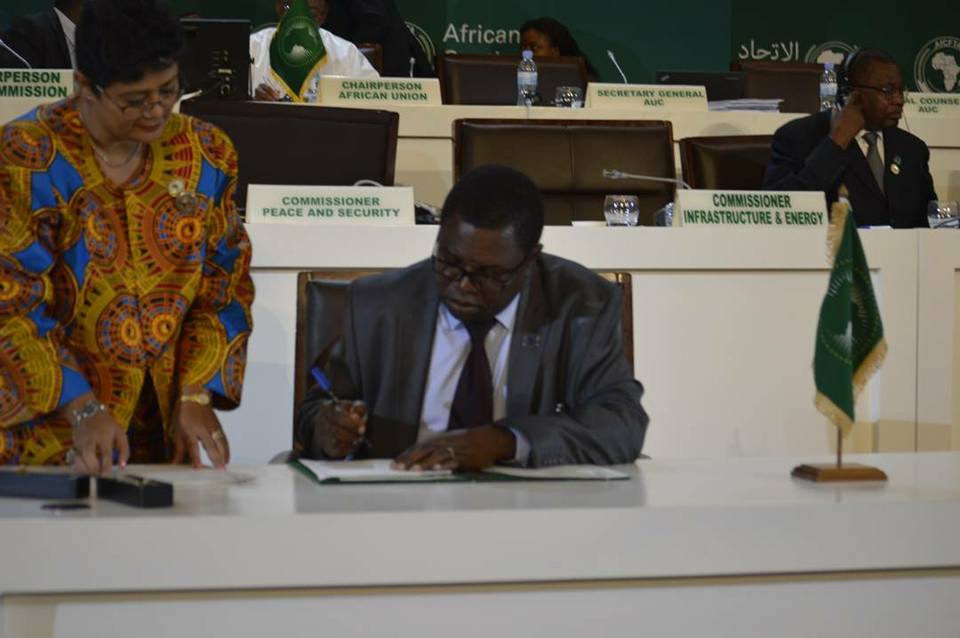
The African Union is putting the Africa Continental Free Trade Area (AfCFTA) into operation. It will be the world’s largest free trade area by number of countries and is so far in force across 27 countries.
Open economy key to success
Some countries are currently better placed than others to reap the rewards of intraregional trade and numerous obstacles mean that the tangible benefits of the agreement will likely only be realized from 2030. The report finds countries with good existing trade integration with their neighbours and which have open economies are most likely to benefit economically from lower trade tariffs.
For example, South Africa stands to maximize the benefit from AfCFTA towards future growth and further trade expansion, due to its existing strong connections across the continent and a well-established manufacturing base. Smaller economies, such as those of Ghana and Côte d’Ivoire, stand to benefit from the agreement, due to existing favourable conditions such as having open economies, good infrastructure and supportive business environments, they could quickly ramp up their intracontinental exports.
The report also reveals that to unlock the full US$3 trillion in growth potential that free trade will bring to the region, governments and businesses across the continent will need to fully support the AfCFTA agreement and prioritise it over the patchwork of regional and competing agreements in Africa.
Mattias Hedwall, Partner and Head of Baker McKenzie’s Global International Commercial & Trade Group, notes that the AfCFTA agreement will create the world’s largest free trade zone by number of countries and is expected to revolutionise trade across the continent.
“Once implemented, it will lead to sustainable socio-economic development, increased diversification, a boost in investment, trade liberalisation, the industrialisation of African economies, the establishment of new cross-border value chains and better insulation from global shocks,” he says The results of our analysis show countries that have already been bold enough to create more open, business-friendly environments stand to make the biggest gains. The message should be that freeing up trade is going to be the big engine of African growth through the 2020s and the first movers have the biggest advantages.”
Older trade agreements risk stifling growth
However, AfCFTA’s success depends on the continent’s ability to overcome several big challenges that relate to limitations in infrastructure, resources, political climate and existing regional trade agreements.
Kamal Nasrollah, Partner and Head of Baker McKenzie in Casablanca explains that, currently, regional integration in Africa is largely an unattained goal, despite the continent’s Regional Economic Communities (RECs). Overall, the RECs have complex and often conflicting policies and have achieved very different levels of integration to-date.
“Despite the challenges, however, some RECs have successfully encouraged effective trade between member countries. For example, Côte d’Ivoire, Kenya, Senegal and South Africa have become regional trading hubs, having leveraged alliances they established through their RECs. Morocco is also an active trade hub within the Union du Maghreb Arab (UMA) trade agreement as well as the various trade agreements it has entered into with the US, the EU and the francophone Africa free-trade zone (UEMOA). One of the ways forward for African economies to further implement effective intraregional trade may be to draw on the lessons learned from these successful RECs,” Nasrollah says.
More trade between African nations is the real growth opportunity
Currently, Africa ranks behind other regions in terms of its overall level of regional trade integration. The AfCFTA’s intraregional trade share of 17% compares to 64% for the European Union and 50% for the US Mexico Canada Agreement. At present, trade links between Africa and the rest of the world are often stronger than trade between countries on the continent.
According the Report, African nations currently tend to trade more with Europe (35%) and Asia (31%) than with neighbouring markets. In contrast, less than a fifth of African countries’ exports are headed to other countries on the continent.
“These intracontinental trade shortcomings underscore the extent of lost revenue and development opportunities for African countries. They also highlight the benefits of supporting the AfCFTA and working together towards its successful implementation,” says Nasrollah.
Virusha Subban, Partner specialising in Customs and Trade at Baker McKenzie in Johannesburg, explains that while African nations may trade within their respective RECs under preferential terms, trade beyond these regional agreements is generally subject to most-favoured nation (MFN) tariffs, which are much higher and act as a disincentive to trade integration.
The Report compares Africa’s 20 largest economies in terms of the share of exports destined for other economies on the continent. Some economies, such as Uganda and Zimbabwe, buck the overall trend, trading more with their neighbours than other African nations do. Yet, their economies are small in contrast to those of Egypt, Nigeria and South Africa, which together represent more than half of the continent’s GDP. Egypt and Nigeria, for instance, have very limited trade relationships with their African peers. As major fuel exporters, they are focused on exports outside the continent.
“Over three quarters of African exports to the rest of the world are heavily focused on natural resources, primarily raw materials. In contrast, a look at African imports from outside the continent reveals that manufacturing products, industrial machinery and transport equipment constitute over 50% of Africa’s combined needs. Currently, Africa’s external imports account for more than half of the total volume of imports, with the most important suppliers being Europe (35%), China (16%) and the rest of Asia including India (14%). By contrast imports from other parts of Africa account for only 16% of total merchandise imports.
“Manufacturing GDP represents on average only 10% of GDP in Africa. This means that limited production capabilities within Africa are currently being compensated for through foreign imports. Yet, this manufacturing deficit could be eventually satisfied within the continent and enabled by AfCFTA. Manufactured products currently exported to African countries by their peers, primarily industrial machinery and motor vehicles, represent a third of the total trade flow in Africa. But a significant share of these intraregional exports of manufactured goods are re-exports of imported manufactured products from the rest of the world,” says Subban.
“This shows that African nations do not trade more with each other because of a misalignment between what various African countries need and what is produced on the continent. This misalignment signals missed opportunities to reduce foreign imports from outside Africa and increase trade flows within the continent. For AfCFTA to succeed fully, more countries need to diversify their production of goods to better match the import needs of their continental neighbours,” she notes.
Multinationals will benefit most from building out their business across Africa to support intra-African trade. Governments should seek to develop policies and regulations to bolster economic relations with their nearest neighbours as well as courting foreign direct investment from Asia, Europe and the US.
“Egypt has chaired the African Union through the year the agreement has come into force in 27 nations – a huge achievement – and now has the opportunity to focus on bringing forward implementation measures to fully activate AfCFTA in one of the continent’s largest economies by growing cross-border trade with nearby countries and diversifying the economy,” said Lamyaa Gadelhak, a partner in Baker McKenzie’s Cairo office.
Overcoming non-tariff barriers requires investment
Wildu du Plessis, Head of Africa at Baker McKenzie in Johannesburg, says the Report underscores the importance of not only lowering tariff barriers, but also addressing non-tariff barriers to intra-regional trade. Some of the most significant obstacles to AfCFTA are inadequate infrastructure, poor trade logistics, onerous regulatory requirements, volatile financial markets, regional conflict and complex and corrupt customs procedures. These can be even more detrimental to trade expansion than tariff measures.
“There is a strong consensus that the vast infrastructure gap in Africa, including transport and utilities infrastructure, must be urgently addressed so as not to restrict increased trade integration,” du Plessis notes, adding that South Africa is next to chair the African Union, starting in January 2020 and will be keen to facilitate progress in free trade on the continent under the agreement, especially as it is one of the nations with the greatest opportunities for growth.
Du Plessis explains that large infrastructure projects in the pipeline should improve the situation with some non-tariff barriers. These include the Trans-Maghreb Highway in North Africa and the North-South Multimodal Corridor, connecting extensive parts of Southern Africa, as well as the Central Corridor project and the Abidjan-Lagos Corridor Highway project.
“AfCFTA is expected to act as a strong impetus for African governments to address their infrastructure needs as well as to overhaul regulation relating to tariffs, bilateral trade, cross-border initiatives and capital flows. Both domestic and foreign trade will benefit from reforms to regulation, political climate and trade policies that enhance competitiveness and improve the ease of doing business.
“It is important to be realistic about timeframes, however, as effective solutions will take years, given limited financial capacity in many countries, high risks to private financing of infrastructure, political hurdles, administration shortfalls and lack of resources. Less developed economies that are likely to find themselves more exposed initially will therefore prefer a more gradual implementation of the trade deal,” du Plessis says.
Weighing the opportunity
Countries with relatively less manufacturing capacity and weaker trade ties, such as Algeria and Sudan also have higher political and security risks, which undermine their ability to trade and integrate into regional value chains. And the economy of Angola is heavily dependent on hydrocarbons, limiting its ability to fully capitalise on the AfCFTA deal in the near-term. All three economies need to diversify and become more receptive to FDI.
“Economies that are less export-oriented or have unfavourable business environments should identify their comparative advantages and key strengths, and leverage these to tap into new or established AfCFTA value chains,” says Hedwall. “While the benefits may not be immediate, the launch of the AfCFTA is a positive step, not just for the African continent, but for world trade in general. While there are still numerous challenges to be resolved, we expect that if the barriers to its effective implementation can be addressed, the next decade will see the growth of the African Continental Free Trade Area into one world’s most exciting new global trading zones.”


