Connect with us

Economy

Nigeria’s External Reserves Drop 8% to $39.6m in 2019

Published

on

external reserves

By Adedapo Adesanya

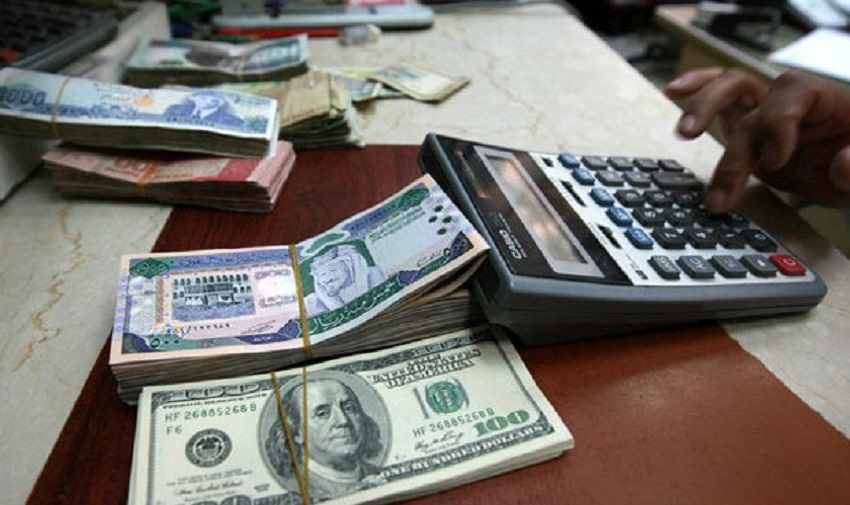
Data obtained by Business Post on Monday from the Central Bank of Nigeria (CBN) showed that from the first business day of this year, January 2, 2019, till Friday, December 6, 2019, the country’s external reserves dropped 8.13 percent from $43.076 billion to $39.576 billion. This represents a decline of about $3.458 billion.

Business Post reports that the reserves have been depleting lately as a result of decline in the price of crude oil on the international market. Oil, which is Nigeria’s mainstay in terms of foreign exchange, has suffered frequent drop in prices at the market as a result of the trade war between the United States and China.

From the data harvested from the CBN, the foreign reserve, as at the opening day in January was at $43.076 billion, but dropped to $42.297 billion at the end of the February 2019, shedding $779 million.

However, by the end of March, the reserves recovered and rose to $44.428 billion. It further increased to $44.793 billion as the end of April and as at end of the month of May, the external reserves stood at $45.123 billion, but dropped by $53.4 million by the close of June to $45.070 billion.

As the end of the month of July, the country foreign reserves had dropped further to $44.903 billion and in August, it fell to $43.608 billion.

Between the end of August and September, the external reserves shed a total of $1.76 billion to $41.852 billion, this extended into October as the reserves further recorded a decline to $40.464 billion.

In November, the CBN data showed that the reserves dropped below the $40 billion mark as the figures closed the month of November at $39.803 billion.

Into the final month of the year, the reserves have further recorded drops and as at Friday December 6, 2019, what is left in the reserves is not more than $39.576 billion.

Recently, when Governor of the CBN, Mr Godwin Emefiele, was asked to speak on the decline in the foreign exchange reserves to less than $40 billion, he said the drop should not cause panic or any agitation for unnecessary policies.

The CBN Chief had said the bank would continue to sustain its intervention in the foreign exchange market despite the drop in external reserves.

“If during the period of recession in 2015 to 2017 reserves dropped as low as $23 billion and yet we still managed our position and we were able to get out of the situation; we are saying now that at even below $40 billion, our threshold is still very high.

“We will never have any fears and there is no need for anybody to worry,” he had stated.

He further said that with crude oil selling at a price of about $63 per barrel, the drop in reserves to less than $40 billion was not enough reason for panic, noting that despite the drop in reserves, the bank’s intervention policy of sustaining the Naira would continue.

Foreign exchange reserves are assets held in reserve by a monetary authority in foreign currencies. These reserves are used to back liabilities and influence monetary policy. These are foreign banknotes, deposits, bonds, treasury bills and other foreign government securities.

These assets serve many purposes but are most significantly held to ensure that a government or its agency has backup funds if their national currency rapidly devalues.


Adedapo Adesanya is a journalist, polymath, and connoisseur of everything art. When he is not writing, he has his nose buried in one of the many books or articles he has bookmarked or simply listening to good music with a bottle of beer or wine. He supports the greatest club in the world, Manchester United F.C.

Advertisement
Click to comment

Leave a Reply

Your email address will not be published. Required fields are marked *

Economy

Presco, GTCO List Additional Shares on Stock Exchange

Published

on

Nigeria's stock exchange

By Aduragbemi Omiyale

The duo of Presco Plc and Guaranty Trust Holding Company (GTCO) Plc has listed additional shares on the Nigerian Exchange (NGX) Limited.

The extra equities of these two publicly-listed organisations were admitted to the local stock exchange last Friday, increasing their respective total issued and fully paid-up shares.

For Presco, it listed fresh 166,666,667 ordinary shares of 50 Kobo each on the daily official list of the NGX on Friday, January 30, 2026, increasing its total issued and fully paid-up stocks from 1,000,000,000 units to 1,166,666,667 units.

The additional equities were from the rights issue of the firm allotted to shareholders on the basis of one new share for every existing six ordinary shares held as at close of business on Monday, October 13, 2025.

In a circular issued over the weekend, the NGX said, “Trading licence holders are hereby notified that additional 166,666,667 ordinary shares of 50 Kobo each of Presco Plc were on Friday, January 30, 2026, listed on the daily official list of Nigerian Exchange (NGX) Limited (NGX).

“The additional shares arose from the company’s rights issue of 166,666,667 ordinary shares of 50 Kobo each at N1,420.00 per share on the basis of one new share for every existing six ordinary shares held as at close of business on Monday, October 13, 2025.

“With the listing of the additional 166,666,667 ordinary shares, the total issued and fully paid-up shares of Presco Plc has now increased from 1,000,000,000 to 1,166,666,667 ordinary shares of 50 Kobo each.”

As for GTCO, it listed additional125,000,000 ordinary shares of 50 Kobo each at N80.00 per unit offered through private placement.

The fresh equities taken to Customs Street have raised the total issued and fully paid-up shares of GTCO from 36,425,229,514 to 36,550,229,514 ordinary shares of 50 Kobo each.

Continue Reading

Economy

FG, States, Local Councils Share N1.969trn FAAC Allocation

Published

on

faac allocation

By Adedapo Adesanya

A total of N1.969 trillion was shared to the federal government, the 36 state governments and the 774 local government councils from the gross revenue of N2.585 trillion generated by the nation in December 2025.

The money was disbursed to the three tiers of government at the January 2026 Federation Account Allocation Committee (FAAC) meeting held in Abuja.

In a statement issued on Monday by the Director of Press and Public Relations in the Office of the Accountant-General of the Federation (OAGF), Mr Bawa Mokwa, it was stated that the FAAC allocation comprised statutory revenue of N1.084 trillion, distributable Value Added Tax (VAT) revenue of N846.507 billion, and Electronic Money Transfer Levy (EMTL) revenue of N38.110 billion.

“Total deduction for cost of collection was N104.697 billion, while total transfers, refunds, and savings were N511.585 billion,” the statement partly read.

It was also revealed that from the N1.969 trillion total distributable revenue, the federal Government received the sum of N653.500 billion, and the state governments received N706.469 billion, the local government councils received N513.272 billion, and the sum of N96.083 billion was shared with the benefiting state as 13 per cent derivation revenue.

He said of the N1.084 trillion distributable statutory revenue, the central government received N520.807 billion, the state governments got N264.160 billion, the local councils were given N203.656 billion, and N96.083 billion was shared to the benefiting states as 13 per cent derivation revenue.

FAAC noted that from the N846.507 billion distributable VAT earnings, the federal government got N126.976 billion, the state governments received N423.254 billion, and the local government councils got N296.277 billion.

From the revenue from EMTL, Mr Mokwa explained that the national government was given N5.717 billion, the state governments got N19.055 billion, and the councils collected N13.338 billion.

He added that the companies’ Income Tax (CIT)/CGT and STD, Import Duty and Value Added Tax (VAT) increased significantly in December, while oil and gas royalty, CET levies and fees increase marginally, with excise duty, Petroleum Profit Tax (PPT)/Hydrocarbon Tax (HT), and EMTL considerably down.

Continue Reading

Economy

Oil Exports to Drop as Shell Commences Maintenance on Bonga FPSO

Published

on

Bonga FPSO

By Adedapo Adesanya

Nigeria’s oil exports will drop in February following the shutdown of the Bonga Floating Production Storage and Offloading (FPSO) vessel scheduled for turnaround maintenance.

Shell Nigeria Exploration and Production Company (SNEPCo) Limited confirmed the development in a statement issued, adding that gas output will also decline during the maintenance period.

This comes as SNEPCo begun turnaround maintenance on the Bonga FPSO, the statement signed by its Communications Manager, Mrs Gladys Afam-Anadu, said, describing the exercise as a statutory integrity assurance programme designed to extend the facility’s operational lifespan.

SNEPCo Managing Director, Mr Ronald Adams, said the maintenance would ensure safe, efficient operations for another 15 years.

“The scheduled maintenance is designed to reduce unplanned deferments and strengthen the asset’s overall resilience.

“We expect to resume operations in March following completion of the turnaround,” he said.

Mr Adams said the scope included inspections, certification, regulatory checks, integrity upgrades, engineering modifications and subsea assurance activities.

“The FPSO, about 120 kilometres offshore in over 1,000 metres of water, can produce 225,000 barrels of oil daily.

“It also produces 150 million standard cubic feet of gas per day,” he said.

He said maintaining the facility was critical to Nigeria’s production stability, energy security and revenue objectives.

Mr Adams noted that the 2024 Final Investment Decision on Bonga North increased the importance of the FPSO’s reliability. He said the turnaround would prepare the facility for additional volumes from the Bonga North subsea tie-back project.

According to him, the last turnaround maintenance was conducted in October 2022.

“On February 1, 2023, the asset produced its one billionth barrel since operations began in 2005,” Mr Adams said.

SNEPCo operates the Bonga field in partnership with Esso Exploration and Production Nigeria (Deepwater) Limited and Nigerian Agip Exploration Limited, under a Production Sharing Contract with the Nigerian National Petroleum Company (NNPC) Limited.

The last turnaround maintenance activity on the FPSO took place in October 2022. On February 1, the following year, the asset delivered its 1 billionth barrel of oil since production commenced in 2005.

Continue Reading

Trending