Connect with us

World

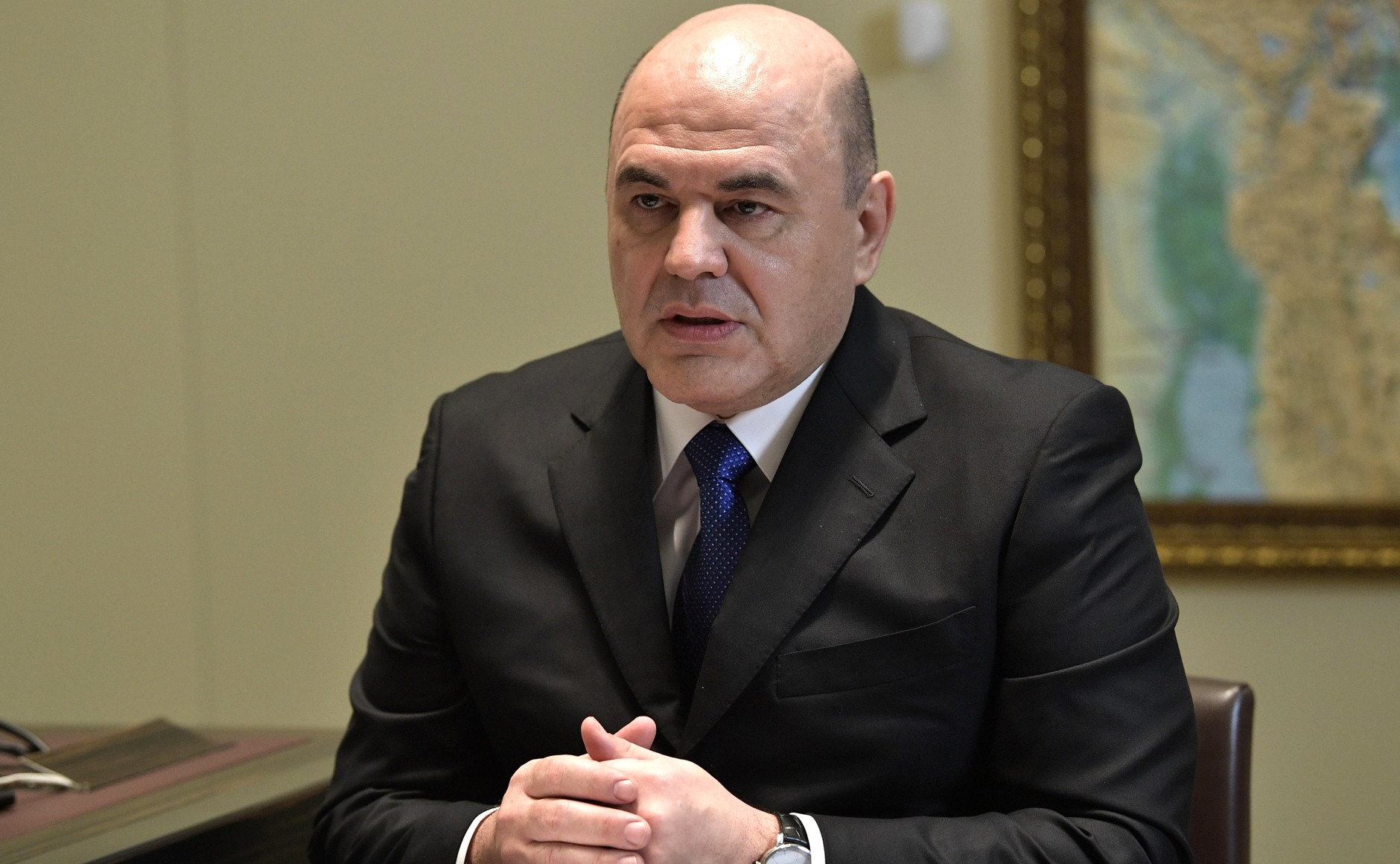
Meet Mikhail Mishustin, Russia’s Prime Minister

Published

on

Mikhail Mishustin Russia Prime Minister

By Kester Kenn Klomegah

Plucked from obscurity and little known in wide national political scene, the Head of the Federal Tax Service, Mikhail Mishustin, to become the new Prime Minister was a complete surprise, but not the first time in Russia’s politics.

President Vladimir Putin was pulled up to the top political field, in a similar way, by Boris Yeltsin. In August 1999, Putin was appointed one of three First Deputy Prime Ministers, and later on, was appointed acting Prime Minister of the Government of the Russian Federation by Yeltsin.

Yeltsin announced that he wanted to see Putin as his successor. Readily, Putin agreed to run for the presidency and later approved by State Duma with 233 votes in favour (vs. 84 against, 17 abstained), while a simple majority of 226 was required, making him Russia’s fifth PM in fewer than eighteen months.

On his appointment, few expected Putin, virtually unknown to the general public, to last any longer than his predecessors. He was initially regarded as a Yeltsin loyalist, like other prime ministers of Boris Yeltsin, Putin did not choose ministers himself, his cabinet was determined by the presidential administration.

Now, with a new chapter opening, Mikhail Mishustin eventually replaces Dmitry Medvedev who served as Prime Minister until mid-January 2020. Putin and Medvedev worked together and even switched positions between President and Prime Minister. This switch was termed by many in the media as “Rokirovka”, the Russian term for the chess move “casting” and later Medvedev said he himself would be ready to perform “practical work in the government” with under Putin.

On January 15, in his address to the Federal Assembly, Putin explicitly explained: “Our society is clearly calling for change. People want development, where they live and work, that is, in cities, districts, villages and all across the nation. The pace of change must be expedited every year and produce tangible results in attaining worthy living standards that would be clearly perceived by the people. And, I repeat, they must be actively involved in this process.”

Meeting with the Cabinet thereafter, Putin said: “For my part, I also want to thank you for everything that has been done so far in our joint work. I am satisfied with the results of your work. Of course, not everything was accomplished, but things never work out in full.” He thanked the government and added that Medvedev served as President and for almost eight years now he has been the Prime Minister, which is probably the longest stint in this post in Russia’s recent history.

Further, Putin held a separate working meeting with Head of the Federal Taxation Service Mikhail Mishustin and proposed him to take the post of Prime Minister. Having received his consent, the President submitted the candidacy of Mikhail Mishustin for consideration to the State Duma.

On January 16, the State Duma (lower house) endorsed Mishustin, as the new Prime Minister of the Russian Federation. As many as 383 lawmakers supported Putin’s choice, none were against, and 41 parliamentarians abstained. “Colleagues, the decision has been taken. We have given consent to the appointment of Mishustin Mikhail Vladimirovich as Prime Minister by the president of the Russian Federation,” Duma Speaker Vyacheslav Volodin said, summing up the results of the vote.

President Vladimir Putin has signed a decree appointing Mikhail Mishustin as the country’s Prime Minister. “In accordance with Article 83(a) of the Russian Constitution, Mikhail Vladimirovich Mishustin is appointed as Russia’s Prime Minister,” says the decree published on the Kremlin’s website. The decree comes into force on the day of its signing.

Mikhail Mishustin was born on March 3, 1966 in Moscow to a father of Russian-Jewish origin and a mother of Russian origin. He completed postgraduate studies in 1992. He is married and has three sons. His interest is in sport, playing ice hockey. He is a member of the supervisory board of HC CSKA Moscow.

In 2003, he defended a thesis, headlined “Mechanism of state fiscal management in Russia” and received a PhD in economics. In 2010, he received a doctoral degree in economics at the Academy of National Economy under the Government of the Russian Federation (currently Russian Presidential Academy of National Economy and Public Administration).

Since graduation, he has worked in several enterprises. In February 2009, he joined the personnel reserve of the President of Russia. In 2010, Mikhail Mishustin was appointed as the Head of the Federal Tax Service (FTS). From 2011-2018, he was a member of the Presidential Council for Financial Market Development.

During this period, the tax service was criticized for its overly strict approach to business, and Mishustin rejected this accusation, citing a significant reduction in the number of inspections. So, with the arrival of Mishustin in 2010, the Federal tax service changed its approach to the organization of control events, focusing on analytical work.

As a result, the number of on-site tax audits has sharply decreased, while their efficiency has increased. If earlier every tenth taxpayer was checked, in 2018, the tax authorities checked only one small business company out of 4,000. The number of inspections of large and medium-sized businesses has also decreased significantly.

“This candidacy comes absolutely unexpectedly, but that does not mean he is a figure who brings about repulsion. Perhaps even the contrary. Not all fiscal heads are likeable and agreeable. In my view, Mishustin is largely seen by the public as agreeable,” Federation Council Deputy Speaker Ilyas Umakhanov told Interfax News Agency.

“This is yet more proof that our president relies on professionals at this difficult, critical moment when the country needs a qualitative leap, primarily in the economic sphere. This is down to new technology, digitalization; this is precisely where Mishustin made a mark as the Russian tax chief. He has huge experience under his belt, which has been embedded into the system,” added Umakhanov.

First Deputy Head of the Federation Council Committee for the Budget and Financial Markets Sergei Ryabukhin, for his part, described Mishustin as a very successful public administrator. “A top professional, a very big statesman and individual who has achieved great successes within the system of public administration in the tax and financial sphere. I think his is a good candidacy,” according to Ryabukhin.

According to experts, the surprise shake-up could have been triggered by launching a reset of the Russian political system and the upcoming power shift. Political Analyst Konstantin Kalachev believes that Putin’s decision to pick Mishustin as the new premier is related to his political neutrality, and he is also known in the business and corporate community. However, the new head of the government is unlikely to become Putin’s successor.

All officials interviewed by Vedomosti have described the choice as a surprise but a good one. Taxation is the only sector that has demonstrated a breakthrough in Russia’s state administration. The Russian Tax Service is one of the best in the world in terms of collecting taxes and developing technologies, an official linked to the financial system said. Mishustin is well-known in the government as a good administrator and his service was a lifesaver during the crisis, according to several media reports.

Mishustin is tasked with fulfilling Putin’s economic program, namely the National Projects to the tune of 26 trillion rubles ($424 billion) up to 2024. The program’s slow implementation and weak economic growth were among the reasons Medvedev’s government came under fire, the paper says. Mishustin’s major achievement is turning the tax-collecting agency into a service tool, said Partner at Taxology Alexei Artyukh.

He reformed the administration of major taxpayers and businesses can coordinate deals in advance in exchange for the Federal Tax Service’s access to companies’ accounting systems. If these approaches are extended to other services, this would result in huge progress, Alexei Artyukh said.

Kommersant, a local Russian newspaper, reported that Russia would remain as a strong presidential republic, and all the upcoming changes are linked to the the upcoming presidential election in 2024. Unreservedly, Mishustin stated during a plenary session of the State Duma that Russia has sufficient funds to achieve all goals set by President Vladimir Putin. Implementation of all the social obligations the president enumerated in his State of the Nation Address would require $64.8 billion.

Russia, with the largest territory in the world, has a wide natural resource base, including major deposits of timber, petroleum, natural gas, coal, ores and other mineral resources that can be used to support the expected economic development and raise the overall living standards of the population.


Dipo Olowookere is a journalist based in Nigeria that has passion for reporting business news stories. At his leisure time, he watches football and supports 3SC of Ibadan. Mr Olowookere can be reached via [email protected]

Advertisement
Click to comment

Leave a Reply

Your email address will not be published. Required fields are marked *

World

Russian-Nigerian Economic Diplomacy: Ajeokuta Symbolises Russia’s Remarkable Achievement in Nigeria

Published

on

Ajaokuta Steel Plant, Nigeria

By Kestér Kenn Klomegâh

Over the past two decades, Russia’s economic influence in Africa—and specifically in Nigeria—has been limited, largely due to a lack of structured financial support from Russian policy banks and state-backed investment mechanisms. While Russian companies have demonstrated readiness to invest and compete with global players, they consistently cite insufficient government financial guarantees as a key constraint.

Unlike China, India, Japan, and the United States—which have provided billions in concessionary loans and credit lines to support African infrastructure, agriculture, manufacturing, and SMEs—Russia has struggled to translate diplomatic goodwill into substantial economic projects. For example, Nigeria’s trade with Russia accounts for barely 1% of total trade volume, while China and the U.S. dominate at over 15% and 10% respectively in the last decade. This disparity highlights the challenges Russia faces in converting agreements into actionable investment.

Lessons from Nigeria’s Past

The limited impact of Russian economic diplomacy echoes Nigeria’s own history of unfulfilled agreements during former President Olusegun Obasanjo’s administration. Over the past 20 years, ambitious energy, transport, and industrial initiatives signed with foreign partners—including Russia—often stalled or produced minimal results. In many cases, projects were approved in principle, but funding shortfalls, bureaucratic hurdles, and weak follow-through left them unimplemented. Nothing monumental emerged from these agreements, underscoring the importance of financial backing and sustained commitment.

China as a Model

Policy experts point to China’s systematic approach to African investments as a blueprint for Russia. Chinese state policy banks underwrite projects, de-risk investments, and provide finance often secured by African sovereign guarantees. This approach has enabled Chinese companies to execute large-scale infrastructure efficiently, expanding their presence across sectors while simultaneously investing in human capital.

Egyptian Professor Mohamed Chtatou at the International University of Rabat and Mohammed V University in Rabat, Morocco, argues: “Russia could replicate such mechanisms to ensure companies operate with financial backing and risk mitigation, rather than relying solely on bilateral agreements or political connections.”

Russia’s Current Footprint in Africa

Russia’s economic engagement in Africa is heavily tied to natural resources and military equipment. In Zimbabwe, platinum rights and diamond projects were exchanged for fuel or fighter jets. Nearly half of Russian arms exports to Africa are concentrated in countries like Nigeria, Zimbabwe, and Mozambique. Large-scale initiatives, such as the planned $10 billion nuclear plant in Zambia, have stalled due to a lack of Russian financial commitment, despite completed feasibility studies. Similar delays have affected nuclear projects in South Africa, Rwanda, and Egypt.

Federation Council Chairperson Valentina Matviyenko and Senator Igor Morozov have emphasized parliamentary diplomacy and the creation of new financial instruments, such as investment funds under the Russian Export Center, to provide structured support for businesses and enhance trade cooperation. These measures are designed to address historical gaps in financing and ensure that agreements lead to tangible outcomes.

Opportunities and Challenges

Analysts highlight a fundamental challenge: Russia’s limited incentives in Africa. While China invests to secure resources and export markets, Russia lacks comparable commercial drivers. Russian companies possess technological and industrial capabilities, but without sufficient financial support, large-scale projects remain aspirational rather than executable.

The historic Russia-Africa Summits in Sochi and in St. Petersburg explicitly indicate a renewed push to deepen engagement, particularly in the economic sectors. President Vladimir Putin has set a goal to raise Russia-Africa trade from $20 billion to $40 billion over the next few years. However, compared to Asian, European, and American investors, Russia still lags significantly. UNCTAD data shows that the top investors in Africa are the Netherlands, France, the UK, the United States, and China—countries that combine capital support with strategic deployment.

In Nigeria, agreements with Russian firms over energy and industrial projects have yielded little measurable progress. Over 20 years, major deals signed during Obasanjo’s administration and renewed under subsequent governments often stalled at the financing stage. The lesson is clear: political agreements alone are insufficient without structured investment and follow-through.

Strategic Recommendations

For Russia to expand its economic influence in Africa, analysts recommend:

  1. Structured financial support: Establishing state-backed credit lines, policy bank guarantees, and investment funds to reduce project risks.
  2. Incentive realignment: Identifying sectors where Russian expertise aligns with African needs, including energy, industrial technology, and infrastructure.
  3. Sustained implementation: Turning signed agreements into tangible projects with clear timelines and milestones, avoiding the pitfalls of unfulfilled past agreements.

With proper financial backing, Russia can leverage its technological capabilities to diversify beyond arms sales and resource-linked deals, enhancing trade, industrial, and technological cooperation across Africa.

Conclusion

Russia’s Africa strategy remains a work in progress. Nigeria’s experience with decades of agreements that failed to materialize underscores the importance of structured financial commitments and persistent follow-through. Without these, Russia risks remaining a peripheral player (virtual investor) while Arab States such as UAE, China, the United States, and other global powers consolidate their presence.

The potential is evident: Africa is a fast-growing market with vast natural resources, infrastructure needs, and a young, ambitious population. Russia’s challenge—and opportunity—is to match diplomatic efforts with financial strategy, turning political ties into lasting economic influence.

Continue Reading

World

Afreximbank Warns African Governments On Deep Split in Global Commodities

Published

on

Commodities Market

By Adedapo Adesanya

Africa Export-Import Bank (Afreximbank) has urged African governments to lean into structural tailwinds, warning that the global commodity landscape has entered a new phase of deepening split.

In its November 2025 commodity bulletin, the bank noted that markets are no longer moving in unison; instead, some are powered by structural demand while others are weakening under oversupply, shifting consumption patterns and weather-related dynamics.

As a result of this bifurcation, the Cairo-based lender tasked policymakers on the continent to manage supply-chain vulnerabilities and diversify beyond the commodity-export model.

The report highlights that commodities linked to energy transition, infrastructure development and geopolitical realignments are gaining momentum.

For instance, natural gas has risen sharply from 2024 levels, supported by colder-season heating needs, export disruptions around the Red Sea and tightening global supply. Lithium continues to surge on strong demand from electric-vehicle and battery-storage sectors, with growth projections of up to 45 per cent in 2026. Aluminium is approaching multi-year highs amid strong construction and automotive activity and smelter-level power constraints, while soybeans are benefiting from sustained Chinese purchases and adverse weather concerns in South America.

Even crude oil, which accounts for Nigeria’s highest foreign exchange earnings, though still lower year-on-year, is stabilising around $60 per barrel as geopolitical supply risks, including drone attacks on Russian facilities, offset muted global demand.

In contrast, several commodities that recently experienced strong rallies are now softening.

The bank noted that cocoa prices are retreating from record highs as West African crop prospects improve and inventories recover. Palm oil markets face oversupply in Southeast Asia and subdued demand from India and China, pushing stocks to multi-year highs. Sugar is weakening under expectations of a nearly two-million-tonne global surplus for the 2025/26 season, while platinum and silver are seeing headwinds from weaker industrial demand, investor profit-taking and hawkish monetary signals.

For Africa, the bank stresses that the implications are clear. Countries aligned with energy-transition metals and infrastructure-linked commodities stand to benefit from more resilient long-term demand.

It urged those heavily exposed to softening agricultural markets to accelerate a shift into processing, value addition and product diversification.

The bulletin also called for stronger market-intelligence systems, improved intra-African trade connectivity, and investment in logistics and regulatory capacity, noting that Africa’s competitiveness will depend on how quickly governments adapt to the new two-speed global environment.

Continue Reading

World

Aduna, Comviva to Accelerate Network APIs Monetization

Published

on

Aduna Comviva Network APIs Monetization

By Modupe Gbadeyanka

A strategic partnership designed to accelerate worldwide enterprise adoption and monetisation of Network APIs has been entered into between Comviva and the global aggregator of standardised network APIs, Aduna.

The adoption would be done through Comviva’s flagship SaaS-based platform for programmable communications and network intelligence, NGAGE.ai.

The partnership combines Comviva’s NGAGE.ai platform and enterprise onboarding expertise with Aduna’s global operator consortium.

This unified approach provides enterprises with secure, scalable access to network intelligence while enabling telcos to monetise network capabilities efficiently.

The collaboration is further strengthened by Comviva’s proven leadership in the global digital payments and digital lending ecosystem— sectors that will be among the biggest adopters of Network APIs.

The NGAGE.ai platform is already active across 40+ countries, integrated with 100+ operators, and processing over 250 billion transactions annually for more than 7,000 enterprise customers. With its extensive global deployment, NGAGE.ai is positioned as one of the most scalable and trusted platforms for API-led network intelligence adoption.

“As enterprises accelerate their shift toward real-time, intelligence-driven operations, Network APIs will become foundational to digital transformation. With NGAGE.ai and Aduna’s global ecosystem, we are creating a unified and scalable pathway for enterprises to adopt programmable communications at speed and at scale.

“This partnership strengthens our commitment to helping telcos monetise network intelligence while enabling enterprises to build differentiated, secure, and future-ready digital experiences,” the chief executive of Comviva, Mr Rajesh Chandiramani, stated.

Also, the chief executive of Aduna, Mr Anthony Bartolo, noted that, “The next wave of enterprise innovation will be powered by seamless access to network intelligence.

“By integrating Comviva’s NGAGE.ai platform with Aduna’s global federation of operators, we are enabling enterprises to innovate consistently across markets with standardised, high-performance Network APIs.

“This collaboration enhances the value chain for operators and gives enterprises the confidence and agility needed to launch new services, reduce fraud, and deliver more trustworthy customer experiences worldwide.”

Continue Reading

Trending