Economy
Border Closure Boosts Flour Mills Q3 Earnings
By Dipo Olowookere
**Pledges to Cut Operational Costs in Q4, Issue Bonds
Group Managing Director of Flour Mills of Nigeria Plc, Mr Paul Gbededo, has said the company will make efforts to reduce its operational costs so as to give more value to shareholders.
Mr Gbadedo made this pledge while reacting to the firm’s financial results for the third quarter of last year, which ended December 31, 2019.
“I am pleased with our quarter 3 results. We have recorded impressive growth in our volumes, and profit before tax increased by 23 percent.
“In line with our purpose of Feeding the Nation, Everyday, I am positive that we are on the right track as we continue to deliver sustainable value for our stakeholders,” he said.
“Going into the final quarter of the financial year, continued growth is envisaged as we continue to implement targeted strategies, invest in our branding and distribution network and reduce operational costs that will bring even more value in the long run for shareholders,” he added.
An overview of the company’s Q3 earnings showed that the closure of Nigeria’s land borders did not negatively impact of the performance.
The profit before tax increased by 23 percent to N3.7 billion in Q3, and by 9 percent to N12.3 billion YTD, while the revenue rose to N152.7 billion in Q3 from N130.9 billion in Q3 2018/19.
For the nine months ended December 31, 2019, the revenue was N423.5 billion, representing a 6 percent increase compared with same period last year, while the gross profit rose by 11 percent in Q3 and by 3 percent YTD to N47.8 billion from N46.6 billion.
Finance cost reduced to N4.3 billion, a significant drop (20 percent) versus N5.3 billion in Q3 2018/19 (21 percent year-on-year decline).
The leading integrated food business and agro-allied group, owners of the iconic food brand Golden Penny, recorded remarkable growth in its volumes from 6 percent during first HY to 8 percent in the period under review.
The agro-allied, sugar and food value chains all had impressive results this quarter, with the food business now moving towards expected projections.
Gains in the sector can be attributed to a combination of ongoing brand loyalty and refined regional strategies that are designed to increase market penetration. These strategies have been boosted by recent improvements in the domestic market as a result of gains from the boarder closure.
The management’s strategy on increasing the efficiency of its balance sheet and improving working capital continues to. yield the desired result, with finance cost recording a steady decline. The group said it plans to issue corporate bonds in Q4.
Economy
Nigeria’s Economy Expands 4.07% in Q4 2025
By Adedapo Adesanya
Nigeria’s economy, measured by gross domestic product (GDP), grew by 4.07 per cent (year-on-year) in real terms in the fourth quarter (Q4) of 2025.
The National Bureau of Statistics (NBS) announced the development in its latest GDP report for Q4 2025 on Friday.
The latest figure represents an improvement over the 3.76 per cent growth recorded in the corresponding period of 2024, signalling sustained recovery across key sectors of the economy. The growth rate was faster than the third quarter’s 3.98 per cent.
The report confirmed that Nigeria’s oil sector grew 6.79 per cent year-on-year and the non-oil part of the economy expanded by 3.99 per cent.
Nigeria’s average daily oil production stood at 1.58 million barrels per day in the final three months of 2025. That was lower than the third quarter’s output of 1.64 million barrels per day but higher than the 1.54 million barrels per day in the fourth quarter of 2024.
Breakdown of the data showed that the agriculture sector grew by 4.00 per cent in the fourth quarter of 2025. This marks a significant increase compared to the 2.54 per cent growth recorded in the same quarter of 2024, reflecting improved output and resilience in the sector.
The industry sector also recorded a stronger performance during the period under review. It grew by 3.88 per cent year-on-year, up from 2.49 per cent posted in the fourth quarter of 2024. The improvement suggests enhanced activity in manufacturing, construction, and related industrial sub-sectors.
The services sector maintained its position as a major growth driver, expanding by 4.15 per cent in Q4 2025. However, this was slightly lower than the 4.75 per cent growth recorded in the corresponding quarter of the previous year.
Overall, the 4.07 per cent GDP growth in the final quarter of 2025 underscores broad-based expansion across agriculture, industry, and services, despite a marginal moderation in services growth.
The Q4 performance provides further evidence of strengthening economic momentum, with improvements recorded in both agriculture and industry compared to the previous year.
Economy
Flour Mills Supports 2026 Paris International Agricultural Show
By Modupe Gbadeyanka
For the second time, Flour Mills of Nigeria Plc is sponsoring the Paris International Agricultural Show (PIAS) as part of its strategies to fortify its ties with France.
The 2026 PIAS kicked off on February 21 and will end on March 1, with about 607,503 visitors, nearly 4,000 animals, and over 1,000 exhibitors in attendance last year, and this year’s programme has already shown signs of being bigger and better.
The theme for this year’s event is Generations Solution. It is to foster knowledge transfer from younger generations and structure processes through which knowledge can be harnessed to drive technological advancement within the global agricultural sector.
In his address on the inaugural day of the Nigerian Pavilion on February 23, the Managing Director for FMN Agro and Director of Strategic Engagement/Stakeholder Relations, Mr Sadiq Usman, said, “At FMN, our mission is Feeding and Enriching Lives Every Day.
“This is a mandate we have fulfilled through decades of economic shifts, rooted in a culture of deep resilience and constant innovation. We support this pavilion because FMN recognises that the next frontier of global Agribusiness lies in high-level technical exchange.
“We thank the France-Nigeria Business Council (FNBC), the organisers of the PIAS, and our fellow members of the Nigerian Pavilion – Dangote, BUA, Zenith, Access, and our partners at Creativo El Matador and Soilless Farm Lab— we are exceedingly pleased to work to showcase the true face of Nigerian commerce.”
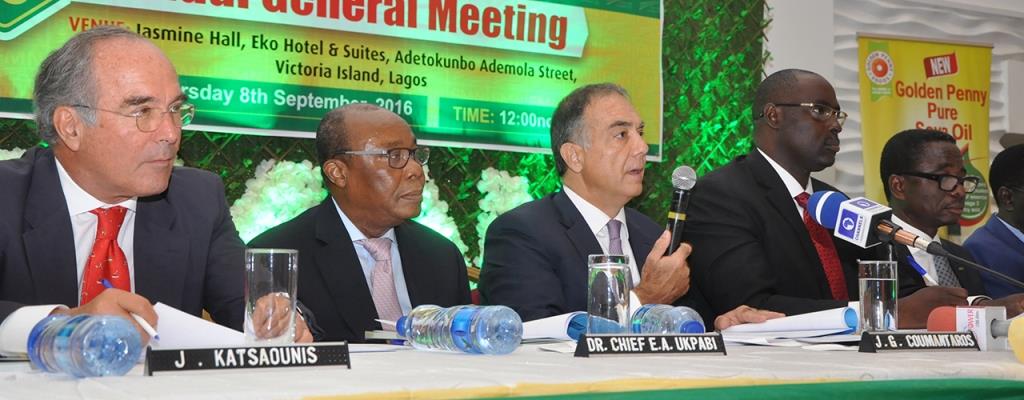
Speaking on the invaluable nature of the relationship between Nigeria and France, and the FMN’s commitment to process and product innovation, Mr John G. Coumantaros, stated, “The France – Nigeria relationship is a valuable partnership built on a shared value agenda that fosters remarkable Intercontinental trade growth.
“Also, as an organisation with over six decades of transformational footprint in Nigeria and progressively across the African Continent, FMN has been unwaveringly committed to product and process innovation.
“Therefore, our continuous partnership with France for the success of the Paris International Agricultural Show further buttresses the thriving relationship between both countries.”
PIAS is one of the most widely attended agricultural shows, with thousands of people from across the world in attendance.
Economy
NEITI Backs Tinubu’s Executive Order 9 on Oil Revenue Remittances
By Adedapo Adesanya
Despite reservations from some quarters, the Nigeria Extractive Industries Transparency Initiative (NEITI) has praised President Bola Tinubu’s Executive Order 9, which mandates direct remittances of all government revenues from tax oil, profit oil, profit gas, and royalty oil under Production Sharing Contracts, profit sharing, and risk service contracts straight to the Federation Account.
Issued on February 13, 2026, the order aims to safeguard oil and gas revenues, curb wasteful spending, and eliminate leakages by requiring operators to pay all entitlements directly into the federation account.
NEITI executive secretary, Musa Sarkin Adar, called it “a bold step in ongoing fiscal reforms to improve financial transparency, strengthen accountability, and mobilise resources for citizens’ development,” noting that the directive aligns with Section 162 of Nigeria’s Constitution.
He noted that for 20 years, NEITI has pushed for all government revenues to flow into the Federation Account transparently, calling the move a win.
For instance, in its 2017 report titled Unremitted Funds, Economic Recovery and Oil Sector Reform, NEITI revealed that over $20 billion in due remittances had not reached the government, fueling fiscal woes and prompting high-level reforms.
Mr Adar described the order as a key milestone in Nigeria’s EITI implementation and urged amendments to align it with these reforms.
He affirmed NEITI’s role in the Petroleum Industry Act (PIA) and pledged close collaboration with stakeholders, anti-corruption bodies, and partners to sustain transparent management of Nigeria’s mineral resources.
Meanwhile, others like the Petroleum and Natural Gas Senior Staff Association of Nigeria (PENGASSAN) have kicked against the order, saying it poses a serious threat to the stability of the oil and gas industry, calling it a “direct attack” on the PIA.
Speaking at the union’s National Executive Council (NEC) meeting in Abuja on Tuesday, PENGASSAN President, Mr Festus Osifo, said provisions of the order, particularly the directive to remit 30 per cent of profit oil from Production Sharing Contracts (PSCs) directly to the Federation Account, could destabilise operations at the Nigerian National Petroleum Company (NNPC) Limited.
Mr Osifo firmly dispelled rumours of imminent protests by the union, despite widespread claims that the controversial executive order threatens the livelihoods of 10,000 senior staff workers at NNPC.
He noted, however, that the union had begun engagements with government officials, including the Presidential Implementation Committee, and expressed optimism that common ground would be reached.
Mr Osifo, who also serves as President of the Trade Union Congress (TUC), expressed concerns that diverting the 30 per cent profit oil allocation to the Federation Account Allocation Committee (FAAC), without clearly defining how the statutory management fee would be refunded to NNPC, could affect the salaries of hundreds of PENGASSAN members.
-
Feature/OPED6 years agoDavos was Different this year
-
Travel/Tourism10 years ago
Lagos Seals Western Lodge Hotel In Ikorodu
-
Showbiz3 years agoEstranged Lover Releases Videos of Empress Njamah Bathing
-
Banking8 years agoSort Codes of GTBank Branches in Nigeria
-
Economy3 years agoSubsidy Removal: CNG at N130 Per Litre Cheaper Than Petrol—IPMAN
-
Banking3 years agoSort Codes of UBA Branches in Nigeria
-
Banking3 years agoFirst Bank Announces Planned Downtime
-
Sports3 years agoHighest Paid Nigerian Footballer – How Much Do Nigerian Footballers Earn