Connect with us

Economy

Chevron, NNPC Begin Gas Supply to Dangote Fertiliser

Published

on

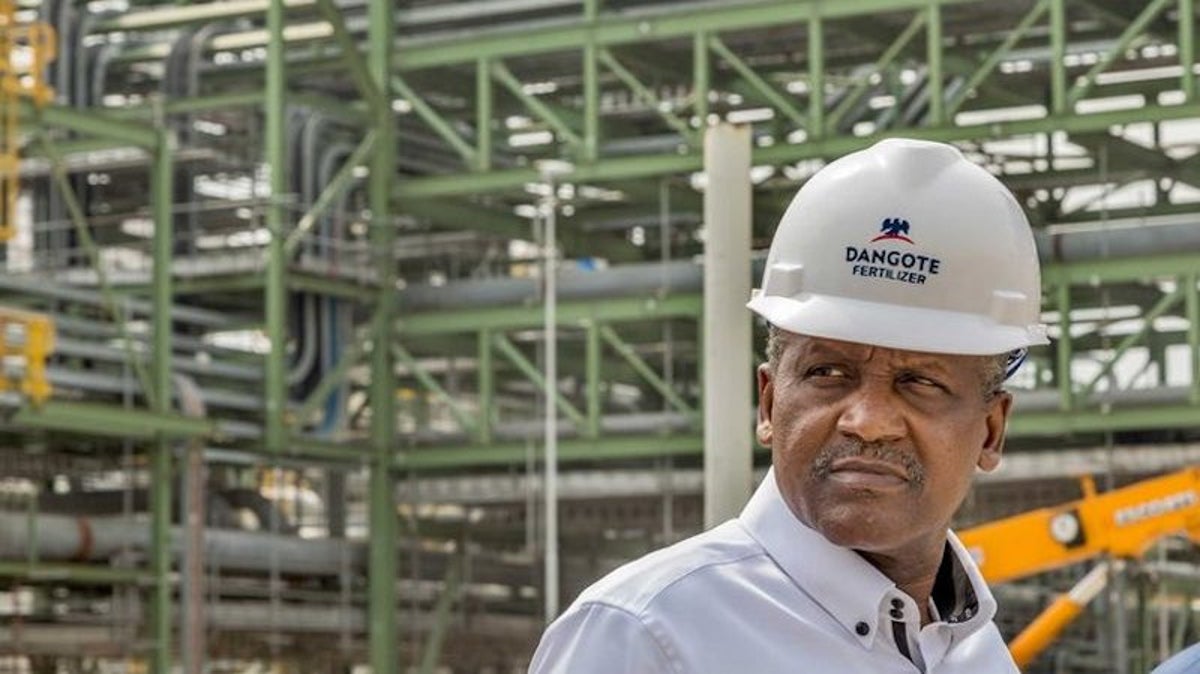
Dangote Fertiliser

By Dipo Olowookere

The management of Dangote Fertiliser Limited said it has started receiving gas supply from the Nigerian Gas Company and Chevron Nigeria Limited under the Gas Sale and Purchase agreement to supply 70 million standard cubic feet per day (Scf/d) of natural gas to its plant in Lagos.

The $2 billion Granulated Urea Fertiliser factory has a capacity of 3 million tonnes per annum and has been classified as the biggest project in the entire fertiliser industry history in the world.

Siapem of Italy is the Engineering, Procurement and Supervision (EP) Contractor for the project, while Tata Consulting Engineers, India, is the Project Management Consultants (PMC) for the project.

The project, which will create thousands of direct and indirect jobs in construction and related fields, will provide a major boost to the agricultural sector by significantly reducing the importation of fertiliser in Nigeria and ultimately removing the need for imports when plant is in full production.

“I am happy that by the time our plant is fully commissioned, the country will become self-sufficient in fertiliser production and even have the capacity to export the products to other African countries.

“Right now, farmers are forced to utilise whatever fertiliser that is available as they have no choice, but we need to know that the fertiliser that will work in one state may not be suitable in another state, as they may not have the same soil type and composition.

“The same fertiliser you use for sorghum may not be the fertiliser you will use for sugar cane,” the Group Executive Director, Strategy, Portfolio Development & Capital Projects, Dangote Industries Limited, Mr Devakumar Edwin, said.

He noted that Nigeria will be able to save $500 million from import substitution and provide $400 million from exports of products from the fertiliser plant, adding that, “The supply of fertiliser from the plant will be enough for the Nigerian market and neighbouring countries.”

Business Post gathered that at the moment, the factory is undergoing various stages of pre-commissioning and test-run. Virtually all the section of the plant such as Central Control Room, Ammonia and Urea Bulk Storage, Cooling Tower, Power Generator Plant, Granulation Plant, have all been completed and are going through pre-testing.

Speaking further on the project, Mr Edwin said the fertiliser complex, which is sited on 500 hectares of land, has the capacity to expand as it is only occupying a small fraction of the allotted portion.

“The management of the complex are confident that the fertiliser business will deliver reasonable profit to the company and its shareholders as it is projected that population growth and the need for food production will jack up the consumption of Urea fertiliser beginning from 2020 when production of the production would have commenced in earnest.

“The current consumption of Urea estimated at a dismal 700,000 tonnes per annum by Nigerian farmers is said to be due to very poor usage and is believed to be the cause of poor product yield, which threatens food security in the country.

“By 2020, Nigerian population is projected to increase to about 207 million which would lead to increased food production.

“Estimates points out that around five million tonnes of fertilisers are required per year in Nigeria in the next five to seven years bifurcated into 3.5 million tonnes of Urea and 1.5 million tonnes of NPK while current production levels in Nigeria are at 1.6 million tonnes by 2019.”


Dipo Olowookere is a journalist based in Nigeria that has passion for reporting business news stories. At his leisure time, he watches football and supports 3SC of Ibadan. Mr Olowookere can be reached via [email protected]

Advertisement
Click to comment

Leave a Reply

Your email address will not be published. Required fields are marked *

Economy

No Discrepancies in Harmonised, Gazetted Tax Laws—Oyedele

Published

on

Taiwo Oyedele

By Adedapo Adesanya

The Chairman of the Presidential Fiscal Policy and Tax Reforms Committee, Mr Taiwo Oyedele, has said there are no discrepancies in the tax laws passed by the National Assembly and the gazetted versions made available to the public.

Last week, a member of the House of Representatives, Mr Abdussamad Dasuki, raised worries about the differences between its version and that gazetted by the presidency.

However, speaking on Channels Television’s Morning Brief on Monday, Mr Oyedele claimed what has been circulating in the media was fake.

“Before you can say there is a difference between what was gazetted and what was passed, we have what has not been gazetted. We don’t have what was passed,” he said.

“The official harmonised bills certified by the clerk, which the National Assembly sent to the President, we don’t have a copy to compare. Only the lawmakers can say authoritatively what we sent.

“It should be the House of Representatives or Senate version. It should be the harmonised version certified by the clerk. Even me, I cannot say that I have it. I only have what was presented to Mr President to sign.”

Mr Oyedele stated that he reached out to the House of Representatives Committee regarding a particular Section 41 (8), which states, “You have to pay a deposit of 20 per cent.”

He noted that the response given by the committee was that its members had not met on the issue.

“I know that particular provision is not in the final gazette, but it was in the draft gazette. Some people decided that they should write the report of the committee before the committee had met, and it had circulated everywhere.

“What is out there in the media did not come from the committee set up by the House of Representatives. I think we should allow them do the investigation,” Mr Oyedele added.

In June, President Bola Tinubu signed the four tax reform bills into law, marking what the government has described as the most significant overhaul of the country’s tax system in decades.

The tax reform laws, which faced stiff opposition from federal lawmakers from the northern part of the country before their passage, are scheduled to take effect on January 1, 2026.

The laws include the Nigeria Tax Act, the Nigeria Tax Administration Act, the Nigeria Revenue Service (Establishment) Act, and the Joint Revenue Board (Establishment) Act, all operating under a single authority, the Nigeria Revenue Service.

Continue Reading

Economy

Aluminium Extrusion Surges 59.35% to Lead NGX Weekly Gainers’ Chart

Published

on

Aluminium Extrusion

By Dipo Olowookere

A total of 55 equities appreciated last week on the Nigerian Exchange (NGX) Limited versus the 49 equities recorded a week earlier.

However, 33 stocks closed lower compared with 41 stocks in the previous week, while 55 shares remained unchanged versus 57 shares of the preceding week.

Leading the advancers’ log was Aluminium Extrusion, which gained 59.35 per cent to close at N12.35, Mecure Industries rose by 44.93 per cent to N55.00, First Holdco appreciated by 42.93 per cent to N44.95, Guinness Nigeria improved by 33.01 per cent to N289.70, and NPF Microfinance Bank grew by 20.65 per cent to N3.74.

On the flip side, Living Trust Mortgage Bank lost 11.38 per cent to settle at N3.35, Japaul declined by 10.53 per cent to N2.38, International Energy Insurance slipped by 9.92 per cent to N2.27, FTN Cocoa depreciated by 9.80 per cent to N4.42, and Stanbic IBTC went down by 9.33 per cent to N95.20.

The buying interest in the week raised the All-Share Index (ASI) and the market capitalisation by 1.76 per cent to 152,057.38 points and N96.937 trillion, respectively.

Similarly, all other indices finished higher with the exception of AFR Bank Value, and the energy indices, which fell by 1.38 per cent and 0.17 per cent apiece.

According to trading data, a total 9.849 billion shares worth N305.843 billion in 126,584 deals exchanged hands in the five-day trading week compared with the 4.373 billion shares valued at N97.783 billion traded in 110,736 deals a week earlier.

The financial services industry led the activity chart with 8.295 billion shares valued at N232.223 billion traded in 50,351 deals, contributing 84.22 per cent and 75.93 per cent to the total trading volume and value, respectively.

The healthcare space followed with 517.443 million shares worth N3.472 billion in 2,979 deals, and the consumer goods counter transacted 392.765 million shares worth N12.664 billion in 18,438 deals.

The trio of Ecobank, First Holdco, and Access Holdings accounted for 6.424 billion shares worth N204.629 billion in 11,362 deals, contributing 65.23 per cent and 66.91 per cent to the total trading volume and value, respectively.

Continue Reading

Economy

NEPC to Disburse $50m Digital Women Empowerment Fund Q1 2026

Published

on

Women Exporters in the Digital Economy

By Adedapo Adesanya

The Nigerian Export Promotion Council (NEPC) has assured beneficiaries of the $50 million Women Exporters in the Digital Economy (WEIDE) Fund to expect the first tranche of grants in the first quarter of 2026, following the completion of ongoing capacity-building and compliance processes.

The assurance was given during a Town Hall Meeting for WEIDE Fund beneficiaries held in Abuja over the weekend. The gathering provided an opportunity to review progress made since the launch of the initiative in August 2025.

The $50 million WEIDE Fund is a global initiative by the WTO and ITC to empower women-led businesses in developing countries, especially Nigeria, by providing training, finance, and market access for digital trade, helping them grow from small enterprises to global players through support like grants and mentorship, as seen in its launch phase benefiting 146 Nigerian women entrepreneurs.

Speaking at the event, the chief executive of NEPC, Mrs Nonye Ayeni, called on beneficiaries to maximize the opportunities provided by the programme, emphasizing the progress made and the milestones achieved since its launch.

Mrs Ayeni said the engagement was meant to review the programme’s achievements, identify areas for improvement, and strengthen support for the beneficiaries.

“So, it’s time for us to get together at the end of the year to see how far we’ve gone, how well we’ve done, and what we need to do to make it better and support them more effectively through the WEIDE Fund,” she said.

Mrs Ayeni highlighted the significant capacity-building activities conducted for the 146 selected women entrepreneurs, noting that top-tier coaches and trainers had been deployed immediately after the official launch by the Director General of the World Trade Organisation (WTO), Mrs Ngozi Okonjo-Iweala.

“These coaches are exceptional. They’ve trained our beneficiaries in financial literacy, bookkeeping, soft skills, leadership, succession planning, and digital tools so they can compete globally,” she said.

Continue Reading

Trending