General
Reps Donate March, April Salaries to COVID-19 Efforts
By Adedapo Adesanya
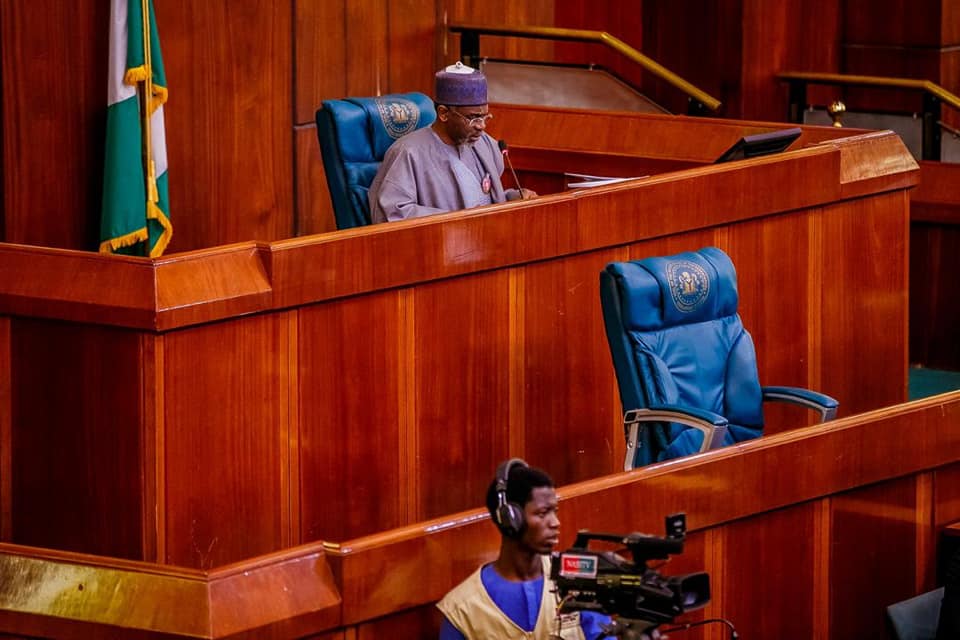
Members of the House of Representatives have donated all their salaries for the month of March and April 2020 to fight the COVID-19 that has so far infected 139 persons in Nigeria.
This information was communicated in a footage shared by Speaker of the lower chamber of the National Assembly, Mr Femi Gbajabiamila, via his twitter page, @femigbaja on Tuesday.
“We have in the House of Representatives jointly committed in contributing 100 percent of our salaries for the next two months to the fight of COVID-19 in Nigeria,” Mr Gbajabiamila said.
He said the donation will be used to provide for the welfare of the front-line medical professionals and health workers and other interventions to provide for the well-being of Nigerians through this trying time.
“Accordingly, I have directed the Clerk to the National Assembly to see to it that all members’ salaries are transferred to the National Relief Fund for this month and the next.
“This is independent of ongoing individual efforts by members to alleviate the suffering brought on by this virus and to improve the living conditions of citizens in their various constituencies,” the lawmaker from Lagos said.
Mr Gbajabiamila further said members of the parliamaent have urged the Central Bank of Nigeria (CBN) to make cash grants to the 774 local government areas in the country to alleviate the suffering of the masses.
“The House also calls on the Central Bank of Nigeria (CBN), as part of its Policy Measures in Response to the COVID-19 outbreak, to immediately direct cash grants to the seven hundred and seventy-four (774) Local Government Area administrations in the country to provide food and other essentials to at-risk individuals and communities,” he said.
The Speaker implored Nigerians to adhere strictly to the guidelines given by relevant authorities to prevent further spread of the disease, saying Nigeria could not afford to have a large-scale outbreak of the disease.
“This crisis has exposed in the worst possible way the evident weaknesses of our health system. After this is over and moving forward, we must do everything in our power to ensure that we will never again come upon a moment such as this, as ill-equipped as we are now.
“The transmission of this disease at a scale for which our systems are not prepared is our biggest present threat. We alleviate that threat by self-isolating. The bad news of this disease is that everyone is a potential victim, but the good news is that everyone is a potential solution,” he said.
The donation is coming a day after members of the upper chamber of the legislative arm of government announced the decision of its 109 members to contribute 50 percent of their salaries to the efforts to respond to the spread and treatment of coronavirus in the country.
Also, Nigerian government had last week Thursday approved a N10 billion grant to fight the spread of coronavirus in the country while donations have also been made by businessmen, citizens, and other institutions.
General
IFC, Standard Chartered Unveil Facility to Boost Supply Chains in Nigeria, Seven Others
By Adedapo Adesanya
The World Bank Group’s private-sector arm, the International Finance Corporation (IFC), and Standard Chartered on Wednesday announced a new risk-sharing facility aimed at strengthening supply chains and supporting business growth across Africa.
The programme will roll out across eight markets—Côte d’Ivoire, Egypt, Ghana, Kenya, Nigeria, South Africa, Tanzania and Zambia—targeting sectors including agriculture, healthcare and manufacturing, with a focus on improving access to working capital for suppliers.
This marks the IFC’s first project under its Global Supply Chain Finance Program and the Africa Trade and Supply Chain Recovery Initiative, supported by the International Development Association’s Private Sector Window Blended Finance Facility.
Global demand for supply chain finance continues to rise, reaching an estimated $2.7 trillion in 2025, an increase of 8 per cent year-on-year. However, access in emerging markets remains limited, as financial institutions tend to prioritise developed economies.
The facility will cover up to $300 million in supply chain and trade finance assets originated by Standard Chartered. It includes financing instruments such as payables finance, receivables discounting and pre-shipment finance programmes, which enable businesses to access funds earlier in the payment cycle.
The facility aims to address this imbalance by mitigating risk in short-term trade and supply chain finance portfolios, helping to unlock capital in underserved markets.
By accelerating payments to suppliers, the initiative aims to strengthen supply chain relationships, improve delivery reliability and support job creation across value chains.
IFC will provide guarantees of up to $150 million, with $100 million committed as an initial tranche. The facility will support transactions in both U.S. dollars and selected local currencies.
Over three years, the partnership is expected to enable approximately $1.9 billion in supply chain finance transactions, supporting more than 500 suppliers, including small and medium enterprises. The programme also has the potential to indirectly benefit over 1 million farmers.
Speaking on this development, Mr Mohamed Gouled, Vice President, Products & Clients at IFC, said, “Supply chain finance is among the fastest ways to narrow the growing finance gap that businesses, particularly small and medium enterprises, are facing in emerging economies. By partnering with Standard Chartered to support companies at the centre of strategic value chains, we can unlock much-needed working capital at scale for businesses across Africa, including smaller firms and farmers, making supply chains more competitive and boosting job creation.”
On his part, Mr Dalu Ajene, Chief Executive and Head of Coverage, Standard Chartered Africa, said, “This $300 million facility with IFC underscores our shared commitment to strengthening Africa’s supply chains and enabling sustainable business growth. As a super-connector bank with deep expertise across key trade corridors linking Africa to Europe, Asia, the Middle East and the Americas, we are uniquely positioned to channel capital and innovation into the real economy.”
“By expanding access to supply chain finance, we are helping African companies unlock liquidity, manage risk, and invest with confidence. Our collaboration unites Standard Chartered’s cross-border expertise with IFC’s development mandate to empower businesses – from major corporations to smaller local suppliers – to engage more actively in regional and global trade, fostering job creation and promoting inclusive growth,” he added.
General
Petrol Prices in Nigeria Rise 22.55% in March 2026 on Hormuz Closure
By Adedapo Adesanya
The National Bureau of Statistics (NBS) has said that the average retail price of a litre of Premium Motor Spirit (PMS), otherwise known as petrol, rose by 22.55 per cent or N237.07 per litre to N1,288.54 in March 2026 from N1,051.47 in February.
In the Premium Motor Spirit (Petrol) Price Watch for March released on Tuesday, the NBS said on a year-on-year basis, the average retail price of fuel also increased by 2.13 per cent from N1,261.65 recorded in March 2025.
This surge in fuel prices could be linked to global disruptions brought on by the US-Israel war on Iran, which triggered the closure of the Strait of Hormuz and sent prices of crude oil above $100 per barrel.
While the country was not heavily hit by the impact, it felt the ripple effect of crude prices increasing, particularly as Dangote Refinery imported crude from other markets to cover for local feedstock shortfalls.
The data noted that by state, Anambra recorded the highest average retail price of N1,441.22 per litre, followed by Sokoto at N1,377.55 and Borno at N1,375.16.
However, the price was cheapest in Lagos at N1,162.71, followed by Ogun at N1,169.78 and Kaduna state at N1,193.40.
By zone, it was most expensive in the North East at N1,336.50 last month, while the South-West recorded the lowest at N1,232.46.
A look at the Diesel Price Watch Report for March showed that the average retail price paid by users rose by 16.05 per cent on a month-on-month basis to N1,648.08 per litre from N1,420.17 per litre a month earlier.
“On state profiles analysis, the highest average price of diesel in March was recorded in Ebonyi at N2,262.29 per litre, followed by Akwa Ibom at N1,895.72 and Osun at N1,872.15.
“On the other hand, the lowest price was recorded in Kogi at N1,383.40 per litre, followed by Katsina State at N1,438.25 and Enugu at N1,480.06,” parts of the report said.
General
Datti Baba-Ahmed Dumps Labour Party, Joins PRP
By Modupe Gbadeyanka
The vice-presidential candidate of the Labour Party (LP) in the 2023 general elections, Mr Datti Baba-Ahmed, has left the party to join the Peoples Redemption Party (PRP).
Speaking on Channels Television’s Politics Today, the politician said he’s no longer interested in the way the Labour Party was being run.
He disclosed that there is no more peace in the political party he flew its flag in the last general elections because of greed.
He accused the ruling All Progressives Congress (APC) of destabilising opposition political parties to ensure President Bola Tinubu does not have a credible opponent in the 2027 presidential poll.
“What the Labour Party stood for is not the same now. We have a government of today which is interested in destroying other political parties,” he said.
“I am leaving the Labour Party tomorrow (today) by 12 midnight,” Mr Baba-Ahmed said when asked about his plans for next year.
I am leaving the Labour Party [at] midnight, and I am joining PRP. PRP is the new destination. PRP is the one with a history. It’s about 75 years old,” he further stated.
He further said, “When there was real peace in the Labour Party, someone was redeployed to the Labour Party and because of the antecedents of the person, [I don’t see things getting better].
PRP, a progressive Nigerian political party, was established in 1978 by Mallam Aminu Kano. It is rooted in social democratic principles and populist ideology, often focusing on the empowerment of the talakawa (common people).
Its current National Chairman, according to data obtained from the website of the Independent National Electoral Commission (INEC), is Mr Falalu Bello, while the National Secretary is Mr Babatunde F. Alli.

-
Feature/OPED6 years agoDavos was Different this year
-
Travel/Tourism10 years ago
Lagos Seals Western Lodge Hotel In Ikorodu
-
Showbiz3 years agoEstranged Lover Releases Videos of Empress Njamah Bathing
-
Banking8 years agoSort Codes of GTBank Branches in Nigeria
-
Economy3 years agoSubsidy Removal: CNG at N130 Per Litre Cheaper Than Petrol—IPMAN
-
Banking3 years agoSort Codes of UBA Branches in Nigeria
-
Banking3 years agoFirst Bank Announces Planned Downtime
-
Sports3 years agoHighest Paid Nigerian Footballer – How Much Do Nigerian Footballers Earn