Connect with us

Economy

Naira Stable Despite Rise in Demand for Dollar for Easter

Published

on

Dollar scarcity

By Adedapo Adesanya

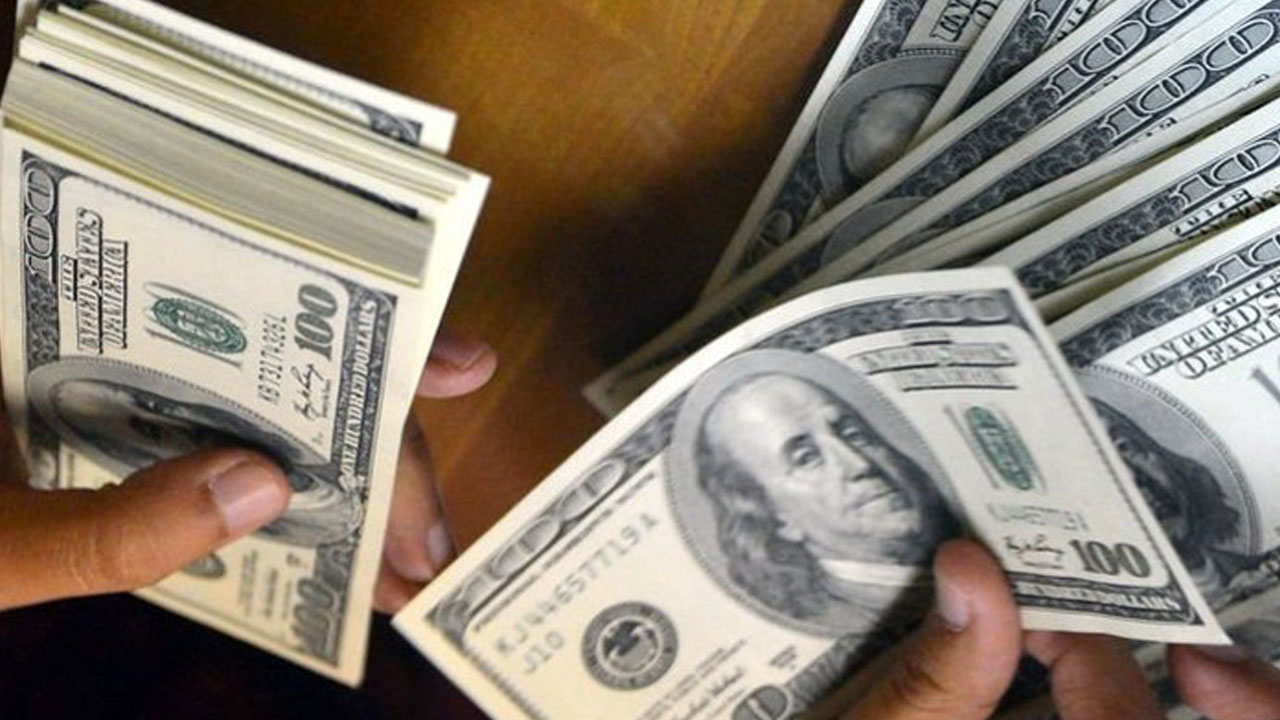
Preparations for Easter caused a spike in the demand for Dollar at the foreign exchange market on Thursday, especially at the Investors and Exporters (I&E) segment of the market.

Yesterday, the value of transactions at the FX window significantly increased by 93 percent to $146.91 million from $76.18 million.

This has almost been the pattern this week at the market segment despite the restriction placed on movements at various major cities in Nigeria to curtail the COVID-19 pandemic.

While the lockdown will remain active in Lagos, Ogun and Abuja, cities like Port Harcourt, Akure in Ondo State and others have relaxed the order to allow residents celebrate Easter.

But despite the rise in the demand for forex at the investors’ window yesterday, the Naira/Dollar exchange rate remained stable at the market.

At the close of business on Thursday, the Naira was sold against the Dollar at N384.83/$1 for the third straight session.

Also, at the interbank segment of the market, the local currency sustained its stability against the American currency, closing at N361/$1.

At the parallel market, the exchange rate of the Naira to the Dollar remained unchanged at N415/$1. However, the local currency depreciated by N5 against the Pound Sterling yesterday to sell at N495/£1 compared with N500/£1 it traded on Wednesday and traded flat against the Euro at N425/€1.

At the Bureaux De Change (BDC) segment of the forex market on Thursday, the domestic currency lost N2 against the Dollar in Lagos to quote at N416/$1 in contrast to N414/$1 that it traded previously. However, it appreciated N5 against the pound to close at N495/£1 versus N500/£1 it traded on Wednesday, while it also gained N5 on the Euro to close at N435/€1 compared with the previous exchange rate of N440/€1.

At the Port Harcourt BDC market, the Naira/USD exchange rate remained flat at N410/$1 just as it remained unchanged against the British currency and the Euro at N500/£1 and N419/€1 respectively.


Adedapo Adesanya is a journalist, polymath, and connoisseur of everything art. When he is not writing, he has his nose buried in one of the many books or articles he has bookmarked or simply listening to good music with a bottle of beer or wine. He supports the greatest club in the world, Manchester United F.C.

Click to comment

Leave a Reply

Your email address will not be published. Required fields are marked *

Economy

Investors Transact N404.762bn Shares in 285,223 Deals in One Week

Published

on

NGX investors

By Dipo Olowookere

Investors on the Nigerian Exchange (NGX) Limited bought and sold 5.119 billion shares worth N404.762 billion in 285,223 deals last week. This was significantly higher than the 4.433 billion shares valued at N306.143 billion traded in 255,589 deals in the preceding week.

This surge in activity level was driven by First Holdco, AVA Capital, and Access Holdings, which accounted for 2.308 billion units sold for N224.773 billion in 27,359 deals, contributing 45.09 per cent and 55.53 per cent to the total trading volume and value, respectively.

Data showed that financial equities led the activity chart with 3.918 billion units valued at N271.428 billion in 123,514 deals, contributing 76.55 per cent and 67.06 per cent to the total trading volume and value, respectively.

Services stocks followed with 203.203 million units worth N3.061 billion in 18,333 deals, and consumer goods shares closed with a turnover of 191.283 million units valued at N13.203 billion in 30,730 deals.

In the five-day trading week, 33 equities appreciated versus 57 equities a week earlier, 56 equities depreciated versus 38 equities in the previous week, and 58 equities remained unchanged versus 51 equities in the preceding week.

The best-performing equity last week was CMFC, which chalked up 22.78 per cent to trade at N3.88, Thomas Wyatt gained 20.66 per cent to close at N4.38, Consolidated Hallmark grew by 19.60 per cent to N8.36, Lasaco Assurance rose by 18.68 per cent to N2.16, and VFD Group increased by 12.21 per cent to N11.95.

On the flip side, the worst-performing equity was ABC Transport, which decreased by 18.44 per cent to N5.75. Fortis Global Insurance shrank by 16.13 per cent to N2.34, Tripple Gee slipped by 15.54 per cent to N2.88, Veritas Kapital slumped by 15.38 per cent to N1.43, and International Breweries crashed by 13.87 per cent to N11.80.

At the close of business for the week, the All-Share Index (ASI) succumbed to selling pressure, as it shed 0.84 per cent to settle at 245,283.68 points, while the market capitalisation retreated by 0.79 per cent to N158.326 trillion.

Similarly, all other indices finished lower apart from the premium, insurance and sovereign bond indices, which appreciated by 0.02 per cent, 1.72 per cent and 0.27 per cent, respectively.

Continue Reading

Economy

43 Insurance Firms Meet NAICOM’s New Capital Requirements

Published

on

NAICOM

By Adedapo Adesanya

The National Insurance Commission (NAICOM) has officially announced the completion of Nigeria’s 12-month insurance sector recapitalisation exercise, describing the accomplishment as a pivotal step that “signals the beginning of a new era for insurance in the country.”

Undertaken pursuant to Section 15 and other relevant provisions of the Nigerian Insurance Industry Reform Act (NIIRA) 2025, signed into law by President Bola Tinubu on July 31, 2025, the exercise aligns directly with the administration’s economic agenda aimed at building a $1 trillion economy by 2030.

Following a rigorous process of review, verification, and validation, NAICOM said in a statement on Sunday that 43 insurance and reinsurance companies have successfully satisfied the new prescribed Minimum Capital Requirements.

The confirmed non-life insurers include Zenith General Insurance Company Limited, Custodian and Allied Insurance Limited, NEM Insurance Plc, Heirs General Insurance Limited, Fin Insurance Company Limited, Tangerine General Insurance Ltd, Capital Express Indemnity Insurance Limited, and Sanlam-Allianz General Insurance Nigeria Ltd.

Others include Consolidated Hallmark Insurance Limited, Sterling Assurance Nigeria Limited, Unitrust Insurance Co. Limited, NSIA Insurance Limited, Rex Insurance Limited, Linkage Assurance Plc, Anchor Insurance Company Ltd, Sunu Assurances Nigeria Plc, KBL Insurance Ltd, International Energy Insurance Plc, Veritas Kapital Assurance Plc, NPF Insurance Company Ltd, Coronation Insurance Plc, and Prestige Assurance Plc.

In the life insurance segment, the successful companies are Custodian Life Assurance Limited, CHI Life Assurance Limited, Heirs Life Assurance Limited, Prudential Zenith Life Insurance Ltd, Stanbic IBTC Insurance Limited, Sanlam-Allianz Life Insurance Nigeria Limited, Capital Express Life Assurance Limited, Mutual Benefits Life Assurance Ltd, Enterprise Life Assurance Company (Nigeria) Ltd, and Coronation Life Assurance Limited.

The composite insurers, operating across both life and non-life insurance that satisfied the requirements comprise Leadway Assurance Company Limited, AIICO Insurance Plc, Cornerstone Insurance Plc, AXA Mansard Insurance Plc, LASACO Assurance Plc, Fortis Global Insurance Plc, Industrial and General Insurance Plc, and Great Nigeria Insurance Plc. Additionally, Mutual Benefits Assurance Plc also met the non-life threshold. In the reinsurance category, Continental Reinsurance Plc and FBS Reinsurance Limited were confirmed compliant.

The regulator noted that an additional eight insurance operators, which submitted evidence of compliance shortly before the statutory deadline, are currently undergoing final verification and regulatory review, with outcomes expected within 14 days.

NAICOM stressed that the milestone “represents a major step towards building a stronger, more resilient, adequately capitalised, professionally governed, and policyholder-focused insurance sector that is better positioned to support national economic growth.”

The recapitalisation exercise was guided by explicit regulatory directives issued by NAICOM to guarantee an orderly, transparent, and verifiable transition. Through its Guidelines on the Implementation of Minimum Capital Requirements for Insurance and Reinsurance Companies in Nigeria, the Commission defined eligible capital instruments, admissible assets, verification procedures, and supervisory expectations throughout the implementation window.

According to the regulator, the action has successfully “enhanced the financial resilience of operators, attracted substantial domestic and foreign investment, and rekindled strong investor confidence” across the industry.

The commission highlighted that the recapitalised market boasts enhanced capacity to underwrite larger and more complex risks across strategic sectors of the national economy. The expanded capital base is set to improve insurers’ ability to settle policyholder obligations promptly, absorb emerging macroeconomic risks, support long-term national infrastructure projects, and boost the sector’s competitiveness within regional and global markets.

Furthermore, the exercise provides a solid baseline for NAICOM to deepen its risk-based supervisory framework, ensuring regulatory capital remains appropriately aligned with the nature, scale, complexity, and risk profile of each licensed operator.

The regulator reaffirmed its commitment to consumer protection, sound market conduct, and expanded financial inclusion as implementation of NIIRA 2025 continues alongside technological modernisation.

“Our unwavering commitment remains to build a fair, stable, innovative, inclusive, and globally competitive insurance market that inspires public confidence and delivers lasting value to policyholders and the Nigerian economy,” the statement read.

Continue Reading

Economy

Nigeria’s Textile Industry Needs Structural Reforms, Not Bailouts—MAN

Published

on

textile park kano

By Adedapo Adesanya

The Manufacturers Association of Nigeria (MAN) has urged the federal government to shift its focus from periodic bailout packages to comprehensive structural reforms, warning that financial interventions alone will not revive Nigeria’s struggling textile industry.

The association argued that years of intervention funds have failed to restore the industry’s competitiveness because the core challenges confronting manufacturers remain unresolved.

The Director-General of MAN, Mr Segun Ajayi-Kadir, said the textile sector’s long-term recovery depends on tackling persistent structural constraints, including unreliable electricity supply, inadequate local cotton production, smuggling, obsolete machinery and limited access to affordable long-term financing.

According to him, while intervention programmes such as the Central Bank of Nigeria’s Cotton, Textile and Garment (CTG) Policy and the N100 billion Real Sector Support Facility have provided temporary relief, they have not addressed the underlying factors driving high production costs and weakening the industry’s competitiveness.

“Key challenges that need attention include the high costs and inadequacies of energy supply, rampant smuggling and counterfeiting, a lack of quality raw cotton, outdated machinery and inefficient loan structures. While aid funds may help with immediate needs like fuel and debt repayments, they do not resolve the core issues of energy supply, cotton availability or market access,” Mr Ajayi-Kadir said.

He outlined a package of reforms that, according to him, would rebuild the textile value chain and improve manufacturers’ competitiveness.

Among the recommendations is the development of gas-powered Independent Power Plants (IPPs) in key textile hubs such as Kano, Kaduna, Aba and Ogun, as well as the creation of industrial parks with shared infrastructure, including Effluent Treatment Plants (ETPs), steam utilities and machinery maintenance workshops to lower production costs.

Mr Ajayi-Kadir also called for measures to revive domestic cotton production through the introduction of high-yield, pest-resistant seed varieties and contract farming arrangements between textile mills and farmers to ensure a reliable supply of raw materials while reducing dependence on imports and exposure to foreign exchange volatility.

On financing, he urged the government to restructure industry loans by extending repayment tenures to between 10 and 15 years and permitting duty-free importation of modern spinning, weaving and printing equipment to boost productivity.

To protect local manufacturers from unfair competition, he advocated stronger anti-smuggling measures, including digital cargo tracking systems, border scanners and stricter enforcement of Executive Order 003 to prioritise locally produced uniforms and other government procurement.

The MAN chief further stressed the need to revive technical and vocational institutions to train textile engineers, weavers and computer-aided design (CAD) specialists capable of supporting a modern manufacturing industry.

He added that improving compliance with international quality and environmental standards would better position Nigerian textile manufacturers to benefit from export opportunities under the African Continental Free Trade Area (AfCFTA) and the African Growth and Opportunity Act (AGOA).

Mr Ajayi-Kadir pointed to Bangladesh, Vietnam and India as examples of countries that transformed their textile industries through sustained structural reforms rather than repeated financial bailouts.

According to him, Bangladesh emerged as the world’s second-largest garment exporter by providing duty-free access to production inputs and establishing special economic zones, while Vietnam built a globally competitive textile industry through reliable electricity, foreign direct investment and trade agreements.

India, he noted, strengthened its sector with PM MITRA textile parks, Production-Linked Incentive (PLI) schemes and investments in cotton production.

He maintained that Nigeria should concentrate on building a sustainable textile ecosystem instead of relying on temporary financial support for struggling manufacturers.

“With stable energy, reliable local cotton supply and protected markets, Nigeria’s textile industry has the potential to create millions of jobs and generate substantial foreign exchange earnings, just as Bangladesh and Vietnam have done,” he said.

Continue Reading