

Economy
10 Favourite Stockbrokers of Investors in Nigeria

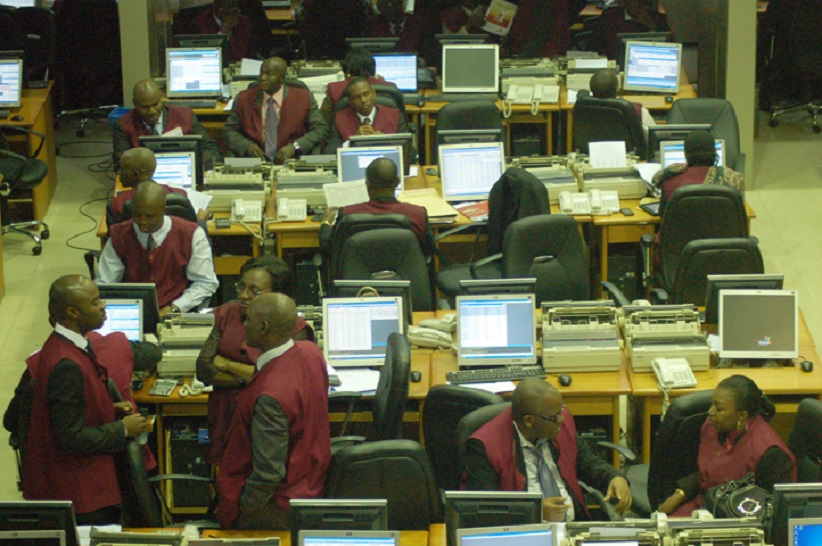
By Dipo Olowookere
While the trading of stocks in Nigeria has been made very easy for rookies and experts, the platform through which the transaction is carried out can either make the experience more interesting or horrible.
To put this into perspective, if a newbie got into the market pre-lockdown era and was unfortunate to pitch tent with a ‘analogue stockbroker’, trading of equities in the lockdown and post-lockdown eras would be hell on earth.
However, this would not be the case for investors who trade shares through ‘digitalised stockbrokers.’ In fact, the experience would be like heaven on earth.
This is what choosing a stockbroker does to an investor in the market.
In the Nigerian equity space, there are brokerage firms that are loved or mostly used by investors because of different factors.
From the analysis done by Business Post, it was discovered that many factors contribute to the picking of a stockbroker over the others by investors. In some cases, investors, in order to have their cakes and still have them, operate accounts with more than one stockbroker to serve different purposes; for short-term and long-term investments.
It was also found out that while some go for firms which offer lower transaction fee, others go for good customer service and a combination of both in few instances.
Below are the top 10 brokerage companies that are favourites of investors in Nigeria. Please note that the list was compiled in no particular order.
Morgan Capital
This company is one of the most popular among Nigerian investors and the reason is majorly because it charges very low brokerage fee. While its competitors charge the maximum 1.35 percent commission or slightly below for buying and selling of stocks, it chose to take a meagre 0.50 percent. This is one of its unique selling points. The low fee charged by Morgan Capital has made it a darling of traders. Its trading platform, iTrade, allows investors to execute a buy/sell order from the comfort of their homes.
However, thumbs down for Morgan Capital is its inability to design a mobile app like others for trading. One would wonder why at this age and being one of investors’ favourite, it is yet to have a mobile app for trading. But we heard the management is looking at this direction and we don’t know how long this would take.
It is important to note that opening a stockbroking account with Morgan Capital is with a minimum of N5,050. The N50 is for transaction fee and it is charged every time you fund your account with them. Opening of account can be started and completed online as long as you provide all the documents via email.
Meristem Securities
Meristem Securities, like Morgan Capital, is a securities dealer approved by both the Nigerian Stock Exchange (NSE) and the Securities and Exchange Commission (SEC). The company has a trading platform known as Meritrade, which unlike Morgan Capital, can be used to trade stocks on the mobile devices and through a mobile application.
However, its commission for buy/sell order is 1.35 percent, while the least amount to open an account with them is N10,000.
But the good thing about Meristem Securities is that you get weekly stock recommendations. They also have an excellent customer service. You don’t have to call their office to resolve an issue. This can be done through a live chat with one of their representatives. You can also easily cancel an order from your end without contacting them. Accounts can be opened too online.
CSL Stockbrokers
This dealing firm is a subsidiary of FCMB Group Plc and it is also one of the favourites of investors in the country because of its services.
Opening an account can be done online or at its office or any branch of FCMB across the country. As a client of CSL Stockbrokers, you enjoy regular information about the market, guiding you on what stock to possibly buy or sell or hold. They have a very strong and reliable research team that is trusted by both retail and institutional investors.
But it is important to note that the main target audience of the company is the institutional investors. The brokerage fee charged by the firm varies from the value of the transactions, but the maximum is one percent, which is for deals from N100 million and below.
For transactions above N100 million but below N300 million, a 0.75 percent commission is charged, while to N500 million is 0.50 percent and above N500 million is 0.35 percent.
As a customer of CSL Stockbrokers, you have the opportunity to trade yourself from anywhere and enjoy excellent service from their online representatives. CSL Stockbrokers seems not to have a mobile trading app at the moment.
Stanbic IBTC Stockbrokers
This brokerage company, which is an arm of Stanbic IBTC Holdings, is very popular with foreign portfolio investors (FPIs), who prefer to transact business with them to others.
The reason is because the firm has a very strong reputation at the market like its sister company in the banking industry in Nigeria.
In fact, Stanbic IBTC Stockbrokers is regarded as the big boy of the stock market in the country and opening an account with them is like how Zenith Bank used to be in the banking sector many years ago. Having an account with them is like a diamond. You must be a millionaire before you can dream of trading stocks through the company and the reason is because without at least N5 million, you will only be trading shares through the firm in your dreams or imaginations.
However, if you are ‘fortunate’ to meet up with the requirement, you are very sure of excellent services from them because your money will make them ‘obey you’ and treat you like a king.
You can also trade on your own through their online trading platform. But at the moment, the company does not have a mobile app for this. The firm charges one percent for brokerage commission for every transaction.
Chaka
Another brokerage company that is now popular among investors in Nigeria is Chaka, which facilitates brokerage services, while its partner, Citi Investment Capital, facilitates the brokerage transactions.
Though the company is relatively new in the industry, its decision to charge as low as 0.50 percent like Morgan Capital has attracted a lot to it like ants do to sugar. Another selling point is the ability of investors in Nigeria to trade international stocks through the platform with a commission as low as $2 or one percent.
Chaka started operations in 2019, but it is gaining attention and giving its ‘seniors’ some sleepless nights and the reason is that with N1,000, you are qualified to open an account with them and start trading like a pro and with $10, your dream of buying stocks in the United States and other foreign countries will become a reality.
In terms of customer service, they are prompt in resolving complaints. You might say this is because they are yet to be overwhelmed. Unlike Morgan Capital, Chaka has a mobile trading app and you can execute a buy/sell order on your own. Opening an account with them is seamless provided you have all the documents.
Afrinvest Securities
This stockbroker is one of the leading players in the industry with experience spanning years. The company has a trading platform called Afrinvestor and it offers clients excellent services like easy-to-understand market analysis, customer service and others.
The platform also allows customers to trade from the comfort of their homes. Transactions can be done too through its mobile app, making it easier for investors to buy or sell stocks on-the-go.
However, the company charges 1.35 percent for buy/sell orders, while no minimum amount is needed to open an account with them. The process can also be done without a visit to their office. Through the platform, investors can buy treasury bills, bonds and other securities, including unlisted stocks on the NASD OTC Exchange.
Greenwich Trust
This stockbroking firm is another big fish in the industry, which ‘feeds’ its clients with rich industry data and analysis to guide their investment decisions. The company has a trading platform called Mytradebook, which can be assessed online or through a mobile app.
Though the firm has an online chart platform for resolving complaints, it is not too efficient.
Opening an account with them is easy and the process can be started and completed online. They require investors to make an initial deposit of at least N10,000 before trading in stocks through them. The brokerage fee is 1.35 percent.
United Capital
Another very popular stockbroking company in the Nigerian stock market is United Capital, which operates a trading platform called Investnow.ng. What makes this platform loved among investors is its customer service and market analysis. The minimum amount for opening an account with them is N50,000 and the brokerage commission is 1.35 percent. Clients can trade from anywhere as long there is internet connection. The trades can be done online or mobile app.
From an investigation done by Business Post, the mobile app is one of the most downloaded on Google PlayStore with over 10,000 downloads (just like Chaka). Most mobile app of Nigerian stockbrokers are around 1,000 downloads.
Lead Asset Management
Another brokerage company in the market is Lead Asset Management, which has a trading platform called LeadTrader. One attraction to the firm is its low commission, 0.75 percent and its services, though within average.
Opening an account with them is seamless and can be done online. A minimum amount of N50,000 is required to begin trading stocks through them either online or via a mobile app.
ARM Securities
Last but not the least is ARMStocktrade, owned by ARM Securities, another major player in the sector, offering robust services to its clients. Transactions are executed very fast on the platform with convenience. The firm also gives investors control over their investment trading activities, while being fed with news and trade sensitive alerts. Customers also have access to robust research materials including stock recommendations. The account opening can be done completely online with at least N50,000. The commission for buy/sell orders is one percent.
For newbies, the company, through ARM Research, provides them with insights on the Nigerian equity market and up-to-date market analysis to better inform their decision making, enabling them to position themselves strategically. Investors are also exposed to detailed equity comments and stock recommendations.


