Connect with us

Banking

Suleiman Speaks on Future Prospect of Sterling Bank

Published

on

sterling bank Abubakar Suleiman

By Modupe Gbadeyanka

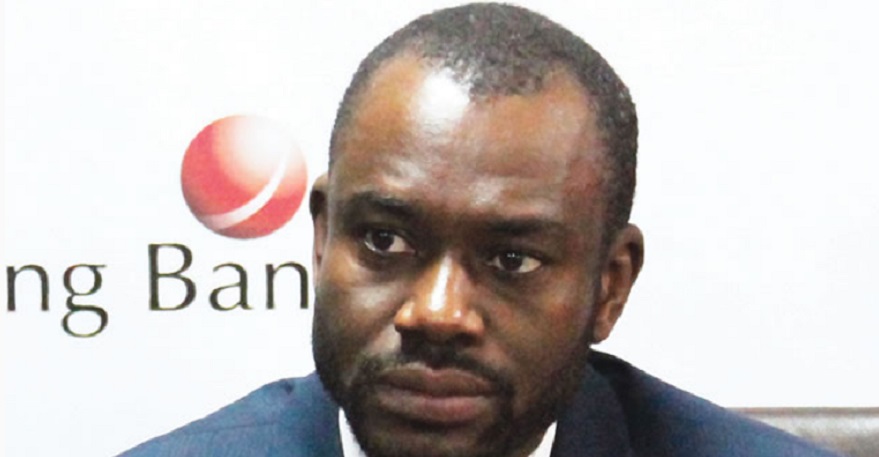
The Chief Executive Officer of Sterling Bank, Mr Abubakar Suleiman, has expressed his views on the future prospect of the financial institution.

Mr Abubakar, while speaking at the 58th Annual General Meeting (AGM) of the bank held recently virtually by proxy and streamed live from the Muson Centre in Lagos, noted that the lender plans to serve its customers with empathy and knowledge on their own terms.

To achieve this, he emphasised that the management has “laid a sound foundation for 2020 with significant investments in technology to accelerate our digitisation.”

According to him, “For a bank to succeed in these uncertain times, it must be agile, cautious, innovative, knowledgeable and prepared.”

He said last year, the unwavering commitment of Sterling Bank to a more disciplined deployment of scarce capital and the strength of its retail business contributed to a 15 percent growth in profit after tax to N10.6 billion.

The banker said in this present fiscal year, the financial institution will maintain this strategy and give more value to shareholders.

In the 2019 financial year, the bank’s shareholders’ fund grew by 22.2 percent to N119.6 billion because of increase in retained earnings despite the challenging operating environment under which it operated.

The board then recommended the payment of 3 kobo per share as dividend for the year ended December 31, 2019 to reward its loyal and committed shareholders.

This afforded the bank the required buffer to finance its growth ambitions, and effectively become a first-class, stronger, creative and extremely dependable financial institution.

Corroborating the CEO’s stance on the use of technology to grow earnings, Chairman of Sterling Bank, Mr Asue Ighodalo, said, “A direct contribution of our investments in technology and intelligent automation can be seen in the performance of SPECTA-Nigeria’s fastest digital retail lending platform.”

He noted that the recorded growth in total equity was attributable to growth in comprehensive income arising from gains recorded from investments in debt securities.

Commending the bank’s performance, National Coordinator Emeritus of the Independent Shareholders Association of Nigeria (ISAN), Mr Sunny Nwosu, lauded the increase in the bank’s demand deposit which went up by 47 percent.

Another shareholder of Sterling Bank, Mr Nornah Awoh, expressed satisfaction with the level of openness of the lender, noting that, “I don’t think it is out of place to have payments of external assessors stated. I want other companies to learn from Sterling Bank and do the same.”


Modupe Gbadeyanka is a fast-rising journalist with Business Post Nigeria. Her passion for journalism is amazing. She is willing to learn more with a view to becoming one of the best pen-pushers in Nigeria. Her role models are the duo of CNN's Richard Quest and Christiane Amanpour.

Banking

S&P Forecasts 25% Credit Growth for Nigerian Banks in 2026

Published

on

Nigerian Banks

By Adedapo Adesanya

Nigerian banks are expected to post stronger credit growth of up to 25 per cent in 2026 while retaining positive profitability, according to a new outlook by S&P Global Ratings.

In its Nigerian Banking Outlook 2026, S&P said improved lending to key sectors of the economy alongside resilient non-interest income would help banks absorb the impact of regulatory headwinds and easing interest rates.

The ratings agency projected credit growth of between 20 and 25 per cent in 2026, driven largely by increased investments in oil and gas, agriculture and manufacturing.

It added that the outlook for lending was supported by expectations of moderating inflation and gradual monetary easing, following recent interest rate cuts by the Central Bank of Nigeria (CBN).

“We expect credit growth of about 20-25 per cent supported by investments in the oil and gas, agriculture, and manufacturing sectors. Although interest rates have started to decrease, profitability should stay resilient in 2026, supported by growth in non-interest income (NII) and lower provisions.

“We expect Nigerian banks to prove resilient and capable of preserving their profitability in 2026,” S&P said, noting that earnings would be supported by transaction driven fees, commissions and a still elevated cost of risk, even as margins come under pressure.

The ratings agency noted further that it expects nominal lending growth to remain high at about 25 per cent, supported largely by investments in the oil and gas sector, agriculture and manufacturing.

S&P said Nigerian banks would continue to benefit from rates that remain high relative to peers, supporting net interest margins while interest rates are expected to decline further in 2026.

“Although interest rates have started to decline, we expect rates to remain high relative to peers, which will continue to support banks’ net interest margins through 2026.

“We forecast the average return on equity (ROE) will normalise at 20-23 per cent in 2026 compared to 25 per cent estimated for 2025, while return on assets will decline marginally to 3.0-3.1 per cent from an estimated 3.3 per cent in 2025. Profitability will be supported by still high interest margins, growing NII, and slightly lower provisions, while capital issuance will increase the equity base leading to a lower ROE.

“Although interest rates have started to decline, we expect rates to be high relative to peers, which will continue to support the banks’ net interest margins through 2026. We forecast an average margin drop of about 50bps to 100bps in 2026, as banks’ margins will continue to benefit from higher yields on government securities and large recourse to low-cost customer deposits.”

Continue Reading

Banking

CBN Targets Reforms to Ease Compliance Burdens on Fintech Firms

Published

on

fintech innovators

By Aduragbemi Omiyale

To ease regulatory compliance burdens on financial technology (fintech) companies, the Central Bank of Nigeria (CBN) is considering some strategic reforms through a policy known as the Single Regulatory Window.

In its 2025 Fintech Report, the central bank said this scheme will significantly reduce time-to-market for new digital financial products by streamlining licensing and supervisory processes across multiple agencies.

The CBN said there would be a shared regulatory infrastructure in form of a Compliance-as-a-Service model to cut down duplicative reporting, ease the burden on regulated fintechs, and enhance supervisory visibility.

The apex bank said it came up with this idea after being aware of some challenges stakeholders, especially operators, go through in the ecosystem.

The bank said fintech firms remain a critical leg in its financial inclusion drive in Nigeria and must be supported to expand their operations to achieve the goal.

The CBN report showed that 62.5 per cent of fintech firms lamented how regulatory timelines materially affect product rollouts, while over one-third noted that it takes more than 12 months to bring a new product to market, largely due to compliance bottlenecks.

“Stakeholders cited delays in approvals and ambiguity in regulatory guidelines as their most pressing concerns,” a part of the report disclosed.

The report recommended “exploring models for a Single Regulatory Window to simplify multi-agency compliance processes and reduce time-to-market.”

It was also suggested that to address the issues, the bank must review “approval timelines and operational guidelines.”

In addition, the central bank was advised to either review the PSB framework or introduce a dedicated digital banking licence that would enable inclusive lending under stronger prudential oversight.

“A dedicated digital bank licence may be a more effective pathway for inclusive lending than expanding the PSB mandate,” the respondents suggested.

As for digital assets, the CBN signalled a shift towards a more nuanced regulatory framework for cryptocurrency, balancing innovation with financial integrity rather than imposing blanket restrictions, as fintechs acknowledged crypto’s potential to drive cost-effective cross-border transactions and strengthen remittance channels, while also warning of risks linked to illicit flows and consumer protection.

“There was broad agreement on the need for a risk-based, activity-focused regulatory framework,” the report stated, adding that regulators must avoid equating all crypto activity with criminality, especially as many scams originate offshore.

Continue Reading

Banking

Onafriq, PAPSS to Launch Wallet-Based Outbound Payments from Nigeria to Ghana

Published

on

Onafriq PAPSS

By Modupe Gbadeyanka

A platform to enable cross-border intra-Africa payments for individuals, merchants, and traders in Nigeria and Ghana is being designed by Onafriq Nigeria Payments Limited in partnership with the Pan-African Payment and Settlement System (PAPSS).

The platform, currently in its pilot stage, is the first wallet-based outbound payments scheme, which is fully in Naira and instant, without relying on hard currency conversion.

The parties are working together with banks and mobile money operators in the West Africa nations.

The Central Bank of Nigeria (CBN) has already approved this initiative, which will benefit small and medium enterprises (SMEs), the real engine of intra-African trade, as they will now have access to a faster, cheaper way to reach customers and suppliers across the border.

By reducing barriers to cross-border trade, the new service will allow these businesses to grow their addressable markets and activity. From December 1, this service will be fully operational for a 6-month period.

Through the partnership with PAPSS, Onafriq, which is a CBN licensed payment service provider, is supporting the operationalization of the Africa Continental Free Trade Area (AfCFTA) mandate. The mandate itself is driving tariff-free trade for the 54 member states of AfCFTA. Within the partnership itself, Onafriq provides the mobile money rails, with an ecosystem consisting of over 1 billion mobile wallets.

Meanwhile, PAPSS brings a network of over 160 commercial banks, representing an ecosystem of more than 400 million bank accounts across its 19 African countries of operation. The two partners are essentially seamlessly connecting two worlds: mobile money and banking. As a consequence, intra-African trade transactions will take place more easily and opportunities will be created.

Currently, Africa is made up of bank and mobile-led markets, with siloes often inhibiting transactions between these economies. However, this partnership will remove these boundaries. With over one billion mobile wallets and 500 million bank wallets across Africa, this partnership will allow for cross-border collaboration at scale.

This partnership builds on Onafriq and PAPSS’ existing partnership for payments into Ghana, announced earlier this year.

“Our work with PAPSS shows what collaboration at scale can unlock—seamless, secure connections between banking systems and mobile money ecosystems. This is how we open bi-directional trade corridors, reduce costs for businesses, and give African enterprises the rails they need to trade with confidence in their own currencies. The vision is continental, but it starts with practical steps like this one,” the Managing Director for Anglophone West Africa, Mxolisi Msutwana, said.

The Chief Information Officer for PAPSS, Ositadimma Ugwu, added, “Too often, African businesses and individuals see borders as roadblocks instead of opportunities. With this step, we’re challenging that mindset, giving Nigerians the ability to send value next door with the same ease as sending a text message. Our vision is simple: make Africa’s borders invisible to payments. This pilot makes that a reality, moving us closer to a continent where payments don’t pause at the border.”

Continue Reading

Trending