General
IBEDC, Others Power Community With Undergrid Minigrid Technology
By Modupe Gbadeyanka
The first commercial undergrid minigrid project in Nigeria has been successfully launched by the Ibadan Electricity Distribution Company (IBEDC) in collaboration with other firms.
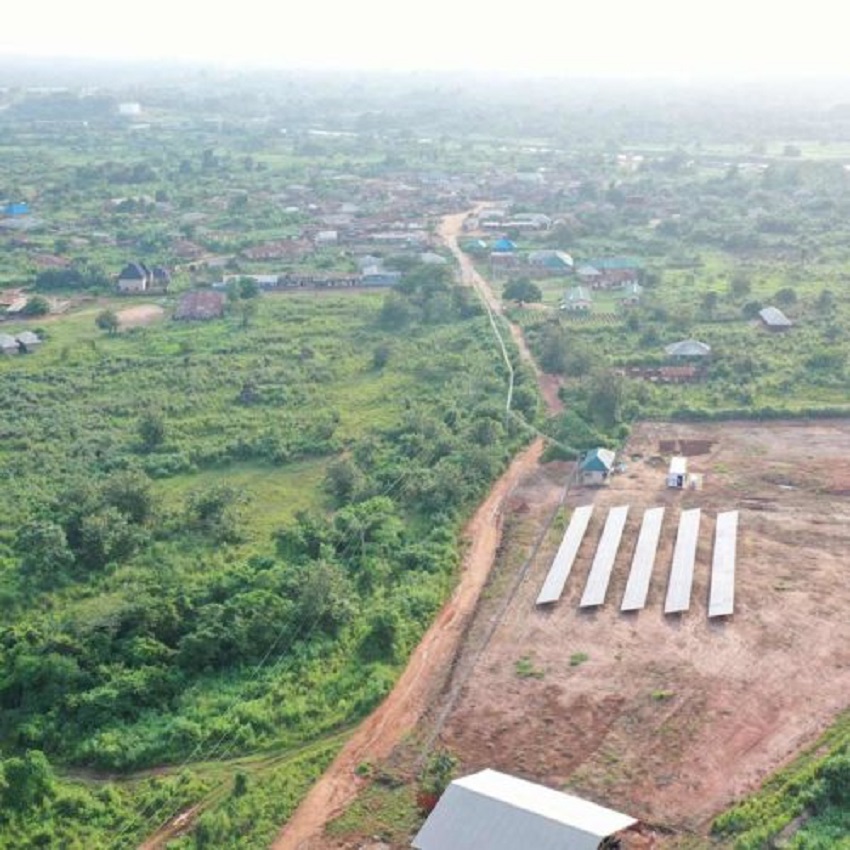
The project, which is a joint effort of the DisCo, Rocky Mountain Institute (RMI) and Nayo Tropical Technology (Nayo Tech), has been used to power a rural community in Ogun State called Mokoloki.
It was gathered that the deployment of the undergrid minigrid technology was supported by the Nigerian Rural Electrification Agency (REA).
The Mokoloki project demonstrates a financially viable business model that could provide electricity access to millions living in underserved rural communities throughout the country.
According to the MD/CEO of REA, Mr Ahmad Salihijo, “Part of the work we do at REA is creating an enabling environment for private sector-led projects to thrive.”
“We are delighted to witness strategic collaborations geared toward accelerating energy access in unserved and underserved communities across Nigeria.
“What makes this project unique, beyond being Nigeria’s first commercial undergrid minigrid in a rural community, is the social and economic transformation that the project ultimately brings to the Mokoloki community.
“I commend RMI, IBEDC, Nayo Tech and all other stakeholders involved in carrying out this feat,” he added.
On his part, the Chief Operating Officer of IBEDC, Engr. John Ayodele, assured that, “By the time this project [stabilizes], Mokoloki will be like a town. They will have more regular power supply than cities.”
IBEDC was the first Nigerian distribution company to initiate a tripartite contract negotiation with a rural community as required for interconnected minigrids by regulation.
“We are happy with the Mini Grid Regulation.”
“We are excited to be in the forefront of undergrid minigrid development in Africa as a scalable and sustainable business opportunity with good social impact on our host communities,” said Anayo Okenwa Nas, chief executive officer of Nayo Tech.
Mokoloki, a rural community in Ogun State, previously struggled with intermittent electricity access and poor voltage quality prior to this project.
However, its bustling market and proximity to main trade routes promised major commercial activity, making it an ideal site for an undergrid minigrid, as explained in the newly released project brief and article.
This undergrid minigrid pilot embodies recommendations from recent reports by RMI and partners at EMRC, Cleantech Hub, and All On.
Under the Grid outlines the business opportunities for undergrid minigrid development in sub-Saharan Africa, while Electrifying the Underserved expands on specific business models to guide project implementation. An estimated 40 million rural residents are underserved by the main grid in Nigeria.
Of these, close to 35 per cent could be served by over 4,000 commercially viable undergrid minigrid systems. Nationwide, the revenue opportunity from these minigrids is approximately N400 billion ($1 billion) per year.
“Mokoloki’s undergrid minigrid shows how utilities, developers, and communities can collaboratively develop innovative power solutions, and this willingness to test new approaches has unlocked a new option for increasing energy access,” added James Sherwood, principal at RMI.
Using a modular design approach, the solar-hybrid minigrid is initially providing 100 kW of generation for an estimated peak load of 88 kW, with an expansion plan in place for anticipated load growth. After three months of operation, it is serving 230 households and over 60 commercial and public enterprises, including the local health centre.
RMI hopes the success of this undergrid minigrid, as a replicable solution, will jump-start similar partnerships that serve customers across Nigeria and sub-Saharan Africa.
Both IBEDC and Nayo Tech intend to scale up their undergrid portfolios and are actively exploring project and investment opportunities.
General
QNET’s Global Reach in 100+ Countries: What International Access Means for Local Distributors
Global scale means market access and international supply chains. For individual distributors in direct selling, it can shape everything from product availability to income stability and long-term opportunity.
QNET, the multinational wellness and lifestyle direct selling company, positions its business model around that idea: connecting locally based independent distributors to an international operating platform. With activity spanning more than 100 countries, the company sits within a direct selling industry that, according to the World Federation of Direct Selling Associations (WFDSA), has stabilized after several relatively volatile post-pandemic years.
Global Reach Within a Stabilizing Industry
The WFDSA’s latest global report estimates worldwide direct selling retail sales at roughly $163.9 billion in 2024, essentially flat year over year. That flat performance, however, masks gradual improvement beneath the surface. Nearly half of reporting markets showed growth in 2024, and average market growth rates rebounded to positive territory.
The report estimates more than 104 million independent sales representatives globally in 2024, a figure that has remained largely stable year over year.
This stabilization sets a backdrop for companies like QNET. A global footprint is no longer about rapid expansion alone; it is increasingly tied to resilience: operating across regions with different economic cycles, consumer behaviors, and growth trajectories.
For distributors, this matters because opportunities extend beyond individual effort. They are often shaped by the health of the company’s broader channel and product reach.
A Platform Designed for Distributed Entrepreneurship
QNET’s model centers on local execution supported by centralized infrastructure. Products—ranging from nutritional supplements and wellness devices to home and lifestyle solutions—are sold through the company’s proprietary e-commerce platform. Independent distributors do not manage warehouses, shipment logistics, or customer service systems.
As Ramya Chandrasekaran, who heads communications at QNET, explained in a recent interview, the company views direct selling as a form of accessible “micro-entrepreneurship.” The idea is to reduce the operational burden typically associated with starting a business, allowing distributors to focus on product education, customer relationships, and market development.
Why Global Scale Changes the Distributor Equation
One practical benefit of international reach is product continuity. WFDSA data shows that wellness products account for roughly 29% of global direct selling sales, making it the largest category worldwide. In the Asia-Pacific region, the largest direct selling region by sales, wellness represents more than 40% of total category share.
QNET’s emphasis on wellness and lifestyle products places distributors in line with the strongest demand segments globally. Instead of relying on narrow local trends, distributors operate within product categories that have shown consistent global interest.
International scale also supports consistency in training, compensation structures, and digital tools. Distributors in different countries access identical back-end systems, tracking referrals, commissions, and orders through the same platform. This standardization reduces friction and uncertainty, particularly for individuals operating in markets where informal commerce is common.
Workforce Shifts
The WFDSA’s report highlights notable shifts in the global direct selling workforce. Women continue to make up more than 70% of participants worldwide, and representation among individuals aged 35 to 54 remains the largest cohort.
Independent Distributors increasingly value flexibility, long-term viability, and support systems that allow them to operate sustainably rather than aggressively scale. QNET’s emphasis on digital access, centralized operations, and gradual business building reflects those priorities.
For many participants, especially those balancing work with caregiving or other responsibilities, direct selling infrastructure offers a way to stay engaged at their own pace.
Training, Exposure, and Cross-Market Learning
QNET’s international conventions and training programs connect distributors across regions, creating informal networks for peer learning. Events that draw participants from dozens of countries expose distributors to varied approaches to sales, customer engagement, and market adaptation.
This mirrors one of WFDSA’s broader conclusions: direct selling increasingly functions as a global learning ecosystem, with companies providing tools and education that help individuals navigate uncertain economic conditions.
For distributors, exposure to cross-border experiences can recalibrate expectations, reinforcing that success often comes from steady engagement rather than rapid recruitment or short-term activity.
International Access, Interpreted Locally
Despite its global scale, QNET’s business ultimately plays out in local communities. Distributors adapt messaging around wellness, home quality, and lifestyle enhancement to cultural norms and household priorities. The international platform provides reach and structure, but relevance is built locally.
That balance, global systems supporting local relationships, defines much of modern direct selling. The WFDSA describes the industry not as a single growth story, but as a framework that can scale proportionally with economic conditions across regions.
For QNET distributors, international presence does not guarantee income or uniform outcomes. What it offers is access: to resilient product categories, standardized systems, training resources, and a global marketplace that extends beyond any single region. For local distributors navigating today’s uncertain global economic environment, that is an important foundation to maintain.
General
FCCPC Unseals Ikeja Electric Headquarters
By Adedapo Adesanya
The Federal Competition and Consumer Protection Commission (FCCPC) has unsealed the headquarters of Ikeja Electric Plc in the Lagos State capital after a week under lock and key.
According to a statement on Friday, the electricity distribution company committed to a binding undertaking to comply with the remedial process following consumer rights violations.
The statement signed by Mr Ondaje Ijagwu, Director of Corporate Affairs at the commission, Ikeja Electric undertook to resolve all consumer complaints referred to it by the FCCPC within agreed timelines
The headquarters was earlier sealed on December 11, 2025, because Ikeja Electric allegedly failed to comply with a directive by the Nigerian Electricity Regulatory Commission (NERC) to unbundle a Maximum Demand account into 20 individual accounts for a customer who had been without power for over two and half years.
The FCCPC noted that following the resolution, any breach of the undertaking would expose it to renewed and escalated enforcement action under the Federal Competition and Consumer Protection Act.
Reacting, the Executive Vice Chairman and Chief Executive Officer of the FCCPC, Mr Tunji Bello, said the Commission’s intervention was necessary to enforce the provisions of the FCCPA (2018).
“Our responsibility is to ensure that consumers are treated fairly and that service providers comply with lawful decisions and directives. Enforcement is not an end in itself. Where compliance is achieved and credible commitments are made, the Commission will respond appropriately,” he said.
Clarifying further, Mr Bello said the outcome reflects the commission’s balanced approach to regulation.
“We intervene decisively where consumer harm persists, and we de-escalate where enforceable compliance is secured. What remains constant is our duty to protect consumers and uphold regulatory accountability,” he said.
General
All On’s Clean Energy Access Transforms Over One Million Lives
By Modupe Gbadeyanka
The decision by a leading impact investment company focused on expanding clean energy access, All On, to support over 50 clean energy businesses and provide grants and technical assistance to more than 80 enterprises in Nigeria is already yielding positive results.
This is because the organisation’s Impact Evaluation Report indicated that more than one million lives have been transformed through clean energy access.
The report covered from 2018 t0 2024 and it was discovered that the interventions of All On enabled the connection of over 230,000 households, businesses, and public facilities to reliable energy solutions, while strengthening the operational capacity of energy providers and improving affordability and service reliability for end users.
Prior to the commencement of All On’s operations in 2016, nearly half of Nigeria’s population lacked access to electricity, and the sector faced an estimated 92 per cent annual funding gap.
In response, the group adopted a bold, risk-tolerant strategy—deploying catalytic capital, innovative financing instruments, and ecosystem-building initiatives to unlock private sector participation and drive progress toward universal energy access.
Central to these achievements is All On’s holistic support model, which combines rigorous, tailored due diligence, deep sector expertise, and active ecosystem engagement.
This approach has positioned All On as a trusted partner capable of delivering both commercial viability and systemic impact.
Flagship initiatives such as the Demand Aggregation for Renewable Technology (DART) programme have further amplified results by reducing procurement costs for supported businesses by up to 50 per cent, enabling developers to scale faster and pass cost savings on to consumers due to access to reliable, affordable, and sustainable energy solutions.
In the report, it was revealed that half of supported households reported improved air quality, enhanced safety, and reduced noise pollution, contributing to better health outcomes and improved quality of life, alongside measurable environmental benefits.
“This report confirms that our approach is delivering real results. By combining patient capital, technical assistance, and ecosystem support, we are enabling scalable and sustainable energy solutions for Nigeria’s unserved and underserved communities,” the chief executive of All On, Ms Caroline Eboumbou.
The company plans plans to scale proven models, strengthen local capacity, and expand its reach—particularly in underserved regions such as the Niger Delta.
“While the progress to date is encouraging, our work is far from done. As we look toward 2030, we remain committed to deepening our impact and creating even more meaningful connections across Nigeria,” Ms Eboumbou added.
-
Feature/OPED6 years agoDavos was Different this year
-
Travel/Tourism9 years ago
Lagos Seals Western Lodge Hotel In Ikorodu
-
Showbiz3 years agoEstranged Lover Releases Videos of Empress Njamah Bathing
-
Banking7 years agoSort Codes of GTBank Branches in Nigeria
-
Economy3 years agoSubsidy Removal: CNG at N130 Per Litre Cheaper Than Petrol—IPMAN
-
Banking3 years agoFirst Bank Announces Planned Downtime
-
Banking3 years agoSort Codes of UBA Branches in Nigeria
-
Sports3 years agoHighest Paid Nigerian Footballer – How Much Do Nigerian Footballers Earn