

World
The Moment of Truth for BRICS: Challenges, Opportunities and the Way Forward

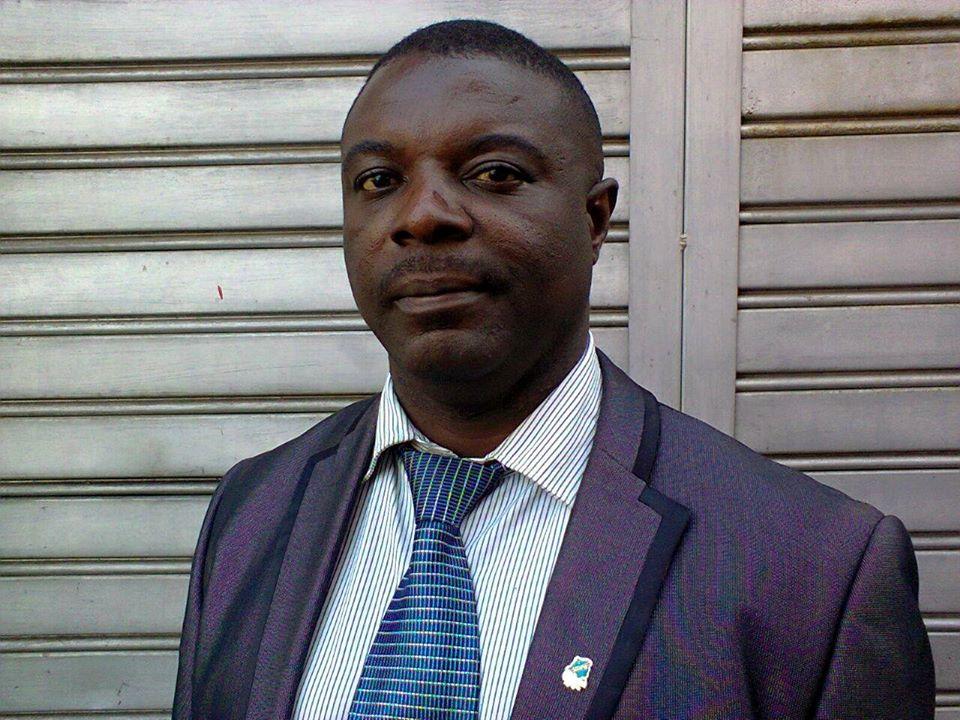
By Kester Kenn Klomegah
As already known, BRICS is an association of five major emerging economies: Brazil, Russia, India, China and South Africa. South Africa joined the association in 2010.
The BRICS has a significant influence on regional affairs and very active on the global stage. All of them are members of the G20.
While the group has received both praise and criticism from different corners of the world, BRICS is steadily working towards realizing its set goals, bilateral relations among them are conducted on the basis of non-interference, equality and mutual benefits.
In this exclusive interview, Dr Byelongo Elisee Isheloke, who is currently a Postdoctoral Research Fellow at the University of Cape Town and has scholarly researched some aspects of BRICS for the past 10 years, spoke with Kester Kenn Klomegah about his observations, the existing challenges, opportunities and the future perspectives of BRICS. Here are the interview excerpts;
South Africa joined BRICS in 2010, a decade ago, and so, how do you assess South Africa in BRICS these years? What are its greatest contributions to the development of the group?
I would say South Africa is strongly committed to its engagement in the BRICS. It has hosted two of its summits. As an active member, it has what it takes to deliver despite the internal economic crises in South Africa. I think over the years, South Africa grew in confidence within the partnership, particularly when the first BRICS summit took place in Durban South Africa.
In the Durban 2013 BRICS summit, African presidents were invited to join leaders of BRICS and the theme evolved around Africa. In this context, South Africa regained its muscles as a BRICS member.
South Africa, therefore, represents Africa well in the BRICS, in a way, and I think the African countries should support it. The only thing I think people want is to be more involved. While the BRICS started as a partnership of political nature, now that it has embraced economic development, the voice of the people must be heard.
The major problem of South Africa is that it is not robust economically compared to its BRICS counterparts, and its economy has been performing badly since the 2008/2009 world’s economic crisis.
It has been a zero growth economy ever since; if any growth, then it has been below 1 per cent. South Africa has struggled to stabilize its economy during the past few years, and now the COVID-19 has exacerbated this but it is common to many countries around the world.
In your previous discussion, you talk about a transition from politics to economy. How do you see BRICS influence on international issues, its collective position on the global arena?
BRICS did not transit from politics to economy as such but put emphasis on economic projects. BRICS leaders still talk global politics while experts guide the leaders on foreign policy issues. For me, I think it is a very good approach going forward. BRICS must deliver on capital-intensive infrastructure development, and the funding from the New Development Bank (BRICS) is critical in this regard. With good policies in place, this will help the SADC region and the rest of Africa. It is great that the branch of this bank operates from Johannesburg in South Africa.
Furthermore, I must say that BRICS influence on international scale is dented by minor problems in the organization. For example, the diplomatic conflict between India and China, the fact that both Russia and China wants to be in a position of favour with the United States on diplomatic ground, this is not helping its influence globally.
“I think BRICS must clean its home, or clean before its door, if it wants to be the balancing power in international affairs. The other problem is the capital issue. At the moment, the BRICS do not have the muscles to outcompete the Bretton Wood Institutions, the World Bank and IMF. More investment, more capital is needed in the BRICS Bank.
In the past, there was the lack of synergy in diplomatic position as far as the BRICS is concerned. In the UN Security Council, for instance, the BRICS have to consult in order to accommodate views on issues of global importance.
We know that South Africa is a member of the SADC and there is the Democratic Republic of Congo (DRC), another SADC country, which has a plethora of problems of security and economic nature. I think that any assistance from such an organization (BRICS) would be appreciated.
Quite recently, more than 200 civilians known as the Bembe people were massacred in the eastern DRC by Ngumino and Twagineho militias. These militias are of foreign origin to the DRC. This news is not broadcasted in South Africa, if the BRICS could invest more in peace-keeping mission, maybe help the current government, perhaps it could help the failing Monusco, a UN mission in the DRC.
It is such engagement that can make the BRICS shine internationally. They need a collective position on global issues. This is just one example.
In relation to economy and trade, what are your arguments about collaboration among BRICS? Do you also see China and India racing for global dominance, and Russia steadily raising its business profile on global stage?
With regard to this question, this is what I have to say. In fact, trade protectionism is only good temporarily and it works only in the short run. It is not sustainable as a policy in the long term. We know in the 17th century it was promoted in European countries but there was a time when the Laissez-faire ideology took precedence on economic isolationism. We also know that a couple of BRICS countries have a communist background (Russia and China). What I can say is that China opened up its economy to trade, and for more than 30 years, it manage to build a robust economy (now considered the 2nd largest after the United States) with potential prospects of outperforming the United States. I think we can learn from the Chinese economic success.
The COVID-19 situation may help change the forecasts but free trade has proven over the years to be highly supportive to the economy of nations. This does not mean one needs “to throw away the baby with the water” when it comes to the gain obtained during the socialist approach to economic development.
The BRICS countries should find a way of striking a balance between the two economic systems. But frankly speaking, an open economy leaning more towards free trade is what I would recommend for an emerging economy.
Now, even countries where the economy is freer like South Africa and India, we see that the major hindrance is corruption and bad governance in certain instances. If the BRICS can address these obstacles or hurdles, they will have a better chance of winning.
In China, human rights abuses shouldn’t be covered up; doing-Business with countries where dictatorship and abuses are evident should it be alright.
In addition, there will be areas where BRICS will compete, and this is healthy to any economy, but there must be more focus on what BRICS can do together to address abject poverty, growing unemployment and human rights abuses.
China and India need to talk more to address their differences. The future of BRICS depends, to some considerable extent, on their good relations. The race for dominance if military is dangerous. I think they need to talk as friends and partners. The rest of the BRICS should mediate in this regard.
Many experts still question the role of BRICS members in Africa. It is important here to recall that Russia was involved in helping African countries during their struggle for independence and that was the Cold War. It lost its influence after the split of the USSR. Currently Russia’s foreign policy largely seeks to regain what it lost to the United States and China and other foreign players in Africa. But for our Russian partners, Africa needs sustainable development, and not military weapons and equipment. Africa is looking for foreign players to invest in infrastructure and play large part economically.
In your post-doctoral research on BRICS, and in your article to The Conversation, you mentioned what South Africa can offer or shared with other members. Is it possible to restate explicitly the kind of “beneficiation” here?
I would make known, first, that as a postdoctoral research fellow at the University of Cape Town, my academic investigation deals with the impact of and the challenges towards mineral beneficiation policy interventions in the SADC region. This has some importance for foreign players looking opportunities to invest in mineral resources in the SADC.
Having said the above, I am more than prepared to embark on a project that will help BRICS to understand the effects of BRICS partnership on mineral beneficiation in South Africa and within the Southern African Development Community.
In this connection, I think South Africa has a lot to offer to the BRICS. There must also be a consensus with other African countries. Understandably, South Africa can be an investment gateway to Africa. As the presiding head of the African Union, South Africa represents the interests of the AU in BRICS.
On beneficiation, South Africa has a tremendous experience on nuclear power that, if used for energy, could help the beneficiation industry in the country. One needs to be cautious of deviations in that regard, not that I am suggesting South Africa would deviate, but care needs to be observed by all member countries on that issue. As a pacifist, I would advise that African countries look at alternative, renewable energy sources. A gradual approach to beneficiation and a dialogue between trade partners will take the BRICS partnership to another level as far as South Africa is concerned in the BRICS.
How do you assess the current coronavirus spread and its impact, especially among BRICS, (Brazil, India, Russia and South Africa) and allegedly (yet to be proved) virus originated from China (BRICS member)?
The BRICS are hit by the COVID-19 crisis just like any other country. As we know, the COVID-19 started in Wuhan, China, and then spread in no time to all the continents. It is however important to note that China closed its borders and cooperated with the World Health Organization (WHO) to alert other countries. On the other hand, in Africa, we saw China helping the African Union (AU) with PPEs and other test equipment. This should be appreciated.
Whether the alert came late or not, I do not have any means to determine that. Why would China want to do that? Instead of pointing fingers to others, I think it is time the world learns from the threat we face together as humans and find a common ground to halt (stop) the spread of COVID-19. It should be an opportunity to re-engineer our health facilities and capabilities for a better tomorrow for all.
Personally, I would call for cooperation between BRICS and non-BRICS countries (the United States and Europe for example to get involved). Failing to do that will be a recipe for more complications.
What do you think of BRICS collaborating on COVID-19 vaccine? Do you see “cooperation or competition” among its members (China, India and Russia) racing for global market with the vaccine?
Interestingly, I see both cooperation and competition. But I think we need more cooperation and sharing of the information. The BRICS must remember what they owe the world. Cooperation should be on all aspects of life. We hear stories of people of colour being ill-treated in China for example. I think the authorities should investigate that and take appropriate actions to care for others with dignity.
In South Africa as well, the refugee community was almost neglected in the management of the COVID-19. I am glad the government decided to do something about it. BRICS scientists, as well, need collaboration to come up successfully with a solution or vaccine.
Efforts by other scientists need to be taken into account. And as regards Africa, an African solution to Africa’s problem approach should not be neglected or relegated to the backyard. BRICS are partners, they can help each other but they should not replace own efforts towards security and safety.
Vaccine or solutions to the pandemic should not be profit-orientated. In Africa, we believe in Ubuntu. I think our BRICS leaders will not do such a mistake. I am highly optimistic on that.
Generally, what would you consider as the key challenges amid the coronavirus pandemic that has shattered the economy, and how do you see the future of BRICS?
The pandemic has, indeed taken a heavy toll on the global economy. As reported by the World Health Organization (WHO), Brazil, India, Russia, China, and of course, South Africa have high infections after the United States.
The key challenges during the COVID-19 era are: Unpreparedness of the BRICS countries. It came as a surprise and BRICS were caught pants down in most instances. We should view the COVID-19 as an opportunity for better planning, re-engineering of our health facilities and capabilities for prevention.
Lack of financial resources. The poor countries in a dire situation. Most countries had no financial muscles to acquire respirators and PPEs. Russia and China managed to build specialized hospitals within a short time to contain the situation. This is an area where the BRICS Development Bank could make the stark difference if steered in the right direction.
Insufficient coordination. As for the case of South Africa, it is good that the government took the scientific approach in managing the situation. Coordination with public-private partnership could enhance the ability of the state apparatus to serve everybody regardless of their origin. There is still time to ensure that poor including refugees and asylum seekers are humanly served. We cannot be selective in enforcing human rights. Medical assistance, in time of coronavirus, be regarded as basic human right for all. A better coordination will therefore help not only South Africa, but all the countries.
Last but not the least, a holistic approach to fighting the pandemic should be promoted. A human being is not just a body, but it is also a spirit. While scientists and decision makers propose solutions, it must be done in conjunction with means that uplift the spirit as well.
Faith based organizations should equally have a role to play to help the government and to provide interventions of psychological and spiritual nature. A healthy body in a healthy spirit is what we need.
Otherwise, any solution will be half-baked and unsustainable. All the stakeholders must work together. This is not only for South Africa or for the BRICS, but it is also for the entire world.
There is a lot of negative news on TV and Radio channels about the corona. It is time the media grasps the opportunity to serve humanity by focusing on giving hope rather than destroying hope. A balance needs to be set in this regard as well. Media have to exhibit a more constructive role for a better world.


