Connect with us

Economy

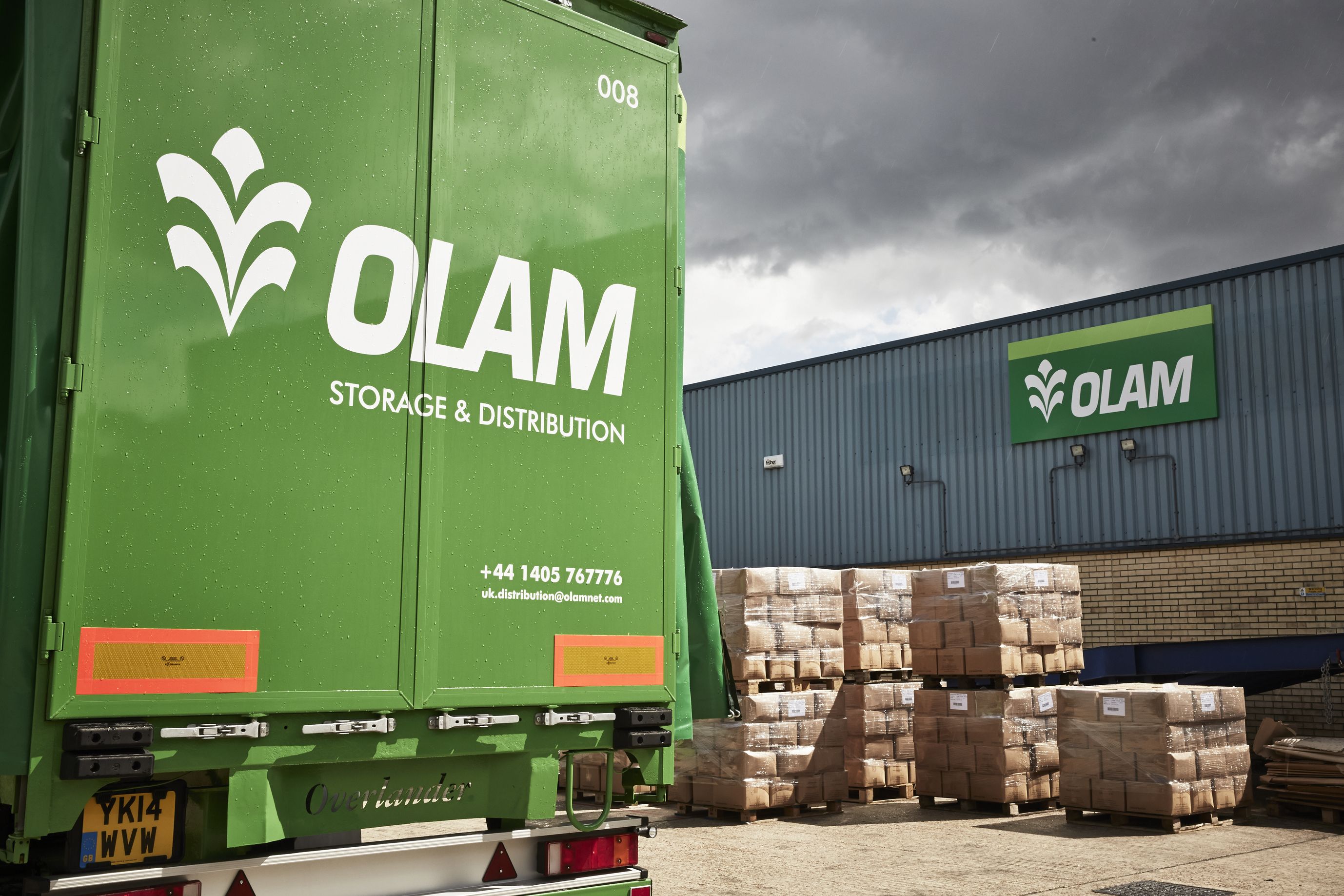
Olam, IFAD Boost Nigeria’s Economy With N3bn

Published

on

Olam Nigeria

By Modupe Gbadeyanka

The Nigerian economy has received a boost of over N3 billion from the partnership between Olam Nigeria, the International Fund for Agricultural Development (IFAD) and the federal government of Nigeria on the Value Chain Development Programme (VCDP).

The programme was launched in 2014 with the aim of generating wealth for smallholder farmers, thereby improving their livelihoods, while also enhancing food security in the country.

The VCDP provides inputs and training to smallholder rice farmers with guaranteed buy back of between 80 per cent and 90 per cent of the rice paddy produced by the farmers at competitive market prices while the rest of the rice paddy is reserved by the small holder farmers for personal consumption.

Since inception, Olam has purchased rice paddy worth N3 billion from smallholder farmers in Benue. The company also has rice outgrower initiative programmes apart from its IFAD VCDP partnership where, it has engaged a total of 14,868 smallholder farmers.

To kick off the planting season and onboard new farmers to the initiative grants worth over N107 million was presented to 2,917 farmers in Benue State, in the form of inputs as palliatives to cushion the impact of the Covid-19 pandemic on them.

According to the Country Representative of IFAD, Ms Nadine Gbossa, the registered smallholder farmers under the VCDP programme have experienced a 79 per cent increase in their income.

“Before the IFAD OLAM VCDP partnership, many of the smallholder farmers were involved in subsistence farming. However, they are now able to market their produce because a firm like,” she said.

The IFAD Nigeria Country Representative further stated that the project has a budget of $329 million, adding that IFAD is financing about $250 million while the federal government of Nigeria and enterprises like Olam finance the difference.

Also commenting, the Vice President of Farming Initiatives at Olam Nigeria, Mr Reji George, stated that a distinguishing factor of the Olam IFAD VCDP initiative is the decentralized model in terms of the mobilization, registration and engagement with the smallholder farmers.

“About 50 per cent of the total capacity of Olam’s rice mill in Rukubi, Nasarawa State, is gotten through the direct buy back from these programmes from different states.

“We expect a higher scope this year because while we had 9,757 farmers in 2019, we have doubled the number of registered farmers this year, which is about 18,646 registered farmers,” he said.


Modupe Gbadeyanka is a fast-rising journalist with Business Post Nigeria. Her passion for journalism is amazing. She is willing to learn more with a view to becoming one of the best pen-pushers in Nigeria. Her role models are the duo of CNN's Richard Quest and Christiane Amanpour.

Advertisement
Click to comment

Leave a Reply

Your email address will not be published. Required fields are marked *

Economy

Why Transparency Matters in Your Choice of a Financial Broker

Published

on

HFM financial broker

Choosing a Forex broker is essentially picking a partner to hold the wallet. In 2026, the market is flooded with flashy ads promising massive leverage and “zero fees,” but most of that is just noise. Real transparency is becoming a rare commodity. It isn’t just a corporate buzzword; it’s the only way a trader can be sure they aren’t playing against a stacked deck. If a broker’s operations are a black box, the trader is flying blind, which is a guaranteed way to blow an account.

The Scam of “Zero Commissions”

The first place transparency falls apart is in the pricing. Many brokers scream about “zero commissions” to get people through the door, but they aren’t running a charity. If they aren’t charging a flat fee, they are almost certainly hiding their profit in bloated spreads or “slippage.” A trader might hit buy at one price and get filled at a significantly worse one without any explanation. This acts as a silent tax on every trade. A transparent broker doesn’t hide the bill; they provide a live, auditable breakdown of costs so the trader can actually calculate their edge.

The Conflict of Market Making

It is vital to know who is on the other side of the screen. Many brokers act as “Market Makers,” which is a polite way of saying they win when the trader loses. This creates a massive conflict of interest. There is little incentive for a broker to provide fast execution if a client’s profit hurts their own bottom line. A broker with nothing to hide is open about using an ECN or STP model, simply passing orders to the big banks and taking a small, visible fee. If a broker refuses to disclose their execution model, they are likely betting against their own clients.

Regulation as a Safety Net

Transparency is worthless without an actual watchdog. A broker that values its reputation leads with its licenses from heavy-hitters like the FCA or ASIC. They don’t bury their regulatory status in the fine print or hide behind “offshore” jurisdictions with zero oversight. More importantly, they provide proof that client funds are kept in segregated accounts. This ensures that if the broker goes bust, the money doesn’t go to their creditors—it stays with the trader. Without this level of openness, capital is essentially unprotected.

The Withdrawal Litmus Test

The ultimate test of a broker’s transparency is how they handle the exit. There are countless horror stories of traders growing an account only to find that “technical errors” or vague “bonus terms” prevent them from withdrawing their money. A legitimate broker has clear, public rules for getting funds out and doesn’t hide behind a wall of unreturned emails. If a platform makes it difficult to see the exit strategy, it’s a sign that the front door should have stayed closed.

Conclusion

In 2026, honesty is the most valuable feature a broker can offer. It is the foundation that allows a trader to focus on the charts instead of worrying if their stops are being hunted. Finding a partner with clear pricing, honest execution, and real regulation is the first trade that has to be won. Flashy marketing is easy to find, but transparency is what actually keeps a trader in the game for the long haul.

Continue Reading

Economy

Nigeria’s Stock Market Indices Shrink 0.41% Amid Panic Sell-Offs

Published

on

stock market indices

By Dipo Olowookere

The Nigerian Exchange (NGX) Limited came under panic sell-offs on Thursday, as the investing community awaits the outcome of a probe into trading activities around one of the stocks on the bourse.

On Monday, trading in Zichis equities was prohibited by the regulator after it gained almost 900 per cent in one month of being listed by introduction on the growth board of the exchange.

This action triggered cautious trading on Customs Street, and things have not remained the same since then.

Yesterday, the key performance indices of the Nigerian bourse further depreciated by 0.41 per cent, the third straight loss this week, as investors book profit before being trapped.

It was observed that the energy industry gained 0.12 per cent and was the only one in green, as the industrial goods space shed 1.19 per cent, the banking counter depreciated by 0.63 per cent, the insurance sector lost 0.32 per cent, and the consumer goods segment tumbled by 0.03 per cent.

As a result, the All-Share Index (ASI) contracted by 802.39 points to 193,567.81 points from 194,370.20 points, and the market capitalisation decreased by N515 billion to N124.239 trillion from N124.754 trillion.

During the session, investors traded 868.5 million shares worth N31.5 billion in 69,310 deals compared with the 1.4 billion shares valued at N46.2 billion exchanged in 70,222 deals at midweek, showing a drop in the trading volume, value, and number of deals by 37.96 per cent, 31.82 per cent, and 1.30 per cent, respectively.

Jaiz Bank led the activity chart with 78.9 million equities valued at N1.2 billion, Japaul traded 73.3 million stocks worth N274.8 million, Access Holdings exchanged 66.9 million shares for N1.7 billion, Chams sold 56.9 million equities worth N239.6 million, and Zenith Bank transacted 45.5 million stocks valued at N4.1 billion.

The worst-performing stock for the day was Jaiz Bank after it lost 9.98 per cent to trade at N12.63, Ikeja Hotel declined by 9.90 per cent to N37.75, John Holt shrank by 9.90 per cent to N8.65, Enamelware slipped by 9.88 per cent to N36.50, and Cadbury went down by 9.69 per cent to N61.95.

On the flip side, FTN Cocoa was the best-performing stock after it gained 10.00 per cent to sell for N6.05, RT Briscoe improved by 9.95 per cent to N11.38, Deap Capital soared 9.92 per cent to N6.98, Japaul grew by 9.91 per cent to N3.77, and Ellah Lakes surged 9.72 per cent to N11.85.

Investor sentiment remained bearish as the exchange finished with 30 price gainers and 38 price losers, implying a negative market breadth index.

Continue Reading

Economy

Champion Breweries Concludes Bullet Brand Portfolio Acquisition

Published

on

bullet energy drink champion breweries

By Aduragbemi Omiyale

The acquisition of the Bullet brand portfolio from Sun Mark has been completed by Champion Breweries Plc, a statement from the company confirms.

This marks a transformative milestone in the organisation’s strategic expansion into a diversified, pan-African beverage platform.

With this development, Champion Breweries now owns the Bullet brand assets, trademarks, formulations, and commercial rights globally through an asset carve-out structure.

The assets are held in a newly incorporated entity in the Netherlands, in which Champion Breweries holds a majority interest, while Vinar N.V., the majority shareholder of Sun Mark, retains a minority stake.

Bullet products are currently distributed in 14 African markets, positioning Champion Breweries to scale beyond Nigeria in the high-growth ready-to-drink (RTD) alcoholic and energy drink segments.

This expansion significantly broadens the brewer’s addressable market and strengthens its revenue base with an established, profitable portfolio that already enjoys strong brand recognition and consumer loyalty across multiple markets.

“The successful completion of our public equity raises, together with the formal close of the Bullet acquisition, marks a defining moment for Champion Breweries.

“The support we received from both existing shareholders and new investors reflects strong confidence in our long-term strategy to build a diversified, high-growth beverage platform with pan-African scale.

“Our focus now is on disciplined execution, integration, and delivering sustained value across markets,” the chairman of Champion Breweries, Mr Imo-Abasi Jacob, stated.

Through this transaction, Champion Breweries is expected to achieve enhanced foreign exchange earnings, expanded distribution leverage across African markets, integrated supply chain efficiencies, portfolio diversification into high‑growth consumer beverage categories, and strengthened presence in the RTD and energy drink segments.

The acquisition accelerates Champion Breweries’ transition from a regional brewing business to a multi-category consumer platform with continental reach.

Bullet Black is Nigeria’s leading ready-to-drink alcoholic beverage, while Bullet Blue has built a strong presence in the energy drink category across several African markets.

Continue Reading

Trending