Banking
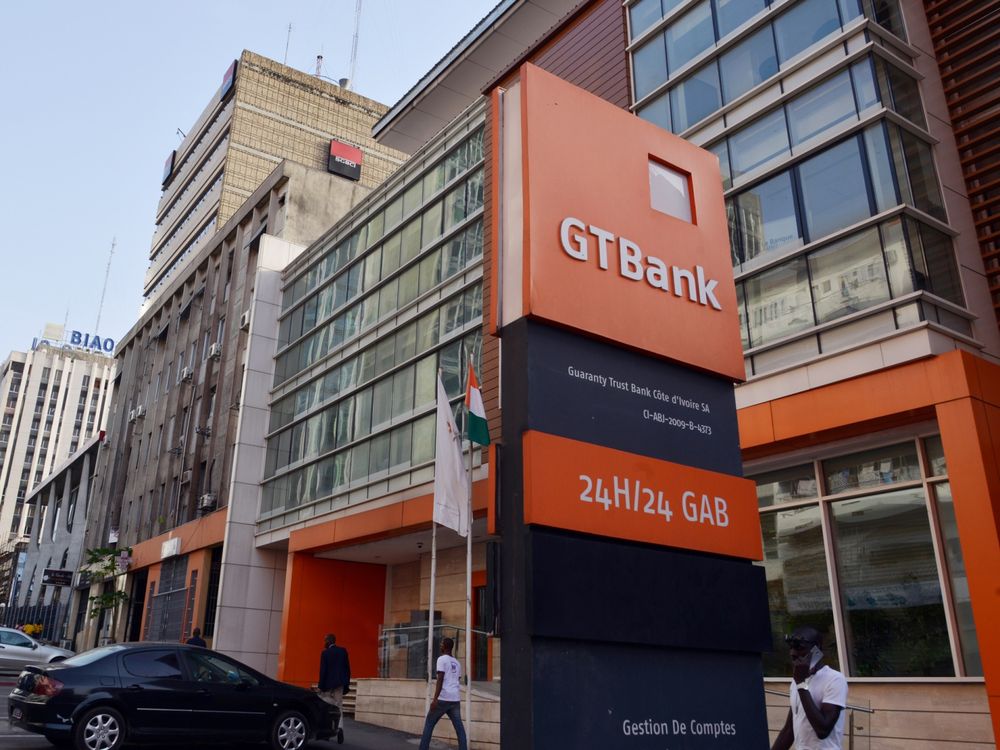
GTBank Increases International Monthly Spending Limit to $200
By Adedapo Adesanya
Guaranty Trust Bank (GTBank) has increased its monthly spending limit on the GTBank Naira Mastercard for international transactions to $200.
This is coming months after a foreign exchange (forex) crisis in Nigeria led many banks to slash their international transactions monthly limit to about $100, with some reducing it to as low as $20 per month.
For GTBank, it had reviewed its limit to $100 per month in August, less than six months after it was pegged at $3,000.
In a message sighted by Business Post, the tier-one lender wrote, “Dear customer, the monthly spending limit on your GTBank Naira Mastercard is now $200 for international transactions. Thank you for banking with us.”
This new development indicates that customers can now make payment for foreign purchases or transactions in Nigeria of up to $200 per month, which is about N75,800 in the local denomination (at N379/$1).
There are no clear indications yet if other banks will follow suit but actions of one bank especially relating to this kind of move might spur other financial institutions to take similar action in the coming days.
Nigeria’s foreign earnings took a hit on the back of the coronavirus pandemic especially from the sale of crude oil which plunged and as a result, put pressure on the local currency.
On two different occasions this year, the Central Bank of Nigeria (CBN) had to adjust the value of the Naira to the Dollar; first from N306 to N360 and then to N380, its current rate.
But with recent moves like the resumption of forex sales to Bureaux De Change (BDC) operators at a specified rate, the market has seen an injection of forex, easing the pressure on the Naira and allowing market participants clear their backlogs.
The Naira has also appreciated across the various segments of the foreign exchange market, indicating that the CBN strategy was yielding the expected positive results. Also, the nation’s foreign reserves have grown to $35.7 billion.
Banking
Court Restrains FCCPC From Enforcing Key Loan Provisions
By Adedapo Adesanya
The Federal High Court sitting in Lagos has granted an interim injunction restraining the Federal Competition and Consumer Protection Commission (FCCPC) from enforcing key provisions of its Digital, Electronic, Online and Non-Traditional Consumer Lending Regulations, 2025, pending the determination of a substantive suit before the court.
Justice Ambrose Lewis-Allagoa granted the order following an ex-parte application filed by the Wireless Application Service Providers Association of Nigeria (WASPA Nigeria), which is challenging the legality and applicability of the regulations.
The association had approached the court on April 14, 2026, seeking urgent judicial intervention to halt the implementation of what it described as ultra vires provisions of the regulatory framework, also referred to as the “DEON Consumer Lending Regulations.”
In the ruling, the court held that the applicant had demonstrated sufficient urgency and legal grounds to warrant temporary protection pending the hearing of the motion on notice for an interlocutory injunction.
WASPA Nigeria, represented by Mrs Kemi Pinheiro, SAN, argued that several provisions of the regulations impose obligations on its members operating in the telecommunications and digital services ecosystem.
The group further contended that the FCCPC lacked statutory authority to regulate technical and operational aspects of telecommunications services, which it said fall under the mandate of the Nigerian Communications Commission (NCC).
In its motion, WASPA urged the court to restrain the FCCPC from enforcing specific provisions of the regulations, including paragraphs 3, 7, 10, 12, 13, 14, 15, 16, 24, 27, 29 and 32, as well as from imposing sanctions, penalties, or compliance directives on its members.
The court, after reviewing the supporting affidavit deposed to by Ayo Stuffman, granted interim relief preserving the status quo.
Justice Lewis-Allagoa, in his ruling, restrained the FCCPC from implementing or giving effect to the contested provisions of the regulations, taking enforcement steps against WASPA members, or issuing further directives under the disputed framework.
The judge also barred the commission from imposing sanctions or penalties on affected entities pending the determination of the substantive application.
The matter was adjourned to April 27, 2026, for the hearing of the motion on notice.
The ruling represents a temporary setback for the FCCPC, which recently introduced the regulations as part of efforts to strengthen oversight of Nigeria’s fast-growing digital lending and fintech ecosystem.
The regulations were designed to address consumer protection concerns, data privacy issues, and unregulated lending practices within the sector.
Banking
Ecobank Grows Net Revenues by 17%, Profit by 22% in FY 2025
By Aduragbemi Omiyale
Ecobank Group, the parent company of Ecobank Nigeria Limited, has released its financial statements for the 2025 accounting year, growing its net revenues by 17 per cent to $2.5 billion from $2.1 billion in the preceding year.
An analysis of the earnings showed that Corporate and Investment Banking (CIB) revenues grew by 21 per cent, while Consumer and Commercial Banking (CCB) earnings rose by 14 per cent, with higher transaction volumes across channels expanding Payment revenue by 14 per cent to $305 million in the period under review.
Details of the results submitted to the Nigerian Exchange (NGX) Limited showed that pre-tax profit went up by 21 per cent to $801 million, and the net profit jumped by 22 per cent to $407 million from $333 million, with the earnings per share (EPS) up by 23 per cent.
Business Post observed that customer deposits increased to $25.3 billion, with gross loans and advances to customers up by $2.3 billion to $12.8 billion.
Commenting on the performance of the financial institution, the chief executive of Ecobank, Mr Jeremy Awori, said, “Our 2025 performance has further demonstrated that our Growth Transformation and Returns (GTR) strategy, along with our geographically diversified business model, are yielding positive results.”
He disclosed that regarding the Consumer Banking business, the company broadened access for both new and existing customers by expanding digital account openings in more markets.
“We installed 500 new ATMs, extended our Direct Sales Agents into 22 markets, and added over 1,000 new personnel. In Commercial Banking, we strengthened our relationships with small and medium-sized enterprises (SMEs), particularly in the agribusiness sector, by introducing specialised expertise and enhanced digital tools to serve our clients better and improve access to funding.
“Within CIB, we secured over 75 major mandates with multinationals, development finance institutions (DFIs), humanitarian agencies, and regional corporations, while $610 million in commodity financing supported robust performance in our Trade business,” he added.
He commended the nearly 14,000 employees of the organisation for their efforts in growing the key performance indicators, noting that “these achievements would not have been possible without” their dedication.
“As we look ahead to 2026, we remain confident in our ability to execute our GTR strategic initiatives. However, we are fully aware of the potential implications for economic and financial conditions stemming from geopolitical tensions in the Middle East, as well as macroeconomic impacts across Africa and globally. Our focus remains on executing with agility, resilience, and disciplined risk and expense management across all our markets,” Mr Awori stated.
Banking
Stop Granting Loans Without Credible Collateral—EFCC Warns Banks
By Modupe Gbadeyanka
Banks operating in Nigeria have been warned by the Economic and Financial Crimes Commission (EFCC) against granting unsecured loans to customers.
The Acting Zonal Director for the Lagos Zonal Directorate 2 of the agency in Ikoyi, Mr Bawa Usman Kaltungo, said giving loans without credible collateral often leads to insider abuse and non-performing loans.
According to him, loans backed only by personal guarantees, including those of top executives, are inadequate and put depositors’ funds at risk.
“We have issues with banks’ mode of giving loans. The process often shows insider abuse,” he said when the Chief Audit Executive of First Bank of Nigeria Limited, Mr Mufutau Olawale Abiola, led a delegation on a courtesy visit to his office in Lagos.
“Top-down loans are not secured. You cannot give a loan based solely on the personal guarantee of the chief executive; this is not security. Banks must not issue loans without verifiable collateral. If there is proper collateral for loans obtained by bank customers, this will reduce the rate of non-performing loans,” he stated.
Mr Kaltungo further warned that a bank is only a custodian, and that giving loans without adequate collateral “amounts to tampering with depositors’ funds,” urging lenders to implement measures, including thorough due diligence on its customers, to prevent loan defaults.
“Even in situations where you outsource due diligence, there must be a clause of liability,” he said.
Reaffirming the commission’s commitment to continued cooperation with the bank in tackling financial crimes, he urged the bank to release its staff promptly when invited during investigations of alleged financial crimes.
“When we invite your staff, especially where insider connivance is suspected, you must release them so we can jointly fight economic and financial crimes. We must work together to stay ahead of criminals.
“Let me add that where money is, that is where people’s hearts are. Most of the time, we escalate issues to foreign security agencies as may be necessary,” he added.
Earlier, Mr Abiola expressed gratitude to the EFCC leadership for the engagement, noting that the visit was intended to strengthen the existing collaboration between the bank and the Commission.
While urging the EFCC to expedite investigations into cases involving its staff and others, he also disclosed that a designated team in his bank handles requests from the EFCC.
-
Feature/OPED6 years agoDavos was Different this year
-
Travel/Tourism10 years ago
Lagos Seals Western Lodge Hotel In Ikorodu
-
Showbiz3 years agoEstranged Lover Releases Videos of Empress Njamah Bathing
-
Banking8 years agoSort Codes of GTBank Branches in Nigeria
-
Economy3 years agoSubsidy Removal: CNG at N130 Per Litre Cheaper Than Petrol—IPMAN
-
Banking3 years agoSort Codes of UBA Branches in Nigeria
-
Banking3 years agoFirst Bank Announces Planned Downtime
-
Sports3 years agoHighest Paid Nigerian Footballer – How Much Do Nigerian Footballers Earn

8 Comments