Feature/OPED
U.S Election 2020: Trump and Validity of Controversy
By Jerome-Mario Utomi
Back in 2005, I read the sage underline that; an argument is one thing you will never win. If you win, you lose; if you lose, you lose.
If you win an argument but lose a good job, customer, friend, position or marriage, what kind of victory is it?
An argument is like fighting a foolish battle. Even if one wins, the cost may be more than the victory is worth. Emotional battles leave a residual ill will even if you win. The best way to win an argument is to avoid it.
Indeed, an admirable position, but, today, it is instructive to look at the difference as emphasis seems shifted.
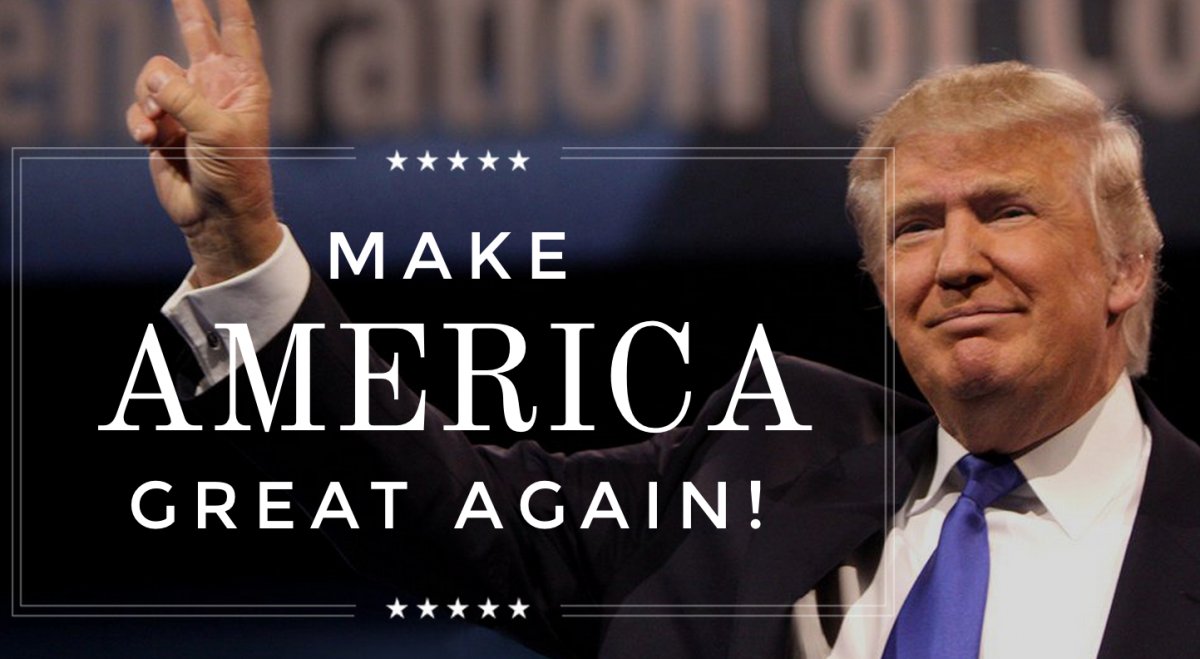
To review a particular example of a personality in this new but strange class, Donald Trump, a man that succeeded Barack Obama on January 20, 2017, as the 45th President of the United States, fittingly comes to mind.
Like Robert Greene admonished in his famous book; the 48 Laws of Power, Trump has in the last three years of his administration demonstrated that everything is judged by its appearance; that what is unseen counts for nothing and one must never get lost in the crowd or buried in oblivion. But be conspicuous at all cost by assuming a magnate of attention; appearing larger, more colourful, and more mysterious than the bland and timid masses.
To add context to the discourse, aside from the recent controversial rejection of plans for a virtual debate initially scheduled for October 15, 2020, with Democratic rival, Joe Biden, which he (Trump) described as unnecessary, those that are familiar with his antecedents know that controversy and transformation trains are not alien to him.
In fact, he is controversy/transformation personified; a financial expert turned businessman, a businessman turned politician, and a politician turned president of the most powerful country in the world.
While his sojourn in the business world earned him a mixture of failures/failings, moral burden and very little dosage of success, the same fate of high voltage controversy heralded his election/ administration in the last three years.
His foreign relation policies were never devoid of controversy. Even the global community particularly the G-7 members do not think that what he is doing is the best way to solve global problems. This partly explains the stiff challenge the United States faced during the Coronavirus pandemic period when the G-7 foreign ministers failed to reach agreement on a joint statement because the U.S. delegation insisted on calling the novel coronavirus the “Wuhan virus.”
This and related concerns have brought about a divided opinion about his victory or otherwise in the forthcoming election.
To many, Trump’s erratic behaviour notwithstanding, he will validly win his arch-rival, Joe Biden, in the November 3, 2020, election. As he is not the first US president to make foreign-policy statements and decisions damaging to American interests. The information in the public domain reveals that George W. Bush’s decision to invade Iraq weakened America.
Within this space, they argued, he has greatly affected Americans through his actions and arguments, creating over 4 million jobs; more Americans are now employed than ever recorded before in history, created more than 400,000 manufacturing jobs since the election, manufacturing jobs growing at the fastest rate in more than three decades, economic growth last quarter hit 4.2 per cent, women’s unemployment recently reached the lowest rate in 65 years, almost 3.9 million Americans have been lifted off food stamps since the election, helped win U.S. bid for the 2028 Summer Olympics in Los Angeles.
But contrary to this position, others are of the view that he should go as his extreme and chaotic personality has lowered American prestige and global influence by a notch or two, while deepening US domestic political divisions.
To this group, great doubt exists about president Trump’s inner motivations. There are doubts also about his capabilities to distinguish between right and wrong, and the capability to judiciously consider the strategic consequences of actions.
With the above highlighted, this piece will focus on his litany of controversies.
First is the reported account of Russian government interference in the 2016 U.S. presidential election with the goals of harming the campaign of Hillary Clinton, boosting the candidacy of Donald Trump, and increasing political and social discord in the United States.
Dana H. Allin, Editor of Survival and IISS Senior Fellow for US Foreign Policy and Transatlantic Affairs, while commenting on this issue recently noted that one way the Russians sought to damage America is by helping to elect a president who is incapable of conducting a coherent foreign policy. They may not have expected him to be elected, but they could have expected that the campaign’s damage to political civility would also impair President Hillary Clinton’s capacity to govern.
From this point flows another. The lengthy debate, sparked by a whistleblower complaint about Mr Trump’s 25 July phone call with Ukraine, in which the president was accused of demanding political investigations into one of his 2020 political rivals, Joe Biden.
During the investigation by the U.S House Committee, Fiona Hill – the former senior director for European and Russian Affairs while testifying noted thus; some of you on this committee appear to believe that Russia and its security services did not conduct a campaign – and that perhaps somehow, for some reason, Ukraine did. This is a fictional narrative that has been perpetrated and propagated by the Russian security services themselves … Russia was the foreign power that systematically attacked our democratic institutions in 2016.
Before the dust raised by this committee investigation could settle, came another form the Wall Street Journal, one of the most respected Journals in the United States (USA). It among other concerns reported that the president told associates that killing Soleimani was useful for solidifying support in the Senate trial among Senate Iran hawks.
Notedly, the most serious and most surprising failures were signposted in his economic misjudgement.
Fresh is reported global concern about Trump’s decision to draw battle lines without ‘provocateur from any quarter, and he’s going into ‘pointless renegotiation’ of the global trading system-a development that made foreign governments believe that the United States was willing to abandon the established norms of trade policy, supports this claim.
It was in the news that his administration was recently blamed for featuring a pitched battle between the so-called globalists (represented by Gary Cohn, the then Director of the National Economic Council), and the nationalists (represented by the Trump advisers Steve Bannon and Peter Navarro). And in the mid-2018, the leading globalists left the administration.
Besides, he was fundamentally described by a notable organization as a leader with a highly distorted view of international trade and international negotiation. Viewing trade as a zero-sum, win-lose game, he stresses one time deals over ongoing relationships, enjoys the leverage created by tariffs and release on brink man ships, and public threat over diplomacy.
The President had said that he likes tariffs (‘trade wars are good and easy to win) and that he wants more of them (I am a tariff man). Trump also went so far as to impose tariffs on steel aluminium imports from Canada, something that even the domestic industry and labour unions opposed. Over the last 30 years, the US steel and aluminium industry has transformed to become North American industries with raw steel and aluminium flowing freely back and front between Canadians and the US plants.
Very recently, Chad P. Bown and Douglas A. Irwin, reported how Trump threatened to leave the WTO, something previous administrations did not do. He says the agreement is rigid against the United States. The administration denounces the WTO when the organization finds US practice in violation of trade rules but largely ignores the equally many cases that it wins. Although the WTO’s dispute settlement system needs reforms; it has worked well to defuse trade conflicts since it was established over two decades ago.
His attack on the WTO, they argued, goes beyond rhetoric. The administration blocked appointments to the WTO appellate body which issue judgement on trade disputes. The dispute settlement system is not perfect.
But rather than make constructive proposals for how to improve it, something Canada and others are doing, The United States is disengaged. The Trump administration may end up destroying the old system without having drafted a blueprint for its successor.
Jerome-Mario Utomi wrote this from Lagos, Nigeria
Feature/OPED
CBN’s New Cash Policy: A Welcome Liberalisation or a Risky Retreat?
By Blaise Udunze
On December 2, 2025, the Central Bank of Nigeria (CBN) announced a policy that significantly departs from the cash-restriction measures Nigerians have faced lately. The apex bank abolished restrictions on cash deposits. Increased the weekly cash withdrawal limits to N500,000 for individuals and N5 million for corporates while substituting the earlier monthly limits of N5 million and N10 million respectively. These modifications, which will be effective from January 1, 2026, represent what the CBN describes as the necessity to “streamline provisions to reflect present-day realities.”
Authorized by the Director of Financial Policy & Regulation, Dr. Rita I. Sike, the policy overhaul aims to lower cash-management expenses, improve security, and lessen money-laundering threats related to Nigeria’s significant dependence on physical cash. Daily ATM withdrawal limits stay fixed at N100,000 and count toward the total cap. Withdrawals exceeding the limits incur charges of three percent for individuals and five percent for companies, with the revenues divided: 40 percent to the CBN and 60 percent to the banks.
This update comes three years following the disputed 2022-2023 cash redesign crisis at a time characterized by extreme cash deficits, extended lines at banks, and devastating impacts on the informal economy. Consequently, the newest order generates responses: praise from individuals who consider it delayed aid, disapproval from those perceiving it as a bewildering backtrack, and concern from those apprehensive about potential enduring hazards.
Experts Applaud a More Realistic Modification
For economists, in a publication by Nairametrics showed that the action taken by the CBN signifies much-needed practicality. Dr. Salisu Ahmed, an economist based in Abuja, refers to the updated limits as “a step,” praising the CBN for gaining a clearer insight into “cash management practices in a predominantly informal economy.”
He stated that the changes will alleviate the difficulties faced by families and small enterprises due to restrictions. Rigid withdrawal caps had limited transactions, made small-scale commerce more difficult, and caused numerous businesses to experience cash-flow problems. “This adjustment signifies a response from the CBN recognizing the challenges Nigerians face daily and easing rules that previously hindered commerce and individual management,” he clarified.
Banking analyst, David Omale, echoes this view, seeing the CBN’s action as a sign of responsiveness. He points out that higher limits could “enhance liquidity for firms facing challenges from inflation, supply-chain issues and unpredictable cash flows.”
In an economy in which over 60 percent of trade is informal and where the adoption of digital payments varies across different socio-economic groups, experts suggest the updated limits correspond more accurately to real-world conditions. These limits offer businesses flexibility to reinstate transactional liberty and may help recover public confidence diminished by previous cash shortages.
Critics Caution About Continuing Disparities and New Threats
However, the praise is not universally shared. Numerous specialists and industry participants contend that the modifications, although appreciated, are inadequate or might even be detrimental.
Financial strategist Nnenna Okafor contends that the updated limits are insufficient for traders and micro-businesses that depend largely on cash to sustain their operations amid challenges. Due to increasing product prices, logistical difficulties, and unreliable digital banking services in regions, she asserts that numerous Nigerians will still need more liquidity than the new thresholds to stay viable.
Within PoS operators’ players, in Nigeria’s payment system, the response is notably divided.
PoS Operators Split
Certain PoS agents appreciate the modifications, anticipating that they will:
– Reduce friction with banks over “flagged” transactions
– Facilitate processes for clients requiring withdrawals
– Rebuild trust after months of cash shortages
Others convey concern. A PoS operator in Lagos cautions that greater cash availability could hinder the adoption of payments. “While easier access to cash can address problems, it may also decrease dependence on PoS terminals and other digital payment solutions that provide long-term security and efficiency,” she remarked.
She argues that if the CBN does not combine the policy with targeted incentives to encourage payment uptake, Nigeria runs the risk of regressing into deep-rooted reliance on cash.
Another operator in Abuja points out a different issue that has to do with unstable cash supply at numerous commercial banks. He insists that simply boosting withdrawal limits does not automatically fix supply shortages. “If banks cannot consistently provide cash, raising limits fails to solve the issue,” he stated.
Other operators also caution that the new setting might push fintech firms out of the market, which possibly allows monopolies to form since only big payment firms can endure the transition back to increased cash usage.
Experts in Security Alert to Increasing Threats, from Crime
Apart from operational issues, security experts have expressed concerns about the dangers linked to greater cash flow.
Abas Ogendengbe, a security expert at Anold Consulting Ltd., warns that increased access to amounts without strict controls “opens up risks for theft, fraud and money laundering.” He contends that without improvements in surveillance transaction tracking and reporting frameworks by banks, criminal groups might take advantage of the restrictions.
Nigeria continues to confront:
– High rates of petty theft
– Organised criminal cash-for-goods networks
– Ransom-based criminality
– Fraudulent cash-flow manipulation
He contends that a policy boosting the amount of currency in circulation should consequently be accompanied by enhanced institutional protections, rather than diminished ones.
Advantages of the New Policy: Relief, Liquidity, and Business Freedom
Although it has faced criticism, the CBN’s decision carries benefits:
- Increased Liquidity for the Informal Sector
Small-scale merchants, farm producers, haulers, craftsmen, and market participants relying significantly on cash will experience ease in transferring money, purchasing stock, and expanding their businesses.
- Reduced Transaction Friction
Companies that once faced limiting restrictions now recover agility, enhancing business continuity and lowering administrative challenges.
- Restoration of Public Trust
After the trauma of the cash scarcity era, easing restrictions may slowly rebuild confidence in the banking system and encourage more people to save and transact through formal channels.
- Policy Simplicity
The updated limits, while still restricted, are more straightforward and less administrative compared to the special-authorization system.
The Disadvantages: Policy Volatility, Inflationary Risks, and Stunted Digitalisation
Nonetheless, the policy change is also accompanied by drawbacks:
- Weakening of Monetary Policy Credibility
Regular significant reversals indicate instability and undermine confidence. A central bank needs to be consistent and foreseeable; Nigeria’s policy environment has shifted in the contrary.
- Potential for More Money Laundering
Unlimited cash deposits and increased withdrawal limits are inconsistent with standards for preventing illegal financial transactions.
- Undermining Digital Payment Growth
The increase in fintech was expedited amidst cash availability. A return to reliance on cash might hinder innovation. Dampen the use of safer trackable digital methods.
- Increased Risk of Robbery and Cash-Based Crime
An increased amount of cash in use results in tangible currency to be stolen additional opportunities for criminals and amplified operational difficulties for the police.
- Higher Costs of Cash Management
The processes of currency production, circulation, and safeguarding place financial strains on the banking sector and the CBN.
Policy Details and Operational Complexities
The CBN’s circular offers instructions for operations:
– Excess withdrawal charges:
3 percent for individuals
5 percent for corporates
– Revenue sharing:
40 percent to CBN, 60 percent to banks
– Withdrawals from ATMs and PoS terminals contribute to the limit, highlighting the importance for customers to monitor where their withdrawals originate.
– ATMs can now be loaded with all denominations, although third-party cheque cashing is still limited to N100,000.
– Exemptions are maintained for government revenue accounts, microfinance banks, and primary mortgage banks.
– The removal of exemptions for embassies and donor agencies is a move that some parties consider diplomatically risky.
The CBN frames this policy change as a balance, boosting liquidity while still maintaining the nation’s goal of a cashless economy. Nevertheless, its effectiveness depends on the ability of the government and financial institutions to encourage payments while addressing the security challenges posed by greater cash circulation.
A Relief Today, a Question Mark Tomorrow
The CBN’s updated cash-policy structure provides support for families, small enterprises, and the informal sector. It addresses some of the severe effects of previous policies and shows a readiness, though delayed, to adjust to practical realities.
However, the enduring consequences are complex. The policy creates openings, as money laundering hampers progress in payments, increases security threats, and shows a regulatory environment grappling with achieving stability and trustworthiness.
Nigeria is at an intersection. While cash can relieve hardships, it cannot shape the future economic landscape. The current task is to apply this policy without hindering progress, undermining financial integrity, or jeopardizing monetary stability.
The question of whether this constitutes a liberalisation or an expensive withdrawal will in the end hinge on a single element, the CBN’s ability to pair increased liquidity with stronger oversight, steadfast policy direction, and sustained digital-payment incentives.
Only then can Nigeria avoid sliding backward and instead build a financial system that truly reflects the realities of its people, its economy, and its future.
Blaise, a journalist and PR professional, writes from Lagos, can be reached via: [email protected]
Feature/OPED
When Stability Matters: Gauging Gusau’s Quiet Wins for Nigerian Football
By Barr. Adefila Kamal
Football in Nigeria has never been just a sport. It is emotion, argument, nationalism, and sometimes heartbreak wrapped into ninety minutes. That passion is a gift, but it often comes with a tendency to shout down progress before it has the chance to grow. In the middle of this noise sits the Nigeria Football Federation under the leadership of Ibrahim Musa Gusau, a man who has chosen steady hands over loud speeches, structure over drama, and long-term rebuilding over chasing instant applause.
When Gusau took office in 2022, he understood one thing clearly: the only way to fix Nigerian football is to repair its foundations. He said it openly during the 2025 NNL monthly awards ceremony — you cannot build an edifice from the rooftop. And true to that conviction, his tenure has taken shape quietly through structural investments that don’t trend on social media but matter where the future of the game is built. The construction of a players’ hostel and modern training pitches at the Moshood Abiola Stadium is one of the clearest signs of this shift. Nigeria has gone decades without basic infrastructure for its national teams, especially youth and age-grade squads. Gusau’s administration broke that pattern by delivering the first dedicated national-team hostel in our history, a project that signals an understanding that success is not luck — it is preparation.
The same thread runs through grassroots football. The maiden edition of the FCT FA Women’s Inter-Area Councils Football Tournament emerged under this administration, giving young female players a structured platform instead of the token attention they usually receive. These initiatives are not flashy. They do not dominate headlines. But they form the bedrock of any footballing nation that wants to be taken seriously.
Gusau’s leadership has also focused on lifting the domestic leagues out of years of decline. The NFF has revamped professional and semi-professional competitions, working to create consistent scheduling, fair officiating, and marketable competition structures. The growing number of global broadcasting partnerships — something unheard of in the old NPFL era — has brought more eyes, more credibility and more opportunities for clubs and players. Monthly awards for players, coaches and referees have introduced a culture of performance and merit, something our domestic game has needed for years. These are reforms that reshape the culture of football far beyond one season.
Internationally, Nigeria regained a powerful seat at the table when Gusau was elected President of the West African Football Union (WAFU B). This is not a ceremonial achievement. In football politics, influence determines opportunities, hosting rights, development grants, international appointments and the respect with which nations are treated. For too long, Nigeria’s voice in the region was inconsistent. Gusau’s emergence changes that, and it places Nigeria in a position where its administrative competence cannot be dismissed.
His administration has also made it clear that women’s football, youth development and academy systems are no longer side projects. There is a renewed intention to repair the broken pathways that once produced global stars with almost predictable frequency. If Nigeria is going to remain a powerhouse, development must become a machine, not an afterthought.
Still, for many observers, none of this seems to matter because the yardstick is always a single match, a single tournament or a single disappointing moment. Public criticism often grows louder than the facts. Fans want instant results, and when they don’t come, the instinct is to blame whoever is in office at the moment. But this approach has repeatedly sabotaged Nigerian football. Constant leadership changes wipe out institutional memory and scatter reform efforts before they mature. No nation becomes great by resetting its football house every time tempers flare.
Gusau’s leadership is unfolding at a time when FIFA and CAF are tightening their expectations for professionalism, financial transparency and infrastructure. Nigeria cannot afford scandals, disarray or combative politics. We need the kind of administrative consistency that global football bodies can trust — and this is exactly the lane Gusau has chosen. He has not been perfect; no administrator is. But he has been consistent, measured and focused. In an ecosystem that often rewards noise, this is rare.
For progress to hold, Nigeria must shift from the culture of outrage to a culture of constructive contribution. The media, civil society, ex-players, club owners, fan groups — everyone has a role. The truth is that Nigerian football’s biggest enemy has never been the NFF president, whoever he might be at the time. The real enemies are impatience, instability and emotional decision-making. They derail strategy. They kill reforms. They weaken institutions. And they turn football — our greatest cultural asset — into a battlefield of blame.
Gusau’s effort to reposition the NFF is a reminder that real development is rarely glamorous. It is slow, disciplined and often misunderstood. But it is the only route that leads to the future we claim to want: a football system built on structure, modern governance, infrastructure, youth development and global influence. Nigeria will flourish when we start protecting our institutions instead of tearing them down after every misstep.
If we truly want Nigerian football to rise, we must recognise genuine work when we see it. We must support continuity when it is clearly producing a roadmap. And we must resist the temptation to substitute outrage for analysis. Ibrahim Musa Gusau’s tenure is not defined by noise. It is defined by groundwork — the kind that elevates nations long after the shouting stops.
Barr. Adefila Kamal is a legal practitioner and development specialist. He serves as the National President of the Civil Society Network for Good Governance (CSNGG), with a long-standing commitment to transparency, institutional reform and sports governance in Nigeria
Feature/OPED
Unlocking Capital for Infrastructure: The Case for Project Bonds in Nigeria
By Taiwo Olatunji, CFA
Nigeria’s infrastructure ambition is not constrained by vision, but by the financing architecture. The public sector balance sheet, which has been the primary source of financing, has become very tight, while financing from the private sector is available and increasing, with a focus on long-term, naira-denominated assets. Hence, the challenge lies in effectively connecting this capital to bankable projects at scale and with discipline. Project bonds, created, structured and distributed by investment banks, are the instruments required to bridge the country’s infrastructure needs.
The scale of the need is clear. Nigeria’s Revised NIIMP (2020–2043) estimates ~US$2.3 trillion, about US$100bn, a year is required annually for the next 30 years to lift infrastructure to 70% of GDP. Africa’s pensions, insurers and sovereign funds already hold over US$1.1 trillion that can be mobilised for this purpose, but they require new and innovative approaches to enhance their participation in addressing this challenge.
What is broken with the status quo?
Nigeria continues to finance inherently long-dated assets through the issuance of local currency public bonds, Sukuk and Eurobonds. This approach creates a heavy burden on the government’s balance sheet while sometimes causing refinancing risk and FX exposures, where naira cash flows service dollar liabilities. It has also led to the slow conversion of the pipeline of identified projects because many infrastructure projects have not been prepared, appraised and structured to attract the private sector.
Why project bonds and where they sit in the stack
Project bonds are debt securities issued by project SPVs and serviced from project cash flows, typically secured by concessions, offtake agreements, or availability payments. Unlike typical bonds (corporate or government), which are backed by the sponsor’s balance sheets, project bonds are backed by the cash flow generated by the financed project. They often have longer duration, are tradeable, aligned with the long operating life of infrastructure projects and best suited for pension and insurance investors.
Globally, this type of instrument has been used to finance major projects such as toll roads, power plants, and social infrastructure. For example, in Latin America, transportation and energy projects have been financed through project bonds from local and international investors, through the 144A market, a U.S. framework that allows companies to access large institutional investors without going through a full public offering. Similarly, in India, rupee-denominated project bonds have benefited from partial credit guarantees provided by institutions like Crédit Agricole Corporate and Investment Bank, which help lower investment risk and attract more investors.
In practice, project bonds can be structured in two ways: (i) as a take-out instrument, refinancing bank or DFI construction loans once an asset has reached operational stability; or (ii) as a bond issued from day one for brownfield or late-stage greenfield projects where revenue visibility is high, often supported by credit enhancements such as guarantees.
In both cases, the instrument achieves the same outcome: aligning long-term, project cash flows with the long-term liabilities of domestic institutional investors.
The enabling ecosystem is already emerging
1. Nigeria is not starting from zero. Regulatory infrastructure is already in place. The Securities and Exchange Commission (SEC) has issued detailed rules governing Project Bonds and Infrastructure Funds, creating standardized issuance structures aligned with global best practice and familiar to institutional investors. The SEC is also mulling the inclusion of the proposed rules on Credit Enhancement Service Providers in the existing rules of the Commission.
2. Market benchmarks are already available. The sovereign yield curve, published by the Debt Management Office (DMO) through its regular monthly auctions, provides a transparent reference point for pricing. This curve serves as the base risk-free rate, against which project bond spreads can be calibrated to reflect construction, operating, and sector-specific risks.
3. The National Pension Commission (PenCom) has revised its Regulation on the investment of Pension Fund Assets, increasing the amount of the country’s N25.9 trillion pension assets to be allocated to infrastructure.
4. InfraCredit has established a robust local-currency guarantee framework, supporting an aggregate guaranteed portfolio of approximately ₦270 billion. The portfolio carries a weighted average tenor of ~8 years, with demonstrated capacity to extend maturities up to 20 years. (InfraCredit 2025)
Why merchant banks should lead
Merchant banks sit at the nexus of origination, structuring, underwriting, and distribution, and they need to work with projects sponsors, financiers and government to develop a pipeline of bankable infrastructure projects. A pipeline of bankable infrastructure projects is important to attract investors as they prefer to invest in an economy with a recognizable pipeline. A pipeline also suggests that a structured and well-thought-out approach was adopted, and the projects would have identified all the major risks and the proposed mitigants to address the identified risks.
This “banks-as-catalysts” model, an economic framework that states banks can play an active and creative role in promoting industrialization and economic development, particularly in emerging markets, can be adopted to structure and mobilise domestic private finance into Infrastructure projects.
Coronation Merchant Bank’s role and vision
At Coronation, we believe the identification, structuring and testing of bankable infrastructure projects are the constraints to mobilization of private capital into the infrastructure space. We bring an integrated platform across Financial Advisory, Capital Mobilization, Commercial Debt, Private Debt and Alternative Financing to identify, structure, underwrite and distribute infrastructure debt into domestic institutions. The Bank works with DFIs, guarantee providers and other banks to scale issuance. Our franchise has supported infrastructure debt issuances via the capital markets, likewise Nigerian corporates and the Government.
From Insight to Execution
If you are considering the issuance of a project bond or you want to discuss pipeline readiness, kindly contact [email protected] or call 020-01279760.
Taiwo Olatunji, CFA is the Group Head of Investment Banking at Coronation Merchant Bank
-
Feature/OPED6 years agoDavos was Different this year
-
Travel/Tourism9 years ago
Lagos Seals Western Lodge Hotel In Ikorodu
-
Showbiz3 years agoEstranged Lover Releases Videos of Empress Njamah Bathing
-
Banking7 years agoSort Codes of GTBank Branches in Nigeria
-
Economy3 years agoSubsidy Removal: CNG at N130 Per Litre Cheaper Than Petrol—IPMAN
-
Banking3 years agoFirst Bank Announces Planned Downtime
-
Banking3 years agoSort Codes of UBA Branches in Nigeria
-
Sports3 years agoHighest Paid Nigerian Footballer – How Much Do Nigerian Footballers Earn