Connect with us

Economy

Expectations from Oil Prices This Year

Published

on

crude oil market

By Adedapo Adesanya

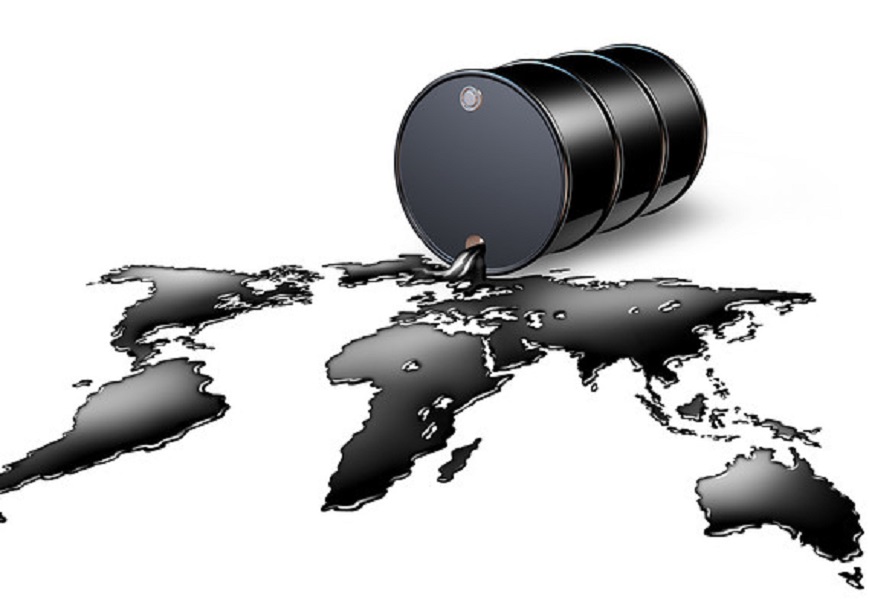
Expectations for global crude oil prices in 2021 swing between hope for effective vaccines against COVID-19 and concerns over uncertain oil demand with a second wave of rising infections around the world.

Last year, Brent crude, the international benchmark crude, dropped as low as $16 per barrel while the United States’ West Texas Intermediate (WTI) crude in April plunged below zero for the first time in history, due to coronavirus-related lockdowns and relevant declining oil demand.

The price dispute between the world’s second-largest oil producer Saudi Arabia, a leading member of the Organisation of the Petroleum Exporting Countries (OPEC), and non-OPEC producing countries led by Russia, greatly contributed to the oil price collapse in March – April 2020

But oil demand gradually rebounded and so did oil prices in the second half of 2020 as the global crude market rationalised supply while business activities resumed in many economies amid preventive measures against the virus.

On the last day of 2020, Brent crude closed at $51.80 dollars while WTI closed at $48.52 per barrel.

In 2021, Brent prices are set to average $50.67 a barrel while the US benchmark is expected to average $47.45 a barrel. Despite expectations about oil demand, recovery is anticipated to remain lower than it was before the pandemic.

It is widely believed that vaccination against the virus will revive optimism about global economic recovery as well as oil demand and prices. If the vaccines are soon widely available and effective, demand is expected to start rising in the second quarter of 2021.

However with the current second wave of COVID-19, with its soaring infections across the world, this is likely to cap oil price gains in the early months of the year and further bring uncertainty about oil demand throughout the New Year.

On the vaccine front, the World Health Organization (WHO) recently granted emergency validation to the Pfizer-BioNTech vaccine, which was also authorised by the European Union.

Britain authorised the Oxford-AstraZeneca vaccine for emergency use, and China approved its Sinopharm vaccine that was also approved in the United Arab Emirates, Bahrain and recently Egypt. Dozens of other vaccines are currently being tested on humans and animals.

In light of the hopeful indications, OPEC and OPEC+ countries decided in a ministerial meeting in early December to increase production by 500,000 barrels a day as of January.

The group’s meeting will be held every month in 2021 to assess market conditions and needs and decide an adjustable monthly production accordingly. The first of the year will hold today via videoconference.

Despite renewed fears about oil demand due to the new coronavirus strain, Russia is reportedly still in favour of another 500,000 barrels per day increase in the alliance’s oil production from February.

OPEC yesterday noted that crude demand is expected to rise by 5.9 million barrels per day to 95.9 million barrels per day this year. The group also sees plenty of downside demand risks in the first half of 2021.

Currently, oil prices are trading up with Brent trading at $52.56 per barrel while WTI is near $49 per barrel.


Adedapo Adesanya is a journalist, polymath, and connoisseur of everything art. When he is not writing, he has his nose buried in one of the many books or articles he has bookmarked or simply listening to good music with a bottle of beer or wine. He supports the greatest club in the world, Manchester United F.C.

Advertisement
Click to comment

Leave a Reply

Your email address will not be published. Required fields are marked *

Economy

CAC Deregisters 400,000 Inactive Businesses in 2025

Published

on

CAC

By Adedapo Adesanya

The Corporate Affairs Commission (CAC) has deregistered more than 400,000 inactive companies from the corporate registry in 2025 as part of reforms aimed at strengthening transparency, protecting the economy and restoring investor confidence.

The Registrar-General of the CAC, Mr Hussaini Magaji, disclosed this on Saturday in Abuja during the commission’s monthly fitness walk, which was organised as part of the activities marking its 35th anniversary.

Mr Magaji said the affected entities were largely companies that had failed to file statutory annual returns for years and were no longer operational, warning that such firms posed serious risks to economic integrity.

He said, “In 2025 alone, we deregistered over 400,000 companies from our records. These were largely companies that had become inactive and failed to meet statutory obligations, including filing annual returns.

“Such entities pose threats to economic operations. Cleaning up the register was necessary to build confidence and ensure that Nigeria has a credible and reliable corporate registry,” he stated.

Mr Magaji explained that a transparent and up-to-date register was critical to attracting both local and foreign investment, as well as preventing the misuse of corporate structures for illicit activities.

The CAC boss described the anniversary fitness walk as symbolic, noting that it reflected the commission’s resilience, teamwork and institutional evolution since its establishment in 1991.

He recalled that the commission began operations as a largely manual agency, once confined to a single office in Garki, Abuja, but has since evolved into a fully digital, end-to-end service provider with global reach.

“The CAC has come a long way, from manual operations in one location to a fully digital organisation. Today, our services are available anywhere, anytime, 24/7. We are the only government agency providing end-to-end digital services,” he stated.

According to him, the commission’s digital transformation has significantly supported the Federal Government’s ease-of-doing-business reforms, eliminating the need for physical visits to CAC offices to register or manage businesses.

“You can register and manage your business from your room without stepping into any CAC office. That is what ease of doing business truly means,” he added.

As part of its support for small businesses, Mr Magaji disclosed that the commission partnered with the Small and Medium Enterprises Development Agency of Nigeria to facilitate the free registration of 250,000 MSMEs in 2025.

He explained that the registrations were deliberately channelled through SMEDAN to ensure beneficiaries also received training and capacity-building support, adding that improved welfare, timely payment of entitlements and clear career progression had boosted staff morale and service delivery.

Continue Reading

Economy

NGX Market Cap Surpasses N110trn as FY 2025 Earnings Impress Investors

Published

on

creative economy capital market

By Dipo Olowookere

Investors at the Nigerian Exchange (NGX) Limited have continued to show excitement for the full-year earnings of companies on the exchange so far.

On Friday, Customs Street further appreciated by 1.01 per cent as more organization released their financial statements for the 2025 fiscal year.

During the session, traders continued their selective trading strategy, with the energy sector going up by 2.47 per cent at the close of business despite profit-taking in the banking counter, which saw its index down by 0.11 per cent.

Yesterday, the insurance space grew by 2.16 per cent, the industrial goods segment expanded by 1.70 per cent, and the consumer goods industry jumped by 0.42 per cent.

Consequently, the All-Share Index (ASI) increased by 1,722.13 points to 171,727.49 points from 170,005.36 points, and the market capitalisation soared by N1.106 trillion to N110.235 trillion from the N109.129 trillion it ended on Thursday.

Business Post reports that there were 59 appreciating stocks and 19 depreciating stocks on Friday, representing a positive market breadth index and strong investor sentiment.

The trio of Omatek, Deap Capital, and NAHCO gained 10.00 per cent each to sell for N2.64, N6.82, and N136.40 apiece, as Zichis and Austin Laz appreciated by 9.98 per cent each to close at N6.72 and N5.40, respectively.

Conversely, The Initiates depreciated by 9.74 per cent to N19.45, DAAR Communications slumped by 7.32 per cent to N1.90, United Capital crashed by 6.55 per cent to N18.55, Coronation Insurance lost 5.71 per cent to quote at N3.30, and First Holdco shrank by 5.53 per cent to N47.00.

The activity chart showed an improvement in the activity level, with the trading volume, value, and number of deals up by 33.77 per cent, 93.27 per cent, and 10.63 per cent, respectively.

This was because traders transacted 953.8 million shares worth N43.1 billion in 51,005 deals compared with the 713.0 million shares valued at N22.3 billion traded in 46,104 deals a day earlier.

Fidelity Bank was the most active with 92.4 million units sold for N1.8 billion, Chams transacted 69.2 million units valued at N310.9 million, Deap Capital exchanged 59.1 million units worth N382.7 million, Access Holdings traded 57.2 million units valued at N1.3 billion, and Tantalizers transacted 48.6 million units worth N228.2 million.

Continue Reading

Economy

Naira Retreats to N1,366.19/$1 After 13 Kobo Loss at Official Market

Published

on

naira street value

By Adedapo Adesanya

The value of the Naira contracted against the United States Dollar on Friday by 13 Kobo or 0.01 per cent to N1,366.19/$1 in the Nigerian Autonomous Foreign Exchange Market (NAFEX) from the previous day’s value of N1,366.06/$1.

According to data from the Central Bank of Nigeria (CBN), the Nigerian currency also depreciated against the Pound Sterling in the same market window yesterday by N2.37 to N1,857.75/£1 from the N1,855.38/£1 it was traded on Thursday, and further depleted against the Euro by 57 Kobo to close at N1,612.52/€1 versus the preceding session’s N1,611.95/€1.

In the same vein, the exchange rate for international transactions on the GTBank Naira card showed that the Naira lost N8 on the greenback yesterday to N1,383/$1 from the previous day’s N1,375/$1 and at the black market, the Nigerian currency maintained stability against the Dollar at N1,450/$1.

FX analysts anticipate this trend to persist, primarily influenced by increasing external reserves, renewed inflows of foreign portfolio investments, and a reduction in speculative demand.

In the short term, stability in the FX market is expected to continue, supported by policy interventions and improving market confidence.

Nigeria’s foreign reserves experienced an upward trajectory, increasing by $632.38 million within the week to $46.91 billion from $46.27 billion in the previous week.

The Dollar appreciation this week appears to be largely technical, serving as a correction to the substantial losses experienced from mid- to late January.

Meanwhile, the cryptocurrency market slightly appreciated, with Bitcoin (BTC) climbing near $68,000, up nearly 5 per cent since hitting $60,000 late on Thursday after investor confidence in crypto’s utility as a store of value, inflation hedge, and digital currency faltered.

The sell-off extended beyond crypto, with silver plunging 15 per cent and gold sliding more than 2 per cent. US stocks also fell.

The latest recoup saw the price of BTC up by 4.7 per cent to $67,978.96, as Ethereum (ETH) appreciated by 6.3 per cent to $2,021.10, and Ripple (XRP) surged by 9.5 per cent to $1.42.

In addition, Solana (SOL) grew by 7.3 per cent to $85.22, Cardano (ADA) added 6.1 per cent to trade at $0.2683, Dogecoin (DOGE) expanded by 5.4 per cent to $0.0958, Litecoin (LTC) rose by 5.2 per cent to $53.50, and Binance Coin (BNB) jumped by 2.3 per cent to $637.79, while the US Dollar Tether (USDT) and the US Dollar Coin (USDC) traded flat at $1.00 each.

Continue Reading

Trending